
Dari Ladang ke Garpu: Menjelajahi Dunia Peralatan Pemrosesan Buncis
Buncis—polong renyah dan beraroma yang kaya akan nutrisi—adalah bahan pokok dalam masakan di seluruh dunia. Tetapi pernahkah Anda berhenti sejenak untuk memikirkan perjalanan sayuran ini dari pertanian hingga ke piring Anda?
Transformasi dari buncis yang baru dipetik menjadi produk yang konsisten dan siap dinikmati yang berjejer di rak-rak toko bahan makanan dimungkinkan oleh keajaiban peralatan pemrosesan buncis. Mesin khusus ini sangat penting untuk memastikan kualitas, keamanan, dan kenyamanan buncis yang kita konsumsi. Baik Anda seorang profesional pengolahan makanan, seorang calon pengusaha, atau sekadar seorang pencinta kuliner yang penasaran, bergabunglah bersama kami saat kami menyelami dunia peralatan pemrosesan buncis yang menakjubkan.
Tahap 1: Penerimaan & Pembersihan – Dari Segar dari Ladang hingga Siap Diproses di Pabrik
Proses dimulai dengan buncis segar yang tiba di fasilitas pengolahan, seringkali langsung dari ladang.
Unloading & Receiving: Specialized equipment is used to gently unload and receive the green beans, minimizing damage and preserving their freshness.
Cleaning & Sorting: Next comes a critical step – removing any foreign material and ensuring that only the highest-quality beans proceed. This typically involves:
Dry Cleaning: Rotating drums or air blowers remove dirt, debris, and loose leaves.
Washing & Fluming: Gentle washing systems, utilizing water baths or sprays, thoroughly clean the beans. Flumes with flowing water help transport the beans and further remove any remaining debris.
Inspection & Sorting: Skilled workers or automated optical sorting machines identify and remove any discolored, damaged, or misshapen beans, ensuring only the best continue to the next stage.
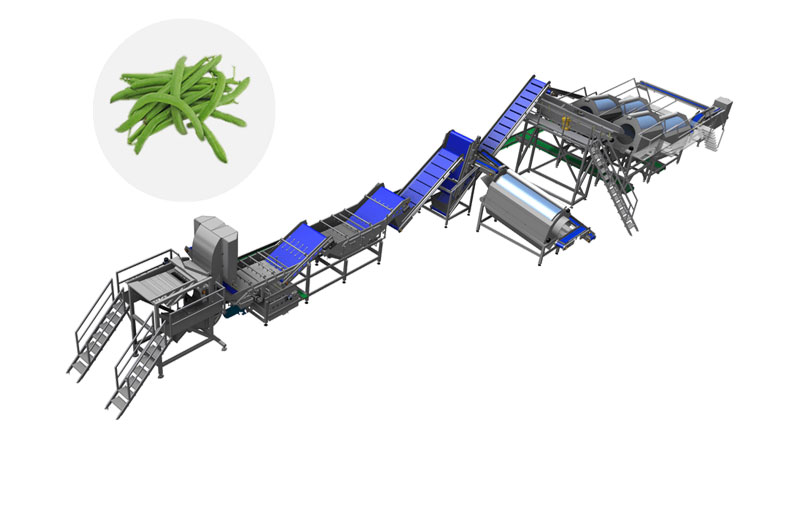
Tahap 2: Persiapan untuk Kesempurnaan – Pemilahan Ukuran, Pematahan, dan Pemotongan
Setelah buncis bersih dan disortir, saatnya mempersiapkannya untuk bentuk akhirnya.
Sizing: This step involves separating the beans based on their length, creating a more uniform final product. Sizing can be done manually or by utilizing automated systems with rollers or belts.
Snapping & Cutting: To remove the stem ends and, if desired, cut the beans into preferred lengths, specialized machinery comes into play:
Snappers: These machines efficiently remove the stem ends of the green beans, ensuring consistency and minimizing waste.
Cutters: If desired, green beans can be cut into specific lengths using rotary cutters or dicers.
Tahap 3: Kekuatan Pengawetan – Pemblansiran & Pendinginan
Tahap penting ini membantu menjaga warna cerah, rasa segar, dan nutrisi penting buncis untuk kenikmatan yang tahan lama.
Blanching: Green beans are briefly immersed in hot water or steam. This process deactivates enzymes that can cause spoilage and color deterioration during storage. Blanching also helps to preserve nutrients and reduce microbial load.
Cooling: After blanching, rapid cooling is essential to halt the cooking process and preserve the desired texture. This is typically achieved by utilizing cold water baths or air chilling systems.
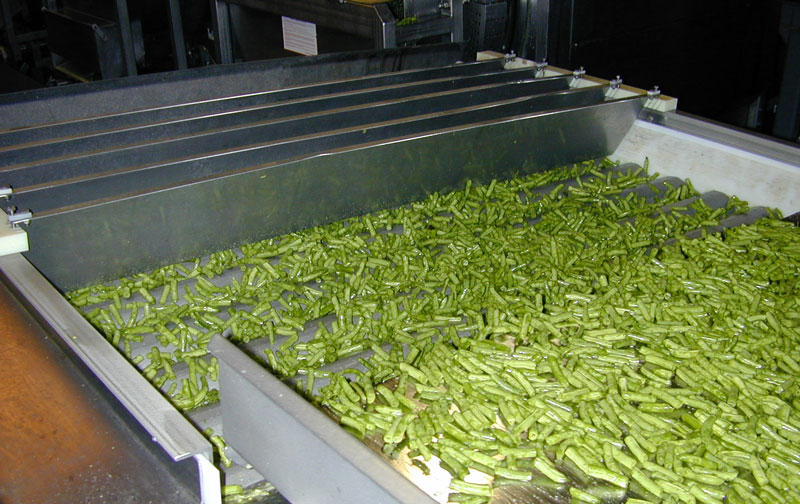
Tahap 4: Sentuhan Akhir – Pengemasan dan Pemrosesan Lebih Lanjut
Packaging: The processed green beans are now ready for packaging. Depending on the intended use and market demand, this might involve:
Canned: Packed in cans and sterilized for extended shelf life.
Frozen: Individually quick frozen (IQF) to preserve optimal texture and freshness.
Fresh-Cut: Packaged for refrigerated retail sale.
Further Processing: In some cases, green beans undergo additional processing after blanching and cooling, which can include:
French Cutting: Cut lengthwise into thin strips.
Dicing: Cut into small, uniform cubes.
Slicing: Sliced into round or diagonal pieces.
Memilih Peralatan yang Tepat – Pertimbangan Utama
Memilih peralatan pemrosesan buncis yang tepat bergantung pada beberapa faktor penting, termasuk:
Production Volume: Small-scale operations might opt for manual or semi-automated equipment, while large-scale facilities require high-capacity, automated systems.
Desired Product: The intended final product format (canned, frozen, fresh-cut) will heavily influence equipment choices.
Budget & Space Constraints: Equipment costs vary significantly, as do space requirements for operation.
Maintenance & Sanitation: Easy-to-clean and easy-to-maintain equipment is vital for ensuring food safety and minimizing downtime.
Inovasi Modern dalam Pemrosesan Buncis
Dunia pemrosesan buncis terus berkembang, didorong oleh kemajuan teknologi dan penekanan yang semakin besar pada efisiensi dan keberlanjutan.
Optical Sorting: Advanced optical sorting machines, equipped with cameras and sensors, can identify and remove defective beans with remarkable accuracy, significantly reducing waste and enhancing product quality.
Water & Energy Efficiency: Modern processing equipment is often designed with sustainability in mind, incorporating water-saving features and energy-efficient technologies.
Automation & Robotics: Automated systems and robotics are becoming increasingly prevalent in green bean processing, streamlining operations, reducing labor costs, and improving consistency.
Mulai dari tindakan sederhana seperti membersihkan dan memilah hingga teknik pemotongan dan pengemasan yang canggih, peralatan pemrosesan buncis memainkan peran penting dalam membawa sayuran bergizi dan serbaguna ini dari ladang ke meja kita. Baik dinikmati segar, beku, atau kalengan, lain kali Anda menikmati buncis, luangkan waktu sejenak untuk menghargai perjalanan yang rumit – dan mesin yang luar biasa – yang terlibat dalam membawanya ke piring Anda.
Blog yang Wajib Dibaca untuk Pemilik Rantai Restoran

 Lini Produksi Beras Rantai Dingin
 Lini Produksi Beras Cerdas Tanpa Awak
 Lini Produksi Beras Otomatis
Siap Memulai?