鱼粉生产线
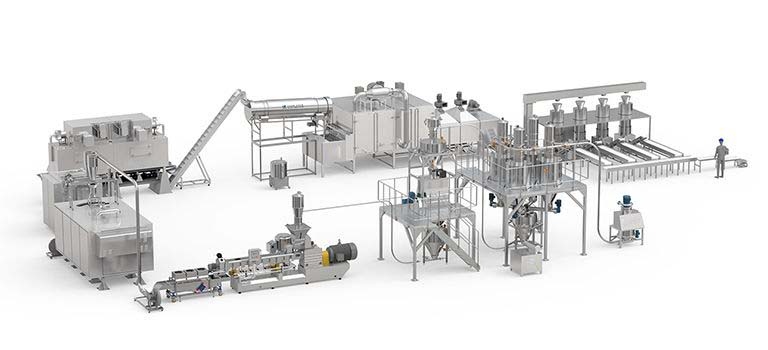
We don't just sell products; we are also fully capable of delivering complete turnkey solutions.


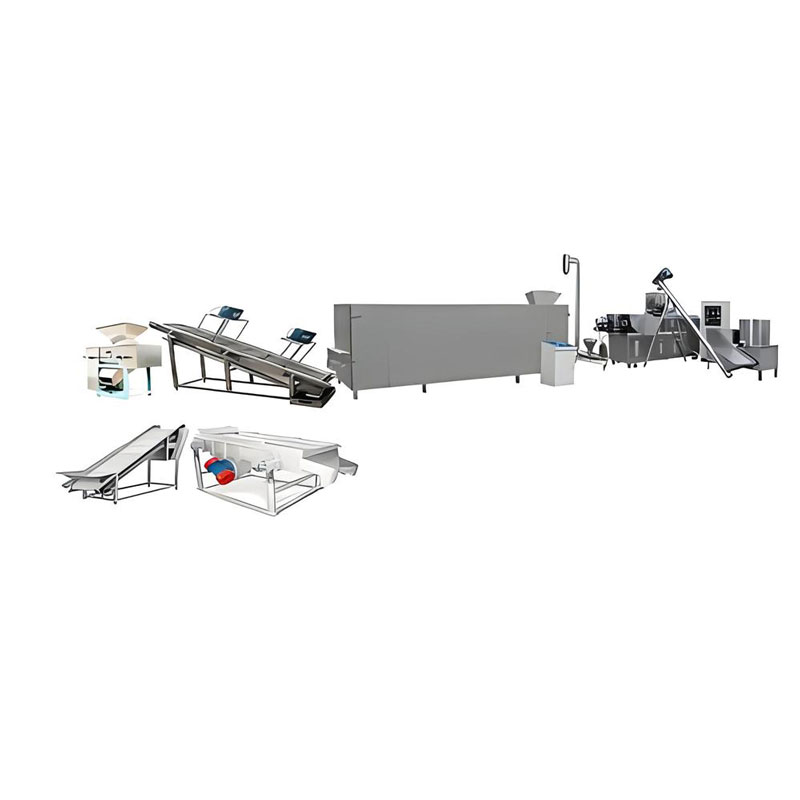
To maximise the commercial value of pelagic fish catches and factory offal, uncompromising thermal regulation during the rendering process is essential. If raw materials are exposed to direct, uncontrolled heat, the essential amino acids denature, drastically reducing both the protein content and the market value of the final fish meal. This continuous fish meal production line is engineered around an indirect steam thermodynamic model. By integrating closed-loop cooking, twin-screw mechanical pressing, and vacuum disc drying, the plant effectively extracts moisture and fish oil while perfectly preserving the 65%+ protein matrix required by premium aquaculture and livestock feed buyers.
Designed for continuous 24-hour operation, this heavy-duty rendering architecture utilises a specialised shell-and-tube seawater condensation system to capture all waste vapours, effectively eliminating the pungent environmental odours typically associated with marine rendering plants.
| Kerntechnische Parameter | Systemspecifikation |
|---|---|
| Systemkonfigurationsmodell | FMP-100T 連続レンダリングシリーズ |
| Raw Material Input Capacity | 100 metriske tons i timen (pelagisk fisk eller afskæringer) |
| Forventet output (Måltid & Olie) | Ongeveer 22-25 ton vismeel / 5-8 ton visolie |
| Samlet tilsluttet effekt | 350 kW (excluding requirements for external steam boilers) |
| Standardarbeitsspannung | 380V / 50Hz / 3-fase (andre konfigurationer kan leveres) |
| Trykkbeholderens materiale | Q345R 鍋爐級鋼材(適用於壓力區認證) |
| 潮湿接触面合金 | SUS304 roestvrij staal (corrosiebestendig tegen zeelucht) |
原料尺寸裁切与间接蒸汽烹饪
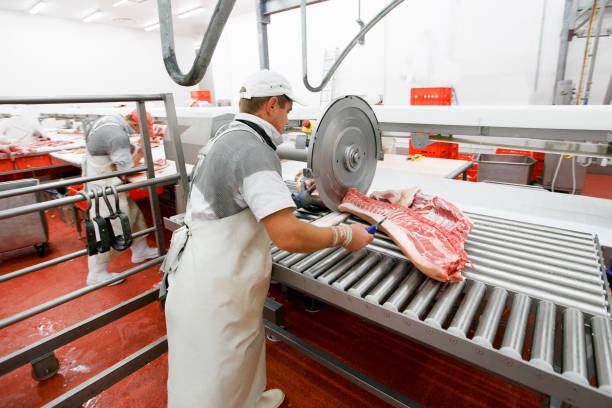
所有的兼捕物及大型内脏碎块都必须经过均质处理,以避免出现未煮熟的核心块。原材料首先会经过一台重型旋转式设备。fish slicing machine为了使颗粒大小均匀一致,随后将此浆料送入连续式水平烹煮机。关键在于,该系统采用蒸汽加热夹套及空心转子轴进行间接加热,而非直接向鱼肉中喷射活蒸汽。这种设计避免了外部冷凝水混入物料中,从而大幅减轻了后续干燥环节的热负荷,并有效保护了水溶性蛋白质。
雙螺桿壓榨技術,極大提升含油率
The most mechanically intensive stage involves extracting the "press liquor" (the water-and-oil emulsion) from the cooked fish mass. The production line employs an industrial twin-screw press, where the counter-rotating screws feature a gradually decreasing pitch. This design forces the cooked mass against heavy-duty stainless steel wedge-wire screens. The intense mechanical compression squeezes out up to 70% of the liquid phase without grinding the bone structure into a paste, resulting in a dense, semi-dry "press cake" that is ready for the final drying stage.
De-oiling using a three-phase centrifugal decanter
The press liquor extracted from the twin-screw press is highly valuable. It is immediately pumped into a high-speed tricanter (a three-phase centrifuge). Operating at speeds exceeding 3500 RPM, the decanter uses centrifugal force to separate the fluid into three distinct streams based on specific gravity: clarified fish oil (ready for refining), stickwater (rich in dissolved proteins), and microscopic sludge. The sludge is automatically routed back to theviskevaskemaskine...via de voederlijn of rechtstreeks naar de droger om te garanderen dat er absoluut geen eiwitverlies optreedt.
真空盘式干燥与异味治理
To achieve optimal moisture reduction without scorching the meal, the press cake is fed into a massive horizontal disc dryer. Operating under slight negative pressure (vacuum), the system lowers the evaporation point of the intrinsic water, enabling the meal to dry rapidly at much safer temperatures. The exhaust vapours, which carry heavy organic odours, are swiftly drawn into a titanium-plate or stainless steel shell-and-tube condenser. By utilising ambient seawater to condense these vapours into a manageable liquid phase, the process completely eliminates the atmospheric pollution issues that typically plague outdated rendering plants.
Managing high-pressure steam vessels demands total precision and oversight. A centralised SCADA control room monitors every critical node throughout the plant. Should the internal pressure of the disc dryer exceed safety limits, or if the amperage on the twin-screw press spikes due to foreign metallic debris, the PLC triggers an immediate failsafe. Electronic steam valves shut down instantaneously, while the VFD-controlled motors engage dynamic braking. This highly automated feedback loop protects your capital investment and ensures the facility operates strictly within the rigorous parameters of CE and ASME pressure vessel standards.
Setting up a 100-tonne-per-day rendering plant on a remote coastline presents significant civil and mechanical engineering challenges. Our B2B turnkey solutions provide end-to-end deployment, encompassing comprehensive 3D pipe routing for steam and press liquor, structural load analysis for heavy-duty centrifuge platforms, and detailed electrical schematics. Our certified marine engineers conduct on-site welding for high-pressure steam lines and calibrate the decanter algorithms, ensuring the facility produces commercial-grade 65% fish meal within the first week of handover.
若您需要針對您的工廠實際空間配置量身打造機械佈局規劃、申請熱力學蒸汽消耗量計算報告,或是欲與我們的渲染工程師進行技術諮詢,請提交正式的專案洽詢。
Essential reading for leaders