
Global Overview: Regional Applications of Food Processing Equipment
Food processing equipment is used globally, with its applications varying significantly based on regional differences, cultural backgrounds, and market demands. In both developed and developing nations, the choice and implementation of such machinery are shaped by economic drivers, regulatory frameworks, technological advancements, and consumer trends. This article provides a global overview of how food processing equipment is applied and examines the underlying factors driving these regional variations.
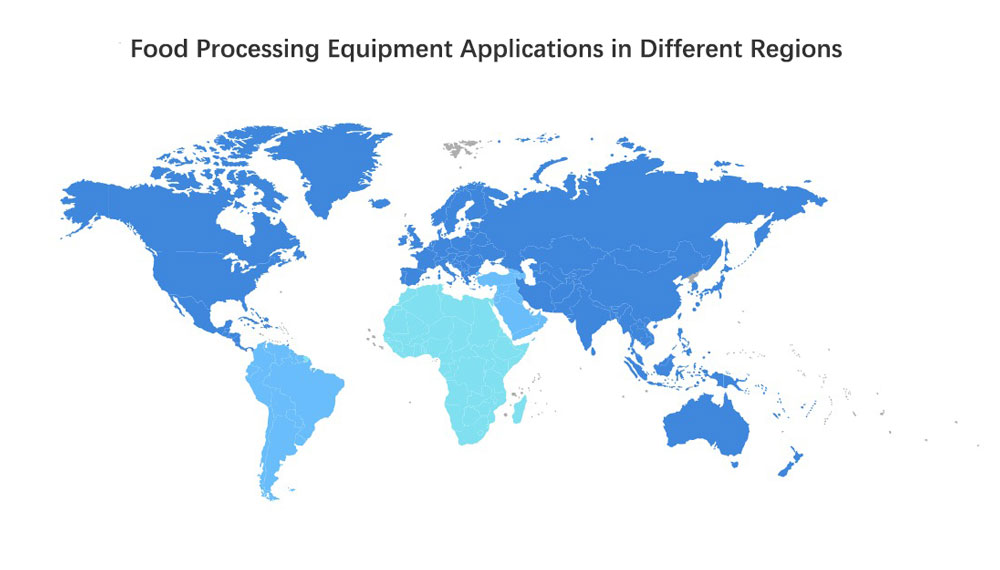
1. Noord-Amerikaanse markt: koploper in automatisering en efficiëntie
1.1 Højt automatiseret
In North America, especially in the US and Canada, the food processing equipment market is highly advanced and characterised by a high degree of automation. Major food production firms rely heavily on automated machinery to boost output and drive down labour costs. Given the high cost of labour in the United States, there is a significant demand for automated solutions. Such equipment not only speeds up production but also ensures higher standards of food safety and consistency.
1.2 Strenge Vorschriften
Food safety regulations in North America are incredibly strict. Food processing companies are required to adhere to a wide range of mandates from authorities such as the FDA (Food and Drug Administration) and the USDA (United States Department of Agriculture). These rules demand much higher sanitary standards for food processing machinery. Specifically, equipment must be easy to clean, corrosion-resistant, and designed to prevent cross-contamination. Consequently, many manufacturers are heavily focused on developing machinery that fully meets these rigorous standards.
1.3 Preference for Large-Scale, Fully Automated Equipment
Food producers in North America generally operate on a massive scale, which drives a strong demand for high-capacity, fully automated machinery. Such equipment provides end-to-end processing solutions—covering everything from raw material handling to final packaging—which significantly boosts operational efficiency. Although the initial capital expenditure for these systems can be substantial, they yield a high return on investment over time, making them a strategic choice for companies focused on long-term growth.
2. Den europæiske markedsplads: Fokus på bæredygtighed og innovation
2.1 Miljøreguleringers indvirkning
The European market is heavily shaped by a strong emphasis on environmental and sustainability standards within the food processing equipment sector. Given the European Union's stringent environmental regulations, manufacturers are now required to prioritise the reduction of energy consumption and carbon footprints throughout both the design and manufacturing stages. Consequently, many European producers are focusing their efforts on developing eco-friendly solutions, such as high-efficiency heating systems and water-saving cleaning technologies.
2.2 Innovatieve technologieën op grote schaal toegepast
European nations are leading the way in technological innovation within the food processing sector. Countries such as Germany, Italy, and France are renowned for integrating state-of-the-art technologies into their food cutting, packaging, and storage processes. Advanced solutions, including smart sensing systems, laser cutting, and vacuum packaging, are widely utilised to boost production efficiency and significantly reduce food waste.
2.3 SMEs have a high demand for flexible equipment
I modsætning til Nordamerika er den europæiske fødevareforarbejdningsindustri præget af små og mellemstore virksomheder (SMV'er). Disse virksomheder har brug for udstyr, der er fleksibelt og kan tilpasses forskellige produktlinjer og produktionsbehov. Modulært og skalerbart udstyr er meget populært i Europa, da det gør det muligt for virksomhederne hurtigt at reagere på markedsændringer og samtidig holde vedligeholdelsesomkostningerne nede.
3. Den asiatiske markedsplads: Hurtig vækst og lokal tilpasning
3.1 需求快速增长
De Aziatische markt voor voedselverwerkingsapparatuur, met name in China, India en Zuidoost-Azië, maakt een snelle groei door. De enorme bevolkingsomvang en de grote vraag naar voedsel in deze regio's stimuleren de uitbreiding van de voedselverwerkende sector. Nu de middenklasse groeit en consumenten meer oog krijgen voor gezondheid en veiligheid, stijgt tevens de vraag naar hoogwaardige voedselproducten en veiligere verwerkingsinstallaties.
3.2 落地需求
One standout characteristic of the Asian market is its heavy focus on localisation. Because dietary habits vary significantly from one country to the next, food processing machinery must be tailored to meet specific local requirements. For example, in China, there is a high demand for equipment used to produce traditional staples such as noodles and steamed buns, whereas in India, the priority lies in machinery for processing spices and rice. Consequently, equipment manufacturers must adapt their product ranges to suit the unique demands of each individual market.
3.3 中小企业的市场主导地位
Many food processing companies in Asia are SMEs, which tend to be more price-sensitive when it comes to capital expenditure. Unlike the North American and European markets, the Asian market shows a strong preference for equipment that is affordable, user-friendly, and easy to maintain. Consequently, local manufacturers have been able to secure a significant share of the market.
4. Den latinamerikanske markeds muligheder og udfordringer i en region i vækst
4.1 Verouderde apparatuur en de noodzaak tot upgrades
The food processing equipment market in Latin America is undergoing a period of rapid expansion, though it is currently hampered by the issue of ageing machinery. A significant number of processing plants still rely on outdated equipment from previous decades, which leads to diminished production efficiency and elevated food safety risks. However, as the regional economy strengthens and foreign investment flows into the area, an increasing number of companies are investing in equipment upgrades to boost production capacity and enhance product quality.
4.2 Pris og omkostningseffektivitet
Just like in the Asian market, businesses in Latin America are extremely price-sensitive when it comes to machinery. There is a strong demand for cost-effective equipment that offers a solid balance between affordability and reliability, particularly to meet the requirements of SMEs. Furthermore, companies are placing a growing emphasis on after-sales service and the availability of spare parts, as these are critical factors in managing long-term operational costs.
4.3 Nachhaltigkeitsbewusstsein nimmt zu
Whilst environmental regulations in Latin America aren't quite as rigorous as those in Europe, the concept of sustainability is certainly gaining momentum. A number of major corporations have begun investing in eco-friendly equipment to curb water consumption and energy waste. In Brazil, for example, manufacturers of coffee processing equipment are developing energy-efficient machinery to keep pace with the global demand for sustainable products.
5. Den afrikanske markedsplads: Potentiale og udfordringer i et vækstmarked
5.1 Stijgende vraag
As Africa's population expands and its economies develop, the food processing sector is poised for massive growth. Consequently, a growing number of global food brands and equipment manufacturers are tapping into the African market to capture these emerging opportunities. Currently, the demand is primarily driven by the need for fundamental machinery, particularly in grain processing, beverage production, and basic packaging solutions.
5.2 技术与财务限制
Africa, however, is grappling with substantial technological and financial hurdles. A great many food processing firms simply lack the capital required to invest in modern machinery. Furthermore, a dearth of skilled labour acts as a bottleneck, hindering the uptake of advanced technology. Consequently, equipment manufacturers looking to break into the African market must provide much more robust technical support and comprehensive training services.
5.3 Lokalisering og tilpasningsevne
In Africa, food processing equipment must be tailored to the local context and highly adaptable. Given the diverse climatic conditions and infrastructural hurdles, machinery needs to be resilient and capable of functioning within the local environment. For instance, water-efficient technology is a major priority in regions facing water scarcity. Furthermore, there is a significant demand for energy-efficient machinery, as many African countries struggle with an unstable electricity supply.
How to choose food processing equipment based on your region?
1. Get to grips with local regulations
Food safety and environmental standards differ significantly from one region to another. When selecting equipment, it is vital for businesses to be fully aware of local regulatory requirements. For example, in the European market, the priority is to choose energy-efficient machinery that adheres to environmental standards; whereas in North America, meeting stringent hygiene and safety protocols is of utmost importance.
2. Overvej om det er pengene værd
Regardless of location, businesses must choose equipment that fits their budget. While companies in developed nations can afford to invest in high-efficiency, automated machinery, those in developing regions may find more value in cost-effective and easy-to-maintain equipment.
3. Find solutions that work locally
The global competitiveness of food processing equipment manufacturers often hinges on their ability to provide localised solutions. Machinery must be custom-built to suit the specific dietary habits, production requirements, and climatic conditions of different regions. By selecting a supplier that offers local support, businesses can ensure their equipment is better suited to their environment and can operate at peak efficiency.
Conclusie
The use of food processing equipment varies significantly across the globe. From the highly automated systems prevalent in North America and the environmentally-driven innovations seen in Europe, to the localised approaches across Asia and the vast untapped potential within emerging markets such as Africa and Latin America, every region possesses its own distinct landscape. Consequently, when selecting equipment, companies must carefully weigh regional regulations, market demand, production scale, and budgetary constraints to ensure the most effective investment. A thorough understanding of these global market nuances is essential for food processing businesses looking to thrive on the international stage.
Essential Reading for Fast Food and Restaurant Chains Owners

 Fish Speed 快速清洁机
 Lakseslagelinje
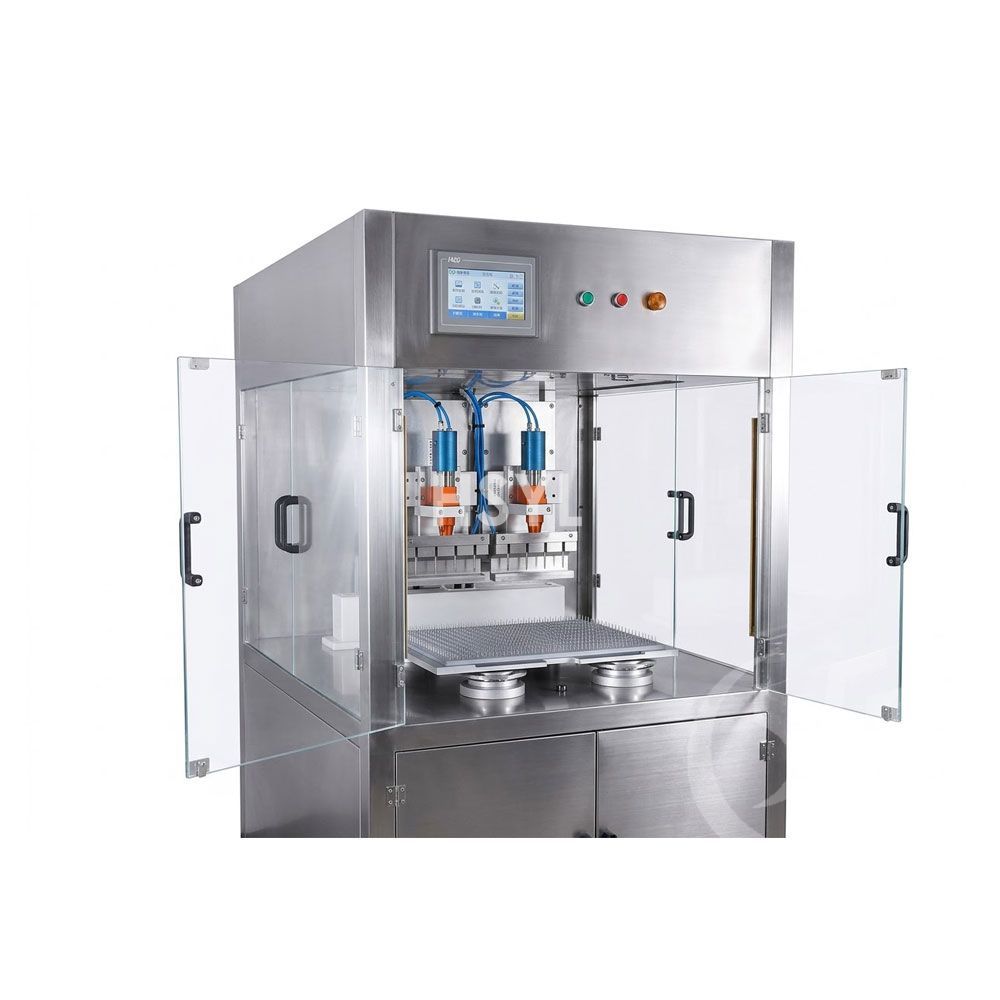 Ultrasonische snijmachine voor koekjes en biscuitjes
Ready to go?