
Quel équipement est nécessaire pour produire des conserves ?
Le guide complet à l'usage des fabricants, des transformateurs et des entrepreneurs du secteur agroalimentaire
Lemarché mondial des conserves alimentairescontinue de croître rapidement, porté par la demande des consommateurs pourdes produits pratiques, durables et prêts à consommerQue vous ayez l'intention de produirepoisson en conserve, fruits, vegetables, saucesouplats préparésune question cruciale se pose toujours :
👉 De quel équipement a-t-on réellement besoin pour assurer une production de conserves à la fois efficace et sécurisée ?
Dans ce guide complet, nous allons vous expliquermachines de base, systèmes auxiliairesetpoints clés à considérerpour l'installation d'un système moderneligne de production de conserves alimentairesVous découvrirez égalementplages de capacité de production, estimations des coûtsetcomment choisir le matériel de mise en conserve appropriépour votre usine.
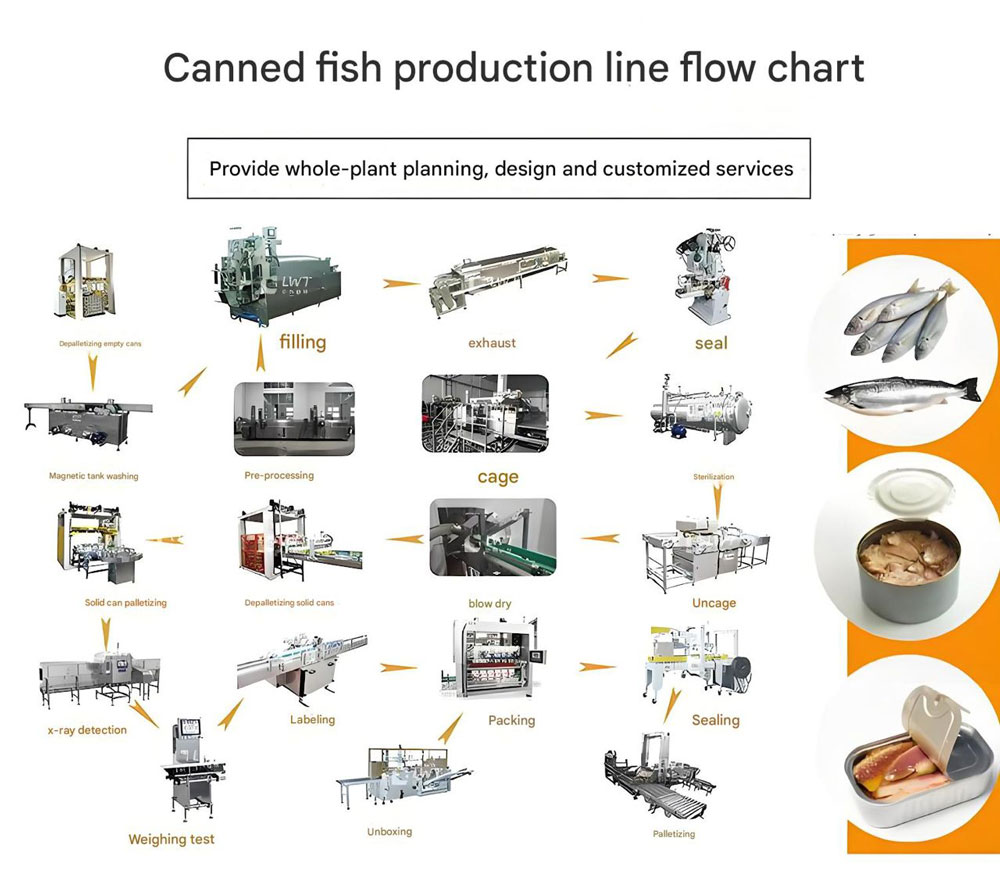
1. Présentation : Le processus de fabrication des conserves
Canning est unprocessus de conservation des alimentsce qui consiste à sceller les aliments dans des récipients hermétiques et à les stériliser par un traitement thermique afin d'éviter toute dégradation.
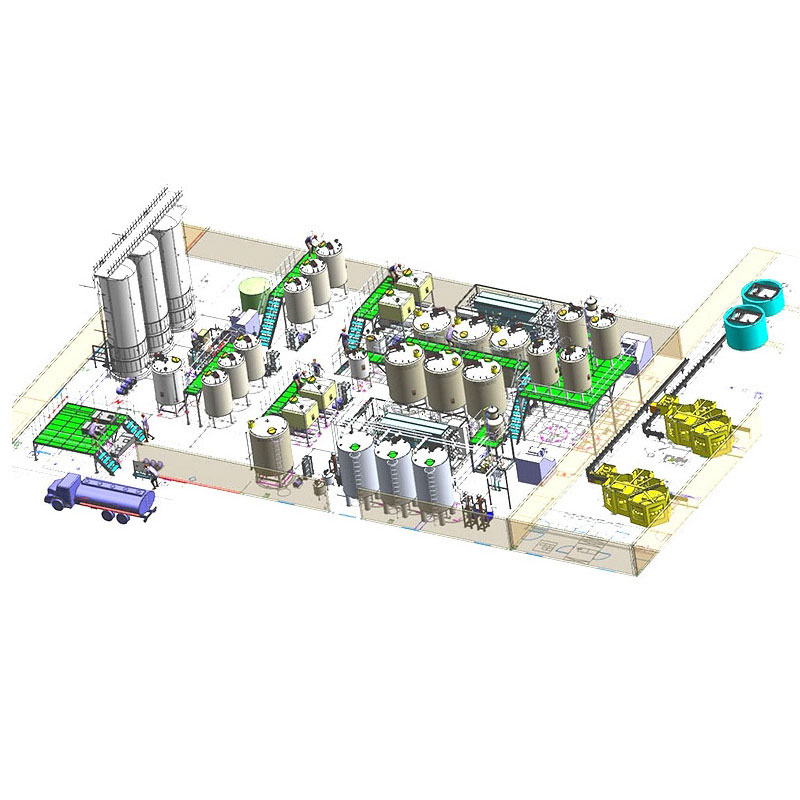
Unligne de production de conserves alimentairesintègre l'ensemble du processus — de la préparation des matières premières jusqu'au scellage et à l'étiquetage — au sein d'unsystème continu, semi-automatisé ou entièrement automatisé.
Étapes clés de la production :
Préparation des matières premières
Remplissage et scellage
Stérilisation
Refroidissement et séchage
Étiquetage et conditionnement
Chaque étape nécessite des machines spécialisées, conçues spécifiquement selon le type de produit et le matériau du contenant (boîtes de conserve, canettes en aluminium ou bocaux en verre).
2. Équipement indispensable pour la conserve de produits alimentaires
Voici le détail de laprincipales catégories d'équipementsutilisé dans les lignes de production de conserves alimentaires.
2.1 Machines de lavage et de tri des matières premières
Objectif :
Nettoyer, inspecter et trier les matières premières (fruits, légumes, viandes ou produits de la mer) avant leur transformation.
Équipement type :
Machine à laver Bubble Care– Élimine les saletés de surface, le sable et les résidus de pesticides.
Laveuse à tambour rotatif– Idéal pour les légumes racines ou les gros fruits.
Convoyeur de tri– Les opérateurs retirent manuellement les articles défectueux.
Tables d'inspection– Pour le contrôle de la qualité visuelle avant traitement.
Capacité recommandée :
300 à 2 000 kg/h selon le type de produit.
2.2 Épluchage, découpe et équipement de prétraitement
Avant la préparation, les ingrédients nécessitent souvent d'être épluchés, tranchés, hachés ou blanchis.
Machines courantes :
Éplucheurs de fruits et légumes(pour la mangue, l'ananas, la tomate, la carotte, etc.)
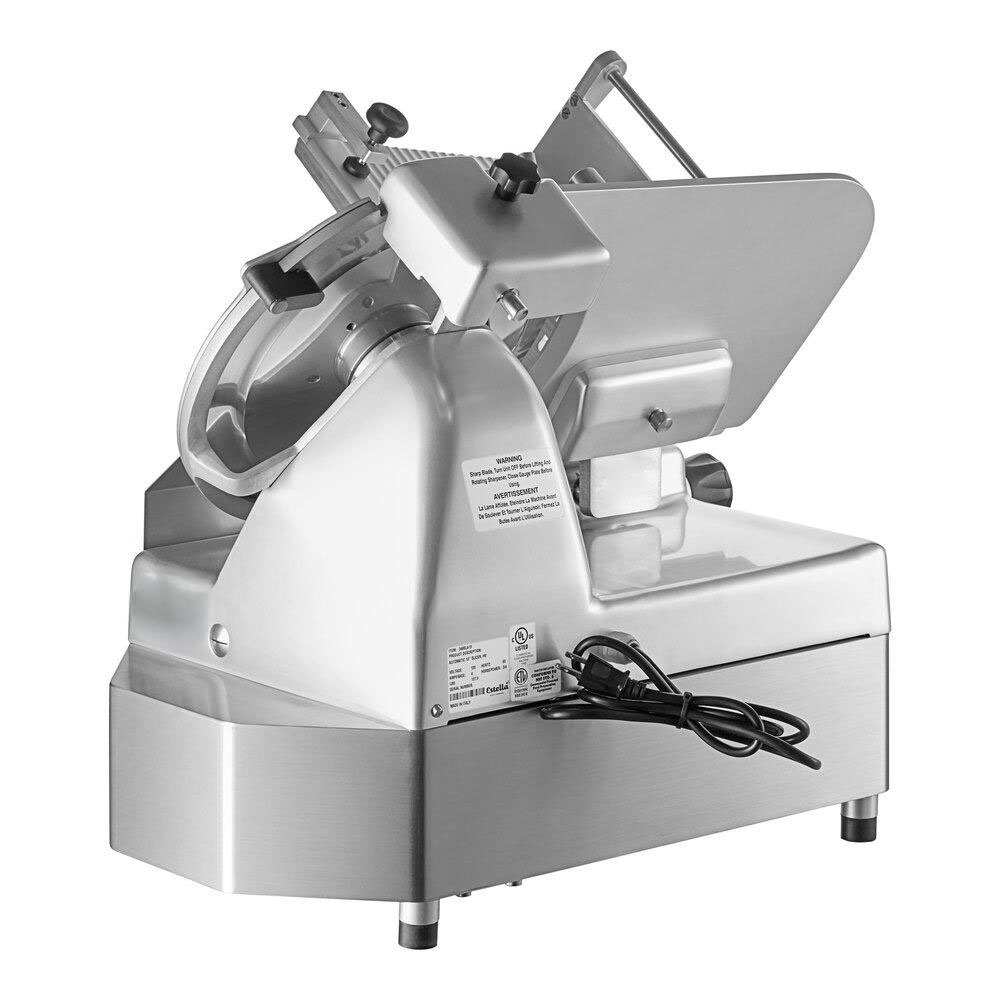
Machines de découpe et de tranchage
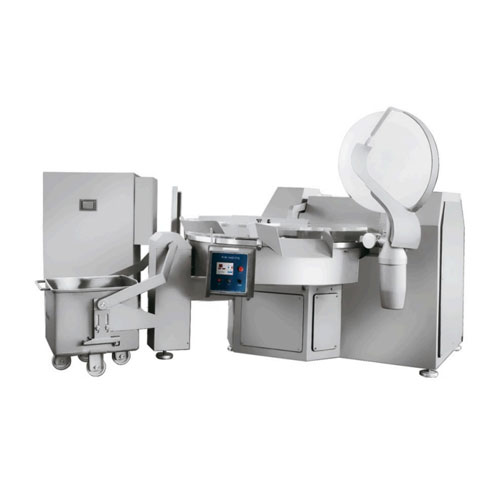
Hachoirs à viande ou coupe-poissons
Blanchisseur– Traitement thermique léger pour préserver la couleur et la texture.
Niveau d'automatisation :
De semi-automatique à entièrement automatique, selon le volume de production.
2.3 Équipement de cuisine et de mélange
La cuisson ou le préchauffage permet d'attendrir les ingrédients crus et d'en exacerber les saveurs. Pour les sauces, les légumineuses et les viandes, unesystème de mélange ou d'ébullitionest utilisé.
Exemples :
Cuves à double enveloppe vapeur– Idéal pour les sauces, les soupes et les pâtes.
Marmites à agitation automatique– Évitez toute brûlure et assurez une chaleur uniforme.
Cuiseurs sous vide– Conserver la saveur et la couleur des fruits confits.
Plage de température :
60–120 °C, selon le type d'aliment et le résultat souhaité.
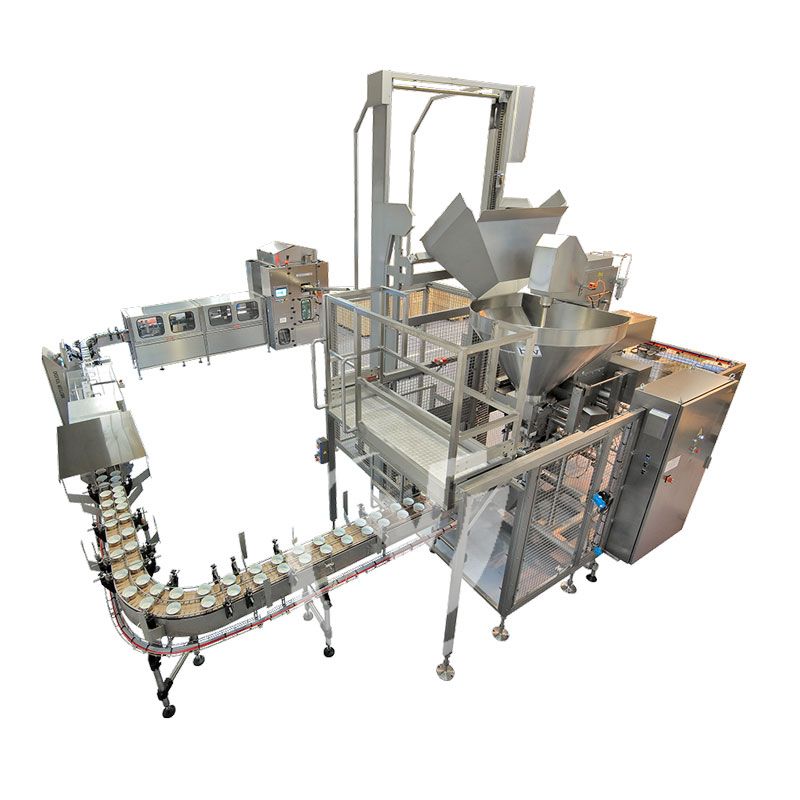
2.4 Machines de remplissage
Les remplisseuses distribuent avec précision le produit dans les canettes ou les bocaux. Elles sont lesle cœur d'une ligne de mise en conservece qui influe directement sur l'efficacité et l'hygiène.
Types de machines de remplissage :
Machine de remplissage de liquides– Pour les jus, les sirops ou les sauces.
Machine de remplissage pour pâte– Pour les produits visqueux tels que le ketchup ou le lait concentré.
Machine de remplissage de produits visqueux– Pour les morceaux de viande, les légumes ou le poisson.
Remplisseuse à vide ou à piston– Garantit un dosage précis et une quantité minimale d'air dans la canette.
Caractéristiques principales à rechercher :
Volume de remplissage réglable
Surfaces de contact en acier inoxydable
Adapté à différents formats de boîtes de conserve
Intégration aux systèmes de convoyage
Capacité de production :
1 000 à 20 000 boîtes/heure (de la petite à la grande échelle)
2.5 Machines de scellage et de fermeture
Une fois remplis, les contenants sont scellés pour former unmilieu totalement hermétiqueUn étanchéité adéquate permet d'éviter toute contamination bactérienne et tout risque de détérioration.
Types principaux :
Machine à coudre(pour les boîtes de conserve en fer-blanc ou en aluminium)
Machine sous vide(pour les bocaux en verre)
Machine de sertissage de bouchons à vis(pour les produits en bocaux)
Caractéristiques principales :
de 1 à 4 têtes selon la vitesse de sortie
Compatible avec les boîtes de conserve rondes ou de formes irrégulières
Conception en acier inoxydable pour une hygiène irréprochable
Niveau d'automatisation :
Manuel → Semi-automatique → Entièrement automatique
2.6 Équipements de stérilisation (Autoclaves de pression)
L'autoclave (étuve) est l'un desles éléments les plus critiquesdans la production de conserves. Cela garantit la sécurité alimentaire en éliminant les micro-organismes et les enzymes.
Types courants :
Autoclave à vapeur
Autoclave à injection de vapeur
Retorte rotative
Stérilisateur hydrostatique
Paramètres de fonctionnement :
Température : 110–135 °C
Pression : 0,2–0,5 MPa
Durée du cycle : 30 à 90 minutes
Matériau :
Entièrement en acier inoxydable avec contrôle automatique de la température et de la pression &.
Capacité de sortie :
500 à 10 000 canettes par cycle, selon la taille de la chambre.
2.7 Systèmes de refroidissement et de séchage
Après la stérilisation, les boîtes sont refroidies afin d'arrêter la cuisson et d'éviter toute déformation.
Options d'équipement :
Convoyeur de refroidissement
Tunnel de douche
Séchoir à l'air libre
Un refroidissement adéquat garantit l'adhérence de l'étiquette et prévient le gonflement des canettes.
2.8 Machines d'étiquetage, de codage et de conditionnement
La dernière étape consiste àimage de marque et emballageavant distribution.
Machines principales :
Étiqueteuse– Application d'étiquettes enveloppantes ou de type haut/bas.
Imprimante à jet d'encre– Affiche la date de production, le numéro de lot et la date de péremption.
Machine d'encartonnage– Met les canettes en boîte ou sur des plateaux sous film rétractable.
PalettiseurEmpile les boîtes pour le stockage et l'expédition.
3. Systèmes auxiliaires pour les conserveries
En plus des machines principales, plusieurssystèmes de soutiensont essentiels au bon fonctionnement :
3.1 Chaudière à vapeur
Fournit l'énergie thermique nécessaire aux processus de stérilisation et de cuisson.
3.2 Système de traitement de l'eau
Garantit une eau pure, exempte de minéraux, idéale pour la vaisselle et la cuisine.
3.3 Compresseur d'air
Commandes pneumatiques, têtes de sertissage et convoyeurs.
3.4 Systèmes de convoyage
Intégrer l'ensemble de la ligne de production afin de garantir la continuité du flux de matières.
3.5 Système de nettoyage en place
Nettoyage automatisé des cuves et des canalisations pour garantir l'hygiène.
4. Configuration d'une ligne de production de conserves standard
Une usine de conserverie de petite ou moyenne taille respecte généralement la configuration suivante :
Raw Material → Washing → Cutting → Cooking → Filling → Sealing → Sterilizing → Cooling → Labeling → Packaging → Storage
Une planification optimisée de l'aménagement permet de réduire la main-d'œuvre, de gagner de l'espace et d'accroître l'efficacité de la production.
Les usines nécessitent généralement300–800 m²pour une installation de petite envergure et1 500 – 3 000 m²pour une plante de taille moyenne.
5. Coût de l'équipement de mise en conserve
Le coût total varie en fonction du type de produit, de la capacité et du degré d'automatisation.
| Échelle de production | Rendement (canettes/heure) | Coût estimé | Remarques |
|---|---|---|---|
| Petite ligne | 1 000–3 000 | 80 000 $ – 150 000 $ | Semi-automatique |
| Ligne de taille moyenne | 3 000 – 8 000 | 200 000 $ – 400 000 $ | Automatisation partielle |
| Grande ligne | 10 000 – 20 000 | 500 000 $ – 1 000 000 $ 000+ | Entièrement automatisé |
Frais supplémentaires :
Construction d'une usine
Services publics (vapeur, eau, électricité)
Matériaux d'emballage
Équipement de contrôle qualité
6. Comment choisir le bon fabricant d'équipements de mise en conserve
1. Définissez votre gamme de produits
Des machines spécifiques sont utilisées selon que vous traitez de la viande, du poisson, des légumes ou des sauces. Privilégiez un fabricant possédant une expertise reconnue dans votre catégorie de produits.
2. Évaluer les besoins en capacité de production
Prévoyez une marge d'au moins 30% au-dessus de votre objectif initial afin de permettre une certaine croissance.
3. Vérifier les certifications de qualité
RechercherISO, FRouHACCPcertifications de conformité internationale.
4. Évaluer le service après-vente
Veillez à ce que le fournisseur fournisseinstallation, trainingetassistance technique.
5. Envisagez des solutions clés en main
Parmi les principaux fournisseurs chinois tels queSociété de Limons de Qingdao Hongshengyuanlin Co., Ltd., Zhucheng Zhongyu MachineryetShanghai Leadworld Machineryoffre terminéelignes d'embouteillage clés en main, de la conception à la mise en service.
7. Conseils d'entretien et de contrôle qualité
Exécuterhygiène quotidiennedes zones de remplissage et de scellage.
Vérification régulièreintégrité des couturesà l'aide d'un analyseur de sertissage de boîtes de conserve.
Étalonnagecapteurs de température et de pressiondans des stérilisateurs.
Maintenirtraçabilité précise des produitsavec des systèmes de codage de date.
8. Tendances futures de la technologie de mise en conserve
Les lignes de mise en canettes modernes évoluent grâce à :
Capteurs intelligentspour la surveillance des processus en temps réel.
Emballage robotisésystèmes.
Stérilisation à haute efficacité énergétique technologies.
Contrôle de la production basé sur l'IApour la maintenance prédictive.
L'automatisation et la durabilité resteront les principaux moteurs de l'innovation, permettant ainsi aux processeurs de réduire à la fois leurs coûts et leur empreinte environnementale.
9. Foire aux questions
Quel est l'investissement minimum requis pour une ligne de production de conserves alimentaires ?
Une ligne de mise en conserve semi-automatique à petite échelle peut débuter à partir de80 000 $ – 100 000 $selon le type de produit et sa capacité.
Q2 : Une même ligne de production peut-elle permettre de fabriquer différents types de conserves ?
Oui. Il y en a beaucoup.polyvalentce qui permet de passer rapidement d'un produit à l'autre, qu'il s'agisse de légumes, de sauces ou de produits de la mer.
Q3 : Quels types de boîtes de conserve peuvent être utilisés ?
Contenants en fer-blanc, en aluminium ou en verre — selon le produit et les préférences du marché.
Q4 : Quel est le délai d'installation d'une ligne de mise en conserve ?
En règle générale30 à 60 joursy compris l'assemblage, les tests et la formation du personnel.
Q5 : Quelle est la durée de conservation des aliments en conserve ?
Les conserves stérilisées correctement peuvent se conserver longtemps1 à 3 ansselon la formulation et les conditions de conservation.
10. Conclusion
Configuration en coursligne de production de conserves alimentairesCela exige une planification rigoureuse et un choix d'équipement approprié. Du lavage au remplissage, jusqu'au scellage et à la stérilisation, chaque étape doit garantirsécurité alimentaire, efficacité et régularité.
En investissant dansdes machines fiableset collaborer avecfabricants expérimentésmême les petites et moyennes entreprises peuvent mettre en place une activité de mise en conserve rentable grâce àrendement élevé et évolutivité à long terme.
Que vous soyez en train de produirepoisson en conserve, fruitsouplats préparésune ligne de mise en conserve parfaitement conçue aidera votre marque à tenir ses promessesdes produits sûrs et de haute qualitéqui répondent aux normes tant nationales qu'internationales.
Blogs incontournables pour les propriétaires de chaînes de restaurants

 Machine de découpe ultrasonique pour biscuits et cookies
 Machine de découpe automatique de confiseries par ultrasons pour boulangerie
Prêt à commencer ?