
Guide de la chaîne de production de cornichons marinés anti-rouille
1. Introduction : Le coût caché de la rouille dans l'industrie des cornichons
The global pickled vegetable market is projected to reach unprecedented heights by 2030, driven by consumer demand for healthy, probiotic-rich shelf-stable foods. For factory owners, this presents a massive opportunity. However, scaling up from artisanal production to an industrial pickled cucumber production line comes with a formidable enemy that destroys profit margins more effectively than any competitor: Corrosion.
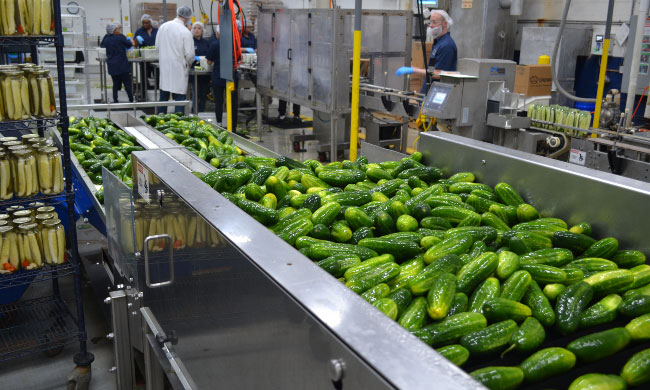
Imaginez le scénario suivant : vous venez d'installer une ligne de remplissage et de bouchage automatique flambant neuve. Tout semble impeccable. Pourtant, six mois plus tard, vous remarquez des traces brun rougeâtre sur le châssis du convoyeur. Un mois après, un servomoteur tombe en panne parce que des vapeurs acides ont pénétré le boîtier. Et soudain, votre ligne est à l'arrêt, en pleine saison de récolte des concombres.
This is the reality for 40% of new pickle factories that prioritize low initial equipment costs over material suitability.
Dans l'industrie agroalimentaire, la rouille n'est pas qu'un simple problème esthétique ; c'est une véritable catastrophe.
Food Safety Risk: Rust particles can contaminate the product, leading to recalls. Corroded surfaces become breeding grounds for bacteria like Listeria and Salmonella.
Regulatory Nightmare: FDA, EFSA, and local health inspectors will shut down a line that shows visible corrosion in food contact zones.
Operational Bleed: Every hour of downtime due to a seized bearing or a snapped chain costs thousands of dollars in wasted raw material and labor.
At HSYL, we don't just assemble machines; we engineer solutions for hostile environments. This guide is the culmination of our 10 years of experience fighting corrosion. We will take you deep into the engineering principles of building a pickle production line that lasts not just for the warranty period, but for a decade.
2. La science de l'agression : comprendre comment le vinaigre & de saumure attaque le métal
Pour vaincre l'ennemi, il faut d'abord le comprendre. Pourquoi l'équipement d'une usine de cornichons est-il tellement plus sollicité que celui d'une biscuiterie ou d'une usine d'embouteillage d'eau ?
Le double danger : chlorures et acides
Les cornichons sont généralement préparés dans une saumure composée de :
Salt (Sodium Chloride): Concentration ranges from 6% to 15%.
Acetic Acid (Vinegar): pH levels often drop below 3.5.
Mécanisme 1 : La corrosion par piqûres (le tueur silencieux)
Standard stainless steel relies on a microscopic "passive layer" of chromium oxide to protect itself. Chloride ions from the salt are aggressive enough to penetrate this layer at specific weak points. Once the layer is breached, the corrosion burrows downward, creating tiny pits.
The Danger: On the surface, the metal might look fine, but structurally, it is becoming a sponge. This is common in low-quality storage tanks and filler bowls.
Mécanisme 2 : Corrosion caverneuse
This occurs in tight spaces—under gaskets, bolt heads, or overlapping metal plates—where the liquid gets trapped and becomes stagnant. The stagnant liquid becomes highly acidic over time, eating away the metal from the inside out. This is why machine design is just as important as material selection.
Mécanisme 3 : Fissuration par corrosion sous contrainte (CSC)
Lorsque des contraintes de traction (telles que les vibrations d'un tamis ou la pression dans un réservoir) sont combinées à un environnement chloré et à des températures élevées (pasteurisation), l'acier inoxydable peut se fissurer soudainement et de manière imprévisible.
L'influence de la température
In the Pasteurization Tunnel, temperatures rise to 85°C-95°C. For every 10°C increase in temperature, the corrosion rate of chemical reactions roughly doubles. A material that survives cold brine might fail catastrophically in hot steam.
3. Ingénierie des matériaux : SUS304, SUS316L et polymères
The most common question we get is: "Do I really need SUS316, or is SUS304 enough?"
The answer is: It depends on the zone. A smart engineering approach uses a hybrid of materials to balance cost and durability.
SUS304 (Le standard de l'industrie)
Composition: 18% Chromium, 8% Nickel.
Verdict: Excellent for general food processing (washing leafy greens, fruits).
In Pickle Lines: We use SUS304 for the structural frames (legs, supports) that do not directly touch the brine, and for the initial cucumber washing section (where fresh water is used).
Warning: Never accept SUS201. It is magnetic, contains low nickel, and will rust within weeks in a humid factory.
SUS316L (Le spécialiste des acides)
Composition: 16% Chromium, 10% Nickel, 2% Molybdenum.
The Magic Ingredient: Molybdenum is the game-changer. It drastically improves resistance to pitting corrosion from chlorides. The "L" stands for "Low Carbon," which prevents corrosion at weld points.
In Pickle Lines: This is non-negotiable for:
Brine Filling Nozzles: High velocity brine wears down weaker metals.
Brine Storage Tanks: Constant contact requires 316L.
The Brine Mixing System: The most aggressive zone.
Titanium (L'arme ultime)
Dans les cas extrêmes (par exemple, lorsque la concentration de saumure atteint >20 % ou lorsqu'elle entre en ébullition), on utilise parfois des échangeurs de chaleur en titane. Toutefois, pour des lignes de saumureage standards, cette solution est généralement disproportionnée et trop coûteuse.
Polymères avancés
Le métal n'est pas toujours la solution.
UHMWPE (Ultra-High Molecular Weight Polyethylene): We use this for guide rails and wear strips. It has self-lubricating properties, meaning less friction and no need for grease (which attracts dirt). It is completely immune to salt and acid.
4. Au-delà de l'acier : conception hygiénique & Technologies de soudage
You can build a machine out of pure gold, but if the design is poor, it will still fail. In the world of Sanitary Design, geometry is everything.
La philosophie de « l'autonettoyage »
Dans une machine HSYL, vous remarquerez l'absence de toute surface horizontale plane.
Sloped Surfaces: All structural tubes are diamond-oriented or sloped to ensure water and brine run off immediately.
No Dead Legs: In our piping systems for the brine filler, we eliminate "dead legs" (sections of pipe where liquid doesn't flow). Stagnant brine is a corrosion accelerator.
L'art du soudage : TIG ou MIG ?
Les soudures défectueuses sont la cause principale de la corrosion sur les machines de fabrication chinoise.
The Problem: Rough welds create microscopic crevices where salt crystals form. The heat from welding also destroys the protective layer of the steel.
Notre méthode :
Pulse TIG Welding: Creates a smooth, "fish-scale" uniform weld.
Full Penetration: We don't just spot weld; we seal the joint completely to prevent liquid from entering the hollow tubes of the frame.
Pickling & Passivation: This is the most critical step. After welding, we bathe the entire component in an acid bath. This removes the "heat tint" and chemically regenerates the chromium oxide protective layer. If a machine looks dull or grey at the welds, it hasn't been passivated. Do not buy it.
Finition de surface : sablage ou polissage ?
Sandblasting (Bead Blasting): Creates a matte finish. Good for structural parts as it hides fingerprints.
Mirror Polishing (Ra < 0.8µm): We use this for all food contact surfaces. A mirror-smooth surface leaves nowhere for bacteria or salt to hide. It makes CIP (Clean-in-Place) twice as effective.
5. Le cœur vulnérable : protéger les moteurs, l'électronique et les capteurs
Si un châssis mécanique peut durer vingt ans, les composants électroniques, eux, sont bien plus vulnérables. En effet, l'air d'une usine de conserve est saturé de vapeurs acides et conductrices.
Protection moteur
Les moteurs à induction standard sont équipés de ventilateurs qui aspirent l'air pour refroidir le moteur. Mais dans une usine de cornichons, ils sont en train d'aspirer de l'acide.
Our Solution: We use Stainless Steel Washdown Motors (completely sealed, non-ventilated) or motors with Epoxy Paint coatings rated for IP66.
Shaft Seals: The point where the motor shaft exits the housing is a weak spot. We use reinforced oil seals to prevent brine ingress.
L'armoire électrique (Le cerveau)
Material: The cabinet itself must be SUS304 (minimum), not painted carbon steel.
Sealing: Double-layer EPDM gaskets.
Positive Pressure System: For high-humidity environments, we recommend a system that pumps clean air into the cabinet, creating positive pressure. This ensures that even if a seal leaks, air pushes out, preventing acid air from coming in.
Capteurs & Pneumatique
Cylinders: We strictly use Festo (Clean Design) or SMC stainless steel cylinders. Standard aluminum cylinders will corrode and seize within months.
Photoelectric Sensors: Must be rated IP69K (capable of withstanding high-pressure, high-temperature washdowns).
6. Joints, garnitures et bandes transporteuses : les consommables négligés
Ce sont les composants les moins coûteux de la machine, et pourtant, leur défaillance est celle qui entraîne les dégâts les plus considérables.
Sélection du caoutchouc
NBR (Nitrile Rubber): Good for oil, but degrades quickly in ozone and UV light.
EPDM: Excellent for water and steam, but weak against oil.
FKM (Viton): The gold standard for acidic, oily, and high-temperature environments.
Our Strategy: We use FKM/Viton gaskets in the filling valves and heating tunnels. They cost 3x more than rubber, but they last 10x longer.
Convoyeurs à bande
Modular Plastic Belts: We prefer Intralox-style modular belts (made of Polypropylene or Acetal) over PVC fabric belts.
Why? Fabric belts can fray. Once the brine gets into the fabric layer, it breeds bacteria and creates a permanent smell. Modular belts are easy to wash and repair (you just replace the broken link, not the whole belt).
7. Procédure opérationnelle normalisée (SOP) de maintenance : comment prolonger la durée de vie de votre machine
Buying a high-quality machine is only half the battle. How you treat it determines the other half. Here is the Standard Operating Procedure (SOP) we teach our clients.
La règle du « sans chlore »
Many factories use Chlorine (Bleach) for sanitization. Chlorine is the kryptonite of stainless steel. It attacks the protective layer aggressively.
Recommendation: Use Peracetic Acid (PAA) or Quaternary Ammonium compounds for sanitization. They are effective against bacteria but gentle on steel.
Protocole de nettoyage quotidien
Pre-Rinse: Use warm water (45-50°C) to melt away salt deposits.
Foam Cleaning: Apply an alkaline detergent foam and let it sit for 15 minutes.
Scrub: Use soft nylon brushes. NEVER use steel wool (it leaves iron particles that cause rust).
Final Rinse: Thoroughly rinse with fresh water.
Sanitize: Apply PAA.
Dry: Run the conveyor for 10 minutes to fling off excess water.
Lubrification
You cannot use standard WD-40. You must use H1 Food Grade Lubricants that are water-resistant. We recommend greasing bearings after the washdown to push out any water that might have entered.
8. L'audit de l'acheteur : 10 questions essentielles à poser à votre fournisseur de machines
Before you sign the contract for your pickled cucumber production line, ask these questions. Their answers will tell you if they are professionals or just assemblers.
Serait-il possible d'obtenir les certificats de réception pour l'acier inoxydable (indiquant la teneur en nickel et en molybdène) ?
Effectuez-vous une passivation sur l'ensemble des joints soudés ?
Quelles sont les marques de vos moteurs et de vos réducteurs, et quel est leur indice de protection (IP) ?
Les armoires électriques sont-elles conçues avec une mise en surpression ou avec un double joint d'étanchéité ?
Le système de remplissage de saumure est-il conçu pour supporter de la saumure chaude (90 °C) sans risque de défaillance des joints d'étanchéité ?
En quel matériau sont fabriqués les pignons du convoyeur ? (Ils devraient présenter une conception à double pignon pour faciliter le nettoyage).
Utilisez-vous le soudage TIG pour vos réseaux de tuyauterie ?
Est-il possible de démonter entièrement l'appareil pour un nettoyage en profondeur sans outils spécifiques ?
Quelle est la politique de garantie spécifique en cas de corrosion ?
Est-ce que je pourrais parler à un client qui utilise votre machine depuis plus de 3 ans ?
At HSYL, we welcome these questions. In fact, we encourage them.
9. Analyse du ROI : l'aspect économique de l'adage « mieux vaut acheter une belle pièce que de s'en racheter une seconde fois »
Examinons maintenant les chiffres. Pourquoi devriez-vous payer 20% de plus pour notre gamme « Édition Anti-Corrosion » ?
Scenario: A standard pickle line running at 3,000 jars/hour.
| Facteur de coût | Gamme générique bas de gamme (80 000 $) | Gamme Premium ([Your Brand]) (100 000 $) |
| Coût initial | 80 000 $ | 100 000 $ |
| Maintenance de la première année | 2 000 $ (Corrections mineures) | 500 $ (Graisse/Huile) |
| Maintenance de la deuxième année | 8 000 $ (Remplacement du moteur, réparation de la rouille) | 1 000 $ (Remplacement des joints) |
| Coût de l'indisponibilité de la 3e année | 15 000 $ (Arrêt de la ligne 3 jours/mois) | 2 000 $ (Entretien courant uniquement) |
| Lifespan | 4-5 ans (Valeur de ferraille) | 10-12 ans |
| Coût total sur 5 ans | 105 $,000 + Production perdue | 103,500 + Production constante |
The Verdict: The cheap machine actually costs more by year 3. And this doesn't even calculate the brand damage if a customer finds a speck of rust in their pickle jar.
Investir dans l'ingénierie de qualité, c'est souscrire une police d'assurance pour la réputation de votre marque.
10. Conclusion & Recommandations finales
La fabrication de cornichons et de petits concombres marinés est un art qui exige un équilibre subtil entre saveur et conservation. Les équipements nécessaires à ce processus reposent, quant à eux, sur une synergie rigoureuse entre la chimie et l'ingénierie.
Ne laissez pas le sel et l'acide dévorer votre usine.
Choose the right materials: Demand SUS316L for brine contact zones.
Inspect the details: Look at the welding, the seals, and the cabinet design.
Maintain with care: Stop using chlorine; start using PAA.
At [Your Brand Name], we specialize in the "Hard Stuff." We build machines for high-acid, high-salt, and high-humidity environments. Whether you are in Turkey, Russia, Germany, or the USA, we design our lines to survive.
Prêt à passer au niveau supérieur pour vos productions ?
Ne jouez pas aux devinettes. Laissez l'ingénierie vous guider.
Blogs incontournables pour les propriétaires de chaînes de restaurants

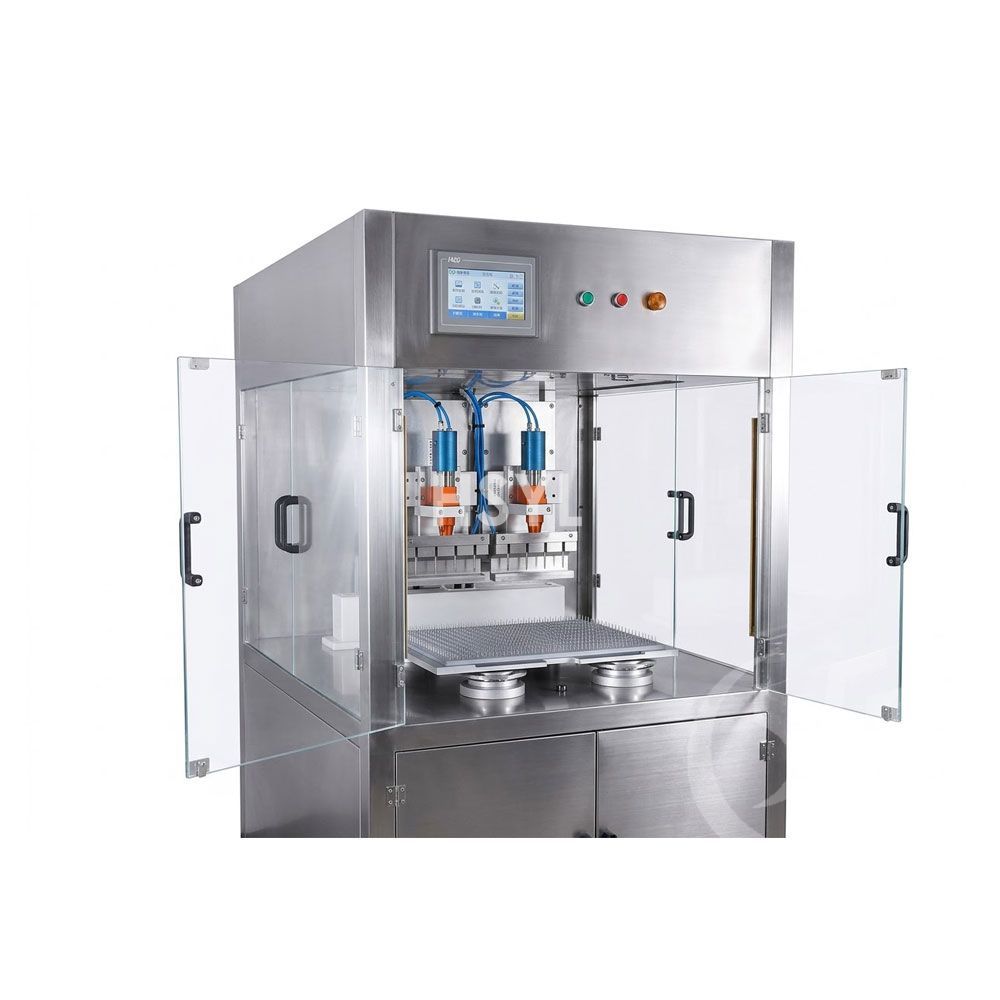 Machine de découpe ultrasonique pour biscuits et cookies
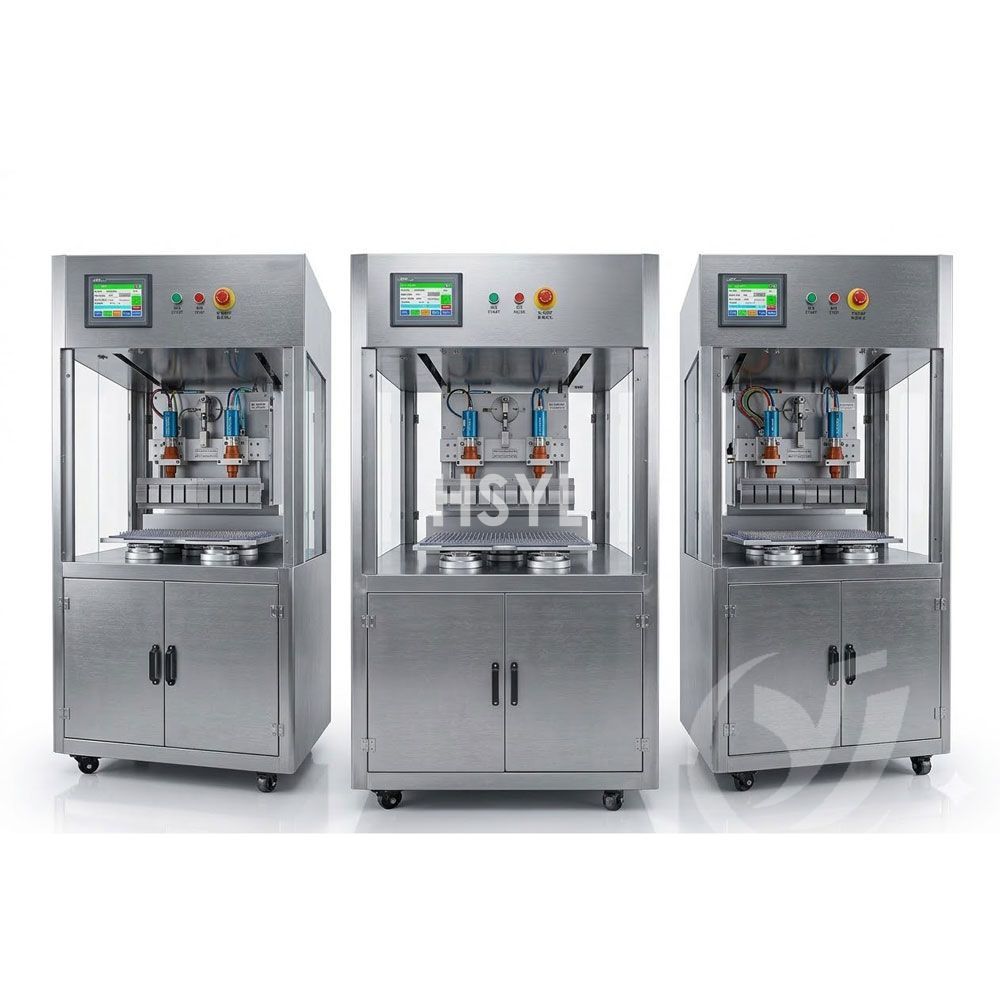 Machine de découpe automatique de confiseries par ultrasons pour boulangerie
Prêt à commencer ?