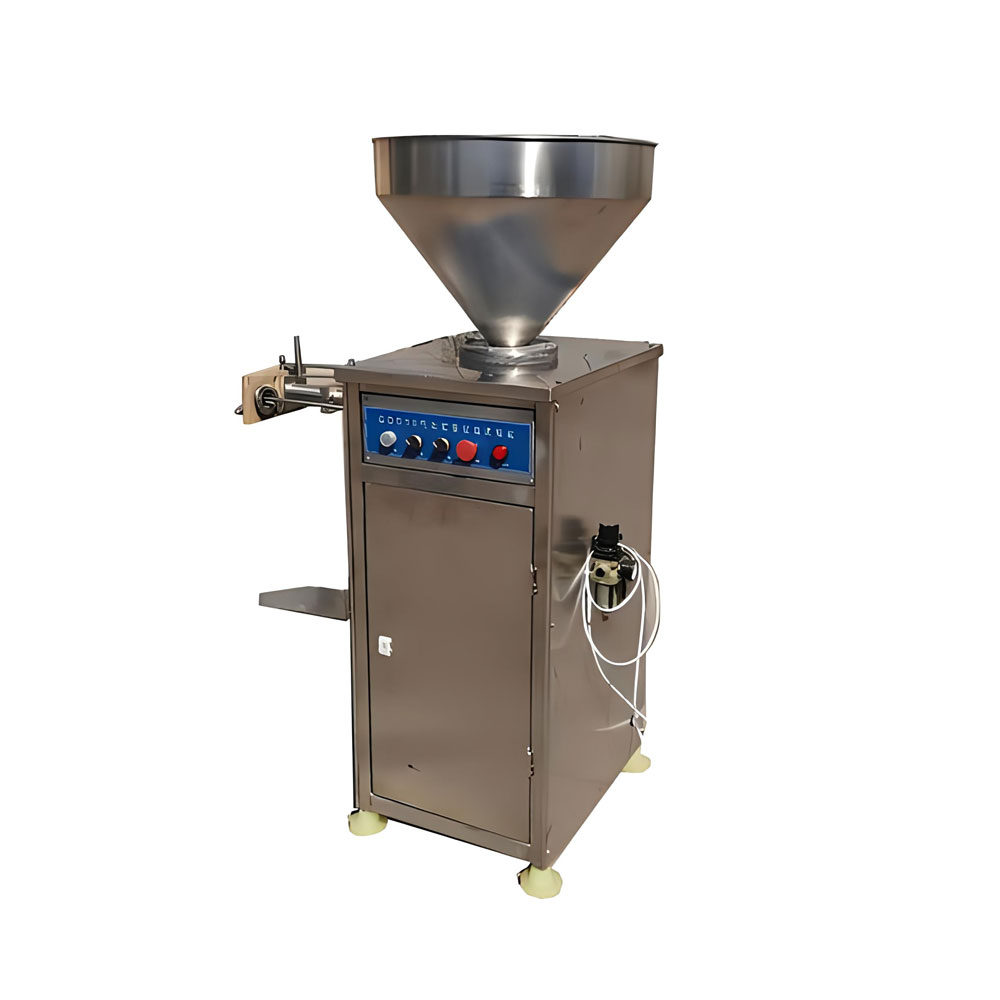
Quantitative Vacuum Sausage Filler
We Are Not Only Capable Of Selling Products, But Also Have The Ability To Undertake Full Turnkey Projects.

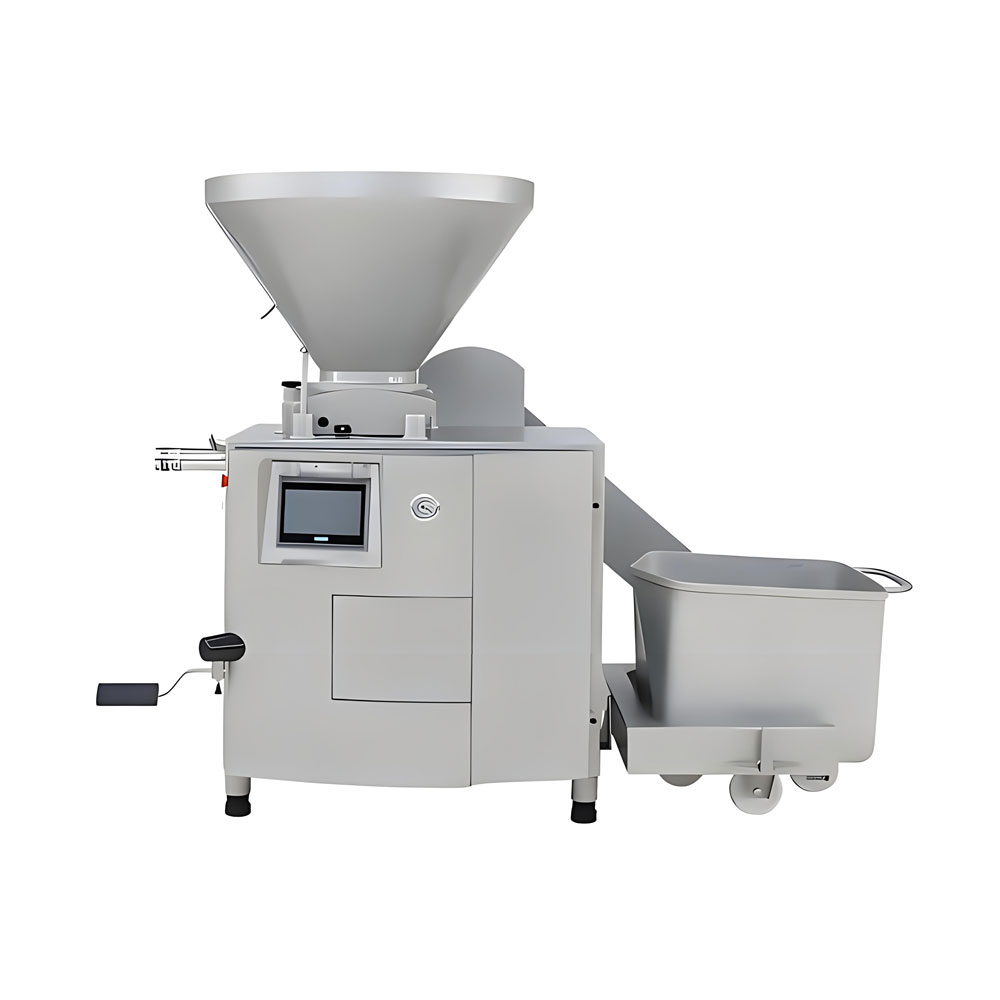
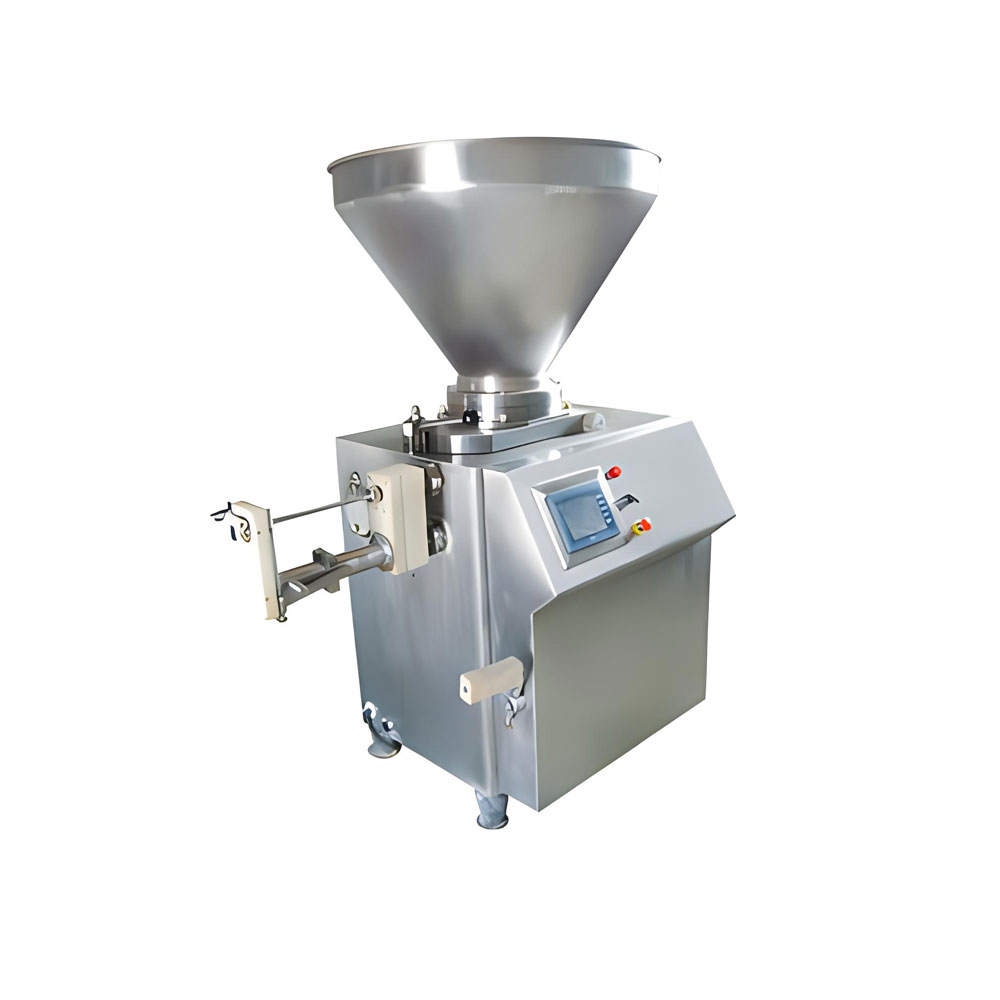
Trapped ambient air within meat emulsions accelerates lipid oxidation and creates visible cavities, actively degrading the physical integrity and maximum shelf life of cased products. Our industrial quantitative vacuum sausage filler relies on a calibrated vane cell feed system, operating under a continuous negative pressure environment (-0.09 MPa), to extract microscopic air bubbles from viscous batter prior to extrusion. Designed specifically to hit strict product giveaway parameters, this equipment ensures pinpoint weight control across synthetic, collagen, and natural casings.
| Specification | Parameter |
|---|---|
| Maximum Throughput | 3,500 kg/h (Dependent on batter viscosity and casing diameter) |
| Portioning Pace | Up to 600 portions/minute (At standard 50g reference weight) |
| Portion Weight Parameter | Programable from 5g up to 99,999g |
| Hopper Capacity | 250 Liters (Includes structural safety step for operators) |
| Total Power Consumption | 5.5 KW (Includes servo drive and independent vacuum pump) |
| Vacuum Operational State | Max -0.09 MPa (Flow capacity 20 cubic meters/hour) |
| Machine Frame Weight | 680 kg |
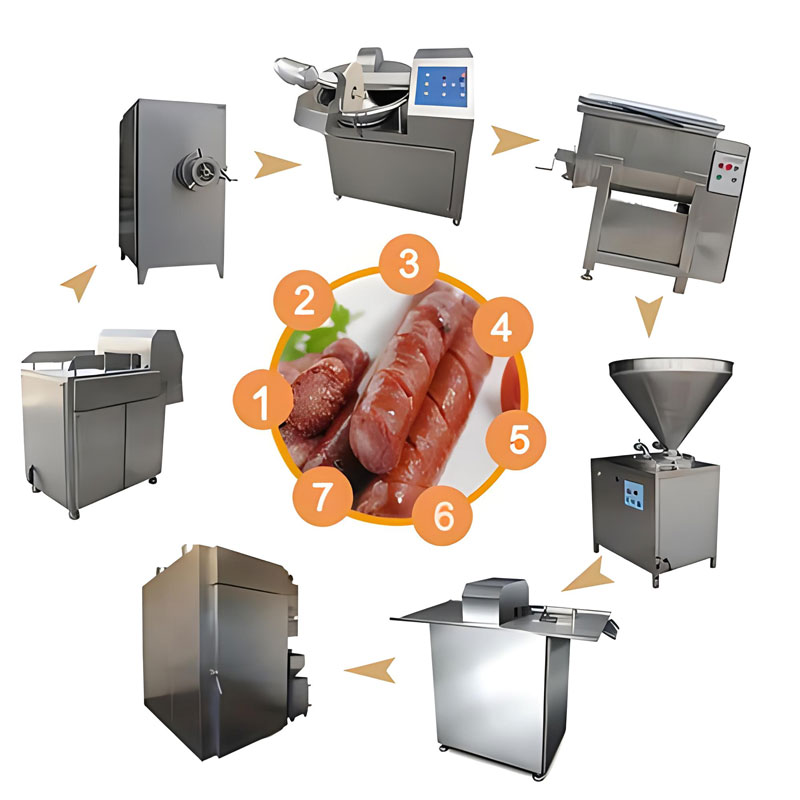
In high-capacity manufacturing, unpredictable product weights lead to packaging rejection and systemic financial losses. By sealing the meat paste within an air-tight extraction chamber, the machine forcefully evacuates existing atmospheric gases. This critical deaeration phase condenses the paste, yielding a completely uniform specific gravity throughout the mixture. Consequently, the volumetric measurement executed by the rotary mechanism translates into perfectly static weight parameters. If the raw material is initially processed by a high-shear emulsifier like the Model 330 Frequency Conversion High Speed Chopper, transferring it directly to this vacuum filler locks in the color stability and prevents the structural emulsion breakdown that normally occurs from secondary oxygen exposure.
The control architecture centers around an industrial touchscreen HMI that allows the plant supervisor to input exact grammage targets, adjust the twist-linker speed, and configure the vacuum draw threshold. Up to 99 distinct product recipes can be stored internally for rapid SKU changeovers.
Mechanical extrusion friction is the primary cause of fat smearing in salami and coarse-ground bratwurst. Rather than using aggressive twin-screw augers that crush cellular walls, this filler operates on an advanced vane cell pump mechanism. Driven by a dedicated low-inertia AC servo motor, the cell segments expand to gently pull the batter from the hopper, then contract to push the material out toward the linking horn.
Because the internal clearances between the hardened steel rotor and the stators measure less than 0.05mm, backflow is almost entirely prevented. The entire pumping block is CNC milled from high-density stainless steel to handle the extreme abrasive wear of processing frozen meat flakes or hard fat inclusions without significant physical degradation over years of heavy usage.
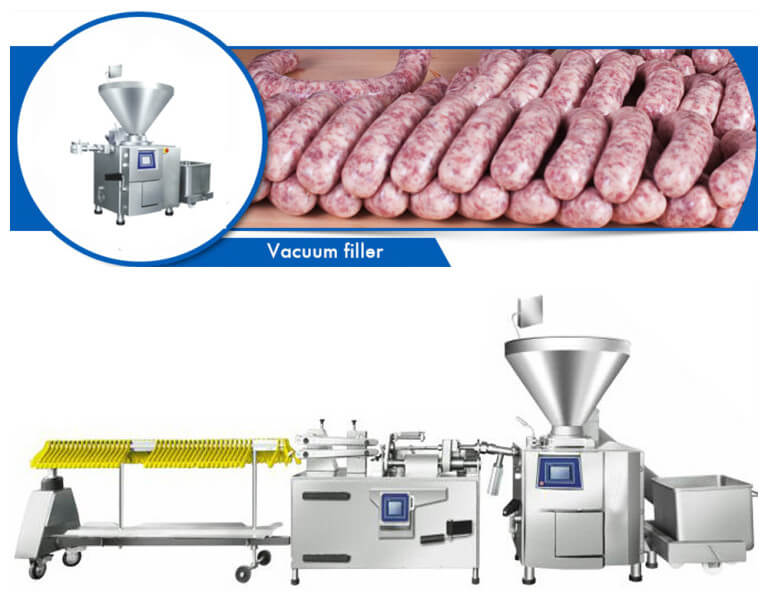
Stand-alone stuffing is insufficient for modern high-speed casing lines. This vacuum filler features universal digital communication ports designed to synchronize its output pulse with peripheral automation gear, including semi-automatic clippers, high-speed twisting lines, and casing hanging systems. It essentially serves as the central pacing module that dictates the speed of the entire automatic meat processing line. When integrated accurately, a single operator can oversee the filling, twisting, and hanging sequence without touching the physical product.
Meeting the intense daily sanitation requirements of the meat processing sector mandates robust engineering choices. We execute the frame and all contact components entirely in acid-resistant SUS304 steel. The housing utilizes sloped surfaces to ensure complete liquid runoff during the foam-and-rinse cycles. The electrical cabinet achieves a certified IP65 water ingress rating, utilizing dual-gasket seals to protect the sensitive servo drives from 80°C high-pressure water jets and aggressive sanitizing chemicals. Furthermore, the quick-release mechanism allows the night sanitation crew to dismantle the hopper feed spiral and the complete vane cell pump block in under 120 seconds without specialized hand tools.
To evaluate the exact ROI this equipment can generate by reducing your current casing giveaway percentage, share your target production volume and product weight tolerances with our engineering analysis division.
Must-read blogs for bosses