Stuffed Meatball Machine
We Are Not Only Capable Of Selling Products, But Also Have The Ability To Undertake Full Turnkey Projects.

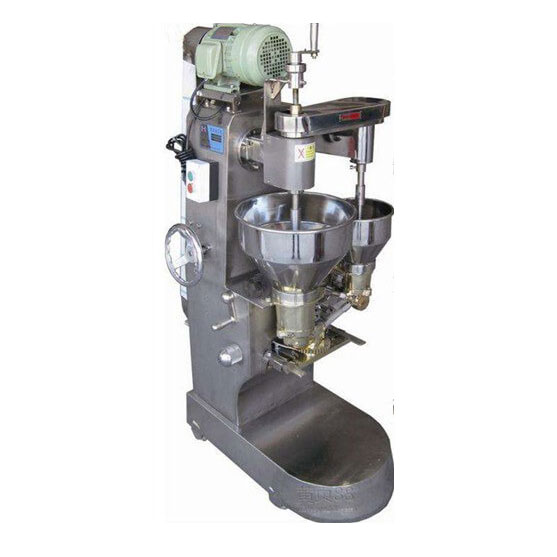
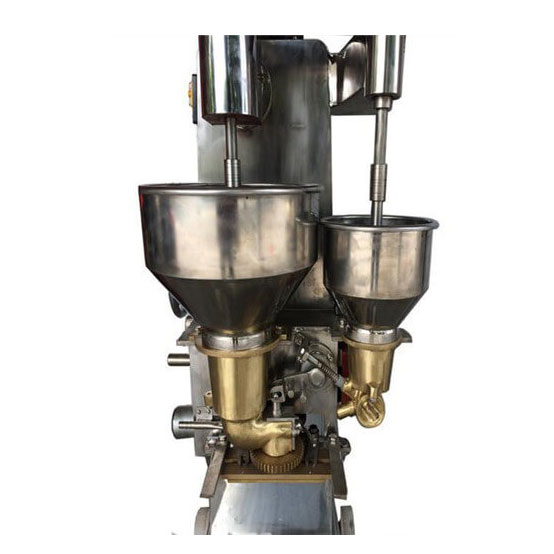
The SBM-120 Stuffed Meatball Machine is a dual-hopper co-extrusion system that continuously produces spherical meatballs with precisely centered internal fillings. Cheese cubes, molten sauce, egg yolk paste, secondary protein blends, vegetable mixtures — the machine encapsulates virtually any pumpable or semi-solid filling inside a uniform meat shell at sustained rates of 60 to 120 pieces per minute. In the premium frozen food sector, stuffed meatballs command retail prices 40 to 60 percent higher than solid equivalents. Achieving this margin at industrial scale, however, demands a forming technology that delivers absolute consistency: every single ball must contain the correct fill-to-shell weight ratio with the core geometrically centered. Off-center filling migrates to the surface during cooking, bursting the shell and destroying the product. The SBM-120 eliminates this failure mode through a coaxial extrusion nozzle that physically constrains the filling stream inside the meat stream at the molecular forming point.
| Engineering Parameter | Technical Specification |
|---|---|
| Model Nomenclature | SBM-120 |
| Output Rate | 60 - 120 pieces/minute |
| Product Weight Range | 15 g - 80 g per piece |
| Product Diameter Range | 20 mm - 50 mm |
| Weight Accuracy | +/- 1.0 g |
| Shell-to-Filling Ratio | Adjustable from 80:20 to 50:50 |
| Outer Hopper Capacity | 60 Liters |
| Inner Hopper Capacity | 40 Liters |
| Total Drive Power | 4.5 KW |
| Construction | SUS304 Frame / SUS316L Contact / Teflon Nozzle |
| Machine Dimensions (L x W x H) | 1500 x 900 x 1700 mm |
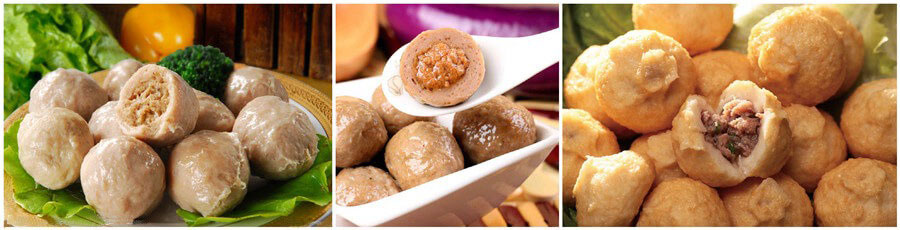
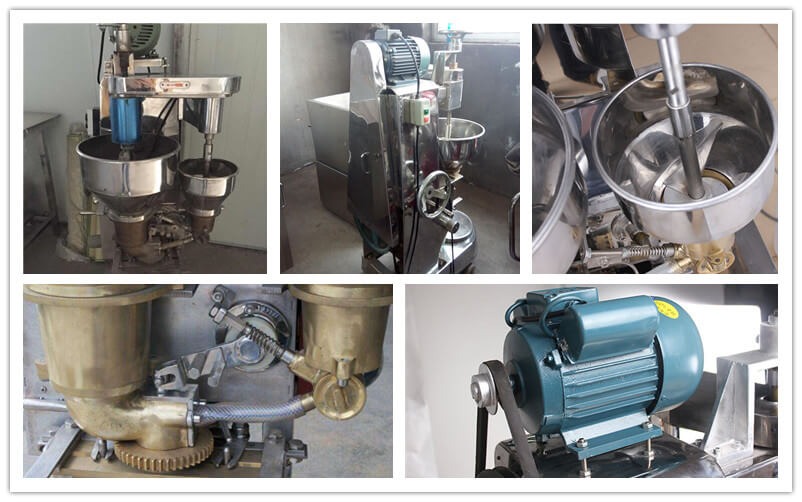
The forming head is the intellectual core of this machine. Two independent screw pumps simultaneously deliver the outer meat emulsion and the inner filling material into a single coaxial nozzle assembly. The outer pump feeds the meat stream into an annular ring channel. The inner pump feeds the filling through a concentric tube positioned precisely at the geometric center of that ring. As both streams exit the nozzle tip simultaneously, the filling is physically surrounded on all sides by the meat shell in a continuous coaxial rope.
A synchronized rotary cutting mechanism positioned directly below the nozzle then pinches and severs this dual-layer rope at programmed intervals, forming individual spheres. The pinch action simultaneously seals the meat shell closed around the filling, trapping the core inside a hermetically enclosed pocket. Because the filling never contacts the exterior environment after encapsulation, there is zero leakage risk during subsequent cooking, frying, or steaming.
The dual-hopper architecture accepts an extremely broad range of food matrices. The outer hopper processes any material with sufficient binding cohesion to form a self-supporting shell: beef emulsion, chicken mince, pork paste, fish surimi, or plant-based protein blends. The inner hopper handles fillings across a wide viscosity spectrum.
Upstream meat preparation typically relies on a commercial bowl cutter to produce the fine emulsion required for a smooth, cohesive outer shell. Coarser ground meat from a standard grinder can also be used for rustic textured products.
Formed stuffed meatballs discharge from the rotary cutter onto a lightly oiled takeaway belt. From this point, the production pathway diverges based on the end product format. For frozen retail products, the belt feeds directly into an IQF spiral freezer, rapidly locking the filling in place before it can migrate or leak. For fresh foodservice distribution, the belt routes into a steam cooking tunnel or oil fryer for immediate thermal processing. In diversified meat processing facilities, the SBM-120 operates as a specialized forming station within broader meat processing equipment solutions, sharing upstream grinding and blending infrastructure with patty, sausage, and nugget lines running in parallel.
Processing raw meat emulsions through precision coaxial channels demands rigorous end-of-shift sanitation. The SBM-120 is engineered for complete disassembly of all product-contact pathways within 20 minutes. Both hopper assemblies lift off on guide rails. The screw pump housings open on hinged lids, exposing the auger flights for direct scrubbing. The coaxial nozzle separates into its inner tube, outer ring, and cutting head components without tools. All components are fabricated from SUS316L or food-grade Teflon-coated aluminum, fully compatible with 85 degree Celsius hot water sanitation and standard quaternary ammonium sanitizers. The Teflon coating on the nozzle inner surfaces serves dual duty: preventing meat adhesion during production and facilitating rapid post-shift cleaning by eliminating protein buildup in the critical forming zone.
To request a forming trial using your specific meat formulation and filling recipe, obtain a quotation with custom nozzle specifications, or receive a complete production line layout integrating the SBM-120 with upstream grinding and downstream freezing equipment, please contact our forming technology engineering team. We provide full Turnkey stuffed product modules with global commissioning and recipe development support.
Must-read blogs for bosses