Chicken Feet Cutting Machine
We Are Not Only Capable Of Selling Products, But Also Have The Ability To Undertake Full Turnkey Projects.

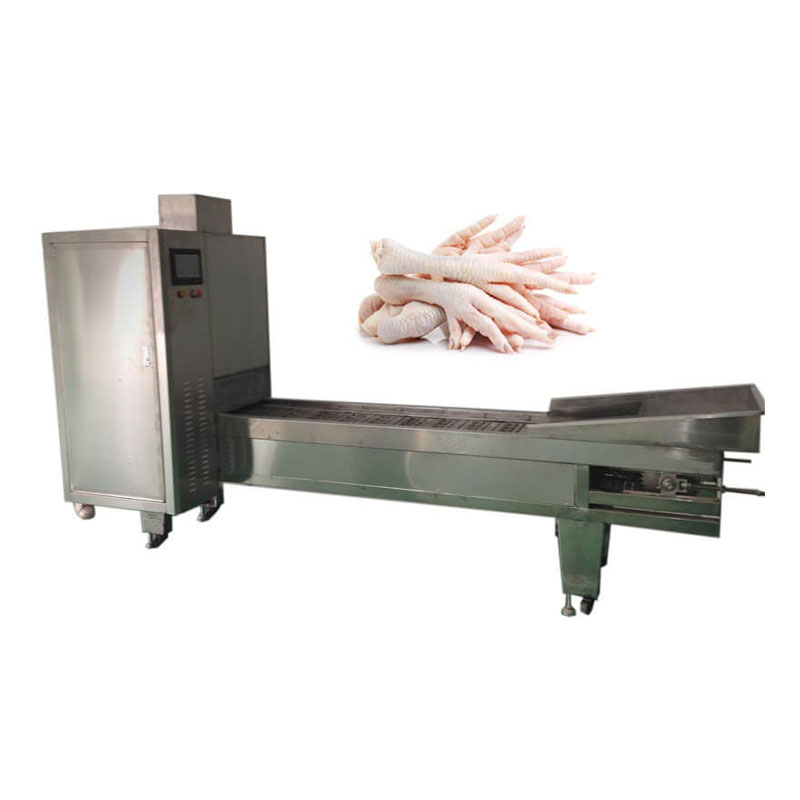
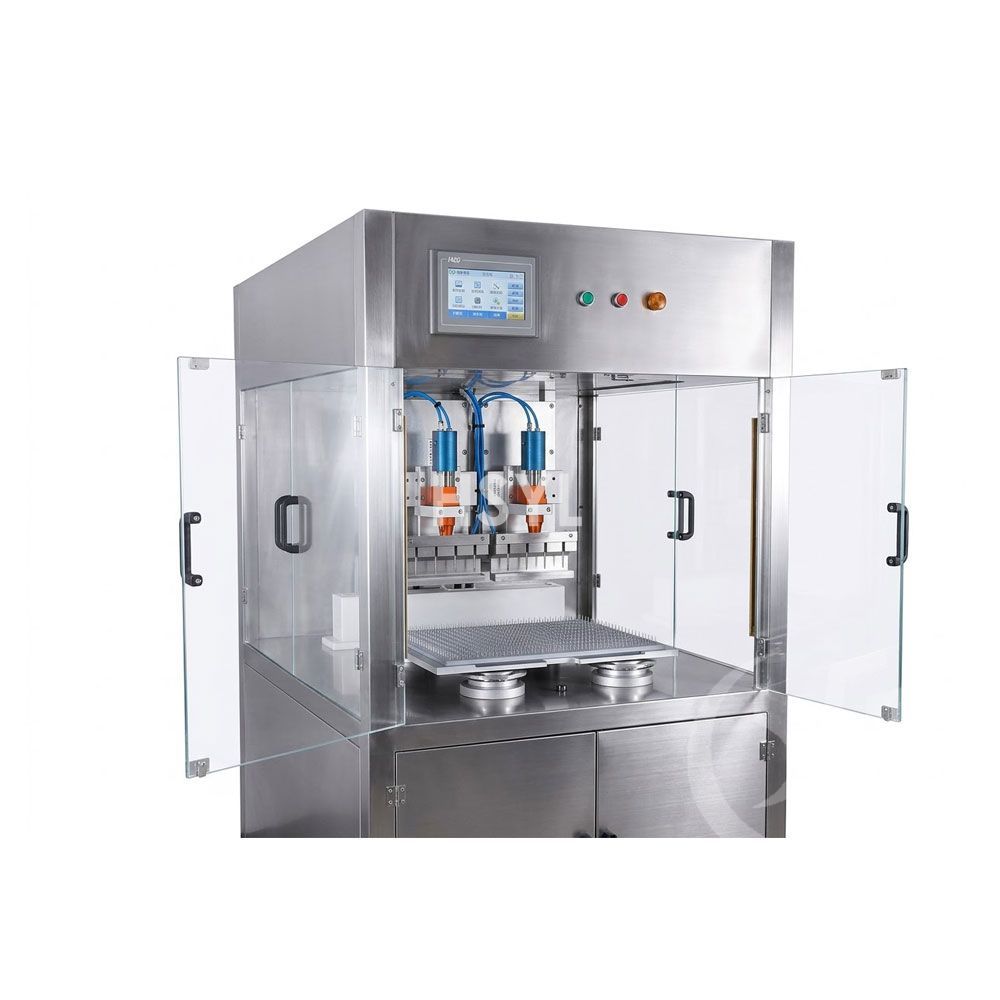
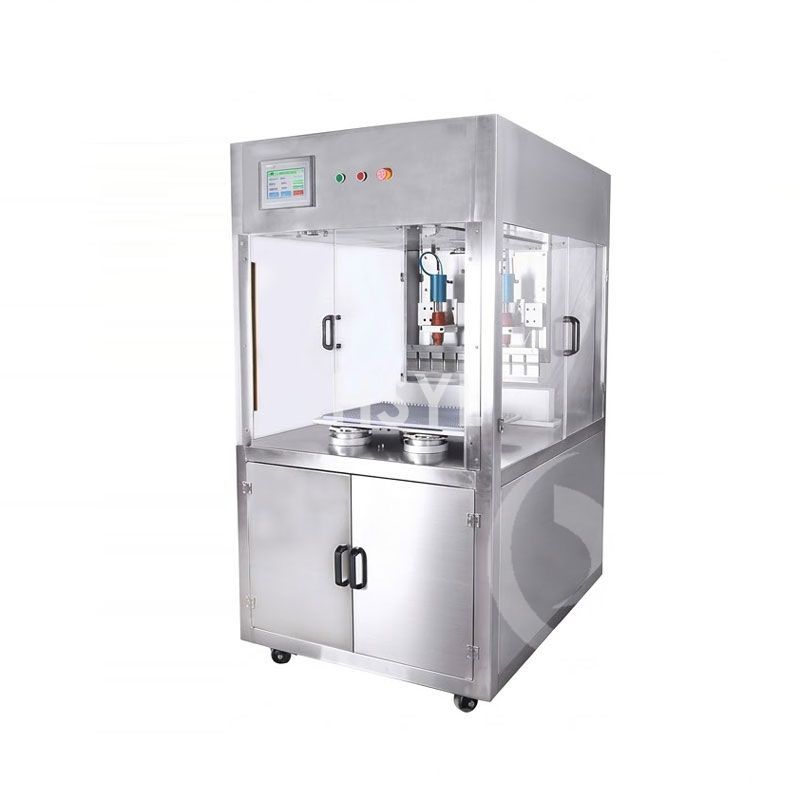
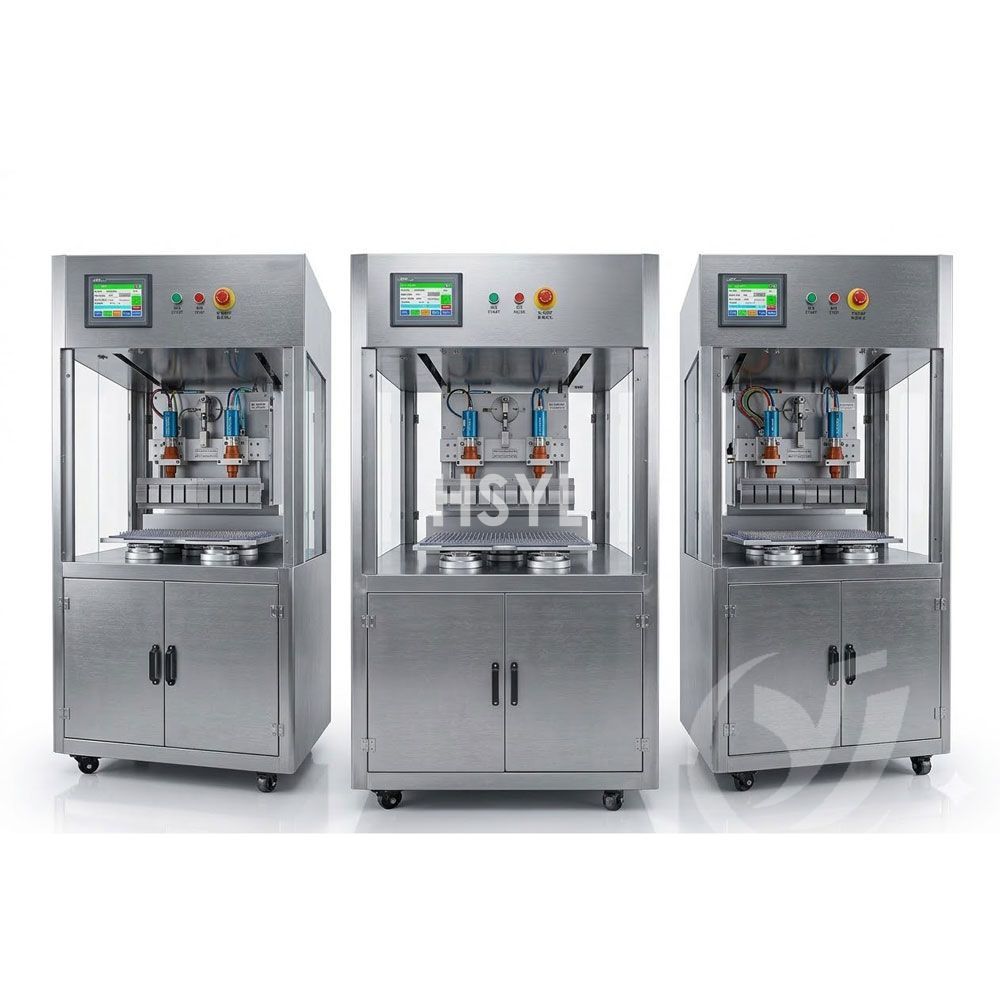
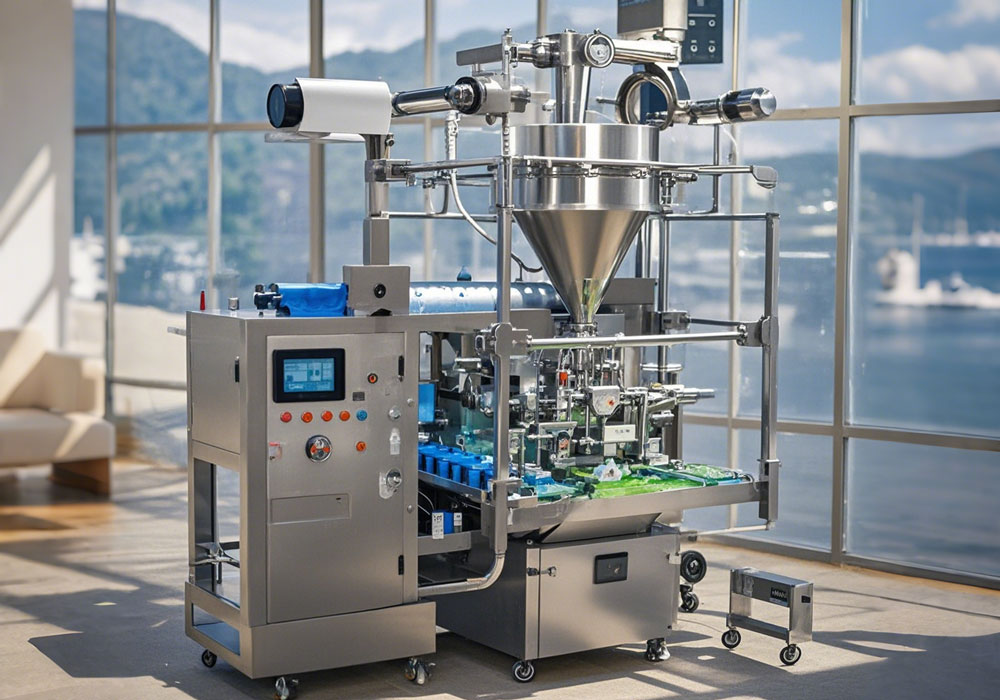
The HCM-6000 Chicken Feet Cutting Machine is an inline, shackle-mounted rotary cutter that automatically severs chicken feet from the carcass at the tarsometatarsal hock joint. Operating at line speeds of up to 6000 birds per hour, the machine replaces the labor-intensive and inconsistent manual knife-cutting station that traditionally bottlenecks high-speed kill floors. The commercial significance of cutting accuracy at this specific anatomical point cannot be overstated. Cutting too high wastes valuable drumstick meat on the discarded paw. Cutting too low leaves an excessively short paw stump that buyers in premium export markets uniformly reject. The HCM-6000 delivers repeatable, millimeter-precise joint severance that simultaneously maximizes both the carcass drumstick yield and the harvested paw commercial length.
| Engineering Parameter | Technical Specification |
|---|---|
| Model Nomenclature | HCM-6000 |
| Maximum Line Speed | 6000 BPH (Birds Per Hour) |
| Applicable Bird Weight | 1.0 - 3.8 kg Live Weight |
| Cutting Mechanism | Rotary Disc (Continuous) |
| Blade Material | Hardened SUS420 Stainless Alloy |
| Blade Diameter | 250 mm |
| Drive Motor | 1.5 KW / 3-Phase |
| Blade Speed | 1400 RPM |
| Height Adjustment Range | 150 mm (Manual Handwheel) |
| Construction Material | SUS304 Frame / SUS420 Blade |
| Machine Dimensions (L x W x H) | 600 x 450 x 850 mm (Excluding Mounting) |
| Net Weight | 75 kg |
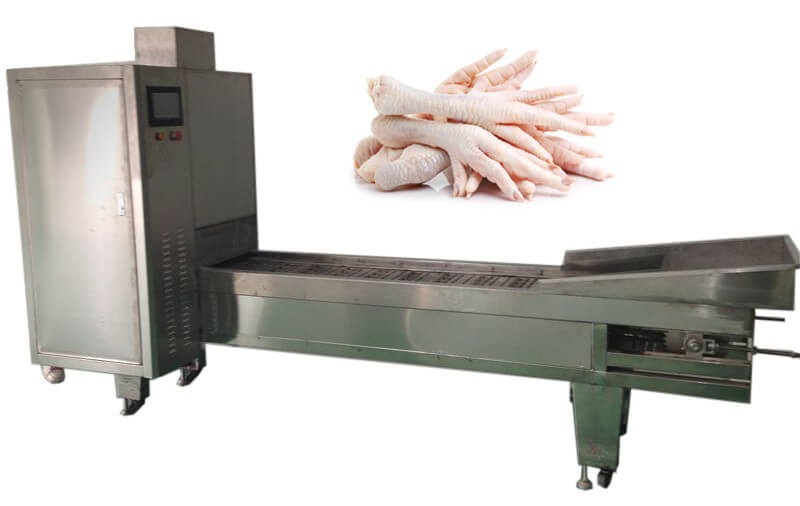
The hock joint on a broiler chicken is a narrow cartilaginous gap between the tibiotarsus (drumstick bone) and the tarsometatarsus (paw bone). This gap measures approximately 3 to 5 mm wide on a standard 2 kg broiler. A blade entering this cartilage window passes through with minimal resistance, producing a clean separation with no bone splinters. A blade striking even 5 mm above or below this gap impacts solid calcified bone, generating sharp fragments that contaminate both the drumstick and the paw, triggering USDA foreign material inspection failures.
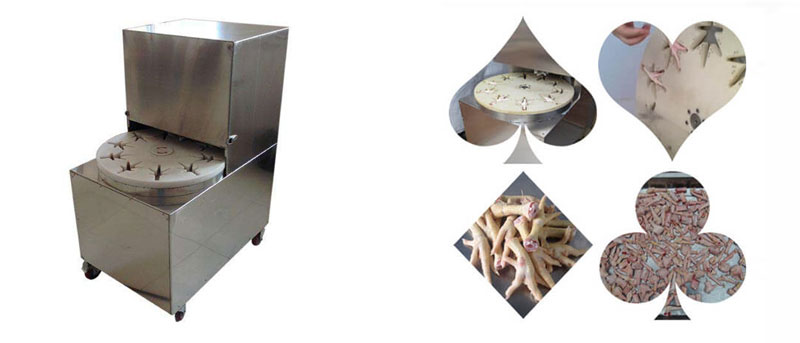
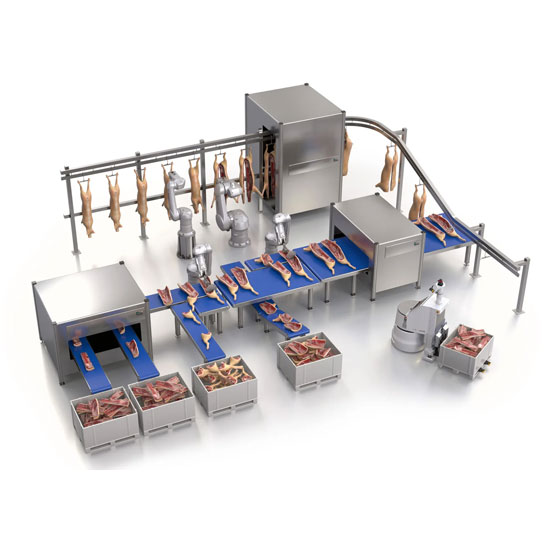
After severance, the two product streams physically separate by gravity. The defeathered carcass remains suspended on the overhead shackle and continues traveling forward into the evisceration department. The severed feet fall freely downward through a stainless steel collection chute positioned directly beneath the blade. This chute routes the raw paws via gravity into a receiving bin, a transfer conveyor, or directly into a scalding tank feeding a downstream chicken feet peeling system. Facilities operating integrated chicken production line architectures position the HCM-6000 as the critical bifurcation point where the primary carcass processing pathway and the secondary paw valorization pathway permanently diverge.
Modern broiler operations frequently process flocks with significant weight variation within a single production shift. A batch of 1.5 kg birds followed immediately by 3.0 kg birds presents a 40 mm difference in hock joint elevation relative to the shackle suspension point. The HCM-6000 addresses this through its 150 mm vertical adjustment range. For operations with extreme weight variability, an optional pneumatic auto-height actuator is available. This upgrade reads a signal from an upstream weighing station on the shackle line and automatically repositions the blade assembly between consecutive birds in under 0.3 seconds, eliminating any manual intervention during mixed-flock processing. This adaptive capability aligns with the broader automation philosophy maintained across our poultry processing line equipment portfolio.
A 250 mm disc rotating at 1400 RPM represents a severe laceration hazard. The HCM-6000 encases the blade within a full SUS304 guard housing that exposes only the narrow 30 mm cutting arc where the bird legs make contact. An electromagnetic interlock sensor on the guard panel instantly kills the motor if the housing is opened during operation. The blade itself is accessed for sharpening or replacement only after the guard is unbolted and the motor circuit physically isolated via a lockout/tagout disconnect switch mounted on the frame. Under standard continuous production conditions processing 2 kg broilers, the hardened SUS420 blade maintains its factory cutting edge for approximately 3 to 4 weeks of single-shift operation before requiring bench grinding.
Must-read blogs for bosses