Fish Deboner Machine
We Are Not Only Capable Of Selling Products, But Also Have The Ability To Undertake Full Turnkey Projects.

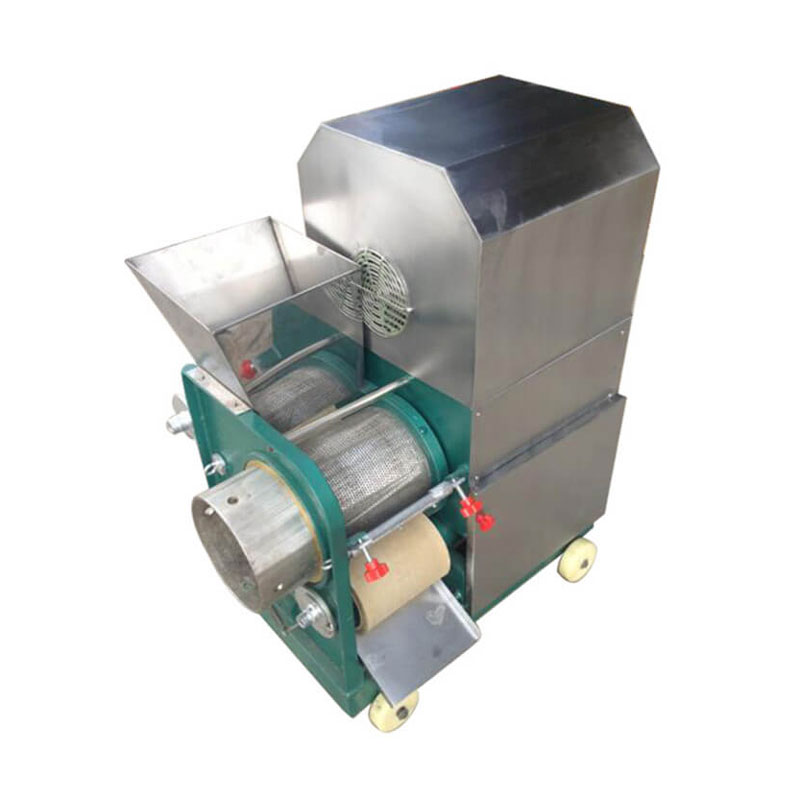
The FDB-500 Fish Deboner Machine mechanically separates edible flesh from skeletal structures, pin bones, and tough connective cartilage. Purpose-built for surimi manufacturers, fish cake factories, and frozen seafood processors, this drum-type bone separator recovers up to 92 percent of available muscle protein from headless, gutted fish frames that would otherwise be discarded as low-value processing waste. The extracted mince exits the machine at a consistently fine, uniform particle structure suitable for direct blending into surimi base, fish paste emulsions, or restructured seafood products without requiring secondary grinding.
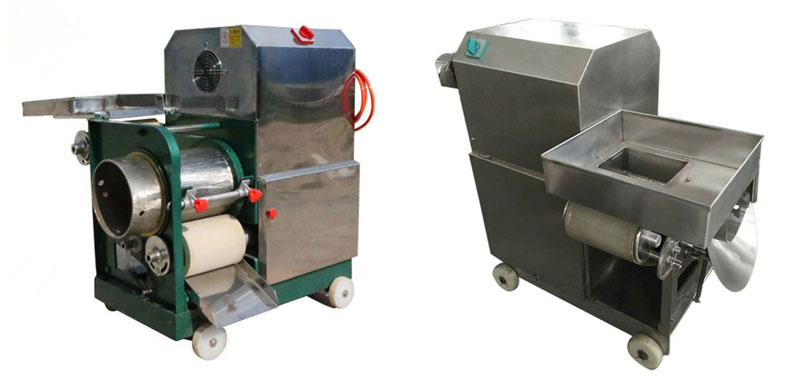
The fundamental engineering challenge in mechanical fish deboning is separating soft protein from rigid calcified bone without generating frictional heat that denatures the myofibrillar proteins critical to surimi gel strength. The FDB-500 addresses this through controlled compression dynamics rather than high-speed impact.
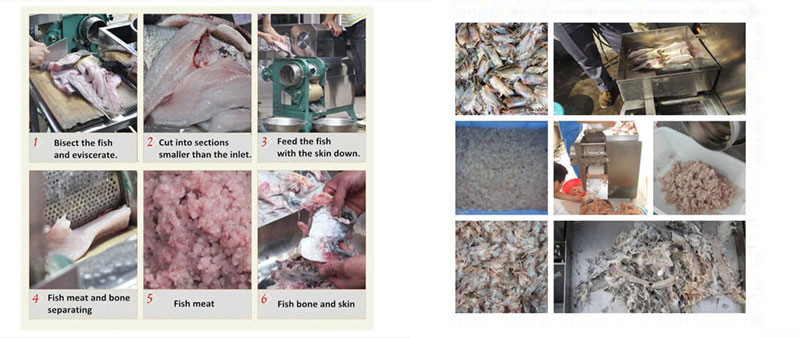
Raw fish frames are gravity-fed into a wide stainless hopper. A food-grade silicone endless belt presses the material firmly against the outer surface of a slowly rotating perforated SUS316L drum. The calibrated belt tension, adjustable via a pneumatic cylinder from 0.2 to 0.8 MPa, forces the soft flesh through the precision-drilled apertures into the drum interior. Bones, scales, and cartilage fragments physically cannot pass through the holes. They ride along the exterior surface and are continuously scraped off by a fixed stainless doctor blade into a separate waste discharge chute.
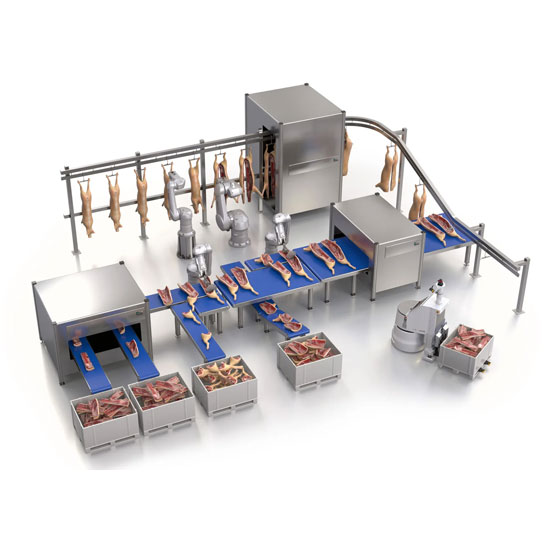
After primary filleting, a significant percentage of usable protein remains attached to the skeletal frame. In facilities operating high-speed automatic fish filleting machine systems, the volume of residual frames generated hourly is substantial. Routing these frames directly into the FDB-500 transforms a waste stream into a profitable secondary product line. A single 8-hour shift processing 4 tons of Tilapia frames, for instance, yields approximately 3.5 tons of high-quality minced flesh, which commands considerably more market value than rendering the same frames into low-grade fishmeal.
Because extracted fish mince is extremely perishable and temperature-sensitive, the FDB-500 must operate within a tightly controlled cold environment. The discharged mince falls directly from the drum interior into a chilled stainless collection tray, which can be immediately transported to washing and refining tanks for surimi production. In broader factory configurations, the deboner serves as the critical intermediate node between the primary cutting department and downstream forming equipment used in complete fish processing line architectures. The discharge height of 650 mm is specifically calibrated to match standard industrial screw conveyors and pump-feed hoppers.
Processing raw seafood generates extreme biological contamination loads. The FDB-500 is designed for complete tool-free disassembly within 15 minutes. The silicone back-pressure belt, the perforated drum, the doctor blade, and the internal collection tray all detach via quick-release locking handles, allowing sanitation crews to individually soak and scrub every product-contact component. The main chassis features fully welded radius corners with zero horizontal ledges, preventing the accumulation of fish residue in hidden cavities. An integrated CIP (Clean-In-Place) spray nozzle set is available as a factory option for facilities requiring automated internal rinsing between species changeovers.
Must-read blogs for bosses