Fish Scaler Machine
We Are Not Only Capable Of Selling Products, But Also Have The Ability To Undertake Full Turnkey Projects.

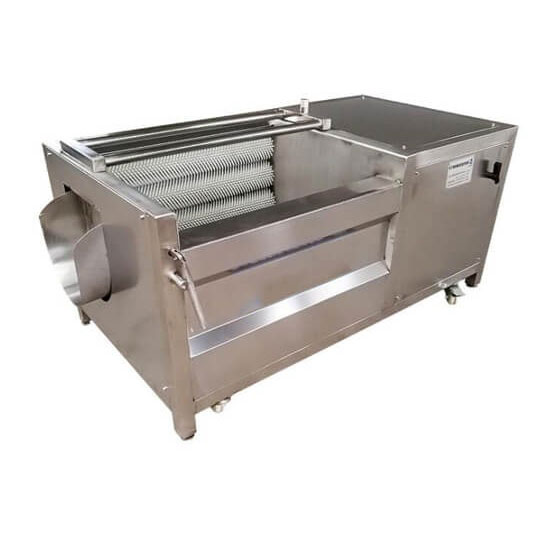
The RDS-800 Fish Scaler Machine employs rotary drum mechanics to strip scales from whole round fish at industrial velocities without compromising the structural integrity of the underlying skin. In aquaculture processing facilities and fresh-market fish plants where skin-on fillets command a significant retail premium, preserving an unblemished, smooth skin surface is not optional. Manual hand-scaling with traditional scrapers damages an average of 12 to 15 percent of fish skin per batch. The RDS-800 reduces that figure to under 1 percent through controlled mechanical tumbling action, processing continuous loads of 600 to 800 kg per hour with a single operator supervising the infeed hopper.
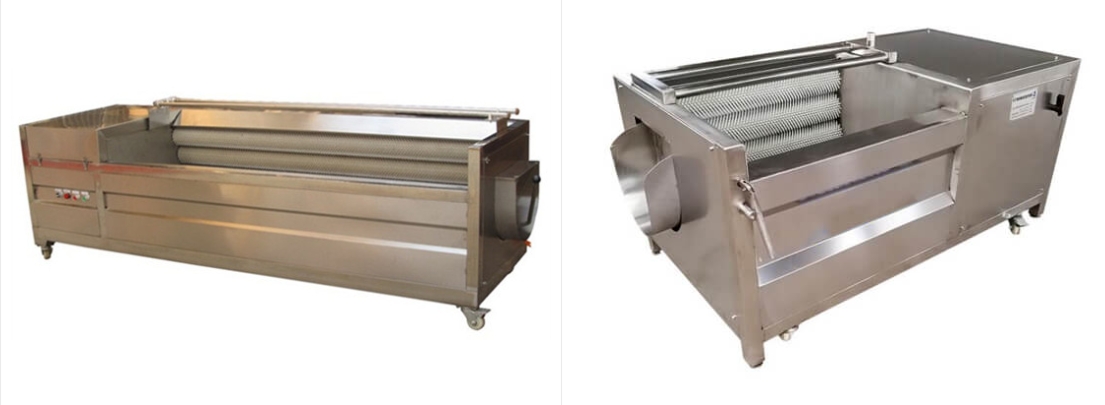
| Engineering Parameter | Technical Specification |
|---|---|
| Model Nomenclature | RDS-800 |
| Processing Capacity | 600 - 800 kg/h |
| Drum Internal Diameter | 600 mm |
| Drum Effective Length | 1800 mm |
| Drive Motor | 2.2 KW (Variable Speed) |
| Drum Rotation Speed | 18 - 35 RPM (VFD Adjustable) |
| Water Consumption | 2.0 cubic meters/hour |
| Construction Material | SUS304 Frame & Perforated Drum |
| External Dimensions (L x W x H) | 2400 x 900 x 1300 mm |
| Net Weight | 380 kg |
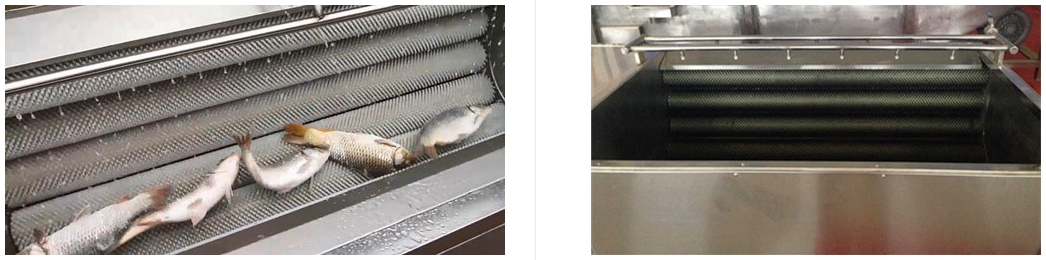
Conventional rotary scalers rely on abrasive metal surfaces that gouge fish skin at high contact pressures. The RDS-800 fundamentally replaces metal friction with elastomeric impact dynamics. Hundreds of molded food-grade rubber fingers are bolted in a staggered helical pattern across the inner drum wall. As the barrel rotates, individual fish tumble freely through the chamber. Each rubber finger contacts the scale surface at a precisely calculated deflection angle, catching the trailing edge of the scale and snapping it away from the dermal layer without penetrating the collagen matrix beneath.
Different fish species present wildly different scaling challenges. Tilapia scales are large, firmly anchored, and require aggressive mechanical energy. Seabass scales are small, brittle, and dislodge under moderate contact. Salmon scales sit flat against oily skin and resist conventional scraping entirely. The RDS-800 accommodates this biological variability through the VFD speed control combined with adjustable drum inclination. By raising or lowering the discharge end via a manual screw jack mechanism, operators control the residence time of fish inside the barrel. A steeper angle accelerates transit for easy-to-scale species; a shallower angle extends tumbling duration for stubborn, deeply embedded scales. This mechanical flexibility positions the scaler as a versatile upstream component in broader fish processing line configurations handling mixed-species aquaculture harvests.
The discharge chute of the RDS-800 is positioned at 750 mm elevation, matching the standard intake height of gutting tables and filleting conveyors. In a typical production workflow, whole fish are received from ice storage, loaded into the scaler hopper, tumbled through the descaling drum, and discharged directly onto an inspection table. Workers perform a rapid visual quality check before routing the scaled fish into the next processing stage. Facilities producing skin-on fillets frequently feed the output directly into an automatic fish filleting machine, where the preserved, undamaged skin becomes the premium visual selling point of the final retail package.
Fish scale residue contains high concentrations of guanine and collagen, both of which form tenacious biofilms when allowed to dry. The open-barrel architecture of the RDS-800 facilitates rapid post-shift cleaning. With the motor running at low speed, sanitation crews direct high-pressure water through the overhead manifold and simultaneously spray the exterior drum surface. The centrifugal force generated by the rotating barrel actively flings residual organic material outward through the perforations. Individual rubber fingers are secured by threaded SUS304 studs and can be replaced in under 90 seconds per unit without specialized tooling. A full 800-finger replacement set is included standard with every machine shipment to cover the first 12 months of operational wear.
Must-read blogs for bosses