
Meat dicing machine setup for meat processing plants
The Crucial Role of Precision: Why Meat Processors Cannot Compromise on Dicing Machinery
In the fiercely competitive and heavily regulated meat processing industry, achieving operational excellence hinges on an uncompromising commitment to precision. Within the vast array of essential equipment, the meat dicing machine is a cornerstone, directly influencing product quality, output capacity, and ultimately, the bottom line. Selecting the right dicing apparatus is far more than a mere logistical task; it is a strategic necessity that underpins the entire efficiency of a processing operation. To settle for inferior quality or an unsuitable configuration for this critical piece of machinery is to invite inefficiency, inconsistency, and significant financial loss.
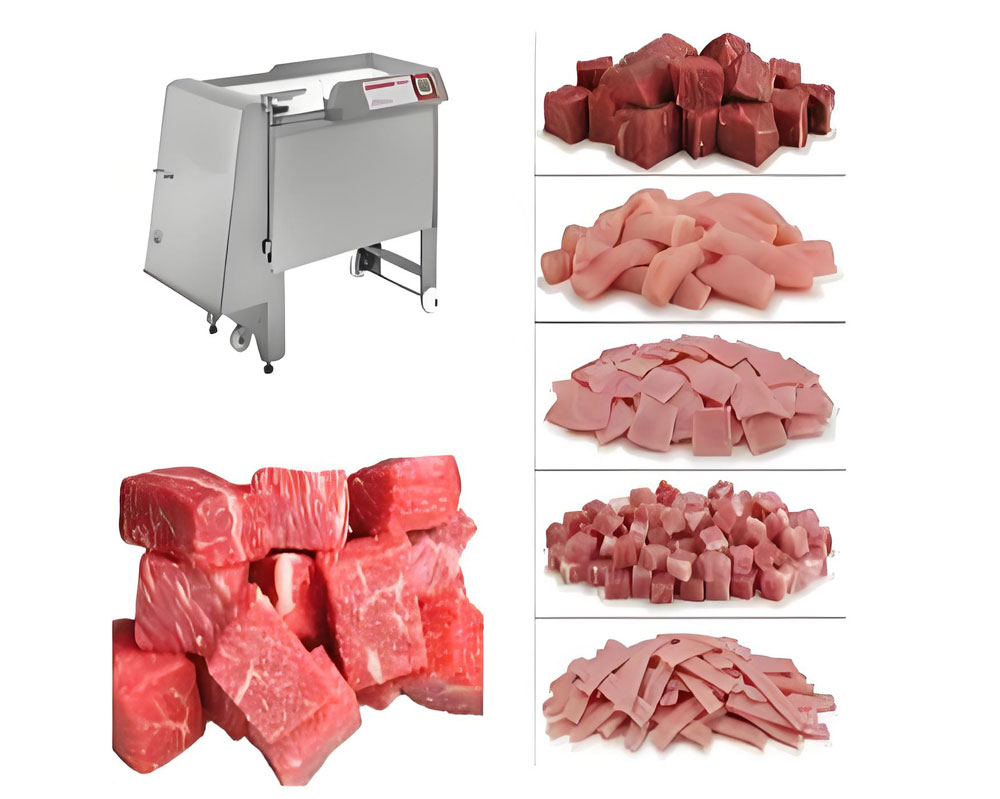
Maximising Efficiency and Consistency: The Comprehensive Advantages of Optimised Dicing
Selecting and implementing a high-quality dicing machine provides a wide range of advantages that benefit the entire meat processing workflow. Precision dicing goes beyond simple chopping; it ensures uniform product dimensions, which is essential for subsequent stages such as cooking, packaging, and plating. This level of consistency not only improves the visual appeal of the finished product but also guarantees predictable cooking times and yields, thereby reducing waste and making the most of available resources. Additionally, a high-performance dicing machine can significantly boost throughput, allowing processors to keep up with rising market demand without sacrificing quality. The shift from manual labour to automated dicing also lowers operational costs and reduces the risk of human error, creating a more productive and reliable production environment.
剖析 Dicer:驅動卓越性能的核心要素
Moderne kødhakkemaskiner er avancerede sammensætninger af integrerede komponenter, hvor hver del spiller en afgørende rolle for maskinens samlede ydeevne og effektivitet. For at kunne træffe kvalificerede beslutninger under indkøbsprocessen er det essentielt at forstå de enkelte deles funktion og det samspil, de indgår i. De vigtigste bestanddele består typisk af indføringsmekanismen, der fører råvaren ind i skærezonen; en enhed til forkomprimering, som sikrer en ensartet tæthed og orientering af produktet før hakning; selve skæreenheden, der består af knive og gitter, som bestemmer de endelige terningstørrelser; drivsystemet, som leverer den nødvendige kraft til skæreprocessen; samt et udløbsbånd, der transporterer de hakkede produkter ud af maskinen. Materialevalget og den tekniske konstruktion af hver enkelt komponent har direkte betydning for maskinens holdbarhed, hygiejnestandard og generelle levetid.
核心原理:深入了解肉类切碎机的切割机制
The cutting mechanism is the heart of any meat dicing machine, as its design directly determines the precision and quality of the finished product. There are several different systems available, each suited to specific tasks. The guillotine cutting system, which uses a reciprocating blade to slice through the meat block, is typically used for larger dice and firmer products. Alternatively, the rotary cutting system employs circular blades that intersect with a grid, offering higher throughput and the ability to produce a wider variety of cube sizes. Some high-end machines even combine pre-slicing and cross-cutting mechanisms to achieve more intricate cuts while minimising product deformation. Ultimately, choosing the right cutting mechanism depends on the specific type of meat being processed and the required characteristics of the final product.
驱动核心:深入探索电机与驱动系统
De motor en het aandrijfsysteem vormen de essentie van de complexe snijprocessen in een vleesblokjesmachine. Het is van cruciaal belang om een robuuste motor met het juiste vermogen te selecteren, zodat een constante prestatie wordt gegarandeerd onder wisselende belastingen. Moderne machines maken vaak gebruik van asynchrone motoren of servomotoren, die een nauwkeurige controle over de snijsnelheid en het koppel bieden. Het aandrijfsysteem, dat de kracht van de motor naar het snijmechanisme overbrengt, kan gebruikmaken van riemen, tandwielen of directe koppelingen. Bij het ontwerp van het aandrijfsysteem moet de prioriteit liggen bij efficiëntie, betrouwbaarheid en een minimale onderhoudsbehoefte. Daarnaast moeten zaken als energieverbruik en het geluidsniveau worden meegewogen in het selectieproces, om zo zowel de operationele efficiëntie als de veiligheidsprotocollen op de werkvloer te waarborgen.
Ensuring Product Integrity: The Role of Infeed and Outfeed Systems
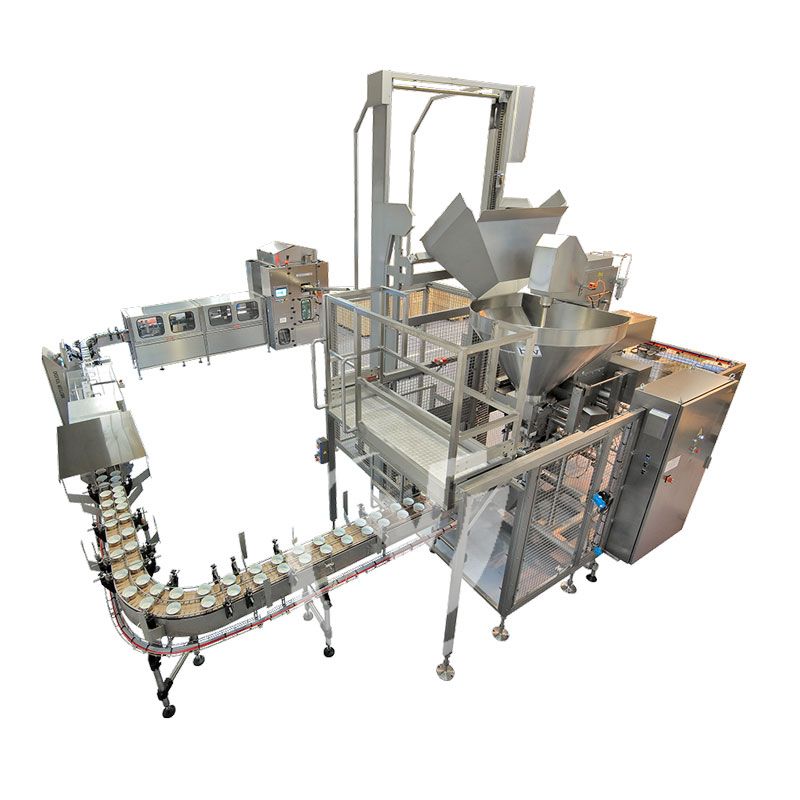
Whilst the cutting mechanism performs the fundamental task of dicing, the infeed and outfeed systems are just as vital for maintaining product integrity and ensuring a seamless workflow. The infeed system is responsible for delivering the meat product to the cutting mechanism in a controlled and consistent manner, preventing any damage or miscuts. This may involve the use of conveyor belts, hoppers, or specialised feeding devices tailored to the specific type and form of the meat. The outfeed system, typically a conveyor belt, facilitates the efficient removal of the diced product, often integrating directly with subsequent processing stages such as packaging or further preparation. The design and materials of these systems must adhere to stringent hygiene standards to prevent contamination and ensure the safety of the processed meat.
Een breed scala aan oplossingen: een gids voor de verschillende soorten vleesblokmachines
The meat processing industry is defined by a wide range of production scales and unique product specifications, which means there is a vast array of dicing machine configurations available. Whether you need a compact unit for a smaller business or a massive, high-capacity machine for large-scale industrial use, the market offers plenty of options. To ensure your investment truly meets the specific demands of your facility, it is vital to understand the subtle differences between each type of machinery.
The Backbone of the Industry: An In-depth Look at Standard Industrial Dicers
Standard industrial dicers are versatile, heavy-duty machines that are widely used throughout the meat processing industry. These units are designed to strike an ideal balance between high throughput, precision cutting, and operational flexibility. Capable of handling a broad range of meat types, they can be customised with various cutting grids and blade assemblies to produce a wide array of dice sizes. Most standard models also feature adjustable cutting speeds and safety interlocks, providing a reliable and adaptable solution for diverse processing requirements. Built for durability and ease of maintenance, these machines are engineered to ensure a long service life, even under the most demanding production conditions.
High-volume demand: A guide to large-capacity dicing solutions
对于生产规模庞大的加工厂而言,必须配备能够高效、连续处理海量肉类的切丁解决方案。大容量切丁机专为满足这些严苛需求而设计,通常配备更宽的进料与出料输送带、动力更强的驱动系统,并能以更高的切割频率运行。这些机器通常集成在自动化生产线中,有助于实现流程简化并大幅提升生产效率。凭借其坚固的结构设计与精密的工程技术,这些设备能够长时间稳定运行且极少停机,是高产量肉类加工企业的核心生产力。
Maximising Efficiency in Limited Spaces: An Insight into Compact and Benchtop Dicing Systems
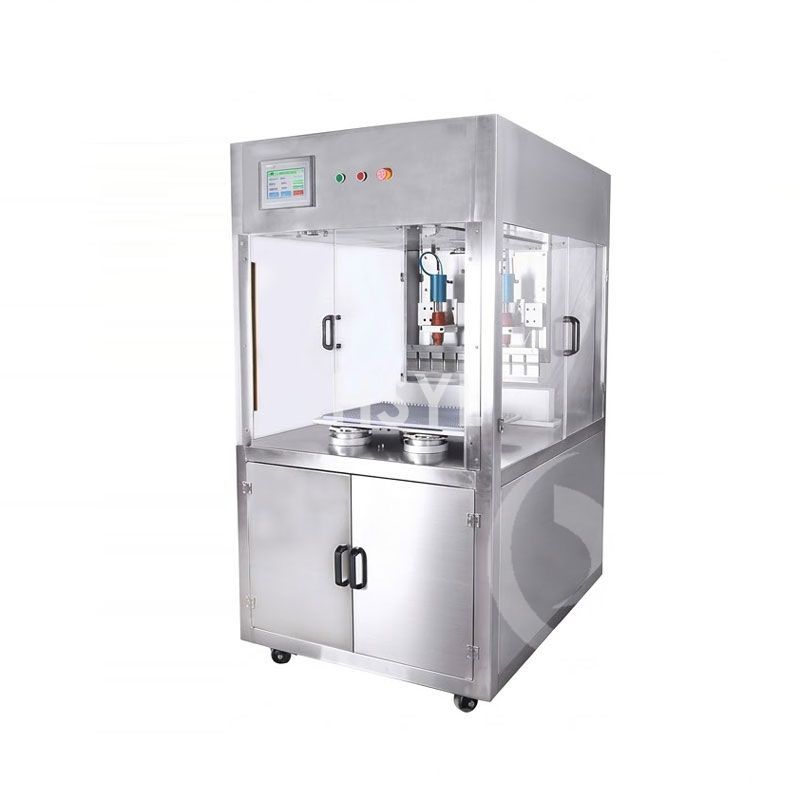
All meat processing operations don't necessarily need the massive footprint of industrial-scale machinery. For smaller butcher shops, catering businesses, or facilities with limited space, compact benchtop dicing machines offer a practical and efficient solution. Although these units are smaller in size, they still provide a significant boost in efficiency and consistency compared to manual dicing. They are typically designed for ease of use and easy cleaning, making them ideal for businesses where space and flexibility are the top priorities. While their throughput might be lower than that of industrial-scale equipment, they offer a cost-effective and space-saving way to achieve precise dicing results.
Customised for Specific Requirements: An In-depth Look at Specialist Dicing Equipment
Beyond the standard ranges, the market also provides specialised dicing equipment tailored to meet specific processing needs. This includes machines optimised for particular proteins, such as poultry or fish, as well as units engineered to produce specific dice shapes or sizes that go beyond the capabilities of general-purpose equipment. For instance, certain specialised models are designed specifically for julienne cuts or intricate patterns. These niche machines often feature unique cutting mechanisms and material handling systems custom-built for the task at hand, enabling processors to create high-value, differentiated products for specialised market segments.
如何做出明智抉择:挑选肉类切碎机的关键考量因素
Choosing the right meat dicing machine is a complex process that involves weighing up various operational and financial considerations. By carefully evaluating these factors, you can ensure the equipment meets the specific requirements and goals of your processing facility, ultimately maximising both your return on investment and overall operational efficiency.
Aligning Output with Demand: A Precise Assessment of Your Production Capacity Requirements
A fundamental consideration during the selection process is the machine's throughput capacity in relation to the facility's production demands. Accurately forecasting current and future production volumes is crucial to ensure that the chosen dicing machine can adequately handle the required output without creating bottlenecks in the processing line. Overestimating capacity may lead to unnecessary capital expenditure, while underestimating it can result in operational inefficiencies and an inability to meet market demands. A comprehensive analysis of production goals and anticipated growth is therefore paramount.
Beyond Beef and Pork: Exploring the Diverse Range of Meats in Your Business
The variety of meat products handled by a facility will have a significant impact on the type of dicing machine required. Given that different meats possess varying textures and compositions, specific cutting mechanisms and machine configurations may be necessary. For example, a machine primarily engineered for beef might not be suitable for processing more delicate poultry or fish. It is therefore essential to consider the full range of meat products to be processed and to select a machine with the appropriate versatility or specialisation to handle them effectively.
The Art of the Perfect Cut: Why Precision and Uniformity in Dice Size Matter
De gewenste afmetingen en de gelijkmatigheid van de vleesblokjes zijn cruciale factoren die een directe impact hebben op de kwaliteit en de verkoopbaarheid van het eindproduct. Afhankelijk van de toepassing kunnen specifieke formaten vereist zijn, variërend van kleine blokjes voor stoofschotels tot grotere stukken voor kebabs. De consistentie van deze afmetingen is even belangrijk, aangezien dit de gaartijd, de presentatie en de consumentenervaring beïnvloedt. De gekozen snijmachine moet in staat zijn om consequent de gewenste afmetingen te produceren met minimale variatie, om zo een hoogwaardig en visueel aantrekkelijk eindproduct te garanderen.
Strict Standards: Prioritising Hygiene and Ease of Cleaning in Machine Design
In the food processing industry, hygiene is paramount. Meat processing facilities are subject to stringent regulations and must adhere to rigorous sanitation protocols to prevent contamination and ensure food safety. Consequently, the design of the dicing machine must prioritise ease of cleaning and sanitisation. Features such as smooth surfaces, accessible components, and the use of food-grade materials are essential. The ability to quickly and effectively disassemble and reassemble the machine for thorough cleaning is also a critical consideration.
Safety First: Incorporating Critical Safety Measures for Operational Security
Ensuring the safety of personnel involved in the operation and maintenance of dicing machines is a matter of utmost importance. Modern dicing equipment is outfitted with a comprehensive suite of safety mechanisms engineered to prevent accidents and maintain a secure working environment. These features typically include safety interlocks that disable operation if guards are opened, emergency stop buttons for the rapid halting of machinery in an emergency, and fully enclosed cutting zones to mitigate the risk of injury. A rigorous assessment of these safety specifications is essential to safeguard employees and ensure full compliance with occupational health and safety regulations.
Naatloos integreren: de compatibiliteit met bestaande productielijnen beoordelen
Voor veel vleesverwerkingsbedrijven maakt de snijmachine slechts een klein onderdeel uit van een grotere, geïntegreerde productielijn. Het is daarom essentieel dat de machine naadloos aansluit op de bestaande apparatuur, zoals transportbanden, molens en verpakkingsmachines, om de workflow te optimaliseren en de efficiëntie te maximaliseren. Bij de aanschaf moet er rekening worden gehouden met zaken als de hoogte van de aanvoer- en afvoerbanden, de richting van de productstroom en de totale afmetingen van de snijmachine, zodat deze probleemloos kan worden geïntegreerd in de huidige productiefaciliteiten.
Built to Last: Assessing Material Quality and Machine Durability for Long-Term Investment
A meat dicing machine represents a significant capital outlay, making its longevity and durability vital to its long-term value. The quality of the materials used in its construction—such as the grade of stainless steel and the robustness of the drive components—will directly dictate its ability to withstand the rigours of continuous operation in a demanding environment. By investing in equipment built with high-quality materials and sound engineering, businesses can minimise downtime, reduce maintenance costs, and extend the machine's operational lifespan, ultimately ensuring a better return on investment.
The Bottom Line: An Analysis of Upfront Costs and Long-term Running Costs
Although the upfront cost of a meat dicing machine is a major factor, a full cost analysis must also account for long-term running expenses. This includes electricity usage, maintenance, spare parts, and the labour required for both operation and cleaning. In the long run, a more expensive model that offers higher efficiency and lower upkeep may actually be more economical than a cheaper alternative that incurs higher operating costs. To ensure a sound financial investment, it is essential to conduct a thorough evaluation of both the initial purchase price and the ongoing long-term costs.
Customisable Solutions for Every Scale: Tailoring Dicing Configurations to Your Plant's Size
The ideal dicing machine setup depends heavily on the scale and scope of the meat processing operation. A local butcher shop's requirements and limitations will differ fundamentally from those of a large-scale industrial plant. To ensure the equipment is correctly sized and configured for your specific operational needs, it is essential to understand these key distinctions.
Optimising for Small to Medium-Sized Businesses: Essential Considerations and Equipment Recommendations
For small to medium-sized meat processing businesses, space constraints, budget limits, and the need for versatility are often the top priorities. Compact benchtop dicers or smaller industrial-grade units tend to be the best fit for these types of operations. When choosing equipment, it is essential to consider ease of use, how easily it can be cleaned, and its ability to process different types of meat. Models featuring interchangeable cutting grids are particularly useful, as they offer greater flexibility with different dice sizes. Ultimately, a robust yet straightforward design is usually preferred to keep maintenance to a minimum and avoid unnecessary downtime.
Maximising Throughput in Large-Scale Facilities: Advanced Dicing Solutions and System Integration
Grovestore industrielle slagterier og kødpraksis lægger vægt på høj gennemløbshastighed, kontinuerlig drift og fuldstændig integration med automatiserede produktionslinjer. Til disse faciliteter er det afgørende med kraftige skæremaskiner med stor kapacitet, der er bygget robust, har kraftfulde drivsystemer og kan operere ved høje hastigheder. For at maksimere effektiviteten og minimere det manuelle arbejde er det essentielt, at maskinerne kan integreres med automatiserede tilførsels- og udførselsanlæg samt avancerede styresystemer. Derudover er funktioner som fjernovervågning og avancerede sikkerhedsløsninger væsentlige for at sikre optimal ydeevne og driftsikkerhed i et stort erhvervsmiljø.
肉品切丁技术的未来:探索肉类加工领域的创新与技术进步
The meat processing industry is in a state of constant flux, with cutting-edge developments in dicing machine design emerging all the time. These innovations are driven by the need to boost productivity, refine product quality, and keep pace with the shifting demands of the sector. For meat processors, staying on top of these technological breakthroughs is essential to gaining a competitive edge and future-proofing their operations.
Staying Ahead of the Curve: An In-depth Look at Automated Dicing Systems and Robotics
Automatisering speelt een steeds belangrijkere rol in de vleesverwerking, en het blokjes snijden is daarop geen uitzondering. Geautomatiseerde snijsystemen, die vaak gebruikmaken van robotarmen voor het laden en lossen, bieden de mogelijkheid om de doorvoer te verhogen, de arbeidskosten te verlagen en de precisie te verbeteren. Deze systemen kunnen worden gekoppeld aan visiesystemen voor kwaliteitscontrole en kunnen worden geprogrammeerd om complexe snijpatronen uit te voeren. Hoewel de initiële investering hoger kan uitvallen, kunnen geautomatiseerde oplossingen voor het snijden van blokjes op de lange termijn aanzienlijke voordelen bieden voor grootschalige bedrijven die hun efficiëntie willen maximaliseren en menselijke fouten willen minimaliseren.
Smart Solutions: Integrating Data and Monitoring in Modern Dicing Systems
Moderne kødhakkemaskiner bliver i stigende grad udstyret med sensorer og dataanalyse-funktioner. Disse "smarte" maskiner kan overvåge forskellige driftsparametre, såsom skærehastighed, motorbelastning og produkttemperatur, hvilket giver værdifuld indsigt i både maskinens ydeevne og potentielle fejl. Disse data kan anvendes til forebyggende vedligeholdelse, optimering af skæreparametre og sikring af en ensartet produktkvalitet. Integrationen af dataovervågning markerer et væsentligt skridt mod en mere effektiv og intelligent proces inden for kødforarbejdning.
Troubleshooting and Maintenance: Optimising Performance and Extending Lifespan
Even the sturdiest, most well-engineered meat dicer will need regular servicing and may occasionally run into technical hitches. To keep your machine running at its best, extend its working life, and avoid unnecessary downtime, it is vital to understand common faults and stay on top of routine maintenance.
解决常见操作难题:识别并排除切料机故障
Meat processors may face various issues during dicing, such as inconsistent piece sizes, product jams, or excessive noise. It is vital to identify the root cause of these problems to implement effective solutions. Inconsistent sizing is often caused by blunt blades, incorrect grid selection, or improper feeding. Jams are frequently the result of overloading the machine or the presence of foreign objects. Excessive noise may also point to faults in the motor or drive system. Adopting a systematic approach to troubleshooting these common issues can help minimise downtime and maintain operational efficiency.
Proactive Measures: Implementing Effective Maintenance Schedules and Practices
Preventative maintenance is essential to ensuring that a meat dicing machine remains durable and performs at its best. By following a regular maintenance routine—such as sharpening or replacing blades, lubricating moving parts, and performing thorough cleanings—you can significantly reduce the risk of unexpected breakdowns and expensive repairs. Furthermore, ensuring that staff are fully trained in correct operation and basic upkeep is vital to maximising the machine's lifespan and maintaining a safe working environment.
實戰成功案例:剖析最佳切片機應用之實際案例研究
實際選用並配置合適的肉類切丁機,能為生產帶來顯著效益,而透過實際案例最能體現其價值。藉由研究已成功優化切丁作業的肉類加工廠案例,不僅能獲得寶貴的實務經驗,更能展現出在這一關鍵環節中,做出明智決策所帶來的實質影響。
向顶尖企业取经:剖析肉类加工龙头企业如何运用切块技术
Leading meat processors often use state-of-the-art dicing technology and innovative operational techniques to achieve top-tier product quality and efficiency. By analysing their methods—including the specific machinery they use, their maintenance regimes, and their integration strategies—other processors can gain valuable insights to help elevate their own operations. These case studies frequently highlight the importance of a holistic approach to dicing, which involves considering not just the machinery itself, but how it integrates into the wider processing environment.
Essential insights for making an informed choice: how to select the perfect meat dicing machine configuration for your plant
To conclude, choosing the right configuration for a meat dicing machine is a critical decision for any meat processing business. It requires a thorough understanding of operational needs, technological options, and financial considerations. By carefully weighing factors such as production capacity, product range, required dice specifications, hygiene standards, safety features, system integration, and long-term costs, processors can make informed decisions that will significantly enhance their efficiency, product quality, and overall success. Given the absolute necessity for precision in meat processing, investing in the right dicing technology is essential to ensuring streamlined operations and sustained profitability.
Veelgestelde vragen (FAQ)
What are the main types of meat dicing machines used in industrial processing plants?
De belangrijkste varianten zijn standaard industriële snijmachines, grootschalige oplossingen voor een hoge productiecapaciteit, compacte tafelmodellen voor kleinere bedrijven of beperkte werkruimte, en gespecialiseerde apparatuur die specifiek is afgestemd op bepaalde vleessoorten of specifieke snijbehoeften.
Wat zijn de belangrijkste factoren om rekening mee te houden bij het kiezen van een vleesblokmachine?
關鍵因素包括您的產量需求、加工肉類種類、切丁尺寸與均勻度要求、衛生與消毒標準、安全功能、與現有生產線的相容性、材質品質與耐用度,以及包含初期投資與長期營運成本在內的整體成本。
Waarom is hygiëne zo'n cruciaal aspect bij de keuze voor een vlees snijmachine?
Hygiene is of the utmost importance in meat processing to prevent contamination and ensure food safety. To comply with strict industry regulations, it is essential to select machinery designed for easy cleaning and sanitisation, featuring smooth surfaces, accessible components, and food-grade materials.
What kind of maintenance is typically required for meat dicing machines?
Regular maintenance involves tasks such as sharpening or replacing the blades, lubricating moving parts, and ensuring everything is thoroughly cleaned. It is essential to follow a proactive maintenance schedule to ensure the machine performs at its best, lasts as long as possible, and experiences minimal downtime.
What are the main cost factors to keep in mind when investing in a meat dicing machine?
When calculating the total cost, one must look far beyond the initial purchase price. It is vital to account for long-term running costs, such as energy consumption, regular maintenance, replacement parts, and the labour required to operate and clean the machinery. Conducting a thorough cost analysis is essential to ensure the investment is financially viable in the long run.
How do I calculate the required throughput capacity for my meat dicing machine?
请务必精准评估当前的及未来的生产规模,以确保所选用的切割机能够满足产出需求,避免造成生产瓶颈。在进行评估时,请务必将高峰时段的产量以及预期的业务增长纳入考量。
Why is it essential to ensure consistent dice size in meat processing?
Consistent dice dimensions are essential for ensuring uniform cooking times, enhancing the visual appeal of the final product, and maintaining consumer satisfaction. The right dicing machine should be capable of consistently producing the desired dice size with minimal variation.
Kan kødhakkemaskiner integreres med andet forarbejdningsudstyr?
Ja, veel snijmachines voor vlees zijn ontworpen om naadloos te worden geïntegreerd met bestaande productielijnen, zoals transportbanden, molens en verpakkingsmachines. Het is essentieel om de compatibiliteit van de snijmachine met uw huidige infrastructuur te beoordelen om de workflow optimaal te stroomlijnen.
Which safety features should I look for in a meat dicing machine?
Key safety features include safety interlocks that prevent operation whenever guards are open, emergency stop buttons, and enclosed cutting zones to minimise the risk of injury to personnel.
Hoe lang gaat een hoogwaardige vleesblokjesmachine gemiddeld mee?
The longevity of a meat cubing machine is determined by several key factors, including the quality of the materials used, the build quality of the engineering, and how strictly regular maintenance schedules are followed. By investing in a machine constructed from premium materials and committing to a proactive maintenance regime, you can significantly extend its operational life.
Essential Reading for Fast Food and Restaurant Chains Owners

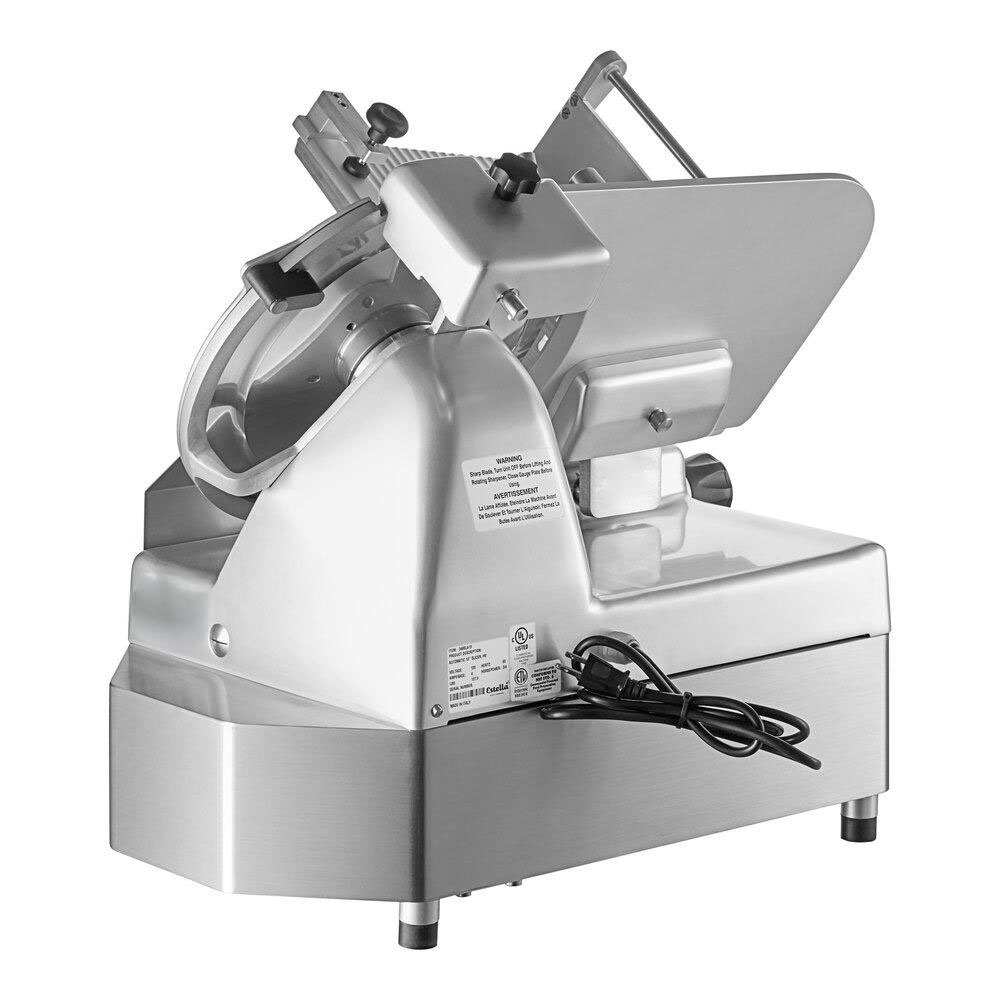
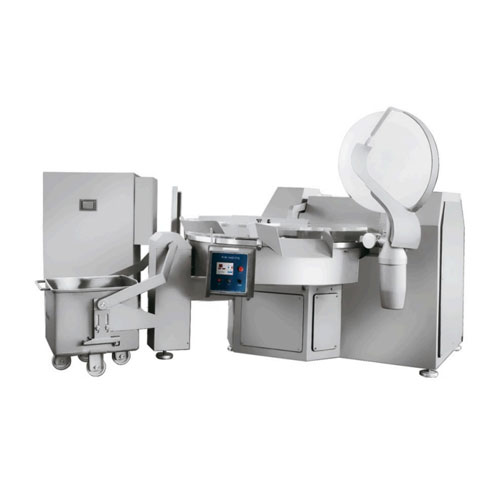
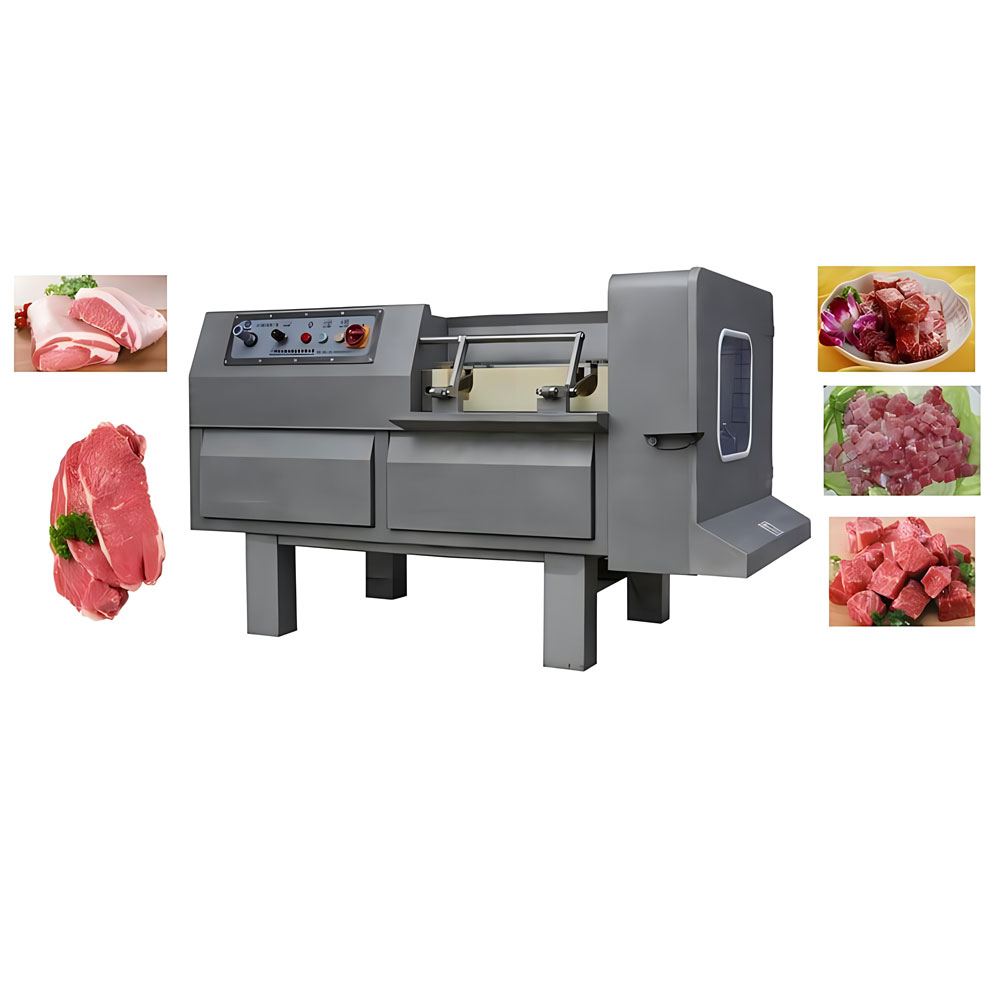 Automatische Hackfleisch-Zerkleinerungsmaschine
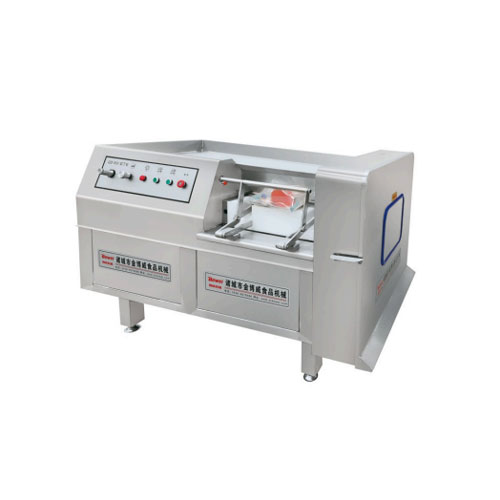 Kødhakkemaskine
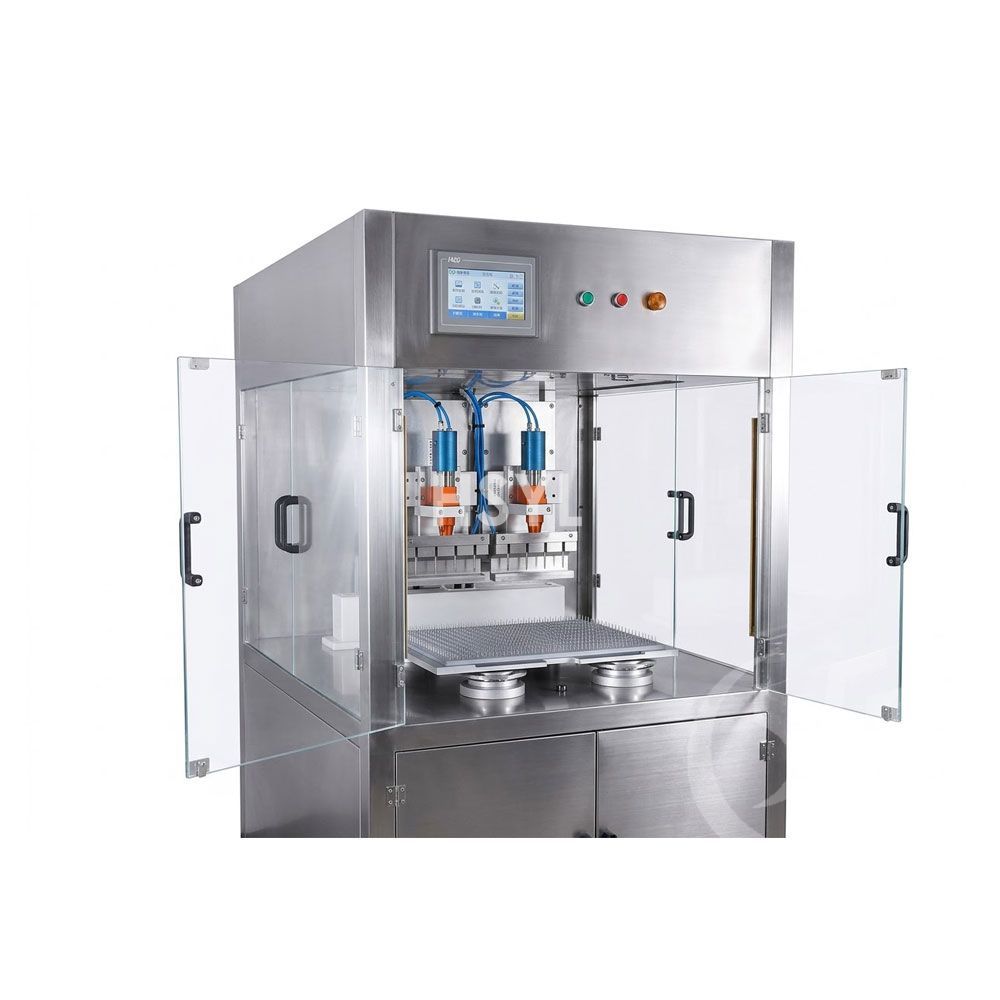 Ultrasonische snijmachine voor koekjes en biscuitjes
Ready to go?