Brine Injector
We Are Not Only Capable Of Selling Products, But Also Have The Ability To Undertake Full Turnkey Projects.

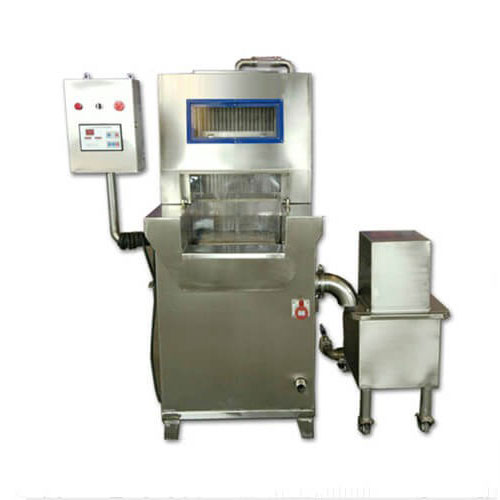
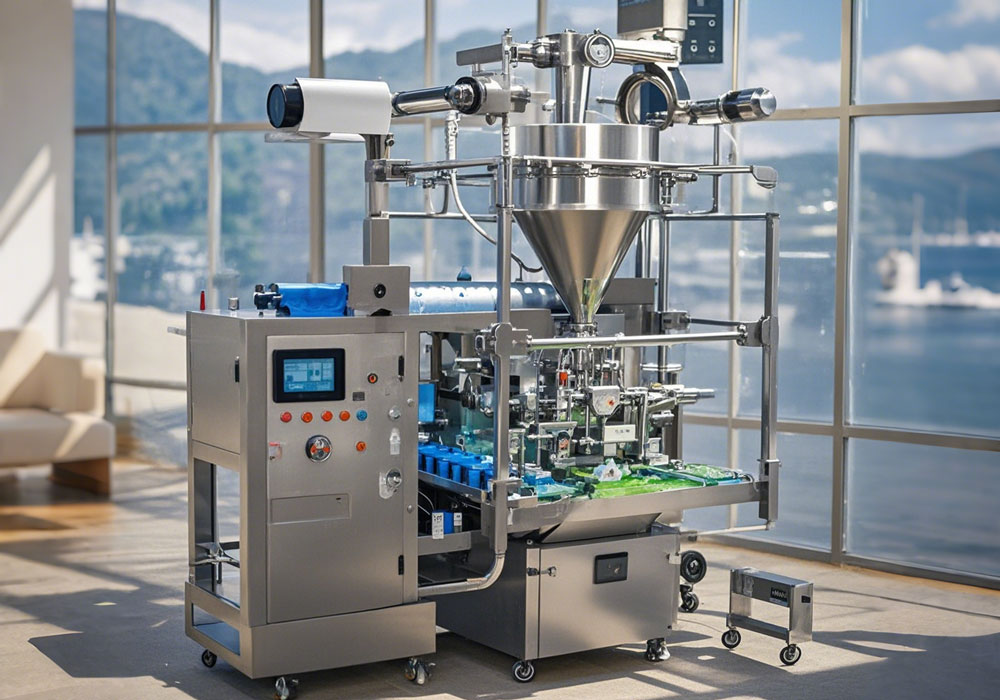
The BNI-48 Multi-Needle Brine Injector delivers curing brines, phosphate solutions, and flavored marinades deep into the structural center of whole-muscle meat cuts with a level of distribution uniformity that surface tumbling alone cannot achieve. Equipped with a 48-needle spring-loaded injection head operating across a 400 mm conveyor width, the machine penetrates thick pork loins, bone-in hams, chicken breast butterflies, and bacon bellies simultaneously from top to bottom. By controlling injection pressure independently from conveyor speed, operators precisely dial in target brine pickup percentages from 10 percent for light seasoning enhancement up to 45 percent for high-yield cooked ham production. The result is a product with consistent salt, moisture, and flavor distribution from the outer crust to the geometric core — eliminating the pale, under-cured center pockets and dark, over-cured surface bands that destroy batch uniformity in static soaking or single-needle operations.
| Engineering Parameter | Technical Specification |
|---|---|
| Model Nomenclature | BNI-48 |
| Needle Count | 48 (6 Rows x 8 Needles) |
| Needle Spacing | 50 mm Center-to-Center |
| Needle Material | SUS316L Surgical-Grade |
| Injection Pressure Range | 0.05 - 0.4 MPa |
| Stroke Depth | 0 - 200 mm (Adjustable) |
| Conveyor Width | 400 mm |
| Processing Capacity | 400 - 600 kg/h |
| Brine Tank Volume | 200 Liters (Integrated) |
| Drive Power | 3.7 KW (Total System) |
| Construction | SUS304 Frame / SUS316L Contact |
| Machine Dimensions (L x W x H) | 2200 x 1100 x 2000 mm |
Whole-muscle meat cuts are never geometrically uniform. A pork loin tapers from 90 mm at the center to 30 mm at the tail end. A chicken breast varies from 45 mm at the keel to 12 mm at the wing tip. Fixed-stroke injection heads drive needles to a constant depth regardless of meat thickness, punching completely through thin sections and spraying brine onto the conveyor belt rather than into the product. The BNI-48 eliminates this waste through individual spring-loaded needle suspension.
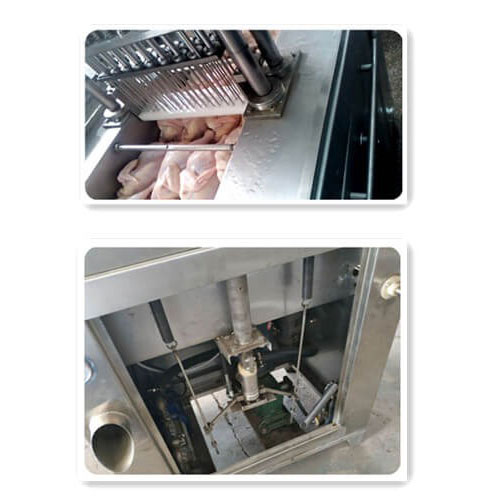
Each of the 48 SUS316L needles is independently mounted on a calibrated compression spring within the injection head block. As the head descends onto an irregularly shaped meat piece, needles contacting thicker sections penetrate to their full stroke depth. Needles landing on thinner areas compress against their springs and stop at the meat's natural bottom surface. Needles that miss the meat entirely retract fully and do not dispense brine. This adaptive penetration geometry ensures that every drop of pressurized solution is delivered inside the muscle tissue, regardless of the cut's irregular topography.
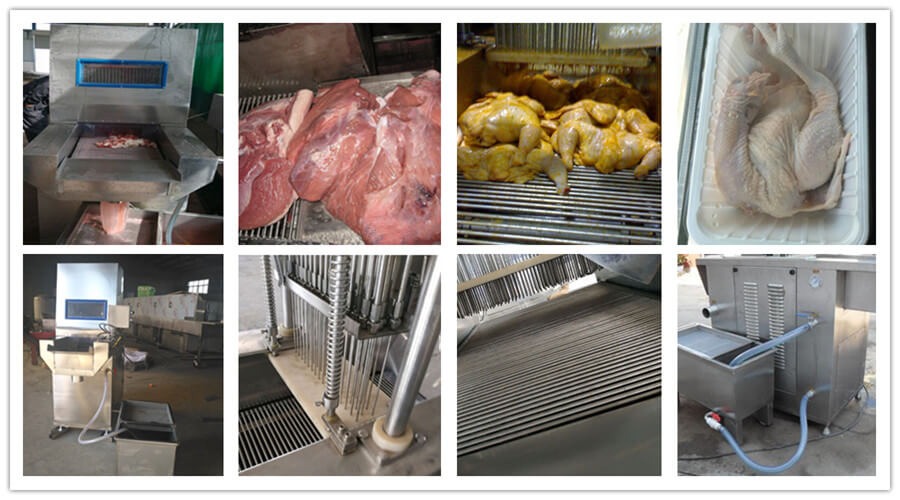
During continuous injection, a significant percentage of delivered brine exits through the meat's cut surfaces and collects in the conveyor drip tray. The BNI-48 captures this overflow in the integrated 200-liter stainless brine tank positioned beneath the conveyor. A dedicated recirculation pump continuously returns the collected brine through a multi-stage filtration system before re-delivering it to the injection manifold. The filtration train consists of a coarse stainless mesh screen (removing bone fragments and connective tissue particles above 2 mm) followed by a fine nylon filter bag (capturing fat globules and protein strands above 0.5 mm). This closed-loop recirculation prevents nozzle blockages that would create missed injection zones in the product, while simultaneously minimizing brine waste and raw material cost.
The brine injector is never the first or last step in the curing workflow. Upstream, meat blocks are received from primary portioning stations, tempered to the optimal injection temperature of 0 to 4 degrees Celsius, and placed on the injector conveyor. Downstream, injected pieces transfer directly into a vacuum meat tumbler where the mechanical tumbling action distributes the injected brine pockets uniformly throughout the muscle fiber matrix and extracts surface myosin protein for bind development. This injector-tumbler combination is the industrial standard two-stage marination protocol used globally for cooked ham, marinated poultry, and enhanced whole-muscle products. The BNI-48 integrates seamlessly into comprehensive meat processing equipment solutions spanning the complete chain from raw material reception through thermal cooking and final packaging.
The 48 SUS316L needles are the highest-wear consumable component in the system. Each needle features a side-port discharge design rather than a bottom-exit hole. Side ports distribute brine radially as the needle penetrates, creating a cylindrical saturation zone around the needle shaft rather than a concentrated pool at the needle tip. This significantly improves intra-muscular distribution uniformity. When a needle becomes blocked by hardened protein or a bent tip prevents smooth penetration, individual replacement takes under 30 seconds using a simple push-and-twist bayonet fitting. A complete 48-needle replacement set ships standard with every machine. For end-of-shift sanitation, the entire needle head block lifts off the machine frame on guide rails, and the brine tank drains completely via a bottom ball valve. All product-contact surfaces are accessible for direct scrubbing and hot water rinse within 25 minutes.
To request a detailed quotation tailored to your specific product portfolio and target pickup percentages, arrange a live injection trial at our factory, or obtain complete process chain layout drawings integrating the BNI-48 with tumbling and smoking equipment, please contact our meat processing engineering division. We deliver complete Turnkey marination and curing modules with global commissioning and recipe optimization support.
Must-read blogs for bosses