Vacuum Meat Tumbler
We Are Not Only Capable Of Selling Products, But Also Have The Ability To Undertake Full Turnkey Projects.

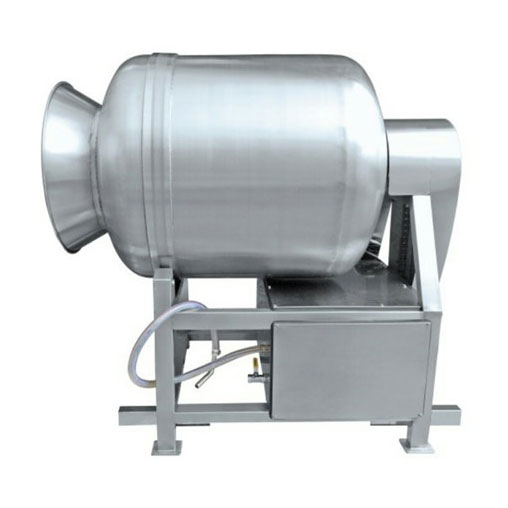
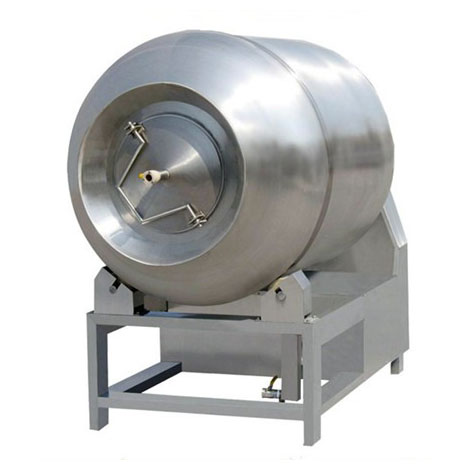
The VMT-1500 Vacuum Meat Tumbler is an industrial-grade sealed rotating drum system that dramatically accelerates the absorption of curing brines, marinades, and seasoning solutions into whole-muscle and portioned meat products. Operating under a controlled vacuum environment of -0.06 to -0.08 MPa, the machine exploits a fundamental physics principle: reduced atmospheric pressure causes the cellular pore structure within muscle tissue to physically expand. When the vacuum is periodically released during programmed tumbling cycles, atmospheric pressure forces the surrounding brine solution deep into these expanded intercellular channels. This vacuum-assisted mass transfer mechanism achieves in 4 to 8 hours what traditional static marination requires 24 to 48 hours to accomplish, while simultaneously extracting surface myosin proteins that create the essential tacky bind layer for sliced deli meat and reformed ham production.
| Engineering Parameter | Technical Specification |
|---|---|
| Model Nomenclature | VMT-1500 |
| Drum Volume | 1500 Liters |
| Working Capacity (Meat Load) | 600 - 750 kg per batch |
| Vacuum Depth | -0.06 to -0.08 MPa |
| Drum Rotation Speed | 4 - 12 RPM (VFD Controlled) |
| Drive Motor | 4.0 KW / 3-Phase |
| Vacuum Pump | 1.5 KW (Oil-Sealed Rotary Vane) |
| Internal Baffles | Helical Paddle Configuration |
| Drum Material | SUS304 (Interior Mirror-Polished) |
| Cooling Jacket | Optional Glycol Circulation |
| External Dimensions (L x W x H) | 2600 x 1400 x 1800 mm |
| Net Weight | 980 kg |
Under normal atmospheric pressure, the air trapped inside the porous structure of muscle tissue physically blocks liquid penetration. Brine solution can only enter through the cut surfaces and then must rely on slow osmotic diffusion to migrate inward. This process takes days. The VMT-1500 fundamentally alters this dynamic through cyclical vacuum-release mechanics.
When the vacuum pump reduces the internal drum pressure to -0.08 MPa, the entrapped air within the muscle tissue physically expands and evacuates through the meat surface into the low-pressure environment. The muscle fibers temporarily relax and the intercellular spaces widen. When the PLC-programmed cycle then vents atmospheric air back into the drum, the sudden pressure differential forces the surrounding brine directly into the vacated pore channels. Each vacuum-release cycle drives the solution progressively deeper. Over a 6-hour programmed sequence containing 15 to 20 such cycles, brine penetrates uniformly to the geometric center of even thick 120 mm whole-muscle cuts.
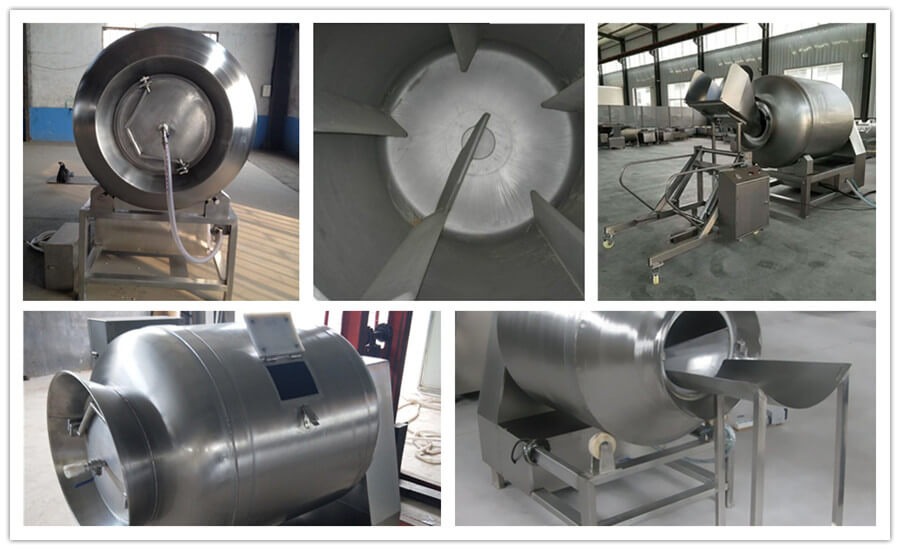
Tumbling cycles lasting 4 to 8 hours generate significant frictional heat from the repeated mechanical impact of heavy meat masses. Without active temperature control, the product core temperature can rise above 10 degrees Celsius, entering the bacterial danger zone and violating HACCP cold-chain mandates. The VMT-1500 addresses this through two complementary thermal management systems.
The standard configuration includes a double-wall drum jacket through which chilled glycol solution circulates continuously from an external chiller unit. This maintains the drum wall temperature at 0 to 2 degrees Celsius throughout the entire cycle, actively extracting frictional heat from the tumbling meat. For facilities without centralized glycol infrastructure, an alternative direct-expansion refrigeration coil option is available, providing self-contained cooling without external plumbing connections. Both systems maintain product temperature below 4 degrees Celsius at all times, ensuring full regulatory compliance even during overnight unattended tumbling cycles.
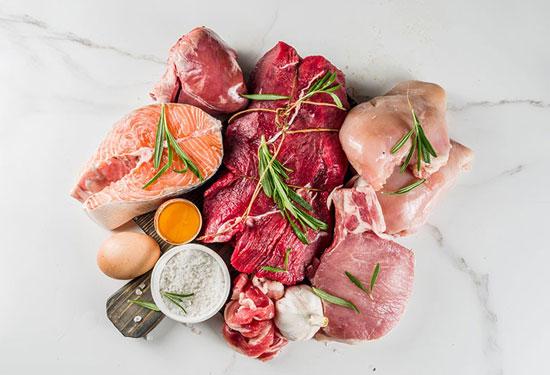
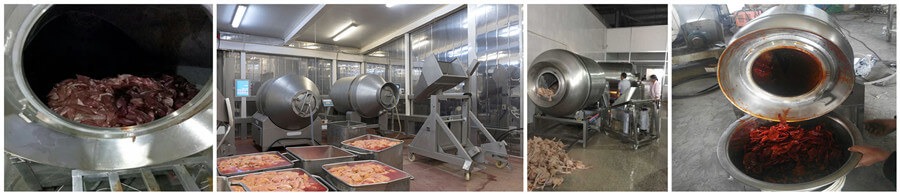
The VMT-1500 serves as the central marination hub across a diverse range of processed meat categories. Injected and tumbled whole-muscle cooked hams. Marinated chicken breast strips for foodservice. Seasoned beef jerky slabs prior to drying. Cured bacon bellies. Spice-rubbed lamb shoulders for retail roast packaging. Each product type demands a unique tumbling recipe — different vacuum depths, rotation speeds, cycle durations, and rest intervals. The 30-recipe PLC memory allows production managers to store and instantly recall optimized parameters for each SKU, eliminating operator guesswork during product changeovers. For upstream brine preparation and meat injection, the tumbler integrates naturally within broader meat processing equipment solutions that include multi-needle injectors and brine mixing tanks. Downstream, tumbled product proceeds to stuffing, netting, or thermal cooking equipment common in facilities sourcing from experienced commercial meat processing equipment providers.
The VMT-1500 features a hydraulic lid lift system that swings the vacuum-sealed cover upward to a 90-degree open position, providing full unobstructed access to the drum interior for top-loading. For discharge, the drum tilts forward on a hydraulic pivot to a 45-degree angle, allowing the entire tumbled batch to slide out by gravity into a waiting trolley or directly onto a conveyor. The mirror-polished interior surface (Ra 0.4 micrometers) prevents protein adhesion and allows rapid post-batch rinsing. A CIP spray ball mounted inside the drum lid enables automated hot water and detergent cycling for end-of-shift full sanitation without manual entry into the vessel.
Must-read blogs for bosses