French Fries Production Line
We Are Not Only Capable Of Selling Products, But Also Have The Ability To Undertake Full Turnkey Projects.

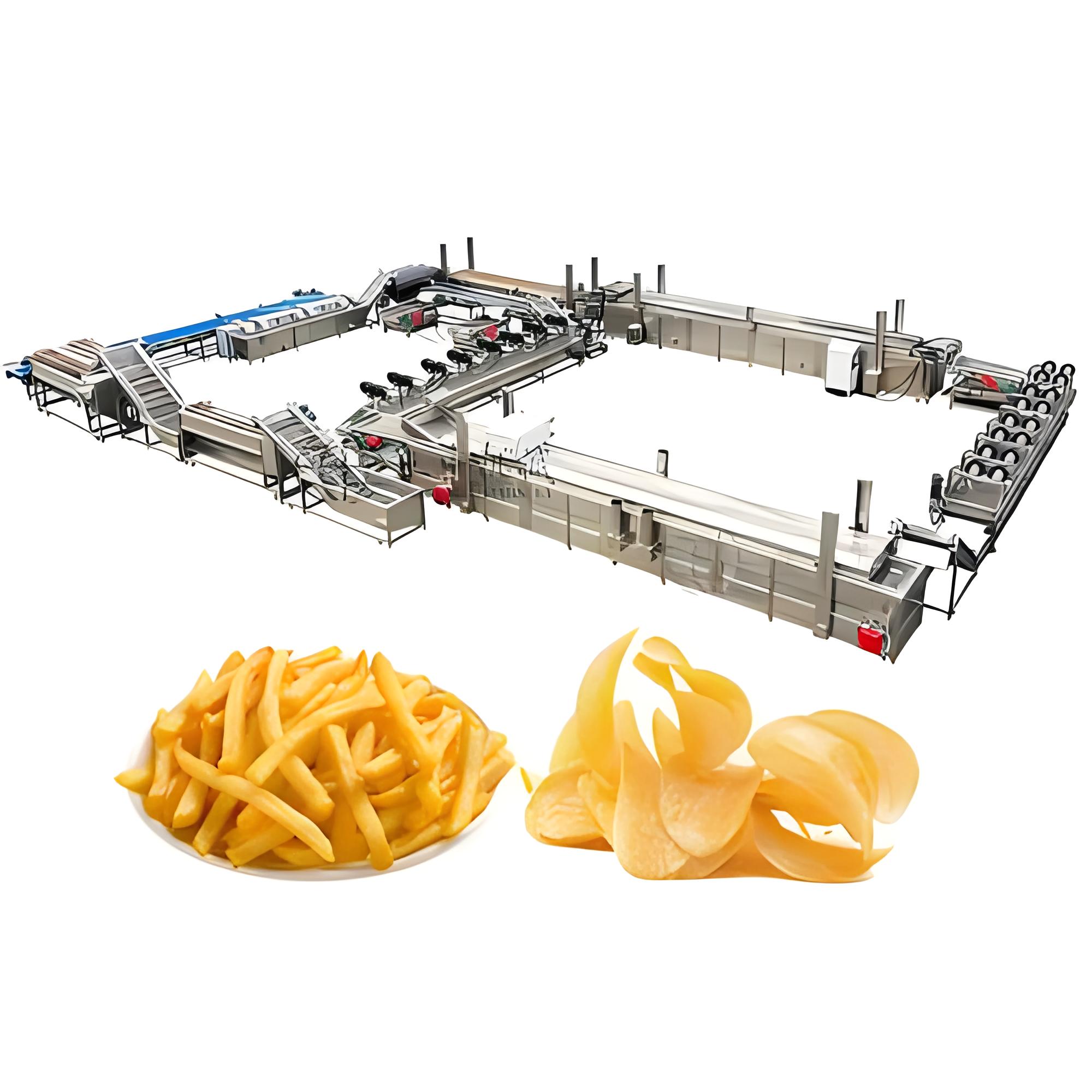
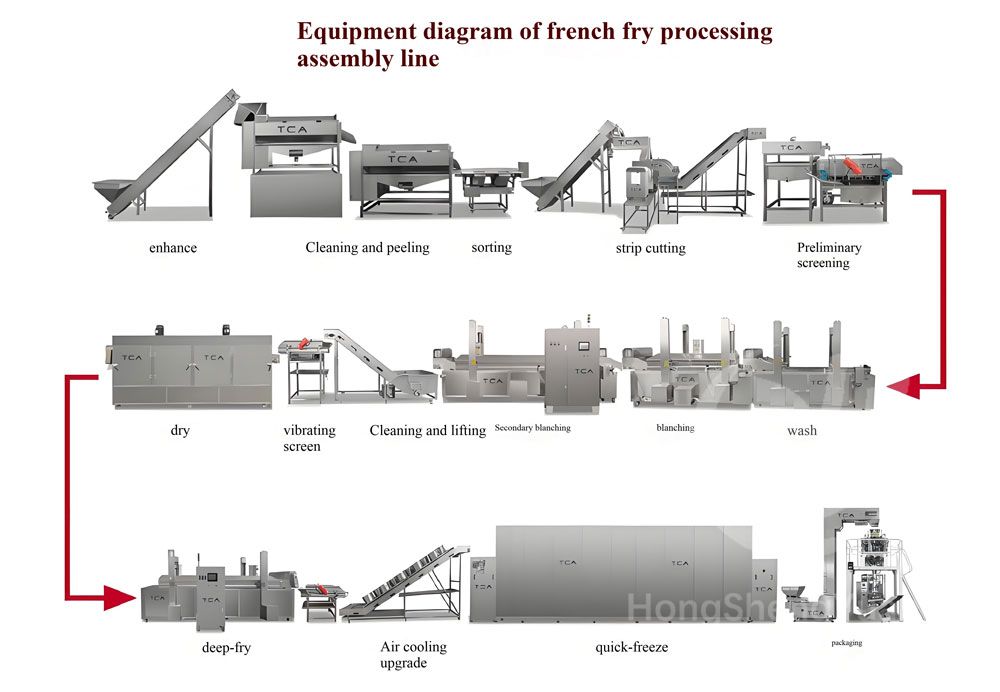
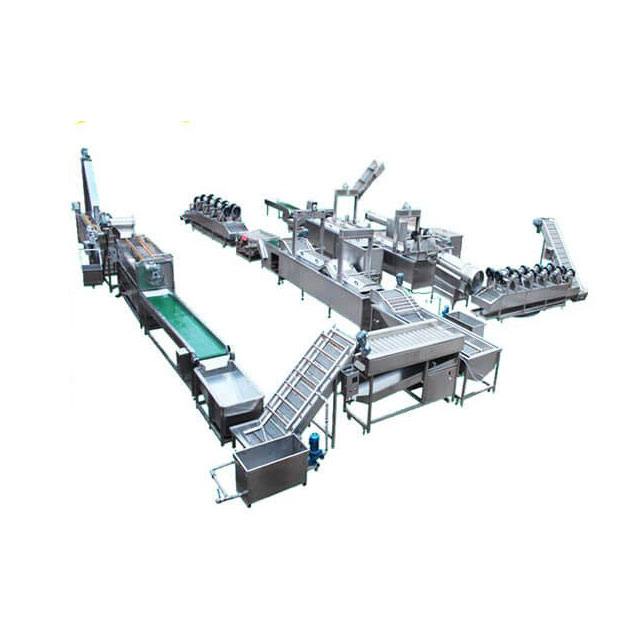
Designing a high-yield frozen french fries plant requires aggressive control over starch surface gelatinization and acrylamide formation. This turnkey French Fries Production Line is specifically configured to process raw field potatoes into standard 9x9mm or 10x10mm QSR (Quick Service Restaurant) grade frozen fries. Engineered for continuous 24/7 manufacturing cycles, the system integrates mechanical abrasion peeling, hydro-cutting, two-stage thermal blanching, and continuous oil frying with subsequent Individual Quick Freezing (IQF). We focus on maximizing structural integrity and uniform color profiles, ensuring strict adherence to global food safety parameter targets.
Every module in this continuous configuration operates under unified PLC logic, drastically reducing the dependency on manual operators while preventing localized bottlenecking between the cutting and drying zones.
| Technical Specification | Defined Value |
|---|---|
| System Configuration | HFF-1000 IQF Frozen Fries Series |
| Target Final Output | 1000 kg/h Frozen Fries (Requires approx 2000 kg/h raw input) |
| Total Installed Power | 160 KW (Excluding external freezing compressors) |
| Frying Temperature Range | 170℃ - 190℃ (PID thermostatic controlled) |
| Standard Cutting Dimensions | 9x9mm, 10x10mm, 12x12mm (Tooling interchangeable) |
| Main Material Matrix | SUS304 Food Grade Stainless Steel |
| Water Consumption | Approx. 1.5 to 2.5 Tons/hour (With integrated filtration) |
Raw Preparation and Yield Conservation
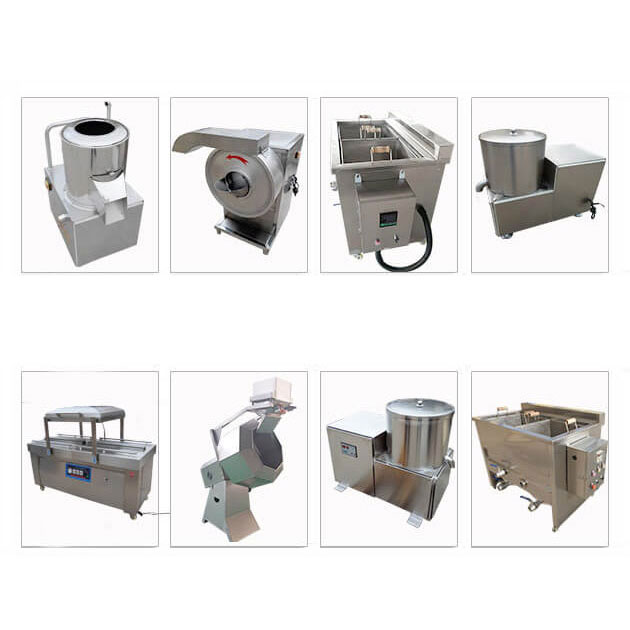
The intake sequence begins with a heavy-duty destoner and an automated potato washing peeling machine. Utilizing synchronized carborundum rollers, the system mathematically balances peeling friction against potato retention time. This minimizes excessive skin removal, recovering up to 8% more usable starch volume per ton compared to standard mechanical tumblers. After peeling, the tubers pass through an optical defect rejection belt.
Hydro-Dynamic Slicing Precision
Mechanical shear forces often fracture potato cell walls, leading to excessive oil absorption. To counteract this, the raw tubers are pumped through a pressurized water flume directly into the french fries cutting machine. This hydraulic delivery mechanism aligns the potatoes longitudinally, driving them through stationary cross-hatched tension grids. The result is perfectly straight strips with zero mechanical bruising and sharply defined edges.
Thermal Inactivation (Two-Stage Blanching)
To prevent non-enzymatic browning (Maillard reaction) and mitigate acrylamide formation, the raw strips enter a zoned thermal processing module. The first stage operates at a higher temperature (85℃) to rapidly deactivate surface enzymes. The secondary blanching phase operates at a lower temperature (65℃) for extended duration, effectively leaching out excess reducing sugars from the cellular matrix. This structural thermal gradient directly translates to the characteristic firm external crust and fluffy internal core required by high-end QSR buyers.
Vibratory De-Watering and Air Impingement Drying
Entering the frying oil with excessive surface moisture rapidly degrades the free fatty acids (FFA) of the frying medium. Our line integrates a high-frequency mechanical vibratory sieve followed by a downward-forced hot air impingement tunnel. This aggressively strips the hydro-layer from the fries, prolonging the usable life of the thermal oil by up to 25% and severely reducing thermal load on the continuous fryer.
Maintaining oil stability is the single largest operating expense in a french fry facility. The continuous frying module incorporates an indirect thermal fluid heat exchanger, displacing the heat source away from the frying pan. This prevents localized oil scorching and carbonization. Concurrently, an active volumetric pump continuously circulates the cooking oil through a centrifugal wedge-wire filtration unit, extracting microscopic starch particulates before they can burn and darken the oil profile. The PTFE-coated hold-down belts ensure uniform submersion of every potato strip, guaranteeing strict color conformity across the entire batch.
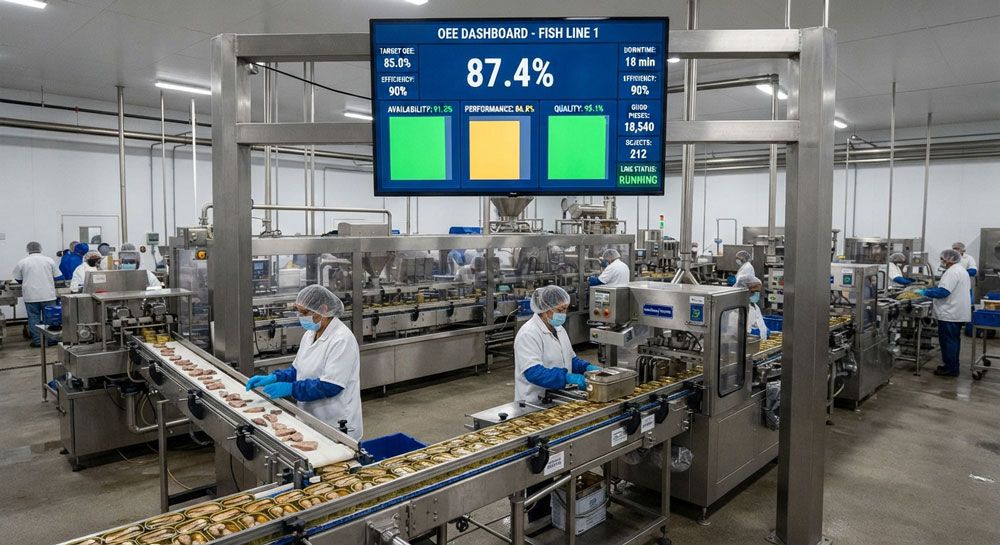
To eliminate isolated failure points, the entire layout is governed by a unified Supervisory Control and Data Acquisition (SCADA) network. Plant managers can directly monitor oil FFA degradation curves, water temperatures, and belt speeds from a central command room. During Turnkey commissioning procedures, our engineers strictly adhere to CE machinery safety directives, implementing comprehensive cable tray routing, washdown-rated IP65 pneumatic enclosures, and customized floor drainage plans. By aligning precise thermodynamics with structural robustness, we establish the foundation for decades of uninterrupted, highly profitable potato processing operations.
Must-read blogs for bosses