
Daily Maintenance Checklist for Commercial Can Seamers
Commercial can seamers are mission-critical assets in any canning operation. From vegetables, fruits, meat, seafood, and pet food to ready meals and beverages, the integrity of the double seam directly determines product safety, shelf life, and regulatory compliance. A daily maintenance checklist for commercial can seamers is not an administrative exercise—it is a core production control practice that protects throughput, reduces scrap, and prevents costly recalls.
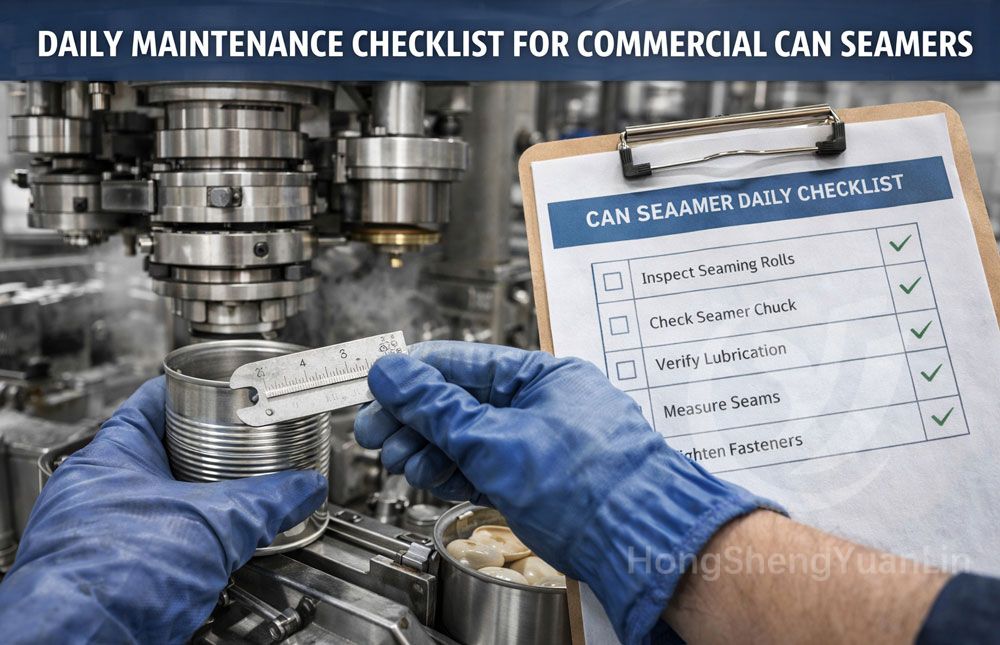
This article is written for plant managers, maintenance engineers, and procurement teams who operate or specify can seaming equipment in real factory environments. Drawing on practical engineering and commissioning experience, it explains what daily maintenance actually involves, why it matters on the production floor, and how to structure inspections that align with modern food safety and reliability requirements.
What a Daily Maintenance Checklist for Commercial Can Seamers Is and How It Works
A daily maintenance checklist for commercial can seamers is a structured set of inspection, cleaning, lubrication, and verification tasks performed at defined intervals—typically at shift start, during operation, and after shutdown. Its purpose is to ensure that all mechanical, pneumatic, and control components influencing seam formation operate within specification.
Unlike periodic overhauls or annual servicing, daily maintenance focuses on high-frequency wear points and hygiene-critical areas. These include seaming rolls, chucks, lifters, base plates, springs, bearings, lubrication points, and product contact surfaces. The checklist converts operator observation and maintenance discipline into a repeatable process that reduces variability.
From an engineering perspective, this checklist works by controlling three variables that cause most seam failures:
Mechanical wear and misalignment
Contamination and lubrication breakdown
Drift in operating parameters due to vibration and thermal cycles
By catching these issues early, the seamer continues to produce consistent seams across long production runs.
Industry Problems This Equipment Practice Solves
Rising Labor Costs and Skill Gaps
Modern canning plants face increasing labor costs and difficulty retaining experienced mechanics. A standardized daily maintenance checklist reduces reliance on individual experience by embedding best practices into routine operations. Operators know what to check, and maintenance teams receive consistent feedback.
Yield Loss from Seam Defects
Loose seams, false seams, droop, and cut-over conditions often develop gradually. Without daily inspection, defects can go unnoticed for hours, leading to thousands of rejected cans. Routine checks of rolls, chucks, and seam measurements significantly reduce yield loss.
Hygiene and Food Safety Risks
Can seamers operate in wet, high-residue environments. Product buildup, oil contamination, or corrosion in seam areas increases microbial risk. Daily cleaning and visual inspection directly support HACCP programs by controlling critical hygiene points.
Inconsistent Product Quality
Even minor variations in seam thickness or overlap can affect internal vacuum and shelf stability. Daily verification of critical settings stabilizes product quality across shifts and operators.
Scalability and Throughput Constraints
As plants increase line speed, tolerances tighten. A daily maintenance checklist ensures seamers are ready for higher throughput without increasing downtime or defect rates.
Key Features and Technical Focus Areas in Daily Seamer Maintenance
Seaming Rolls and Chuck Condition
Seaming rolls are precision components subject to constant load and friction. Daily inspection focuses on surface wear, flat spots, scoring, and correct rotation. Chucks must be free of nicks and corrosion, as surface damage transfers directly to the seam profile.
Lifter and Base Plate Alignment
The lifter mechanism ensures consistent can height and pressure during seaming. Wear or contamination here leads to seam height variation. Checking smooth vertical movement and proper return is a daily priority.
Lubrication Points and Oil Quality
Incorrect lubrication is a leading cause of premature bearing and cam failure. Daily checks confirm oil levels, grease condition, and absence of leaks, especially near product zones where over-lubrication creates contamination risk.
Fasteners, Springs, and Wear Parts
Vibration gradually loosens fasteners and fatigues springs. A visual and tactile check of critical components prevents sudden mechanical failure during production.
Sensors, Guards, and Safety Systems
Modern commercial can seamers integrate sensors for can presence, lid detection, and safety interlocks. Daily verification ensures the machine stops correctly under fault conditions and complies with operator safety requirements.
Typical Applications and Production Scenarios
Daily maintenance checklists are used across a wide range of canning operations, including:
High-speed vegetable and fruit canning lines with frequent washdowns
Meat and seafood canning plants with strict hygiene control
Pet food and ready-meal facilities operating multiple shifts
Beverage canning lines with tight seam tolerance requirements
In continuous production environments, the checklist is often split into pre-start, mid-shift, and post-shift tasks to minimize downtime while maintaining control.
Capacity Considerations and Maintenance Planning Guidance
When selecting or operating a commercial can seamer, throughput directly affects maintenance intensity. Higher speeds increase wear rates and sensitivity to misalignment. Buyers should align daily maintenance depth with:
Line speed and production volume
Can diameter and material thickness
Product type and residue characteristics
Planned future capacity expansion
Plants planning throughput increases should expand daily inspection scope before increasing speed, not after defects appear.
Buyer Benefits of a Structured Daily Maintenance Checklist
Improved Operational Efficiency
Consistent daily maintenance reduces unplanned downtime and stabilizes production scheduling. Small checks prevent major stoppages.
Labor Optimization
Clear checklists allow operators to handle first-level inspections, freeing skilled technicians for higher-value tasks.
Product Quality and Brand Protection
Reliable seam integrity protects brand reputation by reducing leakage, spoilage, and recall risk.
Equipment Longevity and ROI
Commercial can seamers represent significant capital investment. Daily care extends component life and delays costly rebuilds.
Scalable Production Confidence
Well-maintained seamers provide confidence when increasing speed, adding shifts, or introducing new can formats.
Customization and Engineering Support in Maintenance Programs
Experienced equipment manufacturers often tailor daily maintenance checklists to specific seamer models, can sizes, and product characteristics. Engineering support may include:
Model-specific inspection points
Lubrication schedules aligned with washdown frequency
Integration with digital maintenance logs or CMMS systems
Operator and technician training during commissioning
Collaboration between plant maintenance teams and equipment engineers ensures the checklist evolves with production demands.
Standards, Certifications, and Compliance Alignment
A daily maintenance checklist for commercial can seamers supports compliance with:
CE machinery safety requirements through regular safety system verification
HACCP by controlling seam integrity as a critical control point
ISO 22000 / ISO 9001 through documented preventive maintenance
FDA-oriented hygienic design principles, including cleanability, material integrity, and contamination control
Documented daily checks provide traceability during audits and inspections.
Daily Maintenance Checklist for Commercial Can Seamers: Practical Execution
In practice, an effective checklist includes:
Visual inspection before startup
Functional checks during warm-up
Seam sampling and measurement at defined intervals
Cleaning and lubrication after shutdown
Documentation and escalation of abnormalities
The checklist should be concise enough for daily use but detailed enough to prevent ambiguity.
Conclusion and Professional CTA
A daily maintenance checklist for commercial can seamers is one of the most cost-effective controls available to canning operations. It protects seam integrity, stabilizes production, and extends equipment life without requiring additional capital investment. For plants evaluating current practices or planning capacity upgrades, reviewing and refining the daily maintenance checklist for commercial can seamers is a practical first step. Manufacturers with real engineering experience can support this process through model-specific guidance, training, and long-term maintenance strategy alignment.
Frequently Asked Questions
How long should a daily maintenance checklist for commercial can seamers take to complete?
Who should perform daily can seamer maintenance checks?
Does daily maintenance replace scheduled preventive maintenance?
How often should seam measurements be taken during production?
What records should be kept from daily seamer maintenance?
Can daily maintenance reduce seamer spare parts consumption?
Is daily maintenance different for high-speed seamers?
Must-Read Blogs For Chain Restaurants Owner

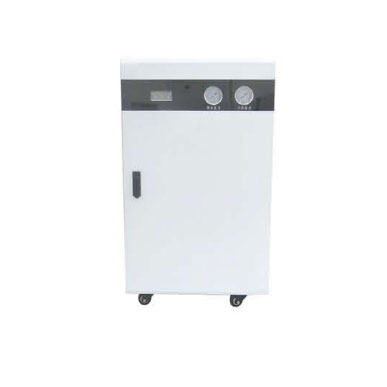 YL-W-01 Commercial Water Purification Equipment
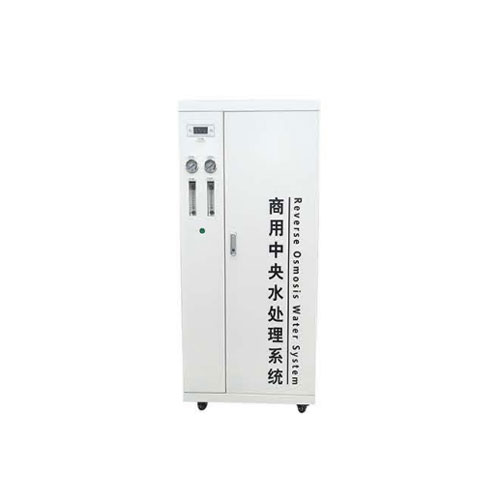 YL-W-06 Commercial Water Purification Equipment
 YL-W-05 Commercial Water Purification Equipment
 YL-W-04 Commercial Water Purification Equipment
Ready to Get Started?