Meat Grinding Machine
We Are Not Only Capable Of Selling Products, But Also Have The Ability To Undertake Full Turnkey Projects.

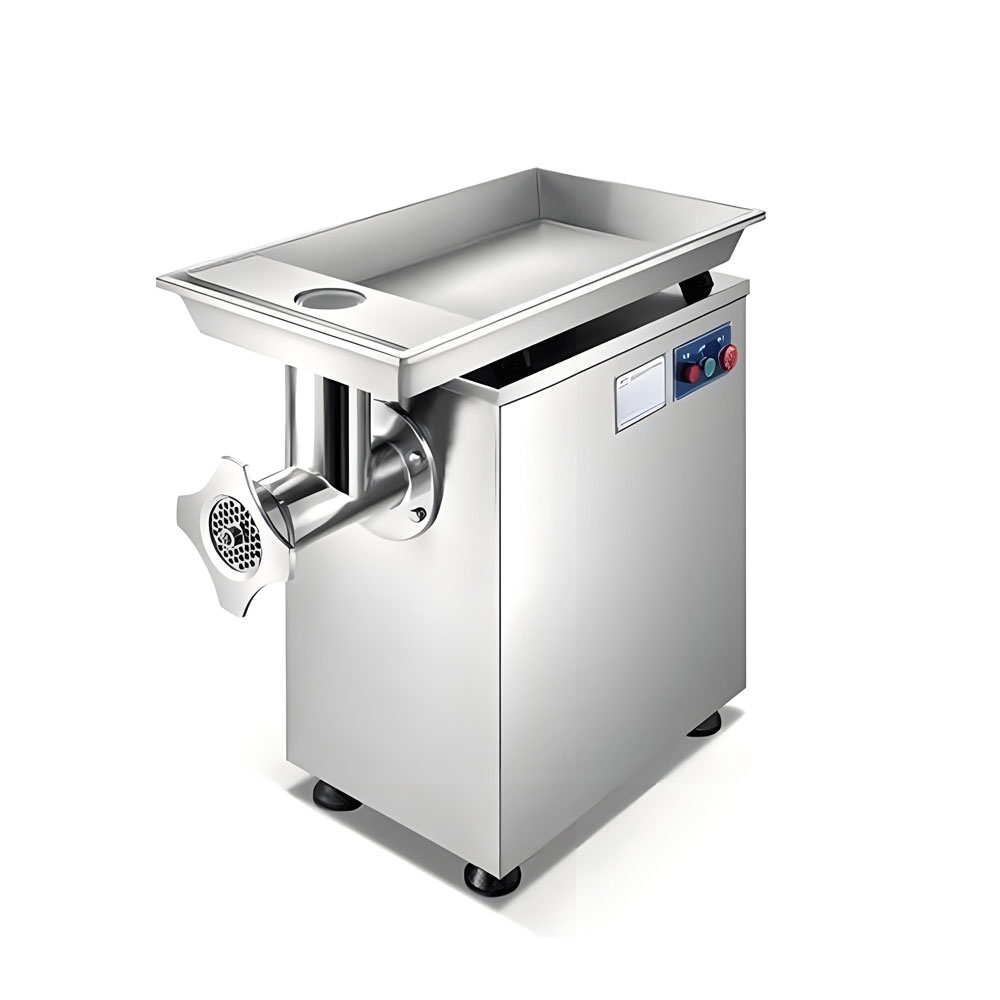
Processing frozen meat blocks directly without a pre-thawing phase prevents protein drip loss, bacterial proliferation, and textural degradation such as fat smearing. Engineered for continuous, high-throughput meat processing facilities, this heavy-duty meat mincer relies on a low-rpm, high-torque auger system to process entire standard 25kg frozen meat blocks (down to -18°C) directly into consistent granules. It systematically integrates into large-scale protein processing setups, minimizing temperature rise to less than 1.5°C during the extrusion phase.
| Specification | Parameter |
|---|---|
| Throughput Capacity | 2,000 - 3,000 kg/h (varies by inserted orifice plate size) |
| Temperature Tolerance | Down to -18°C (Frozen blocks) up to Ambient (Fresh meat) |
| Main Motor Power | 22 KW / 30 HP (Equipped with heavy-duty geared transmission) |
| Orifice Plate Diameters | Standard sets: 4mm, 6mm, 8mm, 10mm, 13mm, 16mm |
| Machine Dimensions | 1450 mm (L) x 850 mm (W) x 1300 mm (H) |
| Material Grade | SUS304 Stainless Steel (Food Contact Zones & Main Frame) |
| Net Weight | 850 kg |
A critical failure point in conventional mincing is excessive internal friction, which liquefies fat cells (fat smearing) and degrades the final product's binding capacity. By utilizing a precisely engineered pre-cutting ring and matched orifice plates, the mechanical stress on the meat fibers is strictly controlled. The low-rpm auger maintains cold temperatures, ensuring distinct fat and lean particle definition. This structural integrity is vital when transferring the minced product into downstream secondary emulsification equipment, such as the Model 330 Frequency Conversion High Speed Chopper, guaranteeing stable emulsions for sausage and frankfurter production lines.
Furthermore, the elimination of dead zones within the extruding chamber prevents product accumulation and microbial growth. Operators can unlatch the front retaining ring using an extraction wrench to remove the entire cutting set and auger within 90 seconds for thorough sanitation verification.
The core of this heavy-duty grinder is its dual-stage reduction gearbox, directly coupled to a 22 KW industrial motor. Instead of relying on high velocities, the system leverages massive rotational torque. When a standard frozen block enters the feeding hopper, an auxiliary paddle forces the rigid block downward into the primary crushing zone. The main auger progressively shears the block against internal barrel rifling before forcing the material through concentric cutting knives.
This sequential multi-stage reduction minimizes the mechanical work applied to the protein matrix. The electrical control cabinet features an advanced PLC system that continuously monitors amperage draw; if a hard foreign object jams the auger, the system initiates an instant reverse cycle to protect the blade shafts from micro-fractures, preventing costly downtime.
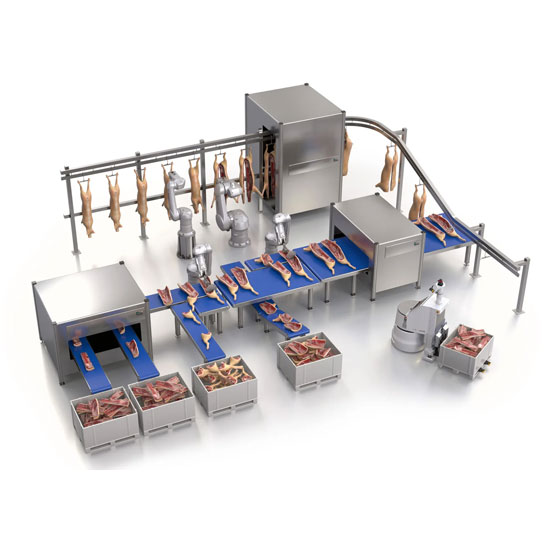
Plant layout designers face the persistent challenge of establishing continuous material flow without bottlenecks. This grinder acts as the primary reduction stage in large multi-stage facilities. The discharge height is engineered to align directly with standard 200L meat buggies or automated inclined screw conveyors. For factory managers aiming for complete system integration, integrating this mincer as the initial intake module within a broader automatic meat processing line creates an unbroken, HACCP-compliant production loop from cold storage retrieval to finished casing-stuffed sausage.
Constructed entirely from premium SUS304 (with optional SUS316L available for high-salinity applications), the mincer guarantees resistance to pitting corrosion over a 15-year operational lifespan. All welding seams are continuously argon-arc welded, ground flat, and glass-bead blasted to eliminate microbial harborage points. The equipment satisfies CE machinery directives and complies with stringent USDA sanitation guidelines. We provide specialized factory acceptance testing (FAT) using your specified raw materials, followed by comprehensive on-site installation and calibration by our engineering team to ensure rapid integration into your specific operational environment.
Ready to integrate high-efficiency, zero-thaw grinding into your plant structure? Contact our technical engineering team today for a detailed CAD layout integration study and official quotation based on your target throughput demands.
Must-read blogs for bosses