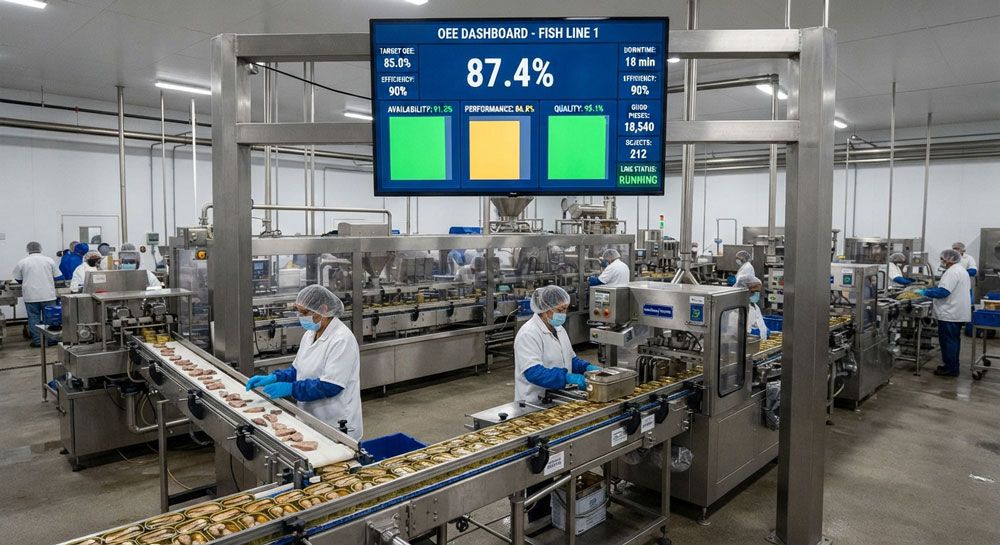
Fish Meal Production Line
We Are Not Only Capable Of Selling Products, But Also Have The Ability To Undertake Full Turnkey Projects.

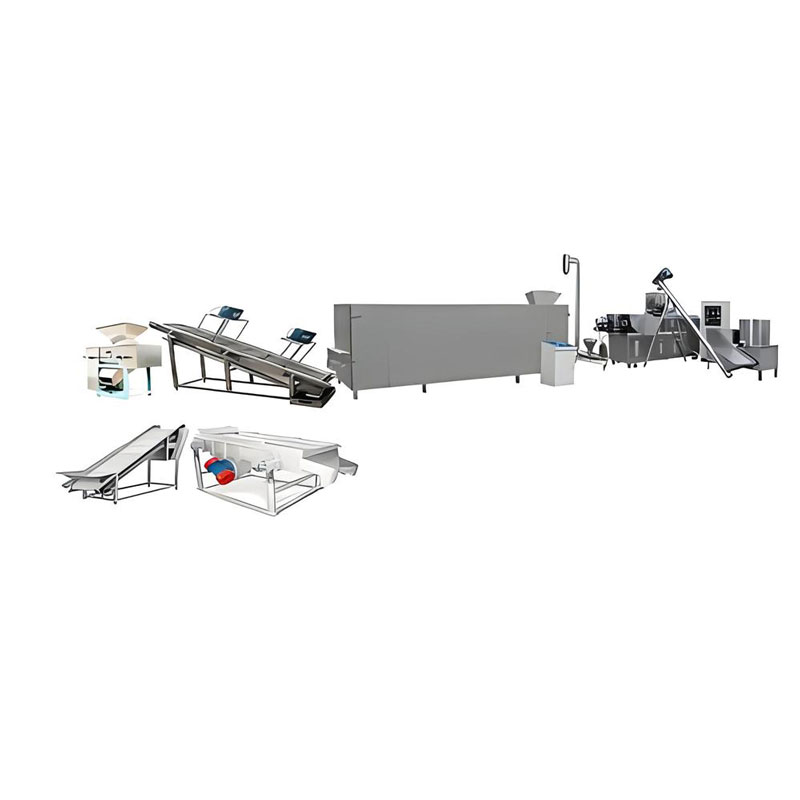
Maximizing the commercial value of pelagic fish catches and factory offal requires uncompromising thermal regulation during the rendering process. If the raw material is exposed to direct, uncontrolled heat, the essential amino acids denature, drastically lowering the protein percentage and market value of the final fish meal. This continuous Fish Meal Production Line is engineered around an indirect steam thermodynamics model. By integrating closed-loop cooking, twin-screw mechanical pressing, and vacuum disc drying, the plant aggressively extracts moisture and fish oil while perfectly preserving the 65%+ protein matrix demanded by premium aquaculture and livestock feed buyers.
Operating continuously over 24-hour shifts, this heavy-duty rendering architecture captures all waste vapors through a specialized shell-and-tube seawater condensation system, eliminating the severe environmental odor footprint typically associated with marine rendering facilities.
| Core Technical Parameter | System Specification |
|---|---|
| System Configuration Model | FMP-100T Continuous Rendering Series |
| Raw Material Intake Capacity | 100 Metric Tons / 24 Hours (Pelagic fish or cutting offal) |
| Projected Output (Meal & Oil) | Approx. 22-25 Tons Fish Meal / 5-8 Tons Fish Oil |
| Total Connected Power | 350 KW (Excluding external steam boiler requirements) |
| Standard Processing Voltage | 380V / 50Hz / 3Phase (Custom configurations available) |
| Pressure Vessel Material | Q345R Boiler Grade Steel (Certified for pressure zones) |
| Wet-Contact Surface Alloy | SUS304 Stainless Steel (Anti-corrosion for marine salts) |
Raw Material Sizing and Indirect Steam Cooking
Whole bycatch and large offal frames must be rendered uniform to prevent uncooked cores. The raw material first passes through a heavy-duty rotary fish cutting machine to standardize the particle size. This slurry is then fed into a continuous horizontal cooker. Crucially, the system utilizes a steam-heated jacket and a hollow rotor shaft (indirect heating) rather than injecting live steam directly into the fish. This prevents the addition of external condensation water into the mass, massively reducing the downstream thermal load on the dryers and preserving the water-soluble proteins.
Twin-Screw Pressing for Maximum Oil Recovery
Extracting the "press liquor" (water and oil emulsion) from the cooked fish mass is the most mechanically stressful phase. The line utilizes an industrial twin-screw press. The counter-rotating screws feature a gradually decreasing pitch, forcing the cooked mass against heavy-duty stainless steel wedge-wire screens. This extreme mechanical compression squeezes out up to 70% of the liquid phase without grinding the bone structure into a paste, leaving a dense, semi-dry "press cake" ready for the final drying phase.
De-Oiling via Three-Phase Centrifugal Decanter
The press liquor recovered from the twin-screw press is extremely valuable. It is pumped immediately into a high-speed tricanter (three-phase centrifuge). Operating at over 3500 RPM, the decanter mathematically separates the fluid into three distinct streams based on specific gravity: clarified fish oil (ready for refining), stickwater (rich in dissolved proteins), and microscopic sludge. The sludge is automatically routed back to the fish deboner machine feed line or directly to the dryer to ensure absolute zero protein loss.
Vacuum Disc Drying and Odor Abatement
To finalize the moisture reduction without scorching the meal, the press cake enters a massive horizontal disc dryer. By operating under a slight negative pressure (vacuum), the evaporation point of the innate water is lowered, allowing the meal to dry rapidly at safer temperatures. The exhausted vapors from the dryer, which carry heavy organic odors, are drawn rapidly into a titanium-plate or stainless shell-and-tube condenser. Utilizing ambient seawater, the vapors are condensed into a manageable liquid phase, completely mitigating the atmospheric pollution issues that plague outdated rendering plants.
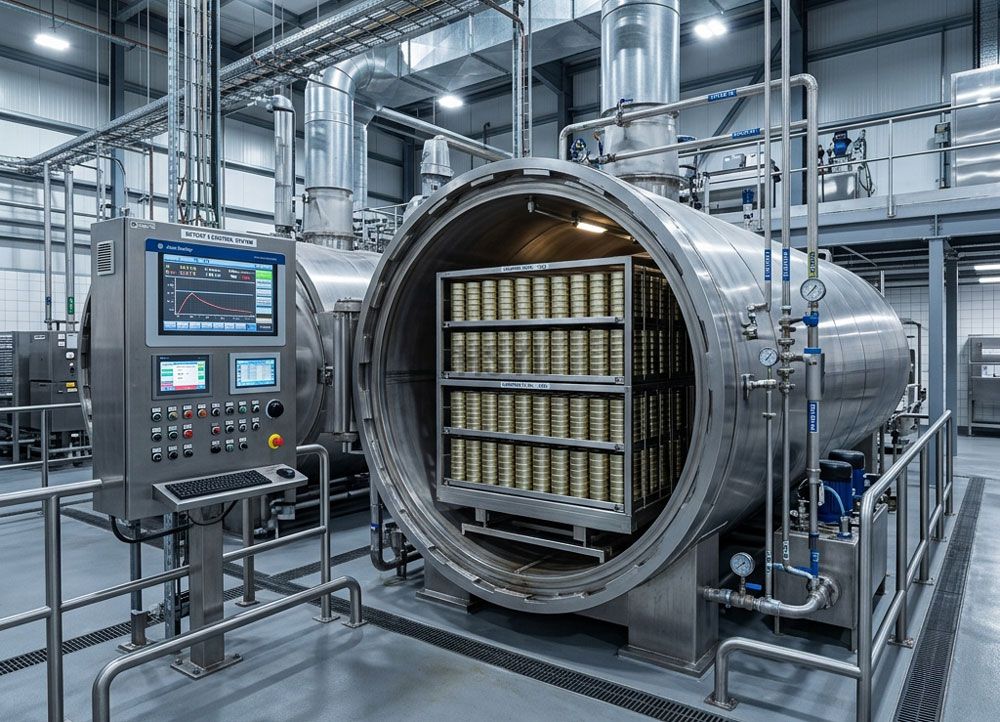
Managing high-pressure steam vessels requires absolute sensory control. The centralized SCADA command room monitors every crucial node of the plant. If the internal pressure of the disc dryer exceeds safety thresholds, or if the amperage on the twin-screw press spikes due to a foreign metallic object, the PLC triggers an immediate failsafe. Electronic steam valves shut off instantaneously, and the VFD-controlled motors engage dynamic braking. This highly automated feedback loop protects your capital investment and ensures the facility operates entirely within the strict parameters of CE and ASME pressure vessel codes.
Executing a 100-Ton/day rendering facility on a remote coastline involves complex civil and mechanical engineering. Our B2B Turnkey deployment includes complete 3D pipe routing for steam and press liquor, structural load calculations for the heavy centrifuge platforms, and precise electrical schematics. Our certified marine engineers travel on-site to weld the high-pressure steam lines and commission the decanter algorithms, ensuring the plant yields commercial-grade 65% protein fish meal within the first week of handover.
To request a tailored mechanical layout designed for your specific factory footprint, request our thermodynamic steam consumption calculations, or schedule a consultation with our rendering engineers, please submit a formal project inquiry.
Must-read blogs for bosses