
Semi vs. Fully Automatic Cake Slicers: 2026 Buying Guide
The 2026 CapEx Blueprint: Semi-Automatic vs. Fully Automatic Cake Slicing Equipment
- The Throughput Threshold: Processing beyond 3,500 portions per shift renders semi-automatic models mathematically inefficient due to massive operator bottlenecking.
- The OpEx Inversion: While fully automatic systems demand higher initial CapEx, removing the dedicated loading operator recovers the price differential within an average of 14 to 18 months in Western markets.
- Inline Synchronization: The defining mechanical upgrade is moving from a standalone cutting module to a PLC-integrated node that precisely dictates upstream oven output and downstream packaging pacing.
As the senior engineering director at HSYL with over two decades spent auditing, debugging, and commissioning high-volume commercial bakery layouts worldwide, I constantly review requests for quotation (RFQs) that misalign a factory's actual payload volume with their equipment strategy. Plant owners frequently default to requesting semi-automatic units under the illusion that lower initial hardware costs equate to safer investments during facility expansions. In reality, purchasing under-specced machinery creates a permanent, hidden labor tax that constantly erodes profit margins long after the equipment is amortized.
This 2026 procurement baseline will bypass the standard sales brochure metrics. Instead, we will rigorously dissect the underlying hardware architecture, compare the true long-term Operator Dependency Ratios, and establish the exact production volume thresholds that dictate when a mid-sized food processing plant must transition from standalone manual loading to absolute inline synchronization.
The Architecture of Standalone Modularity: When Semi-Automatic Makes Engineering Sense
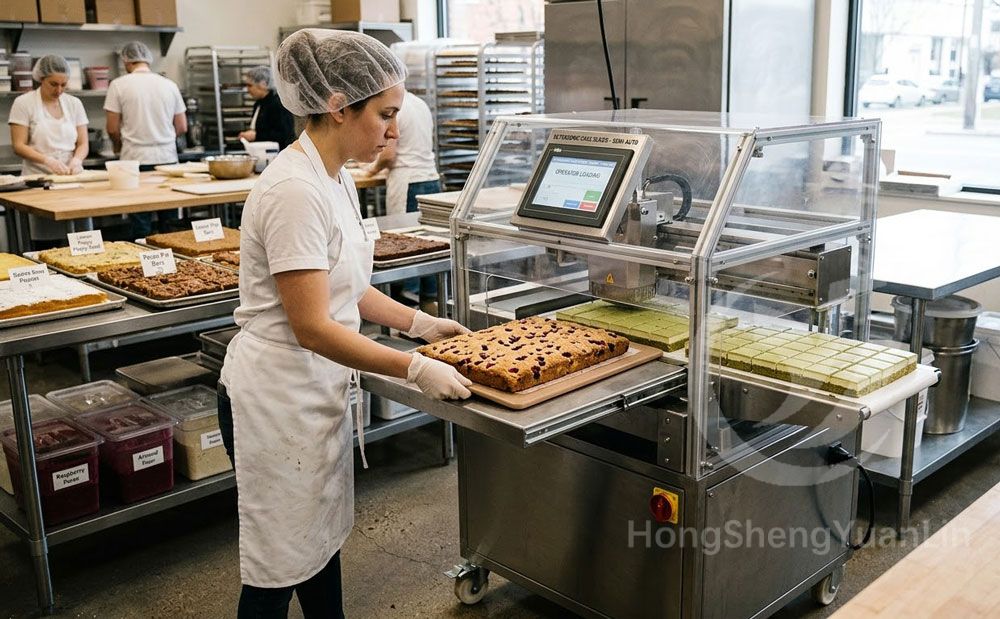
A semi-automatic cutting machine operates as an isolated island on the factory floor. The equipment handles the highly technical act of slicing—typically utilizing a 20kHz active titanium sonotrode or a rigid mechanical drop-head—but it remains entirely dependent on manual human logistics. An operator must physically transfer the baked slab from the cooling rack, align it on the cutting deck, trigger the dual-pushbutton safety cycle, and manually unload the finished portions to a secondary packaging staging matrix.
Agility in High-Variance, Low-Payload Environments
This modular isolation is not inherently a defect; it is a specific design constraint optimized for high-mix, low-volume (HMLV) bakeries. If your facility produces forty different SKUs daily—running small batches ranging from heavy frozen cheese cakes to delicate room-temperature Swiss rolls—a semi-automatic station is structurally superior. The absolute lack of complex upstream conveyor linkage means a line technician can execute a complete product changeover, recalibrate the HMI interface for a different grid geometry, and swap the cutting base plate in under 4 minutes.
However, this agility scales poorly. Once a single product run exceeds a continuous 4-hour cycle, the repetitive ergonomics of manual loading severely degrade the operator's cycle time efficiency, fundamentally capping your daily output regardless of how fast the ultrasonic blade oscillates.
The Fully Automatic Paradigm: Eradicating the Operator Dependency Ratio
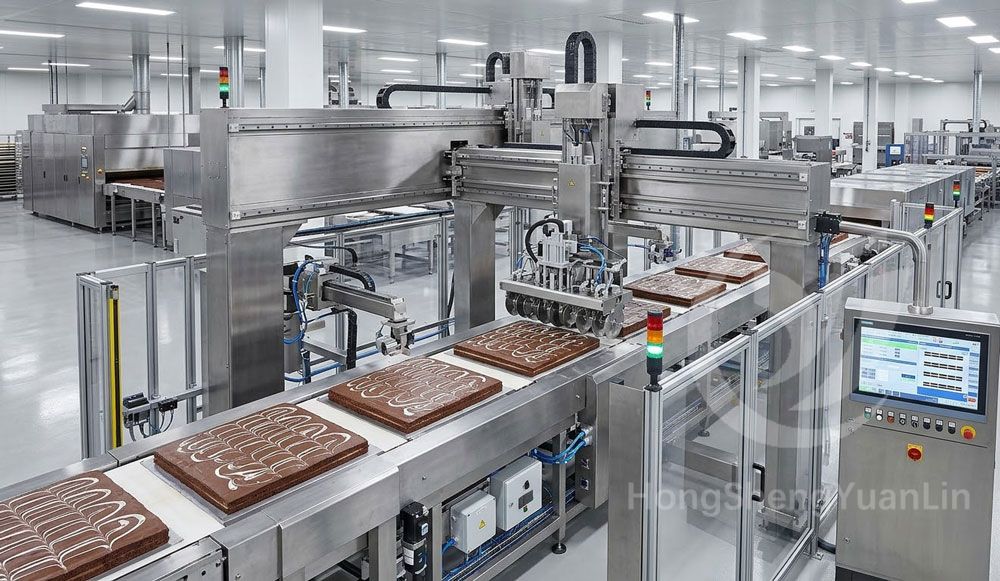
Fully automated systems are not merely semi-automatic machines bolted to a conveyor belt. They represent a fundamental shift from isolated batch processing to continuous fluid production. In a fully automatic array, the slicer acts as an intelligent, communicating node within a centralized Programmable Logic Controller (PLC) architecture.
The HSYL Formula: Calculating True Labor Drag
Throughout my deployment reviews, I advise CFOs and plant managers to evaluate the Operator Dependency Ratio (ODR). Most accounting models severely under-calculate the cost of an operator assigned exclusively to feeding a semi-automatic station. They calculate the hourly wage but ignore the cascading financial drag of sick leave, shift changeover delays, mandatory safety breaks, and human fatigue slowing the cycle down by 15% in the final hours of a shift.
The calculation model is stark: if your automated high-speed packaging line downstream can process 120 pieces per minute, but the fatigued operator manually unloading the semi-automatic slicer can only move 65 pieces per minute, you are paying 100% of the energy and depreciation costs for the packaging machinery while only utilizing 54% of its capacity. A massive, multi-axis inline gantry slicer eliminates this specific bottleneck. Utilizing optical sensors to measure the speed of incoming cooling belts, the fully automatic cutting head accelerates or decelerates in real-time, matching the precise cadence of the upstream tunnel oven without any human physical touch.
Multi-Axis Gantry Mechanics vs. Static Conveyance
Understanding what you are purchasing requires understanding how the product physically moves. Semi-automatic models usually rely on a static base plate or an X-Y indexer where the cake acts as the primary moving mass while the cutting head only plunges on the Z-axis. This requires the product to start, stop, secure, be cut, move, stop, and be cut again. This aggressive start-stop sequence is hostile to highly delicate, crumbly pastry foundations.
High-end fully automatic arrays utilize massive servo-driven overhead gantries. The cake slab flows continuously forward on an active sanitary conveyor belt while the entire titanium cutting head travels along tracks suspended above it. The cutting head matches the precise horizontal speed of the belt, executes a flawless vertical plunge, rises, and rapidly returns to its starting position—all without the cake ever pausing its forward momentum towards the wrapping station.
CapEx vs. OpEx: The 60-Month Total Cost of Ownership Matrix
Do not base a procurement decision on year-one capital expenditure. For industrial baking, machinery must be evaluated on a strictly 60-month amortization cycle to expose the true Total Cost of Ownership (TCO).
| Critical Procurement Variable | Semi-Automatic Architecture | Fully Automatic Inline System (HSYL Target Specs) |
|---|---|---|
| Volume Sweet Spot | 500 to 3,000 portions per shift | 4,000 to 20,000+ portions per shift |
| Direct Annual Labor Drag | 1.0 to 1.5 Full-Time Equivalent (FTE) loads | 0.1 FTE (Primarily intermittent QA auditing) |
| SKU Changeover Downtime | Extremely fast (Under 5 minutes) | 15 to 25 minutes (Requires conveyor realignment) |
| Upstream/Downstream Bottlenecking | High (Subject entirely to operator fatigue) | Zero (Optically synchronized to belt flow) |
Meeting 2026 Global Audit Standards: Hygiene Automation Over Manual Handling
Every time a human hand touches a baked good between the oven exit and the primary hermetic packaging wrapper, the statistical probability of biological cross-contamination spikes. As global food safety audits become exponentially stricter, relying on manual loading matrices threatens compliance.
Premium fully automated slicing arrays remove the human vector. Equipped with Clean-In-Place (CIP) spray nozzles over non-porous stainless steel and titanium components, these machines autonomously wash, sanitize, and dry themselves during shift changeovers. This absolute reduction in physical product handling is heavily scrutinized and highly rewarded during BRC Global Standard compliance audits, transforming your production line from a liability into a certified marketing asset.
The Final Factory Floor Audit: 3 Questions Before You Issue the RFQ
For plant owners currently expanding their factory footprint, do not sign a purchase order for a cake cutting machine before deeply interrogating these three operational metrics:
1. Verify Your Actual SKU Fragmentation: If your plant derives 85% of its revenue from just two highly standardized sheet cakes, spending money on the hyper-flexibility of a semi-automatic station is a strategic failure. High standardization demands high automation.
2. Interrogate the Physical Real Estate: Fully automatic inline systems require massive linear footprints. Measure the distance between your cooling spiral exit and your flow-wrapper intake. If you only possess 2.5 meters of linear floor space, you are structurally constrained to a standalone semi-automatic modular unit.
3. Calculate the True Burden Rate of Labor: Calculate the 5-year cost of the dedicated slicing operator, including taxes, benefits, training turnover, and HR overhead. In virtually every high-volume market, that cumulative number entirely eclipses the upfront CapEx difference of purchasing an automated gantry.
Future-Proofing Your Facility Architecture
Deciding between semi-automatic and fully automatic layouts is rarely a budgetary question; it is fundamentally a volume and variance question. Buying less equipment than your projected 3-year capacity dictates will instantly artificialize a ceiling on your growth potential.
If you are struggling to map exactly when your facility should cross the automation threshold, our systems engineers at HSYL are ready to execute a comprehensive ROI simulation. Do not guess on critical infrastructure. Review our guide on the key considerations before investing in an automated bakery production line, and send us your current throughput data. We will decisively map out exactly whether an agile standalone slicing node or a massively scalable automated food production line is the exact, mathematically correct CapEx decision for your 2026 expansion strategy.
Frequently Asked Questions
When should a bakery upgrade from a semi-automatic to a fully automatic cake slicing machine?
Can a fully automatic slicer replace my entire cutting staff?
Do semi-automatic machines use the same ultrasonic titanium blades as automatic ones?
Must-Read Blogs For Chain Restaurants Owner

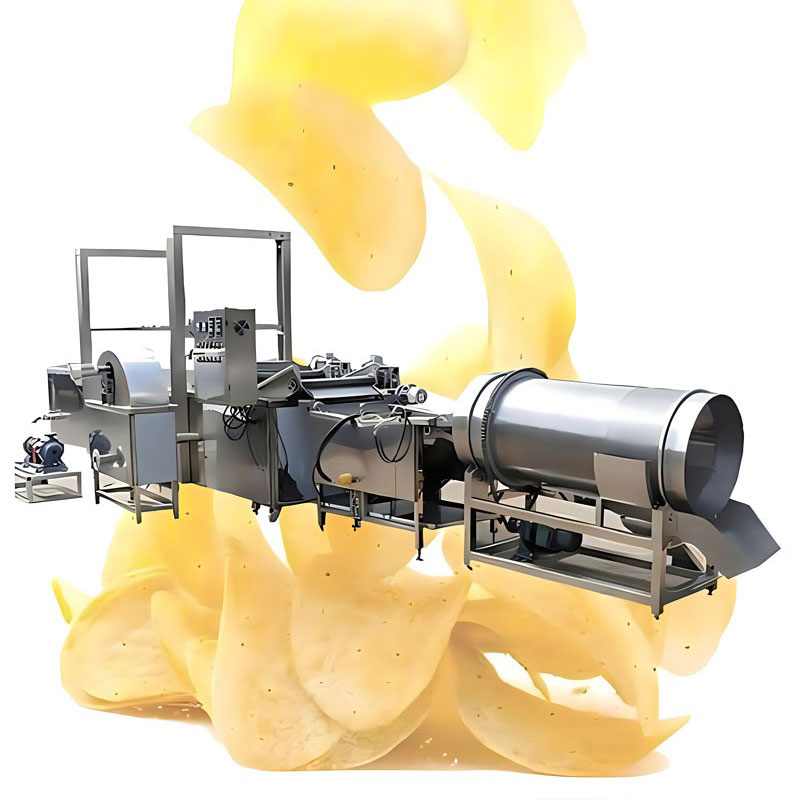 Fully Automatic Potato Chips Line
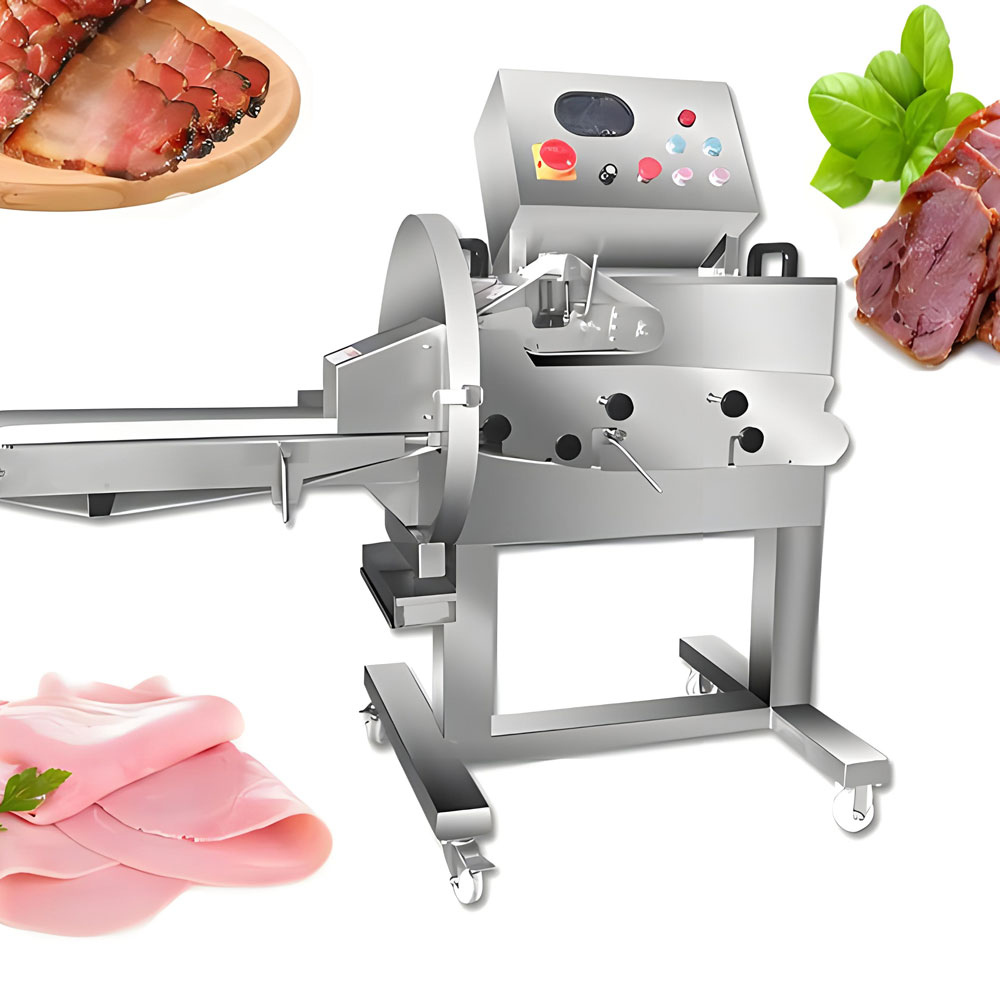 Automatic Cooked Meat Slicing Machine
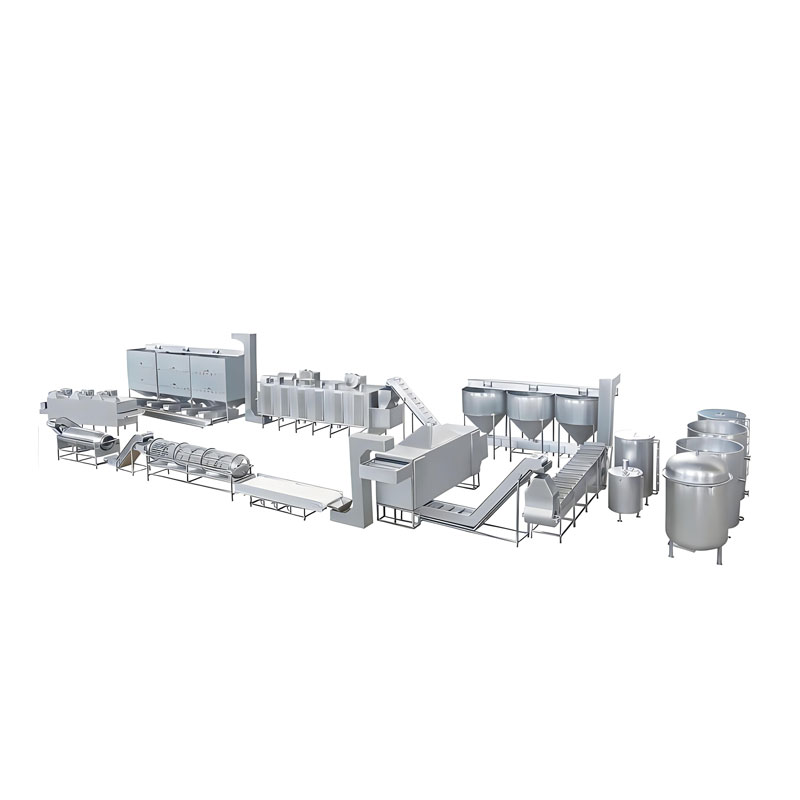 Kimchi Production Line
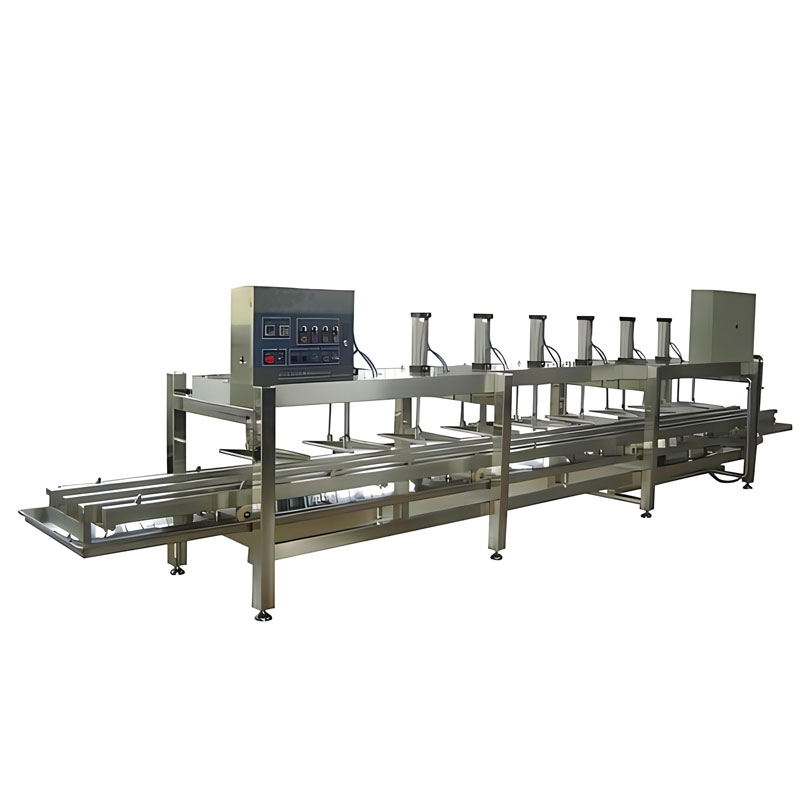 Tofu Production Line
Ready to Get Started?