
Vetting a China Ultrasonic Cake Cutting Machine Factory
The Shifting Logic of Industrial Bakery Procurement
For plant managers and engineering leads in North America and Europe, the decision to source from a China ultrasonic cake cutting machine factory is no longer strictly about CAPEX reduction. It is about speed-to-market and finding a partner capable of handling the high-variability demands of modern SKU cycles. However, the technical gap between a specialized manufacturer and an assembly-line trader can be vast. From my time on the workshop floor, I have seen that the most expensive equipment is the one that sits idle because the ultrasonic generator failed to track a frequency shift in a humid environment.
When evaluating a manufacturer like HSYL, the focus should shift from "Can they cut cake?" to "How do they manage resonance?" A professional facility must demonstrate a deep understanding of acoustic engineering. Proper cutting requires the blade—or the sonotrode—to vibrate in a longitudinal mode with consistent amplitude across its entire length. If the factory lacks the testing equipment to verify the nodal points of their horns, you will experience uneven slicing and premature component failure.
Component-Level Scrutiny: The Metallurgy of Resonance
The most critical component in any portioning system is the blade assembly. In high-output environments, we prioritize medical-grade titanium alloys over stainless steel. Titanium has the fatigue strength required to handle 20,000 to 40,000 cycles per second without cracking. A reliable China ultrasonic cake cutting machine manufacturer should be able to provide material certifications for their titanium horns. If the price seems suspiciously low, they are likely using inferior alloys that will overheat and damage the piezoelectric transducers.
Beyond the blade, the generator—the "brain" of the ultrasonic system—must be digital. Old-school analog generators require manual tuning, which is unacceptable in a modern production facility. Digital generators with automatic frequency tracking ensure that as the blade heats up during a shift, the system adjusts itself. This keeps the amplitude stable and prevents the smearing of delicate layers, a common issue in high-fat products like cheesecake or mousse.
Engineering Trade-offs: Throughput vs. Cut Quality
There is always a trade-off between the speed of the Z-axis (the vertical cut) and the structural integrity of the cake. If the factory pushes for 100 cuts per minute (CPM) without a robust servo-drive system, the product will likely suffer from center-smearing. A high-quality automatic cake ultrasonic cutting machine utilizes precision servomotors to control the entry and exit speed of the blade independently. This allows the blade to slow down as it nears the base of the cake, ensuring the bottom crust is not crushed.
Integration and Automation: The "Turnkey" Test
In mid-to-large capacity plants, a standalone slicer is a bottleneck. The real engineering value lies in how the equipment integrates with the rest of the line. Does the factory offer Modbus or Ethernet/IP communication protocols? Can their PLC interface with your existing packaging master clock? These are the questions that separate an industrial partner from a simple hardware supplier. We have seen projects fail because the cutting machine couldn't "handshake" with the downstream wrapper, leading to continuous line stops.
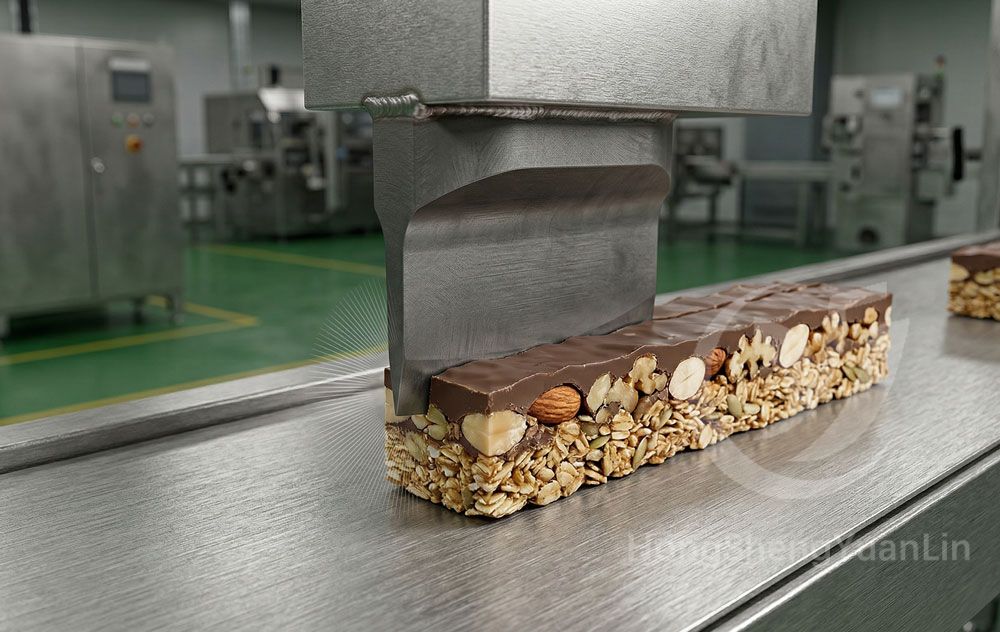
Sanitation design (Sanitation by Design) is another area where many suppliers fall short. For BRC or USDA-compliant facilities, every weld must be ground smooth, and the frame must be constructed from 304 or 316-grade stainless steel with washdown-rated enclosures (IP65 or higher). During a virtual factory audit, ask to see the internal wiring of the control cabinet. Neat, labeled wiring and high-quality electrical components (Schneider, Siemens, or Omron) are reliable proxies for the overall engineering quality of the manufacturer.
Maintenance Reality: Spare Parts and Global Support
No machine is forever. The lifecycle cost of your equipment is determined by the availability of spare parts and technical expertise. A reputable China ultrasonic cake cutting machine factory must maintain a stock of standardized transducers and generators. If they use proprietary, non-standard electronics, you are at risk of long-term downtime. Furthermore, verify if the manufacturer has a track record of overseas commissioning. Sending a technician across borders is a logistical and technical hurdle that only established factories can handle effectively.
The "Old Engineer" Audit: 5 Questions for Your Vendor
- What is the maximum amplitude loss at the edges of your 600mm horn?
- How does your generator handle "no-load" running protection?
- Can you provide a FAT (Factory Acceptance Test) protocol template?
- What is the IP rating of the ultrasonic transducer housing during a high-pressure wash?
- Can your servo system accommodate varying tray thicknesses automatically?
By shifting your procurement strategy from "sighting a machine" to "vetting an engineering process," you significantly reduce the operational risk associated with overseas sourcing. A factory like HSYL, which focuses on these engineering nuances, is not just a supplier; they are an extension of your operations team.
The Impact of Yield and Giveaway Reduction
Finally, we must talk about the bottom line: portion weight consistency. In large-scale operations, "giveaway" (the amount of product over the target weight) can cost tens of thousands of dollars annually. Precise ultrasonic cutting allows you to tighten your tolerances. When the cut is cleaner, there is less waste, and the packaging fits better. These micro-efficiencies are what justify the investment in higher-grade Chinese machinery over entry-level mechanical slicers.
If you are planning to scale your production in 2026, the complexity of modern baked goods—from high-moisture frozen cakes to multi-grain bars—requires a cutting solution that is as flexible as it is reliable. Choosing the right factory in China is the first step toward that stability.
Related Topics
- Ultrasonic Cake Cutting Machine Manufacturers & Global Support
- Industrial Bakery: 2026 Procurement Guide for Automatic Slicers
- Vetting China Ultrasonic Cake Cutting Machine Suppliers
Consult with HSYL Engineering
Are you looking to optimize your portioning yield or bridge the automation gap in your bakery line? Contact our technical team at HSYL today. Our engineers are ready to discuss your specific SKU requirements, frequency tracking needs, and line integration challenges. We don't just sell machines; we design production stability for the global food industry.
Frequently Asked Questions
How do I verify if a China factory is a real manufacturer or just a trader?
What is the standard lead time for an industrial ultrasonic cake cutter from China?
Can the machine handle frozen cakes directly from the blast freezer?
Do I need a special generator for each type of cake?
What certification should I look for when importing from China?
Is technical support available in English for troubleshooting?
Must-Read Blogs For Chain Restaurants Owner

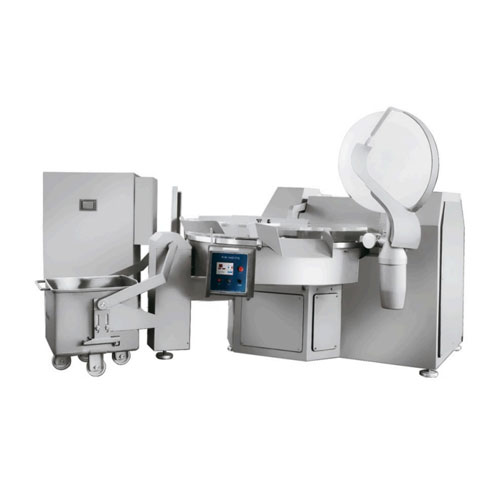
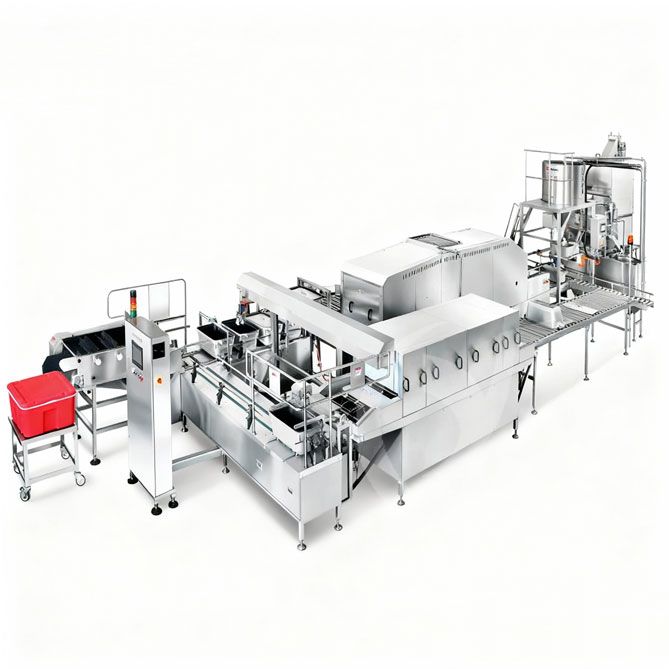
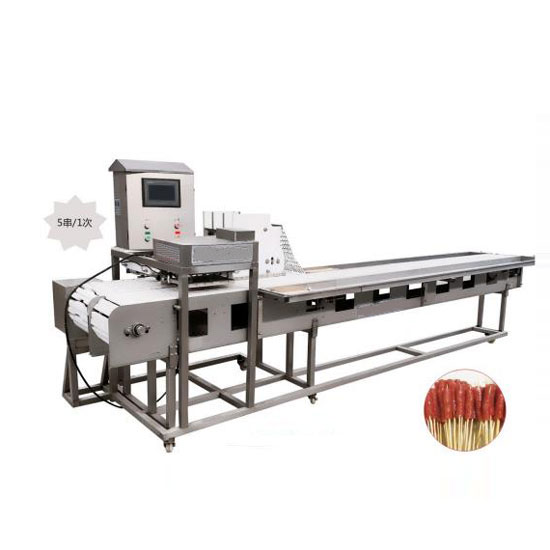 Cutting And Stringing Integrated Machine
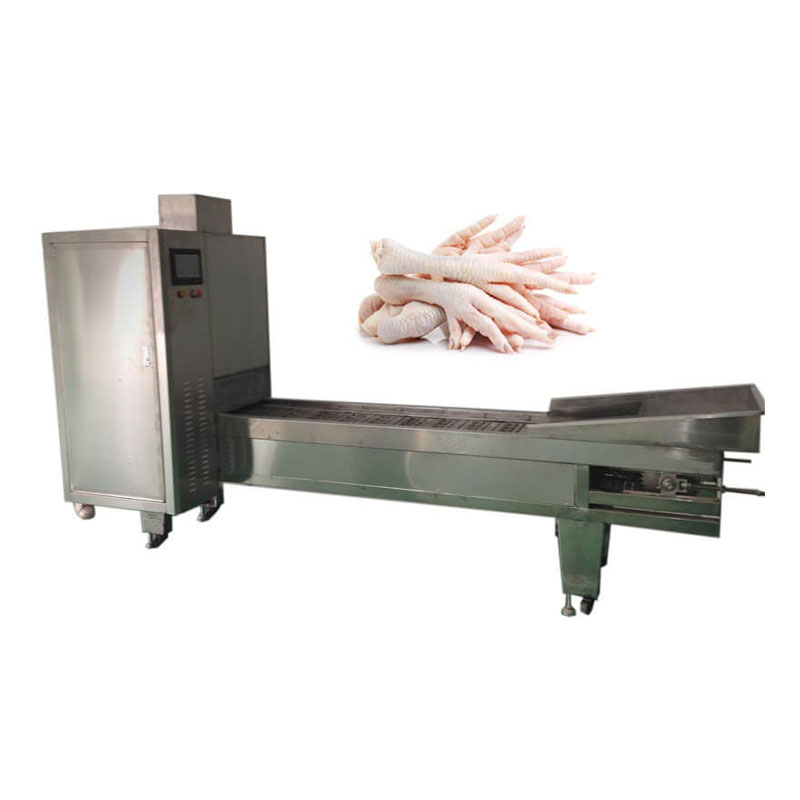 Chicken Feet Cutting Machine
 X-Type Cutting And Stringing Machine
 Flake Ice Machine
Ready to Get Started?