Meatball Production Line
We Are Not Only Capable Of Selling Products, But Also Have The Ability To Undertake Full Turnkey Projects.

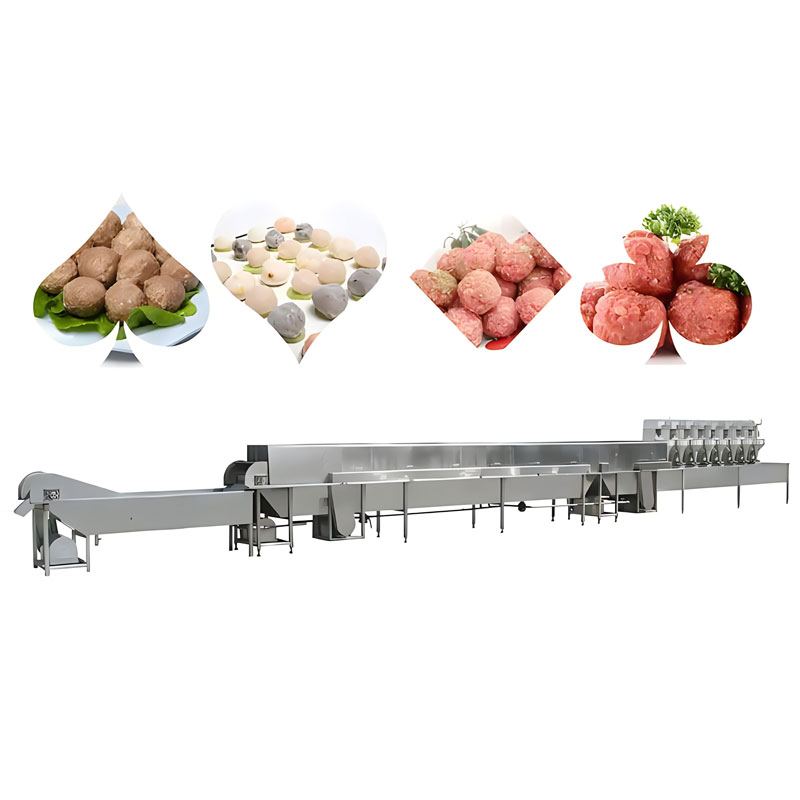
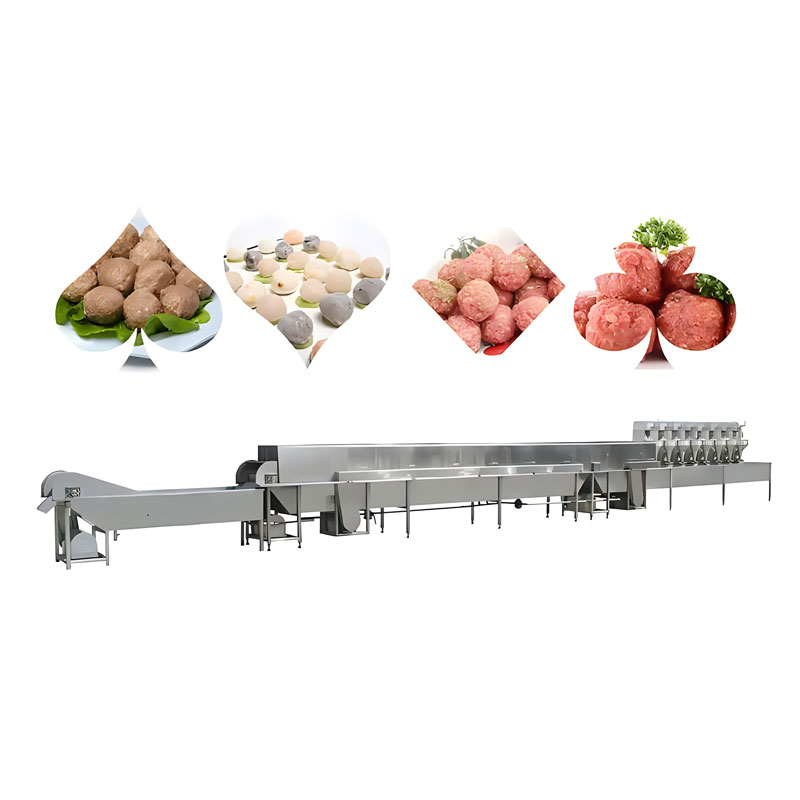
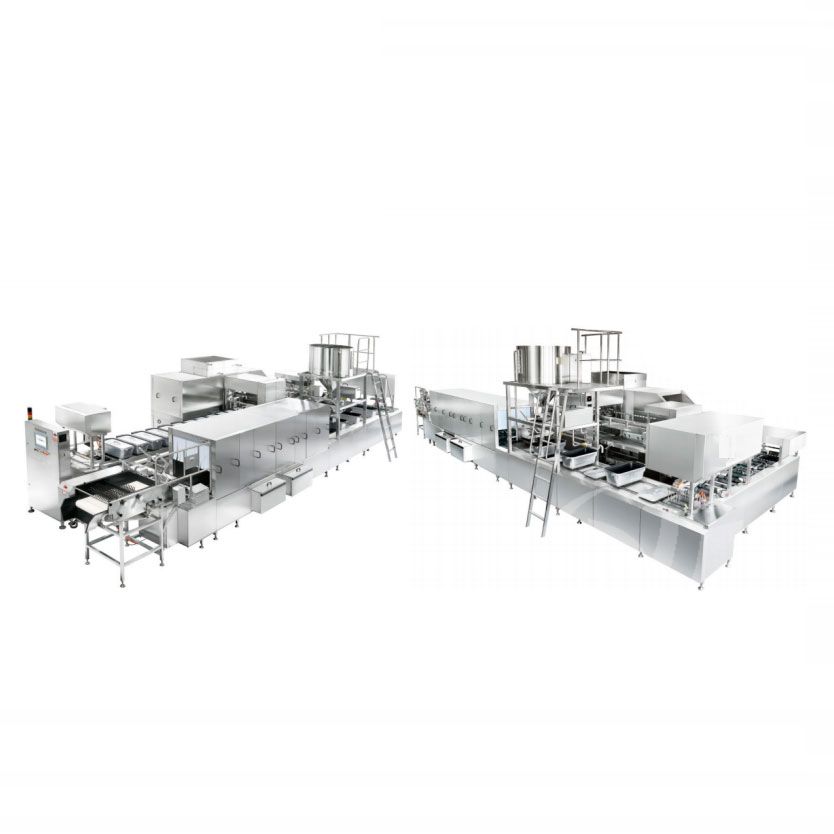
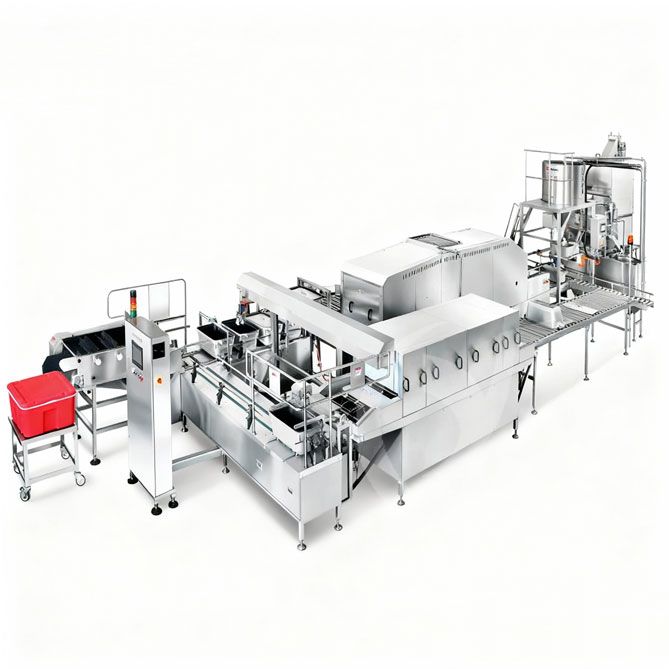
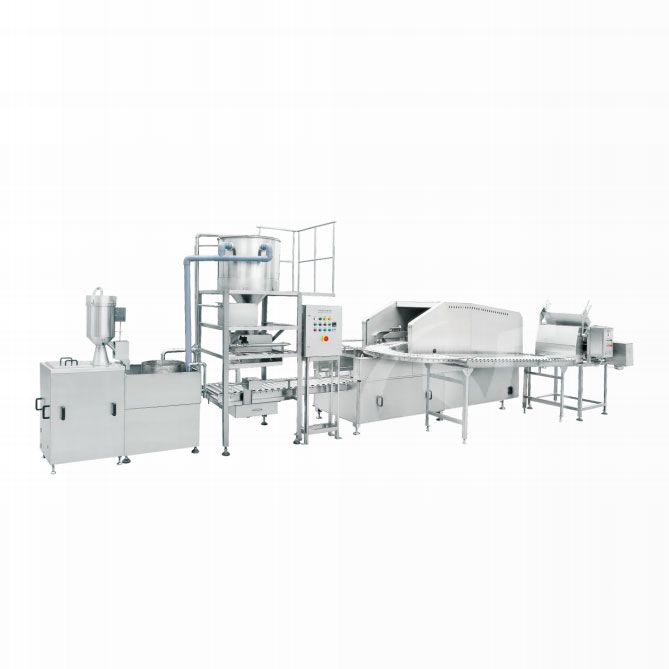
Mass-producing uniform, high-resilience meatballs requires strict thermal control and exact volumetric extrusion to prevent protein denaturation and shape deformation. This turnkey meatball production line is meticulously engineered to manage the entire workflow from initial meat paste blending to core-stuffed forming, double-stage water boiling, cooling, and final IQF freezing. By isolating the mechanical extrusion heat and utilizing synchronized variable-frequency conveyance, this system resolves the common bottleneck of inconsistent weight and broken stuffing, ensuring every batch meets rigorous QSR and frozen food retail standards.
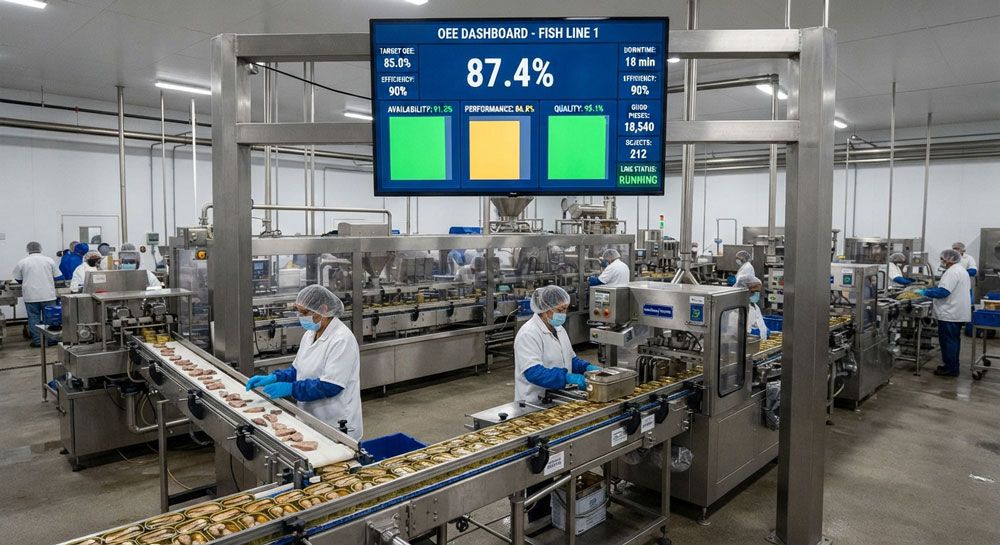
The centralized PLC architecture seamlessly networks all downstream modules, eliminating manual transfer phases and protecting the raw meat emulsion from ambient microbial exposure during the critical forming windows.
| Engineering Parameter | System Specification |
|---|---|
| System Series Configuration | HMB-1000 Continuous Forming Line |
| Volumetric Throughput | 500 - 1000 kg/h (Dependent on paste density/size) |
| Product Size Range | Diameter 15mm - 35mm (Interchangeable copper molds) |
| Total Connected Power | 75 KW (Including boiling and cooling tanks) |
| Standard Operating Voltage | 380V / 50Hz / 3Phase (Custom UL/CSA configurations available) |
| Structural Material | SUS304 Food-Grade Stainless Steel Frame & Piping |
| Sanitary Defense Rating | IP65 (Direct low-pressure foam washdown compatible) |
Zero-Denaturation Synchronized Blending
Maintaining the elasticity of the meat matrix is reliant on temperature management. The line integrates a jacketed vacuum bowl cutter that actively extracts atmospheric oxygen while circulating coolant through the double-layer walls. This prevents the friction-induced heat from prematurely cooking the proteins, enabling the creation of a highly emulsified paste that directly feeds into the automatic meatball production line with maximal structural integrity.
Volumetric Core-Stuffing Accuracy
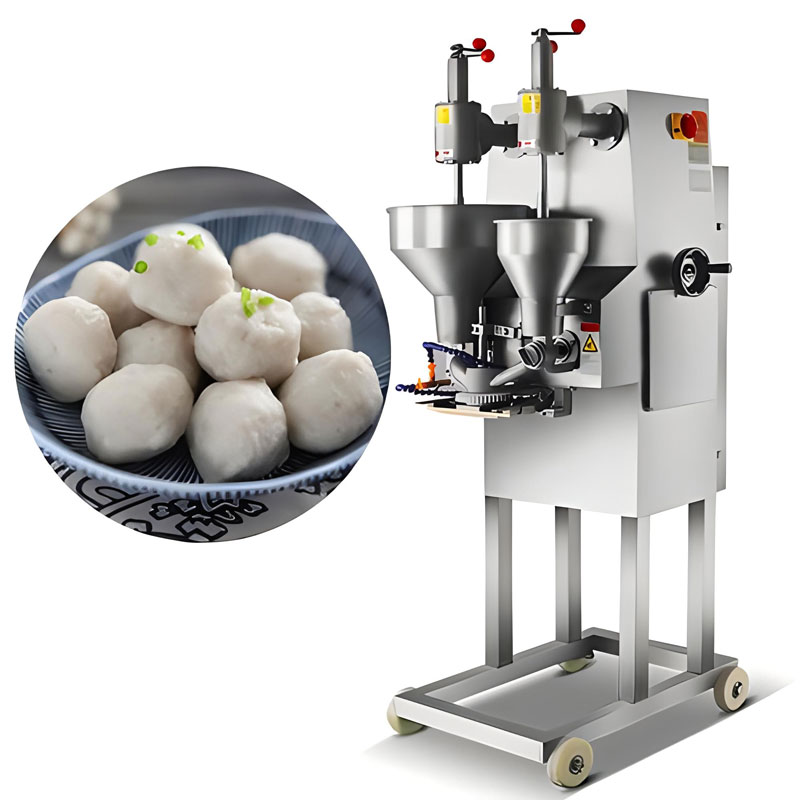
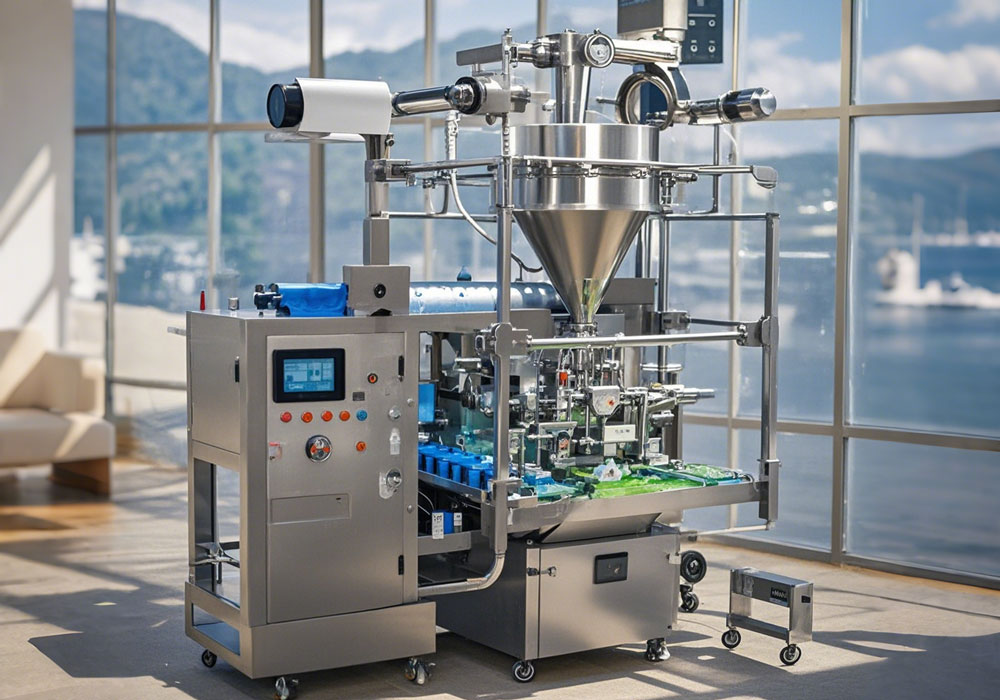
Standard extruders struggle with liquid or high-fat fillings. This line employs an independent dual-hopper servo-driven pumping mechanism. The outer casing paste and the inner core filling (such as cheese, gravy, or seasoned fats) are metered through concentric nozzles. A high-speed mechanical iris cutter severs the flow, perfectly encapsulating the liquid core without tailing or leaking, achieving an exact weight tolerance of ±1 gram per unit.
Two-Stage Hydro-Thermal Setting and Boiling
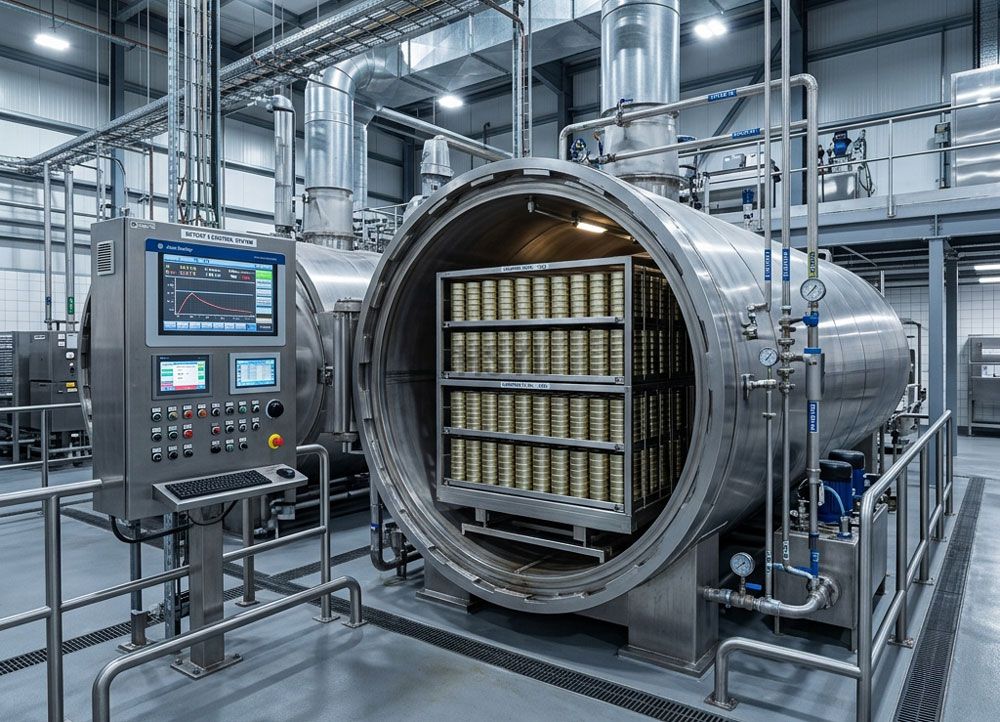
Dropping raw meatballs directly into boiling water causes rapid outer expansion and internal cracking. Our system utilizes a segmented flume. As the meatballs drop from the automatic meatball making machine, they enter a 65℃ to 70℃ low-temperature setting tank to gently coagulate the surface proteins and lock in the shape. A mechanical paddle then transfers them into the 90℃ to 95℃ core-boiling tank to achieve commercial sterility and final structural firmness.
Hygienic Execution and Sloped Drainage
Cross-contamination in meat processing often occurs in hidden horizontal crevices. The entire framework of this production line utilizes continuous TIG welds and tubular, unsealed geometries. The boiling and cooling tanks are equipped with motorized lifting mechanisms for the conveyor belts, allowing sanitation teams unrestricted access to the tank bottoms for complete CIP (Clean-in-Place) sterilization, cutting daily maintenance labor by over a third.
At the heart of the forming stage lies a precision-machined copper gear and rotary drum assembly. Driven by absolute encoders and closed-loop Yaskawa servo motors, the extruder reads the viscosity resistance of the meat batter in real-time. If a localized density shift is detected within the hopper, the PLC instantaneously modifies the extrusion torque, ensuring that the volumetric output remains completely static. This mechanical feedback loop completely eliminates the "hollow core" defects commonly associated with pneumatic extruders, providing industrial buyers with a defect rate approaching absolute zero.
When deployed in an industrial frozen food plant, footprint optimization and continuous flow are paramount. This equipment is specifically designed to function as an uninterrupted conduit between the raw preparation rooms and the packaging halls. Following the water-cooling tank, the meatballs traverse a high-velocity air impingement belt that drastically strips residual surface moisture. This critical transition ensures that when the product drops into the spiral IQF (Individual Quick Freezing) tower, the meatballs do not freeze into clusters, maintaining perfect singularity for automated multihead weighers and bagging machines.
Deploying heavy-duty food machinery globally mandates strict adherence to both operational safety and food hygiene laws. This entire line carries CE certification, featuring Category 3 safety interlocks on all moving components and electrical schematics built to IEC standards using Siemens and Schneider contactors. Every food-contact surface complies with FDA and BRC material regulations, guaranteeing that there are no heavy metal leaching risks, even when exposed to high-salt, high-temperature boiling environments.
For custom 3D factory layout proposals, detailed energy consumption calculations, or to schedule a live demonstration of our core-stuffed extrusion technology, please contact our international engineering team directly.
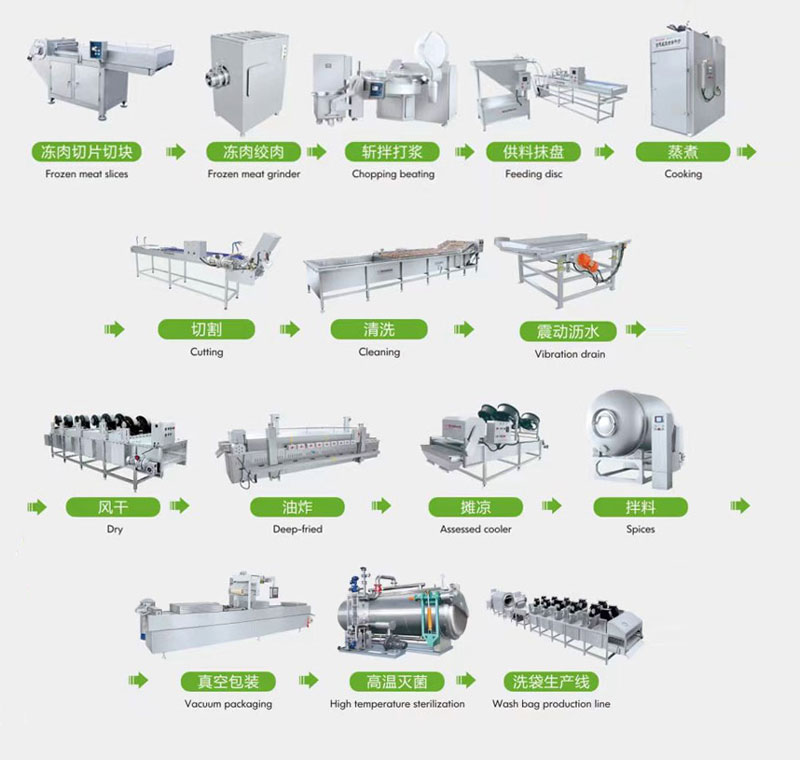
Must-read blogs for bosses