
Turnkey Canning Production Line Solutions
Canning Production Line Manufacturer for Canned Food Factories
HSYL provides turnkey canning production lines for vegetables, fruit, beans, mushroom, meat, fish, eggs, ready meals and aseptic food products, including factory layout support, equipment customization, installation guidance and commissioning support.
Complete Canning Line Planning From Raw Material to Final Packing
A canning line is not only a filling and sealing machine. The full solution must match raw material handling, product formula, can size, sterilization method, factory layout and target production capacity.
HSYL helps food factories plan the full process from washing, sorting, cutting, blanching, filling and liquid dosing to can sealing, retort sterilization, cooling, drying, labeling and carton packing. Each production line can be configured as semi-automatic or fully automatic according to investment budget, labor conditions and capacity requirements.
Canning Products We Support
Different canned foods need different pretreatment, filling, dosing and sterilization plans. This page groups the major product directions for clearer buyer selection.
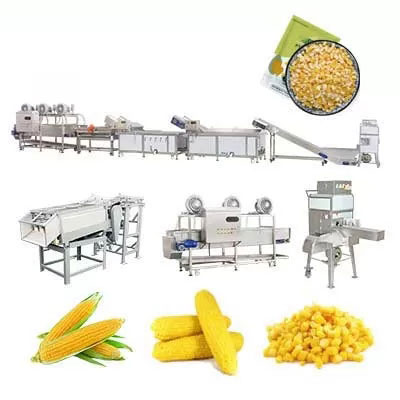
Sweet Corn Canning Line
For corn receiving, cleaning, threshing, blanching, filling, brine dosing, sealing and sterilization.
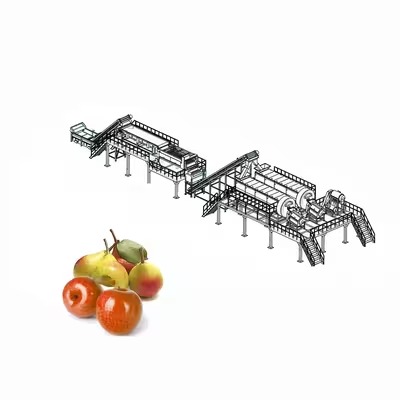
Fruit Canning Line
For apple, peach and mixed fruit processing with washing, peeling, cutting and syrup dosing.
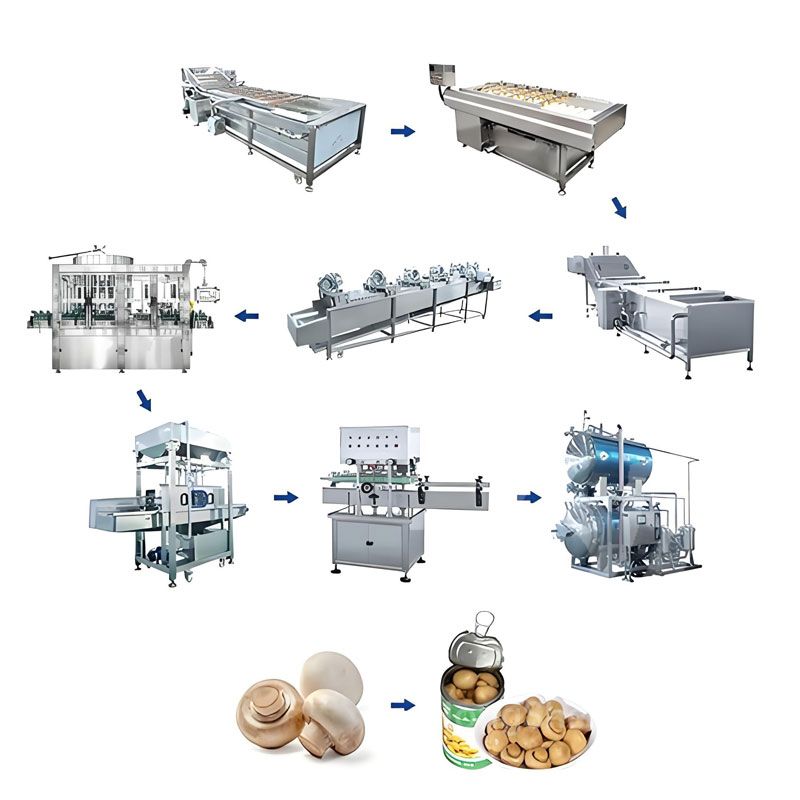
Mushroom Canning Line
For mushroom cleaning, pre-cooking, grading, filling, brine dosing and retort sterilization.
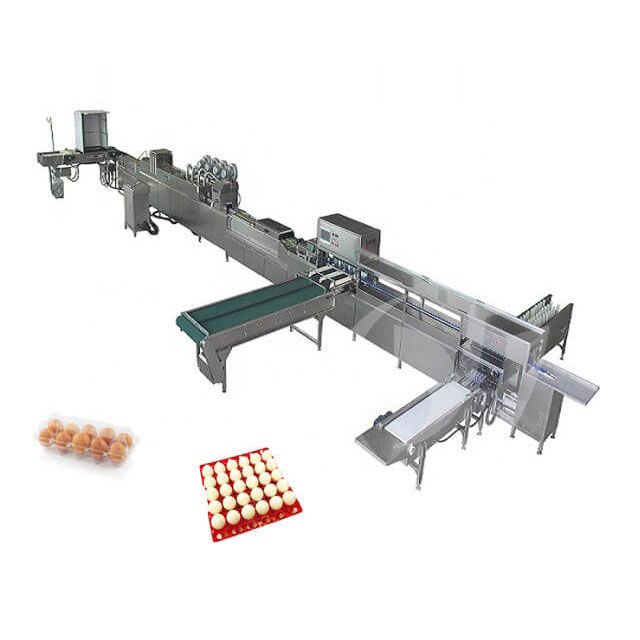
Egg Canning Line
For egg washing, boiling, shelling, marinade filling, sealing and high-temperature sterilization.
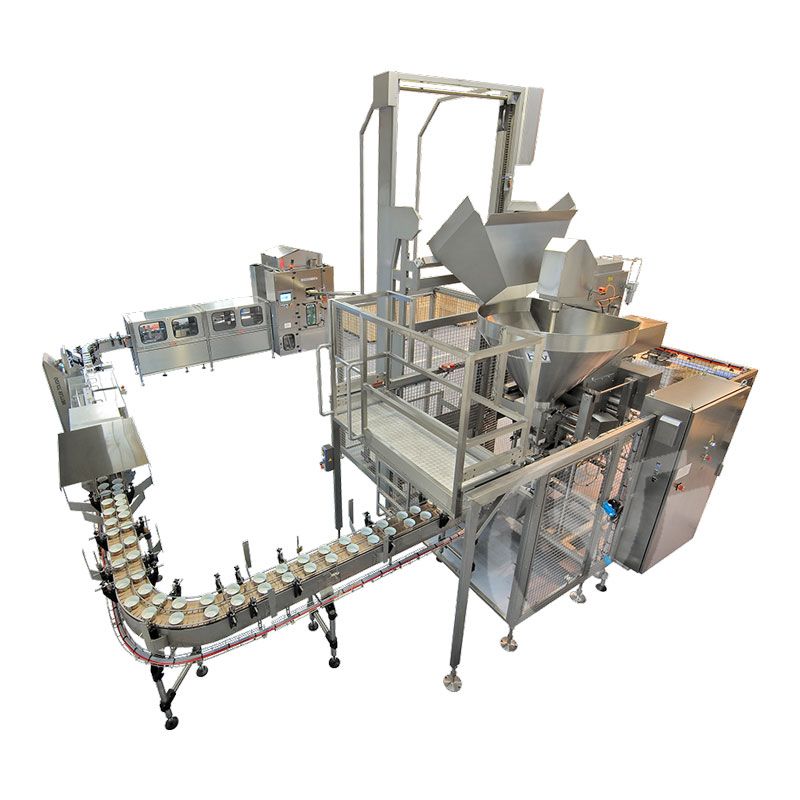
Meat Canning Line
For meat cutting, pre-cooking, sauce dosing, vacuum sealing and high-temperature retort sterilization.
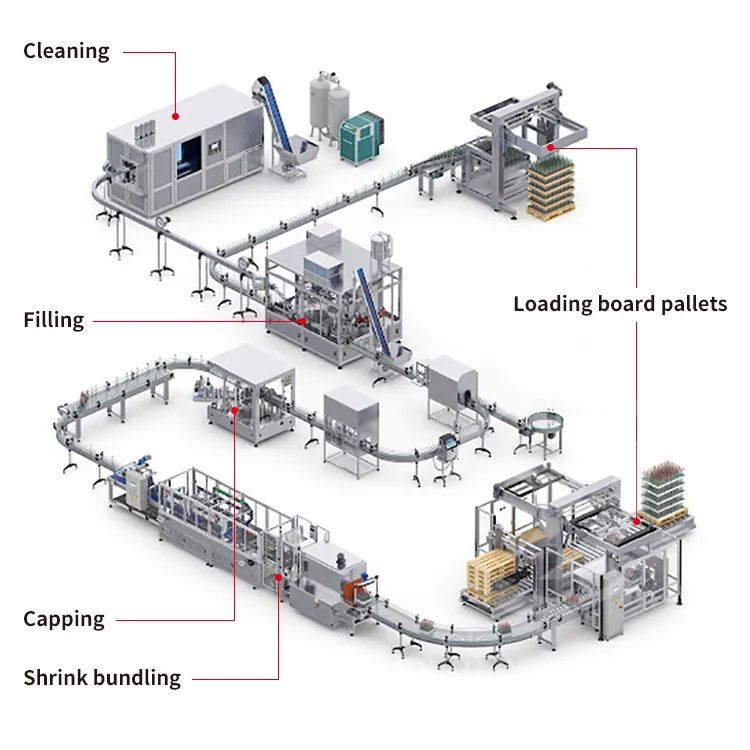
Fish Canning Sterilization Equipment
For fish canning projects that need retort selection, basket loading, thermal processing and cooling design.
Sardine Canning Line
For sardine receiving, cleaning, cutting, filling, sauce dosing, seaming, retort sterilization and packing.
Tuna Canning Line
For tuna cutting, pre-cooking, filling, oil or brine dosing, seaming, sterilization and final packing.
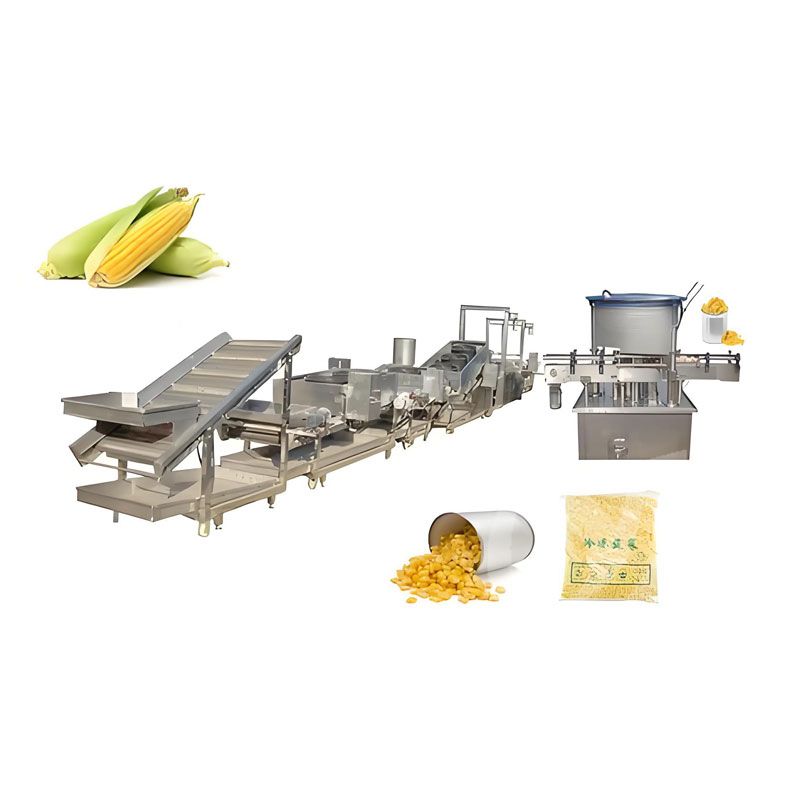
Beans and Vegetable Canning
For beans, corn and vegetables that need soaking, blanching, sauce or brine filling and sterilization.
Aseptic Canning Line
For food products that require CIP, SIP, sterile handling and continuous aseptic filling processes.
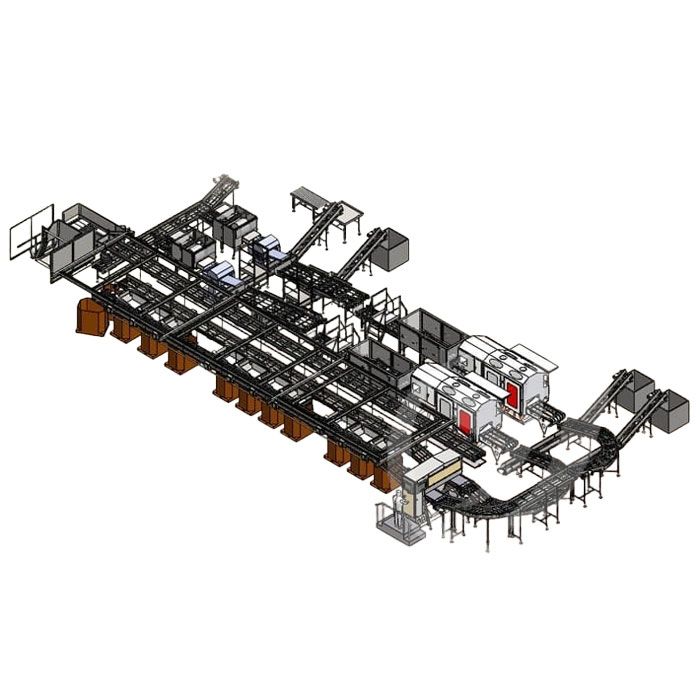
Ready Meal Canning Line
For prepared meals, soups and sauces that need recipe-based filling, sealing and sterilization.
Complete Canning Production Process
The exact flow depends on product type, but most canned food factories need the following process modules.
Raw Material Preparation
Cleaning, sorting, grading, cutting, soaking, peeling, blanching or pre-cooking according to the product.
Filling and Dosing
Can feeding, product filling, brine, syrup, sauce or oil dosing with controlled volume and speed.
Sealing and Sterilization
Vacuum sealing or can seaming, followed by retort sterilization for shelf-stable canned products.
Cooling and Packing
Cooling, drying, inspection, labeling, date coding, carton packing and palletizing for final delivery.
Complete Equipment List for Canned Food Production
Use this equipment list as a quotation starting point. HSYL can adjust the configuration according to capacity, can size, product type and factory layout.
| Process Section | Main Equipment | Purpose |
|---|---|---|
| Raw Material Handling | Washing machine, sorting conveyor, grading machine, cutting machine | Clean, inspect and prepare raw materials before filling. |
| Pretreatment | Blanching machine, pre-cooker, soaking tank, cooling conveyor | Improve texture, color, taste and process stability before canning. |
| Filling and Dosing | Can feeding machine, filling machine, brine/syrup/sauce dosing system | Fill solid product and liquid formula accurately into cans. |
| Seaming and Sterilization | Can sealing machine, vacuum seamer, retort sterilizer, basket loader | Seal cans and complete high-temperature sterilization for shelf life. |
| Post-Treatment and Packing | Cooling tunnel, drying machine, labeling machine, carton packing machine | Cool, dry, label and pack finished canned food products. |
| Cleaning and Utilities | CIP cleaning system, steam system, water treatment, conveyors | Support hygiene, automation and continuous production workflow. |
Engineering Selection Evidence
Technical Evidence for Canning Production Line Planning
Use these planning tables to compare capacity, can type, sterilization method, utilities and quality control before quotation. Final values should be confirmed by product formula, can drawing, filling temperature, target shelf life, local food safety requirements and factory conditions.
Capacity Range Table
| Line Level | Typical Planning Capacity | Suitable Products | Engineering Notes |
|---|---|---|---|
| Entry or pilot line | 800-2,000 cans/hour | New projects, sample production, regional canned food brands | Usually combines semi-automatic loading, compact filling and batch retort sterilization. |
| Medium automatic line | 2,000-6,000 cans/hour | Vegetables, beans, fruit, fish and mixed solid-liquid products | Requires stable raw material feeding, synchronized filling, seaming and retort basket handling. |
| High-output automatic line | 6,000-12,000 cans/hour | Large-scale canned food factories with continuous production demand | Often needs automatic can depalletizing, high-speed filling, multiple seamers and matched retort capacity. |
| Customized high-capacity system | 12,000-15,000+ cans/hour | Dedicated product lines and long production campaigns | Project confirmation is required for product viscosity, can size, thermal process, utilities and packing speed. |
Can Type and Container Adaptation
| Can or Container Type | Typical Application | Equipment Adaptation Point | Data to Confirm |
|---|---|---|---|
| Tinplate round cans | Vegetables, beans, meat, fish, fruit and ready meals | Can washer, filler, lid feeder, double seamer, retort basket and labeling machine must match can diameter and height. | Can drawing, lid type, filling weight, headspace, target output |
| Easy-open cans | Retail canned food products that need convenient opening | Seaming tooling and lid feeding should match the easy-open lid specification and avoid lid deformation. | Lid supplier, cover curl data, seam target, opening direction |
| Small fish cans | Sardine canning line, tuna canning line and other seafood cans | Fish portion control, oil or brine dosing, vacuum seaming and basket loading need special attention. | Fish size, net weight, oil/brine ratio, solid arrangement, retort curve |
| Aluminum cans | Selected beverages, sauces or light canned products | Can handling should reduce dent risk, and seamer configuration must match aluminum can and lid standards. | Can wall strength, lid specification, filling temperature, pressure condition |
| Glass jars or wide-mouth containers | Fruit, sauces, pickles and premium preserved foods | Usually needs jar washing, vacuum capping, gentler conveying and different heat treatment arrangement. | Jar drawing, cap type, pasteurization or retort requirement, breakage control |
Sterilization Solution Selection Table
| Sterilization Option | Best Fit | Main Advantages | Project Confirmation |
|---|---|---|---|
| Saturated steam retort | Metal cans with stable geometry and standard shelf-stable canned food | Simple structure, strong heating efficiency and common use in canned food factories. | Steam supply, basket loading, venting procedure, validated temperature and time record |
| Water spray retort | Cans, jars and products requiring controlled heating and cooling | Improves heat distribution and protects package appearance during sterilization. | Cooling water quality, circulation flow, package strength, thermal process curve |
| Water immersion or cascade retort | Products that need gentle package support and even heat transfer | Suitable for delicate containers and controlled cooling after thermal processing. | Water level, basket design, heat exchanger capacity, drainage and water recovery |
| Rotary retort | Viscous products, solid-liquid mixes and products that benefit from movement | Rotation can improve heat penetration and product consistency in selected recipes. | Headspace, fill ratio, product texture, rotation speed and container strength |
| Aseptic processing and filling | Special shelf-stable liquid or pumpable products | Supports sterile filling with stricter process control for suitable products. | CIP/SIP design, sterile air, validated sterilization target, packaging compatibility |
For low-acid canned foods, the thermal process should be validated by qualified process authority or local regulatory requirements. HSYL can provide equipment configuration, temperature recording and automation interfaces, while the final sterilization schedule depends on the recipe, package and target shelf life.
Factory Utility Requirements
| Utility or Facility Item | Where It Is Used | Planning Requirement | Information Needed Before Layout |
|---|---|---|---|
| Steam | Blanching, pre-cooking, retort sterilization, CIP heating | Steam boiler and piping should match peak retort and cooking demand. | Number of retorts, batch time, cooking equipment list, local boiler standard |
| Electricity | Conveyors, fillers, seamers, pumps, control cabinets, packing equipment | Three-phase power, cabinet layout and machine power list should be confirmed before installation. | Local voltage/frequency, installed power, workshop cable route, automation level |
| Compressed air | Pneumatic valves, cylinders, filling controls, packing equipment | Air compressor, dryer and buffer tank should support stable pressure and clean air quality. | Air consumption by machine, operating pressure, air quality grade, distance to line |
| Water and cooling water | Washing, blanching, brine/syrup preparation, retort cooling, cleaning | Water quality, flow and drainage capacity affect hygiene, cooling speed and product stability. | Raw water source, treatment system, cooling method, wastewater rules |
| Drainage and wastewater | Raw material washing, floor cleaning, CIP discharge, cooling discharge | Floor slope, drain position and wastewater treatment should be planned before equipment placement. | Workshop drawing, cleaning plan, local discharge requirement, solid waste handling |
| Workshop zoning | Raw material area, clean filling area, retort zone, packing and warehouse | Clean and dirty flows should be separated to reduce cross-contamination risk. | Building dimensions, door position, operator flow, material flow, finished goods route |
Double Seam Quality Control
| Control Item | Inspection Method | Why It Matters | Recommended Control Moment |
|---|---|---|---|
| External seam appearance | Visual inspection for droop, sharp seam, false seam, cutover and damage | Finds obvious seaming defects before sterilization and packing. | Start-up, after can size change, after lid change and during routine sampling |
| Seam teardown data | Measure cover hook, body hook, overlap, countersink and seam thickness | Confirms the double seam is mechanically locked within the can supplier target. | Line start, scheduled interval, after tooling adjustment and after maintenance |
| Vacuum or leak testing | Vacuum check, water bath leak test or pressure decay test where applicable | Helps prevent microbial risk, swelling cans and shelf-life failure. | After seaming setup, before retort loading and according to QC sampling plan |
| Fill weight and headspace | Check net weight, solid-liquid ratio and remaining headspace | Affects seam safety, sterilization heat penetration, product appearance and legal weight control. | Before seaming, during production and after recipe or product size change |
| Records and traceability | Keep batch number, seamer setting, operator, inspection data and corrective action | Supports food safety audits, complaint investigation and continuous line optimization. | Every production batch and every critical process adjustment |
Exact seam limits should follow the can and lid supplier specification, seamer manual and the buyer's food safety plan. The equipment proposal can reserve inspection space for seam teardown tools, leak testing and batch records.
Typical Project Configuration List
| Project Type | Core Equipment Configuration | Optional Automation | Key Technical Focus |
|---|---|---|---|
| Sweet corn canning line | Receiving conveyor, husking or cutting, washing, blanching, filling, brine dosing, seaming, retort, cooling, labeling and packing | Automatic corn kernel feeding, multi-head filling, automatic basket loading | Kernel damage control, fill weight accuracy, brine concentration and retort capacity match |
| Sardine canning line | Fish receiving, washing, grading, cutting, pre-cooking, can filling, oil or sauce dosing, vacuum seaming, retort and packing | Automatic fish arrangement, oil dosing system, can inspection and automatic cartoning | Fish portion consistency, can presentation, oil/brine ratio and sterilization curve |
| Tuna canning line | Thawing, cleaning, cooking, cooling, loin cleaning, cutting, filling, brine or oil dosing, seaming, retort and packing | Automatic weighing, chunk filling, vacuum sealing, retort basket handling | Yield control, texture protection, net weight control and sanitation zoning |
| Fruit canning line | Washing, peeling, coring or cutting, color protection, syrup preparation, filling, exhausting, seaming, sterilization and packing | Automatic peeling, syrup mixing, level inspection and label coding | Fruit shape integrity, syrup Brix control, color protection and container appearance |
| Meat or luncheon meat canning line | Meat preparation, cutting, mixing, pre-cooking, filling, vacuum seaming, retort sterilization, cooling and packing | Vacuum mixing, portion filling, metal detection and automatic retort loading | Low-acid process validation, vacuum level, fat separation control and sanitation records |
| Beans or vegetable canning line | Soaking, washing, blanching, grading, filling, brine or sauce dosing, seaming, retort, cooling and packing | Automatic soaking tanks, multi-stage blanching, optical sorting and palletizing | Soaking time, texture control, sauce consistency and batch traceability |
Layout and Technical Parameters
Customize Capacity, Can Size, Sterilization and Factory Layout
For a new canned food factory or production line upgrade, HSYL can help match equipment with workshop space, utility conditions and target output. The final layout should consider raw material entry, clean and dirty zones, sterilization area, finished product storage and operator workflow.
Typical Parameters
- Capacity: 1,000-15,000 cans/hour
- Can size: customized
- Automation: semi-automatic or fully automatic
- Material: SUS304 / SUS316
- Sterilization: steam, water spray or rotary retort
- Service: layout design, installation guide, commissioning support
Buyer Pain Points and HSYL Solutions
Canning projects usually involve many machines and process decisions. This section helps overseas buyers understand where HSYL can reduce project risk.
Common Buyer Problems
- Unclear process flow before factory layout planning.
- Different products require different pretreatment and sterilization methods.
- Filling, sealing and retort capacity do not match each other.
- Equipment list is incomplete, causing extra procurement later.
- Factory utilities are not planned before equipment purchase.
How HSYL Helps
- Process design based on product type and target capacity.
- Complete equipment list from raw material handling to packing.
- Layout support for workshop flow and hygiene zoning.
- Customized filling, dosing, sealing and sterilization configuration.
- Installation guidance and commissioning support for overseas projects.
Canning Production Line Project Directions
These directions use images and product categories already available on the current website.
Sweet Corn Canning Factory
For corn cleaning, threshing, blanching, brine filling, sealing, retort sterilization and packing.
Mushroom Canning Factory
For mushroom cleaning, grading, pre-cooking, filling, brine dosing, sealing and high-temperature sterilization.
Meat Canned Food Factory
For meat cutting, pre-cooking, sauce dosing, vacuum sealing, retort sterilization and final packing.
What Canning Buyers Care About Before Ordering
Most canned food factory buyers need more than a machine list. They want to confirm whether the line matches their product, capacity, can size, sterilization method, factory layout and investment plan.
Product Type and Process Flow
Sweet corn, fruit, mushroom, beans, meat, fish and ready meals need different cleaning, pre-cooking, filling and sterilization processes.
Capacity and Automation Level
Buyers need to know whether the line should be semi-automatic or fully automatic, and whether filling, sealing and retort capacity match each other.
Can Size and Filling Accuracy
Different can sizes, solid-liquid ratios, brine, syrup, sauce or oil dosing requirements affect filling machine selection and quotation.
Sterilization and Shelf Life
Retort type, sterilization temperature, time, basket loading and cooling method must match the canned product and target shelf life.
Factory Layout and Utilities
Workshop size, steam, water, electricity, drainage, compressed air and clean-dirty zone planning should be checked before ordering.
Installation, Training and Spare Parts
Overseas buyers care about installation guidance, commissioning support, operator training, spare parts and long-term line stability.
Frequently Asked Questions
FAQ content improves buyer clarity and gives the page more long-tail SEO coverage.
What products can be processed by a canning production line?
HSYL can configure canning production lines for vegetables, sweet corn, fruit, beans, mushrooms, meat, fish, eggs, ready meals and aseptic food products.
What equipment is included in a complete canning line?
A complete line may include washing, sorting, cutting, blanching, filling, brine or syrup dosing, sealing, retort sterilization, cooling, drying, labeling and packing equipment.
Can HSYL customize the line according to capacity and can size?
Yes. HSYL can customize the equipment configuration according to product type, required capacity, can size, automation level, factory layout and target country requirements.
What information is needed for a canning production line quotation?
Please provide the canned product, target capacity, can size, container material, factory layout or workshop dimensions, automation preference, target country, project timeline and contact details.
How much does a canning production line cost for a food factory?
The cost of a canning production line depends on product type, capacity, automation level, can size, filling method, sterilization system, packing section and factory layout. Buyers can send target cans per hour and product details for a practical equipment list.
What is the difference between semi-automatic and fully automatic canning production line equipment?
Semi-automatic canning equipment is suitable for smaller budgets, trial production and flexible product changes. Fully automatic canning production line equipment is better for stable high-volume production, lower labor dependence and more consistent filling, sealing and packing.
How many cans per hour can a canned food production line produce?
The output depends on can diameter, can height, product viscosity, filling accuracy, seamer speed, retort capacity and packing method. HSYL can match the washer, filler, seamer, sterilizer and packing machines around the required cans per hour.
What factory space and utilities are needed for a turnkey canning production line?
Buyers should confirm workshop dimensions, raw material flow, clean area, drainage, water, steam, electricity, compressed air, cooling water, retort area, finished product storage and forklift movement before finalizing the canning line layout.
How do I choose retort sterilization equipment for canned food?
Retort selection depends on food acidity, can size, solid-liquid ratio, product texture, target shelf life, basket loading method and local food safety requirements. Common options include steam retort, water spray retort and rotary retort systems.
Can one canned food filling and sealing line handle fruit, beans, meat and fish?
Some conveyors, can feeding, liquid dosing, sealing and packing sections may be shared, but pretreatment, filling method, sauce or brine dosing, hygiene design and sterilization process usually need to be configured for each product.
What canning production line is suitable for sardine and tuna canned fish?
Sardine and tuna canning projects usually need fish receiving, cleaning, cutting or portioning, pre-cooking if required, filling, oil or brine dosing, can seaming, retort sterilization, cooling, drying, labeling and packing equipment.
Canning Production Line Hub and Internal Links
This Hub connects the main canning solution page with product pages, topic pages and buying guides from the first-week plan.
Priority Product and Topic Pages
- Aseptic Canning Production Line Equipment
- Sweet Corn Canning Production Line
- Food Canning Production Line
- Canned Food Filling and Sealing Line
- Automatic Can Sealing Machine
- Fish Canning Sterilization Equipment
- Canned Fruit Production Line Equipment
- Canned Meat Production Line
- Canned Luncheon Meat Production Line
- Canned Beans Production Line
Buying Guides and Blog Support Pages
- Ultimate Canned Food Production Line Guide
- Canning Production Line Cost Guide
- How Canning Production Line Works
- Equipment Needed for Producing Canned Goods
- Investment Required for a Canning Production Line
- Fully Automatic Canning Line Cost per Unit
- Fruit Canning Production Line Cost
- Meat Canning Production Line Cost
- Fish Canned Production Line Buying Guide
- Daily Maintenance Checklist for Commercial Can Seamers
Contact Us
Related Canning Lines and Buying Guides
These links use URLs already found in the current sitemap, helping the new Hub page connect to existing indexed content.