Meat Processing Line Equipment
We Are Not Only Capable Of Selling Products, But Also Have The Ability To Undertake Full Turnkey Projects.

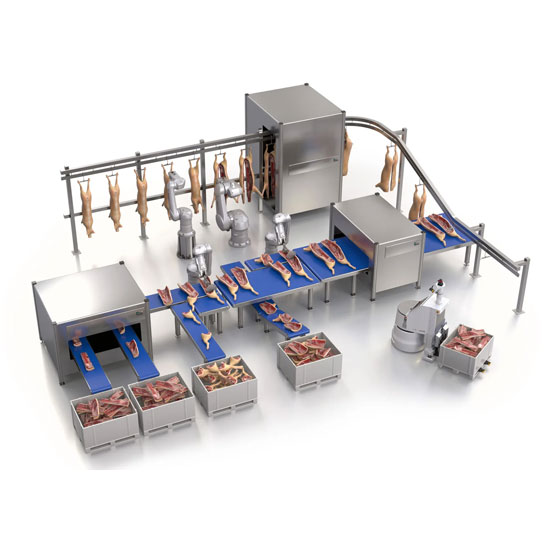
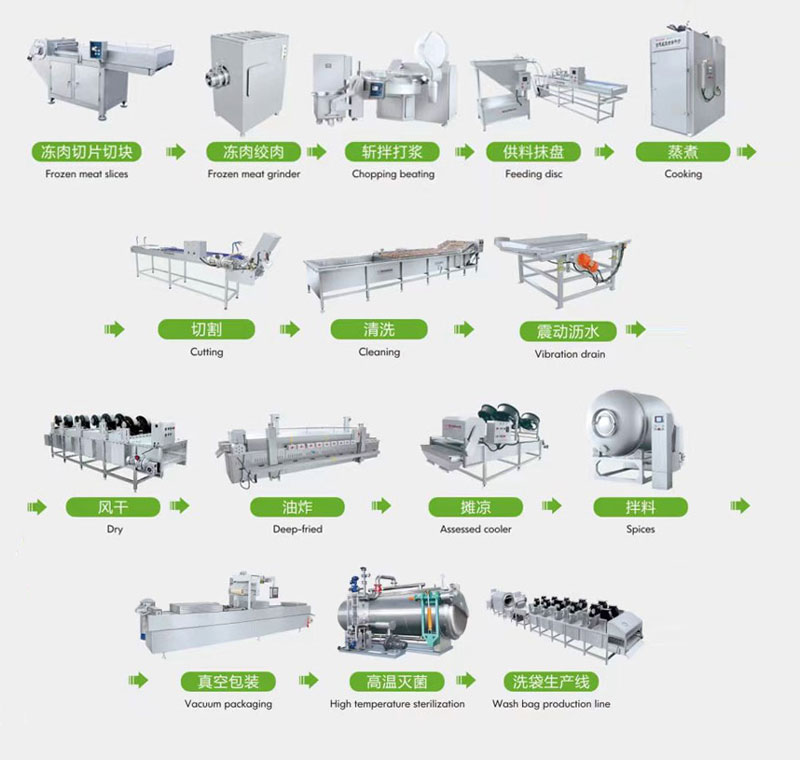
Engineered for continuous high-stress industrial environments, this turnkey meat processing line resolves the critical bottleneck of breaking down and processing -18℃ to -5℃ high-hardness frozen meat blocks without the need for prior tempering. The system systematically integrates primary reduction, secondary grinding, precision mixing, and portioning stages into a unified, synchronized workflow. Built with an uncompromising focus on cross-contamination prevention, the entire module utilizes continuous welds and sloped drainage surfaces to ensure strict adherence to HACCP protocols.
| Parameter | Specification Limit |
|---|---|
| System Model Configuration | HMPL-2000 Continuous Processing Series |
| Nominal Capacity (kg/h) | 1500 - 3000 kg/h (Dependent on raw material hardness) |
| Total Installed Power (KW) | 45.5 KW (Combined downstream drives) |
| Operating Voltage | 380V / 50Hz / 3Phase (Customizable for UL/CSA standards) |
| Main Structural Material | SUS304 Stainless Steel (SUS316 upon special request) |
| Washdown Defense Grade | IP65 (Direct high-pressure hose compatible) |
| System Layout Dimensions (mm) | Approx. 8500 x 2200 x 2100 (Modular adjustable footprint) |
Unyielding Drive Mechanics for Frozen Blocks (Eliminating Tempering Times)
The primary reduction stage incorporates a high-torque planetary gear system specifically calibrated to fracture and process -18℃ frozen beef or pork blocks. By entirely eliminating the 12-to-24-hour static thawing cycle, the facility drastically reduces bacterial growth windows and limits drip loss, preserving the structural integrity of the muscle fibers. The kinetic force is safely distributed through an overload-protected shaft.
Hygienic Washdown Design (IP65 Upgraded Modular Breakdown)
Meeting USDA and European sanitary design directives, the frame avoids flat horizontal surfaces, preventing water pooling and microbial harborage. Every motor enclosure and electrical panel exhibits rigorous IP65-level sealing. Fast-release clamping mechanisms allow sanitation crews to execute a complete wet washdown, saving up to 40% in daily transition downtime between product batches.
Synchronized Conveyance and Reduced Tact Times
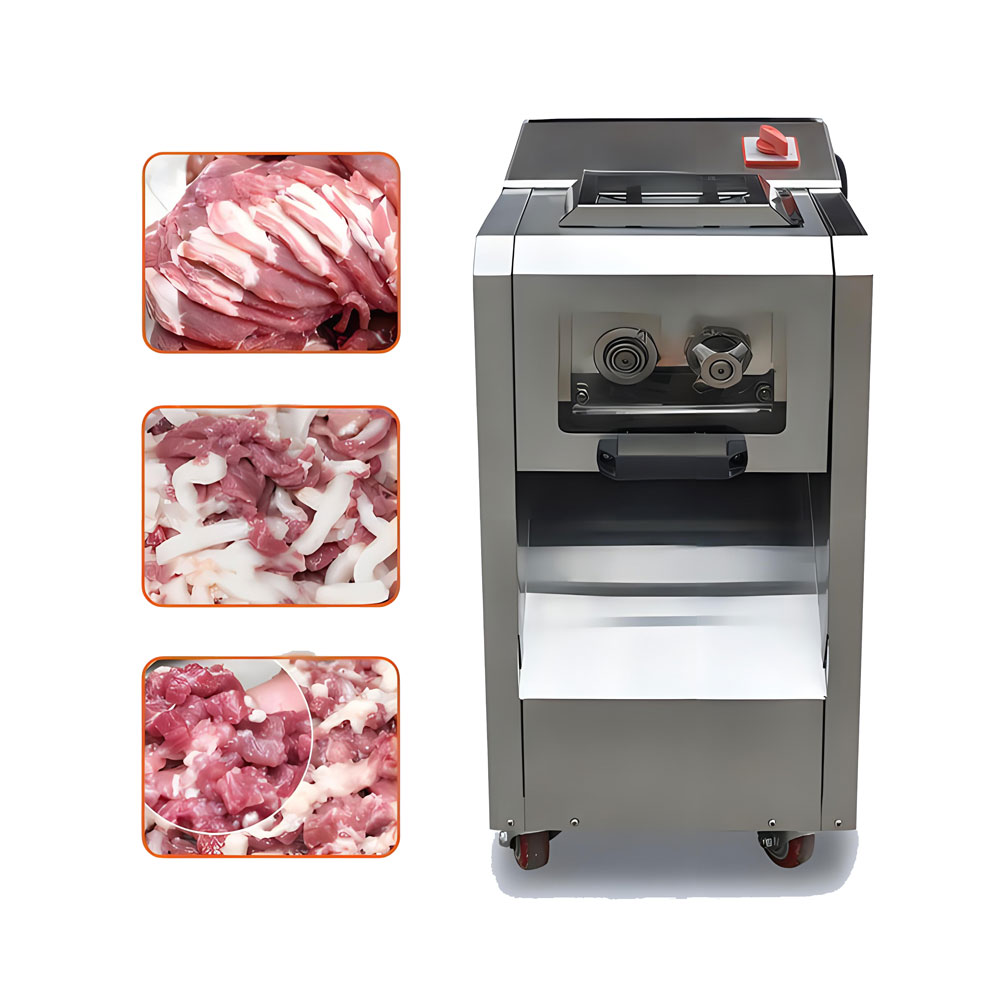
A common issue in fragmented layouts is the accumulation of work-in-progress materials. This line uses synchronized polyurethane (PU) modular belting driven by Variable Frequency Drives (VFD). This allows the line to modulate its feed rate automatically when material is passed into the industrial frozen meat slicing machine, preventing jams and minimizing operator intervention.
Complete Downstream Extensibility
The localized control interfaces can be networked into a master SCADA system. Should the plant decide to transition from bulk ground meat into formed products, the terminal conveyor is specifically engineered to dock seamlessly with automated staging modules, such as a vacuum stuffing machine, providing continuous vacuum extrusion with zero bridging in the hopper.
The operational core of this heavy-duty machinery is not just raw mechanical force, but precise electronic synchronization. The human-machine interface (HMI) controls a deterministic PLC network that reads real-time torque feedback from the primary cutting motors. If the sensors detect an irregular density spike (such as an embedded bone fragment or extreme temperature drop in the meat block), the system instantaneously adjusts the feeding auger RPMs to prevent blade shattering or motor burnout. Safety interlocks mandate that any opened access hatch immediately triggers a multi-stage mechanical braking mechanism, stopping all rotating components within milliseconds to comply with OSHA directives.
When installed within a high-volume central kitchen supplying regional quick-service restaurants (QSR), the structural reliability of this processing line becomes a decisive factor. Operating in damp, +4℃ ambient production halls, the equipment maintains strict temperature control of the meat mass by preventing excessive friction heat during the reduction phases. When executing Turnkey plant deployments, our engineering team manages the complete installation, calculating floor loading capabilities, routing compressed air lines, and establishing proper electrical distribution centers. This end-to-end integration capability guarantees that the layout achieves its rated 2000kg/h capacity from day one of commercial operation.
Exporting industrial capacity machinery requires robust third-party validation. This entire processing line architecture is constructed in accordance with CE machinery directives and BRC mechanical safety guidelines. We utilize strictly standardized electrical contactors and sensors from globally recognized brands, ensuring that any localized maintenance team can source replacement consumables locally. We dispatch certified engineers for international Installation & Commissioning, guaranteeing that the equipment passes local municipal health inspections prior to operation handover.
To request a tailored layout design, detailed DWG floorplans, or a test operation video using your specific raw materials, please submit a formal inquiry to our engineering sales department.
Must-read blogs for bosses