
Retort Critical Factors for Canned Fish: Heat Penetration and Safety
During a process authority audit of a new seafood cannery, the focus quickly shifts from the boiler room to the retort control panel. The auditor is not just checking whether the retorts reach 121.1°C; they are verifying how the plant controls, monitors, and logs the specific parameters that guarantee food safety. Under US FDA 21 CFR Part 113 and Codex CXC 23-1979, the sterilization of low-acid canned food relies on a defined scheduled process. This process is validated on the strict condition that several operational variables—known as critical factors—remain within defined limits. For industrial canned fish production lines, neglecting these factors is a leading cause of process deviations, regulatory audit findings, and product recall risks.
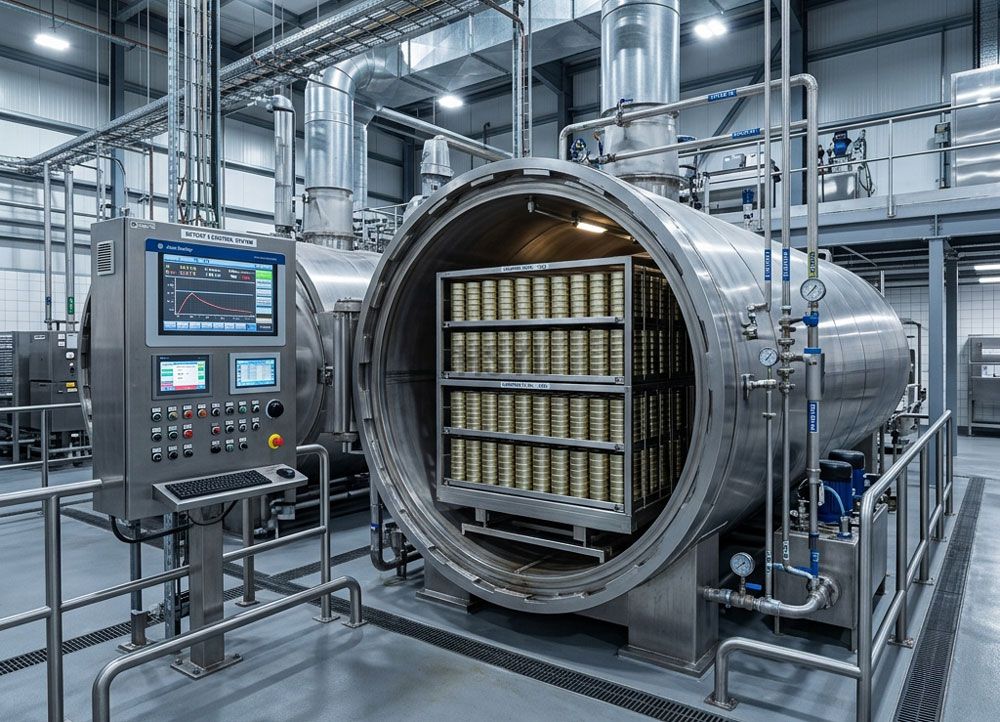
This article details the five primary retort critical factors for canned fish: initial temperature, fill weight, packing medium viscosity, headspace, and mechanical agitation. It explains the physical heat-transfer mechanics behind each variable, how they impact thermal validation studies, and how to establish a robust, audit-defensible control plan to handle operational deviations.
The Physics of Heat Penetration in Canned Fish
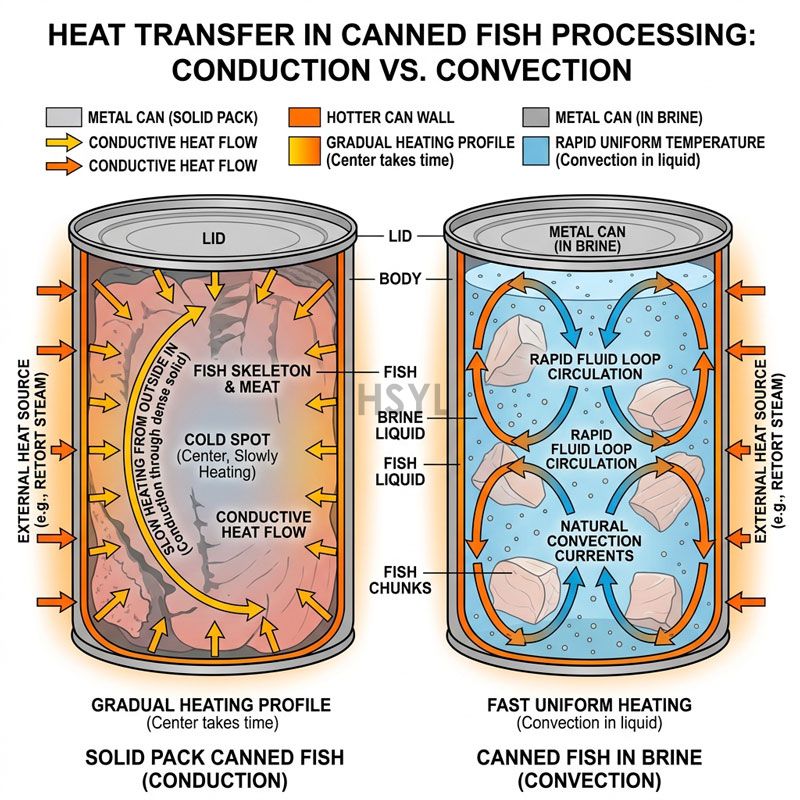
To understand why these five variables are classified as critical factors, one must examine how heat travels from the retort heating medium (steam, hot water cascade, or steam-air mix) to the coldest point inside the container, historically called the "cold spot" or Slowest Heating Zone (SHZ). Heat transfer in canned fish occurs through two primary mechanisms:
- Conduction: The slow, molecule-to-molecule transfer of heat. This occurs in solid-pack products like tuna steaks or salmon portions where there is minimal free liquid. The SHZ is located at the geometric center of the can.
- Convection: The rapid movement of heat via circulating liquid currents. This occurs in products packed in thin liquids like sardines in brine or water. The hot liquid rises along the can walls, and the cool liquid drops down the center, shifting the SHZ toward the bottom-third of the can.
If a critical factor shifts—such as a brine viscosity increase or a packing weight overrun—the heat-transfer mode can pivot from convection to conduction. This slows the rate of heat penetration, invalidating the scheduled process and leaving the center of the container under-processed. The following sections break down how each critical factor alters this thermodynamic balance.
1. Initial Temperature (IT): The Thermal Starting Line
Initial temperature is defined as the temperature of the coldest container in the retort at the moment the sterilization cycle begins (when the steam valve is opened). It is a common misconception that the retort's come-up time will automatically compensate for cold cans. In reality, the scheduled process is calculated using a specific baseline IT. If the actual IT falls below this limit, the cumulative lethality (F₀-value) delivered during the hold phase will be insufficient to achieve commercial sterility.
The physical heat transfer rate is directly proportional to the temperature difference between the retort medium and the product. A lower IT requires more thermal energy and time to bring the SHZ up to the sterilizing threshold. If the cycle time remains fixed, the product will spend less time at the sterilizing temperature, resulting in under-sterilization. The risk is particularly high for lines that experience long delays between filling and retorting, allowing filled cans to cool down in draughty packing halls, or during winter startups when raw fish core temperatures are low.
Engineering Best Practice: IT must be measured on the coldest container in the retort load. This is typically located in the middle of the last basket filled, or in a basket that was held near cold draft air. The temperature must be checked and logged immediately before closing the retort door and starting the steam cycle.
2. Fill Weight: Controlling Thermal Mass and Pack Density
Fill weight determines the total thermal mass inside the container. It is distinct from net weight (which includes liquid media) and must be monitored independently. In canned fish processing, the solid-to-liquid ratio is critical to heat penetration. If the fill weight of the solid fish exceeds the upper limit specified in the scheduled process, the excess mass acts as a heat sink, absorbing thermal energy and delaying the rise of temperature at the cold spot.
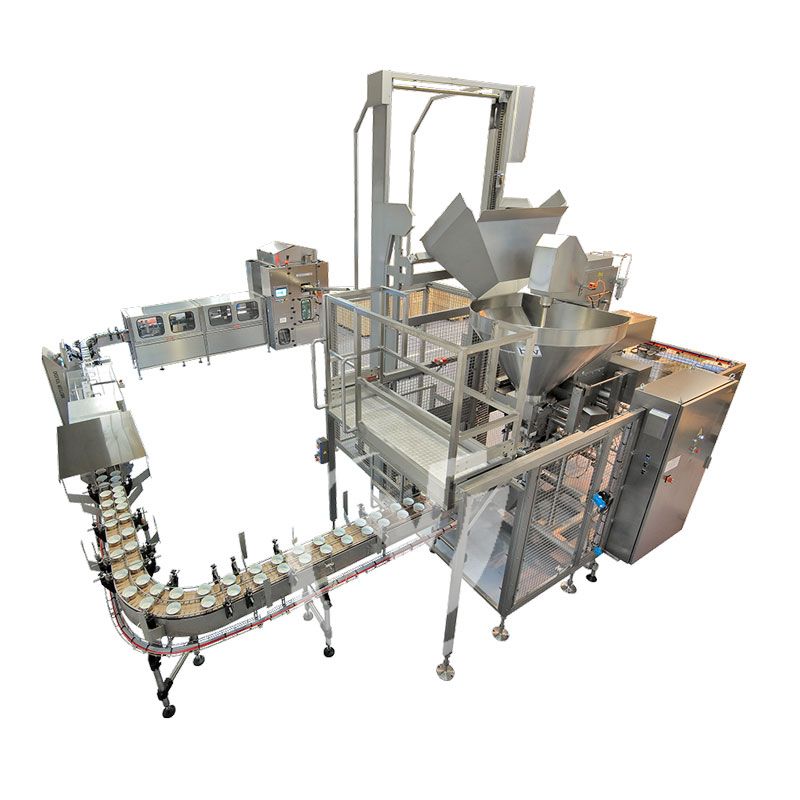
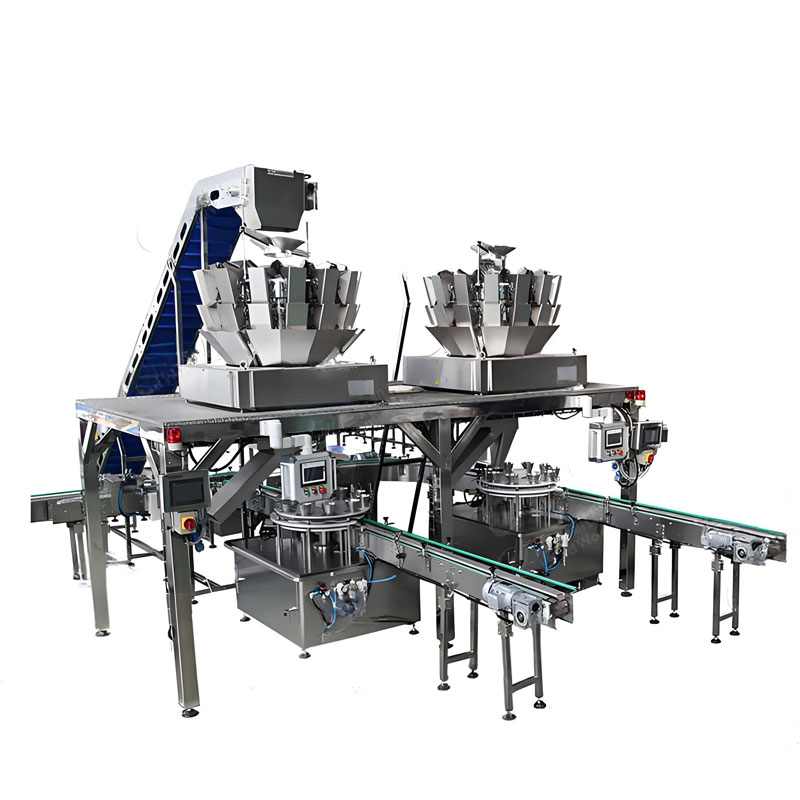
Furthermore, overpacking solid fish pieces compresses the flesh, squeezing out interstitial space and restricting the flow of the packing liquid. In products like tuna chunks or sardines, this compression eliminates convective currents, turning a fast-heating convection process into a slow-heating conduction process. To prevent this, plants must use advanced canned food filling and sealing systems equipped with multi-stage solid fillers and precise liquid oil/brine dosers to guarantee that the solid fill weight remains within the validated engineering tolerances.
3. Viscosity: Convective Heat Transfer Boundaries
The viscosity of the packing medium dictates the ease with which liquid can circulate within the can under thermal convection. Products packed in water or light brine have low viscosity and heat rapidly. However, products packed in thick sauces (such as tomato, mustard, curry, or starch-thickened gravies) present high viscosity, which dampens fluid movement and reduces convective heat transfer.
A critical engineering challenge is thermal starch gelatinization. A tomato sauce may flow easily at the filler, but as the temperature inside the retort rises, starch or thickeners in the sauce gelatinize, causing the viscosity to spike. This transition from convection-heating to conduction-heating must be precisely mapped during the heat penetration study. Any deviation in sauce formulation, starch concentration, or hydration time that increases the viscosity beyond the validated maximum limit will severely delay heat penetration.
4. Headspace: The Steam Path and Agitation Chamber
Headspace is the volume of space in the container above the product level and below the can end. Its role as a critical factor depends heavily on whether the retort process is static or agitating:
- Static Retorts: In static steam-heating cycles, the headspace acts as a steam condensation pathway. Steam condenses on the cold top of the can, transferring latent heat downwards. Too little headspace restricts this top-down heating path.
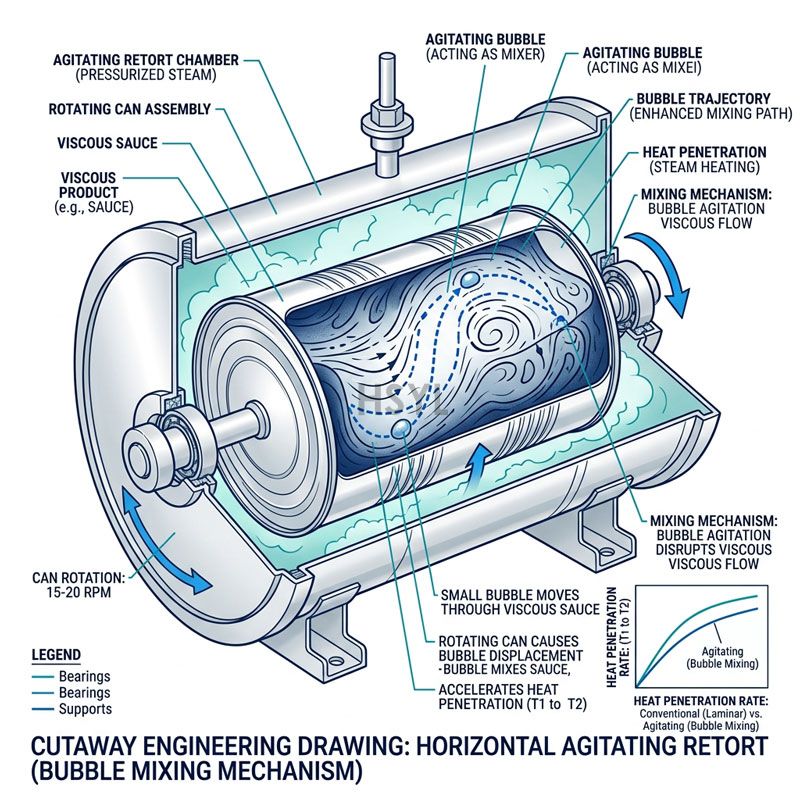
- Agitating Retorts (Rotary or Oscillating): Here, headspace is the single most critical factor for forced convection. During rotation, the headspace bubble travels through the container. The bubble acts as a physical stirrer or paddle, mixing the liquid and solid components and accelerating heat transfer. If the can is overfilled and the headspace is too small, the bubble cannot move, the mixing effect is lost, and the product behaves as if it were in a static retort, leading to catastrophic under-processing.
Conversely, excessive headspace must also be avoided. Too much headspace reduces net contents, increases the oxygen content (promoting oxidation and discoloration), and can cause excessive internal pressure during the heating phase, risking double-seam deformation or panelling (can body collapse) during cooling.
5. Agitation: Mechanical Reel Speed and Rotation Reliability
Agitating retorts use rotational or oscillating motion to achieve rapid sterilization, particularly for viscous products like fish in rich sauces or cream. By rotating the cans, the heat penetration rate is multiplied, allowing for shorter cycles and higher product quality. However, this high performance makes mechanical agitation a highly sensitive critical factor.
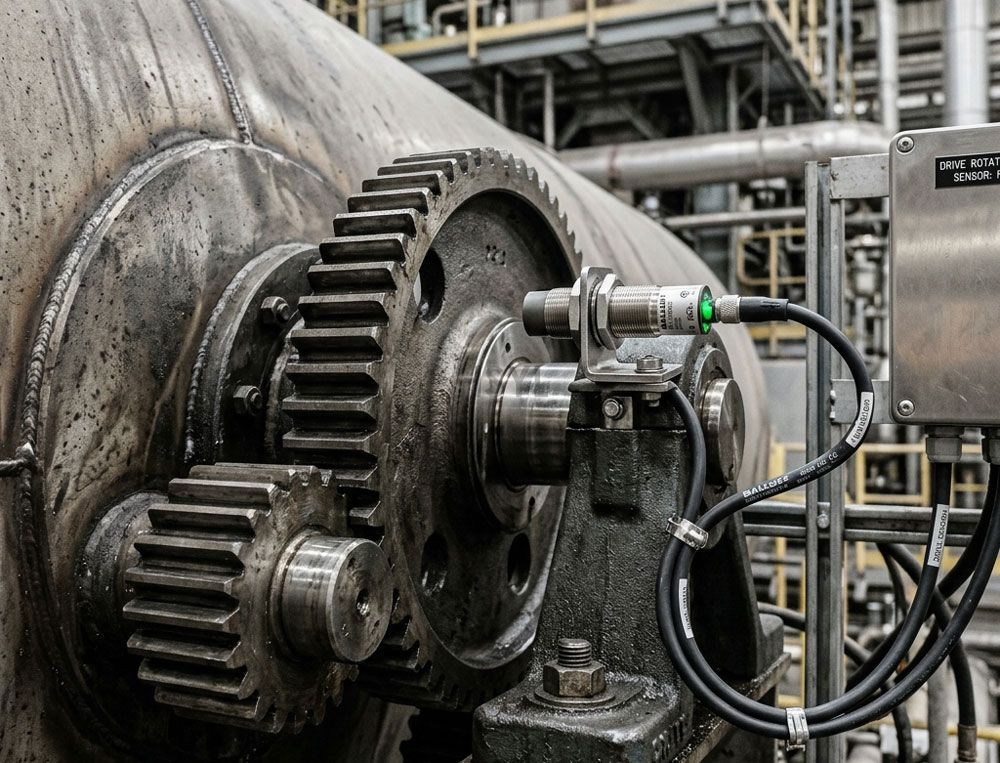
The scheduled process must specify the minimum reel speed in revolutions per minute (RPM). If the reel speed falls below this threshold, the movement of the headspace bubble slows down, reducing the convective mixing rate. A critical mechanical failure is a "reel stop" or drive belt slippage. If the agitation stops during the hold cycle, the process instantly reverts to a static process. Because the scheduled process time for an agitating cycle is far shorter than a static cycle, a reel stop will result in an immediate under-processing deviation. Modern rotary and still sterilization equipment for fish canning must incorporate proximity sensors, digital tachometers, and mechanical speed locks to continuously monitor and log reel RPM as an active safety loop.
Retort Critical Factor Control Plan
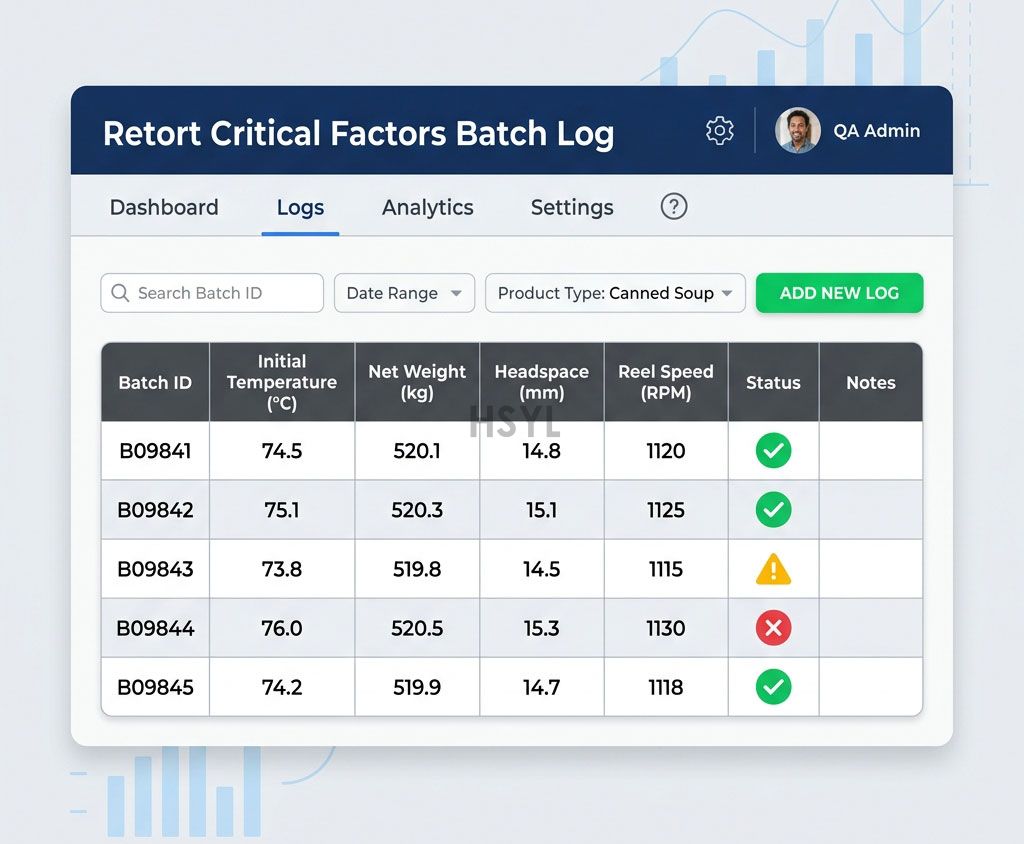
To comply with 21 CFR Part 113, every seafood cannery must maintain a documented control plan. The following table provides a standard engineering framework for monitoring and logging these critical factors. The specific numerical limits must be populated using data directly from the plant's certified Process Authority.
| Critical Factor | Physical Mechanism | Monitoring Instrument | Minimum Frequency | Log Record | Action on Deviation |
|---|---|---|---|---|---|
| Initial Temperature (IT) | Thermal starting energy | Calibrated hand-held digital probe | Every retort basket/charge immediately before start | Retort Operator Batch Log | Extend process time (if pre-approved alternative process exists) or hold load for Process Authority evaluation |
| Fill Weight (Solid Fish) | Thermal mass and density | In-line checkweigher & manual scale checks | Every 15 minutes at filler discharge | Filling Line QA Sheet | Stop filling line, adjust dosing nozzles, isolate filled cans since last compliant check |
| Viscosity (Sauce/Medium) | Convection boundary | Rotational viscometer (e.g., Brookfield) | Every new batch of sauce preparation | Sauce Preparation Log | Reject sauce batch; do not feed to filler |
| Headspace | Bubble mobility / condensation path | Depth gauge or laser headspace sensor | 1 can per pocket every 30 minutes at seamer outlet | Seamer Quality Control Log | Adjust filler height, check vacuum/steam flow, segregate out-of-spec containers |
| Agitation (Reel RPM) | Forced convection rate | Digital tachometer and rotational sensor loop | Continuous electronic logging | Retort PLC Data Log | Revert to static backup process (if validated) or hold full load for evaluation |
Handling Critical Factor Deviations
When a critical factor falls outside the limits specified in the scheduled process (e.g., an operator records a batch IT of 28°C when the limit is 35°C, or the rotary retort logs a speed drop from 10 RPM to 6 RPM), the plant must initiate a formal deviation procedure:
- Isolate and Segregate: Immediately identify and isolate all affected product. Place physical hold tags on the baskets and move them to a designated quarantine zone.
- Document: Record the exact nature of the deviation in the retort log, including batch ID, time, sensor readings, and the quantity of cans affected.
- Evaluate: Do not release the product. The deviation must be reviewed by a qualified Process Authority. The authority will perform calculations (such as integrating the actual temperature-time log to check if the minimum F₀ was reached) or run incubation tests.
- Disposition: The product can only be released if the Process Authority provides a signed, written statement confirming that the deviation did not compromise commercial sterility. If safety cannot be proven, the product must be either fully reprocessed under a validated cycle or destroyed.
Scope, Sources and Limitations
Scope. This article outlines the regulatory and engineering principles of retort critical factors for canned fish, including initial temperature, fill weight, packing medium viscosity, headspace, and mechanical agitation. It does not cover specific retort pipe sizing, boiler design, double seam geometry, or histamine hazard analysis, which are covered in separate technical guides.
Limitations. The values, ranges, and procedures discussed are for educational and planning purposes. They do not constitute a scheduled process, nor do they replace the direct services of a Process Authority. Each canning line must be independently validated by a qualified thermal processing specialist using site-specific equipment, container sizes, and product formulations before starting commercial production.
Source basis. Technical concepts are aligned with US FDA 21 CFR Part 113 (Thermally Processed Low-Acid Foods Packaged in Hermetically Sealed Containers), the FDA Fish and Fishery Products Hazards and Controls Guidance (4th Edition), Codex Alimentarius CXC 23-1979 (Code of Hygienic Practice for Low-Acid Canned Foods), and standard guidelines published by the Institute for Thermal Processing Specialists (IFTPS). Equipment-specific capability statements refer to HSYL engineering parameters and do not imply automated compliance approvals.
Reviewer and date. Last technical review: 2026-07-14 by the HSYL Fish Canning Engineering Team and QA Department. This document must be re-evaluated upon updates to 21 CFR Part 113 or Codex thermal validation standards.
Retort Operations and Thermal Processing Resources
To further support your canning plant's quality management system, the following resources provide detailed specifications and operational guidelines for upstream and downstream machinery:
- Rotary and still sterilization equipment for fish canning — the technical specifications and capacity configurations for batch retort chambers.
- Canned food filling and sealing systems — details on volumetric and weight-controlled fillers designed to maintain fill weight and headspace within critical tolerances.
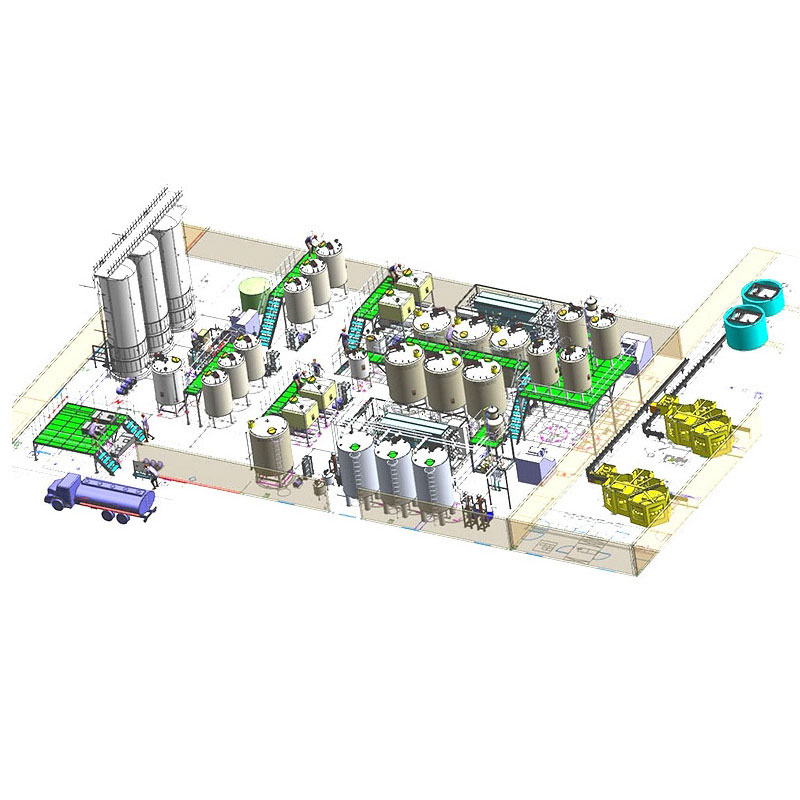
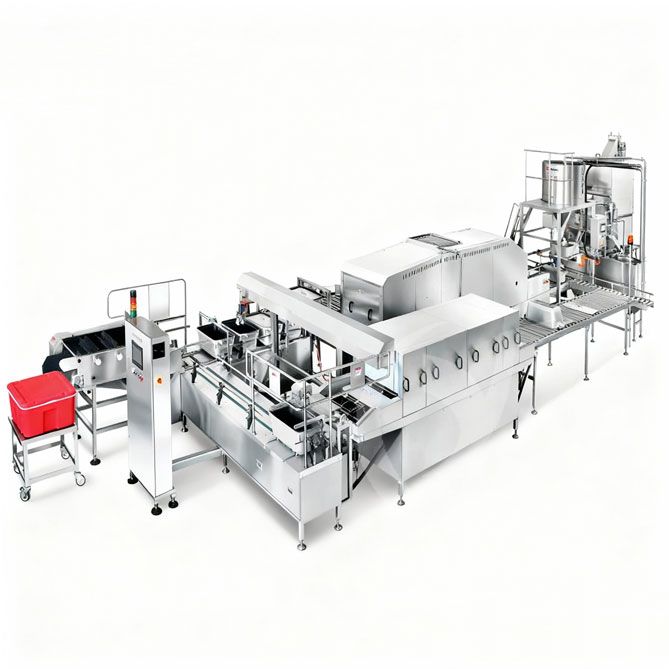
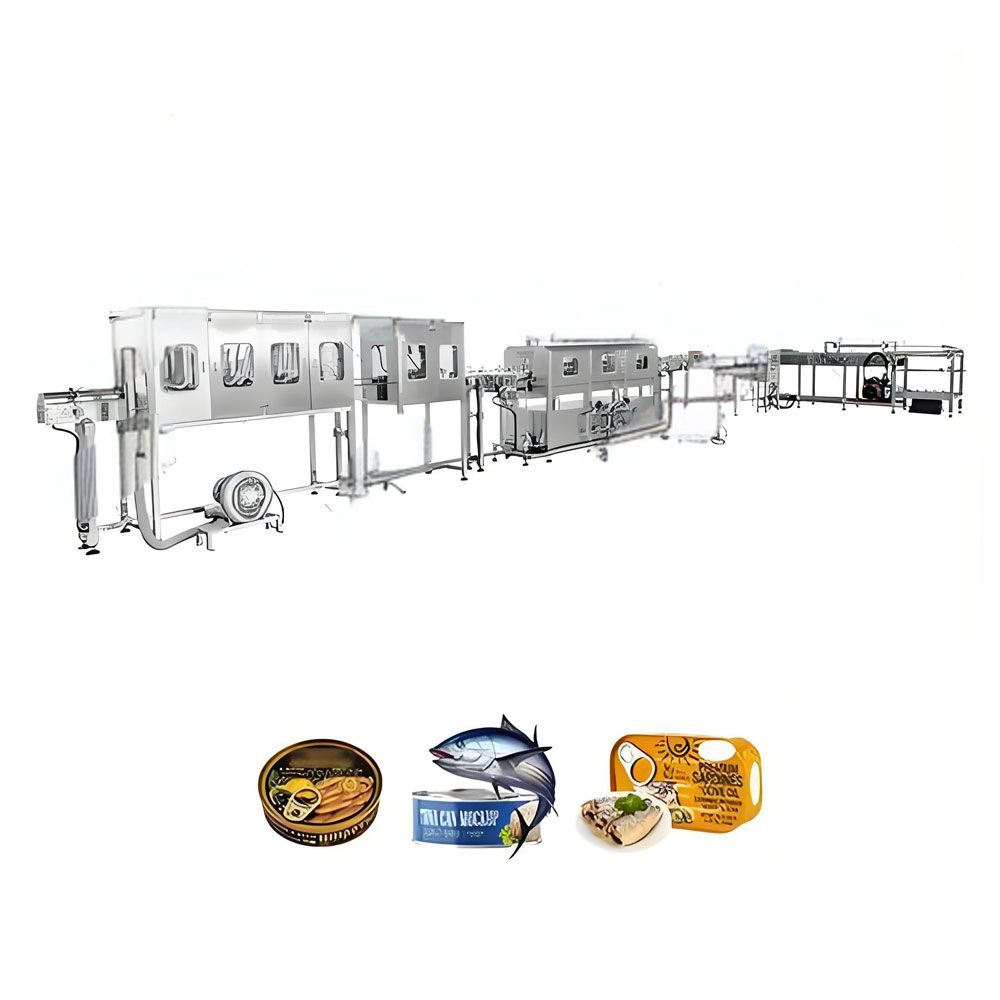
- Industrial canned fish production lines — the complete engineering design scope, mapping process steps from raw receiving to warehouse storage.
Frequently Asked Questions
What is the difference between a critical factor and a standard retort setting?
Why is product initial temperature considered a critical factor?
How does packing medium viscosity affect heat penetration?
Why is headspace so critical in agitating retorts?
What must be done if the retort reel stops rotating during a batch?
Can we change raw fish species without re-validating the retort critical factors?
Must-Read Blogs For Chain Restaurants Owner

 Canned Fish Production Line
 Fish Meal Production Line
 Automatic Chicken Canned Food Production Line
Ready to Get Started?