
OEE for a Fish Canning Line: Measuring Availability, Performance and Quality Without Hiding Food-Safety Stops
OEE — overall equipment effectiveness — is the standard manufacturing metric for measuring how well a line turns planned time into good product. On a fish canning line, OEE has a specific trap: if food-safety stops (CIP, seaming teardown, retort hold for deviation, QA hold) are classified as downtime, the OEE number looks low, and the line team is incentivized to skip or shorten those stops to improve the metric. That is exactly the wrong outcome. A defensible OEE program for a fish cannery classifies stops correctly, keeps food-safety stops visible, and measures the three components — availability, performance, quality — in a way that drives improvement without compromising safety. This article covers the decomposition, the stop classification, and the measurement plan.
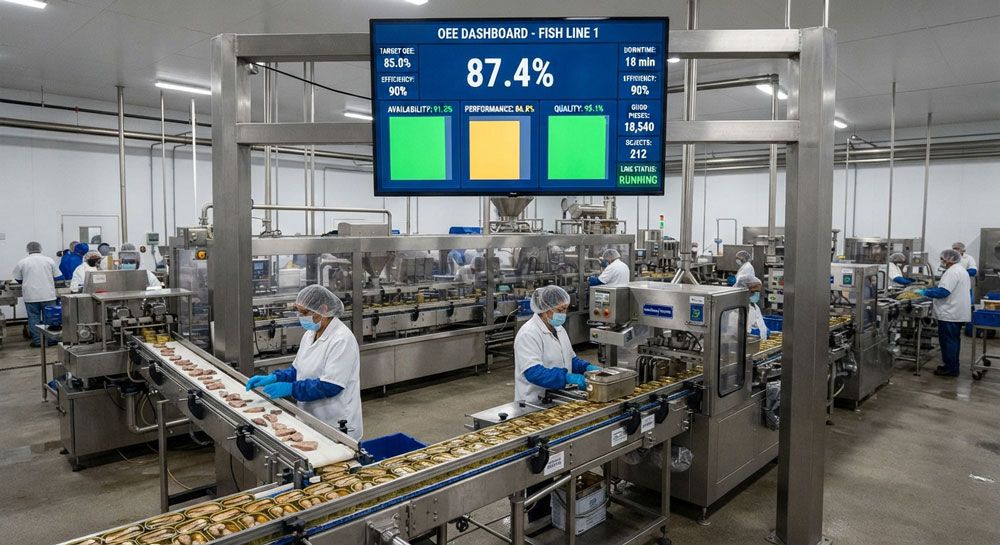
The scope covers OEE measurement for a fish canning line, from planned production time to saleable output. It covers the three components, stop classification, and the measurement plan. It does not cover capacity sizing (covered separately), mass balance, or retort validation. The turnkey canning line scope page carries the full line scope.
The OEE Decomposition
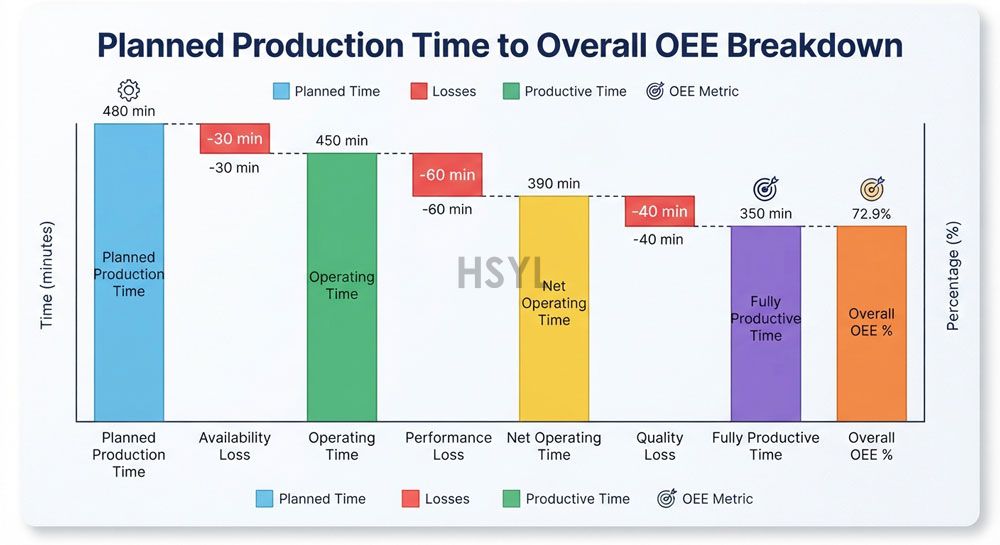
OEE decomposes planned production time into good output through three multiplicative components: availability, performance, and quality. Each component captures a different loss category.
| Component | What it measures | Loss category | Typical reference range |
|---|---|---|---|
| Availability | Time the line is actually running vs planned | Unplanned stops (equipment failure, jams) + planned stops (CIP, changeover, shift handover) | 75–90% |
| Performance | Speed achieved vs ideal cycle time | Micro-stops, speed loss, running below nameplate | 85–95% |
| Quality | Good cans vs total cans produced | Seaming rejects, fill-weight rejects, post-retort defects | 95–99% |
| OEE (product) | Good cans from planned time | Combined losses | 60–80% |
The ranges are planning references. A disciplined fish cannery runs 65–75% OEE; a poorly disciplined one runs 45–55%. The gap between 55% and 70% on the same equipment is the difference between a line that pays back in three years and one that pays back in five.
Stop Classification: Keeping Food-Safety Stops Visible
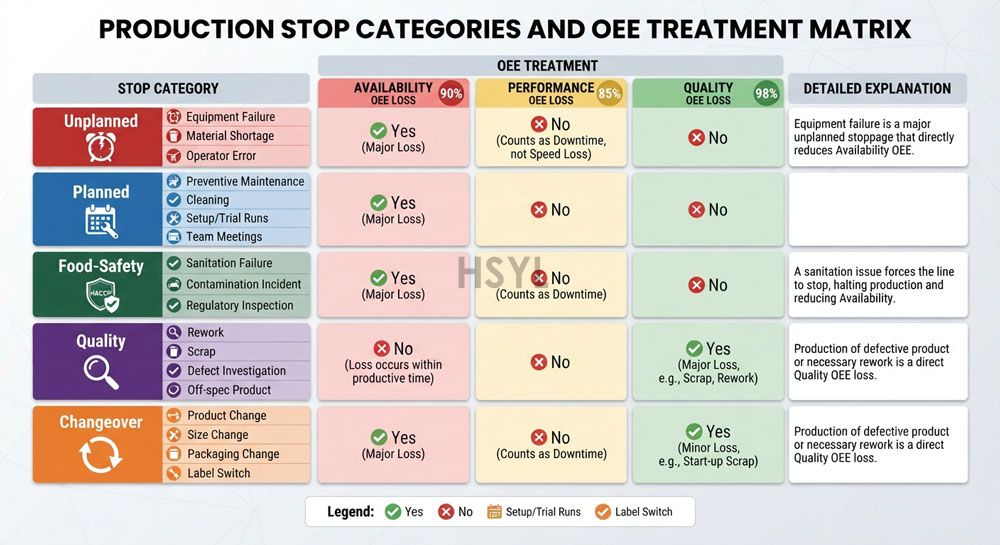
The trap in OEE for a fish cannery is stop classification. If every stop is treated as a loss against availability, the team is incentivized to skip CIP, shorten seaming teardown, or rush retort deviations to improve the number. The correction is to classify stops into categories that separate equipment losses from planned process stops and food-safety stops.
Operations note: Food-safety stops — CIP, seaming teardown, retort deviation hold, QA hold — are not losses to be reduced. They are process controls that must happen. An OEE program that treats them as availability losses will drive the line toward skipping them. Classify them as planned or as a separate food-safety stop category, and report them alongside OEE, not inside it.
A defensible stop classification for a fish canning line has at least five categories: unplanned equipment stops (loss), planned CIP (process, not loss), planned changeover (loss), food-safety holds (process, not loss), and QA holds (process, not loss). The OEE number reports equipment and speed losses; the food-safety and QA stop report is a separate metric that must stay visible.
Performance and Ideal Cycle Time
Performance measures the actual speed achieved against the ideal cycle time — the theoretical fastest rate the line can produce good cans. Ideal cycle time for a fish canning line is typically set by the filler-seamer nameplate CPM, adjusted for the actual can format and product. A performance below 85% indicates micro-stops or speed loss that should be investigated.
The trap is setting ideal cycle time too low, which inflates performance. Ideal cycle time should be the true theoretical maximum, not a comfortable target. A canned food filling and sealing line with checkweigher and rejection provides the data to measure actual performance accurately, because rejected cans are counted as production, not as good output.
Quality and the Quality Loss
Quality measures good cans as a fraction of total cans produced. The quality loss includes seaming rejects (caught at teardown or checkweigher), fill-weight rejects (caught at checkweigher), and post-retort defects (caught at visual inspection or after cooling). The quality component is where food-safety defects and commercial defects meet — a seaming defect that is a food-safety risk is also a quality loss, and the two must not be separated in a way that hides the safety defect.
Scope, Sources and Limitations
Scope. This article covers OEE measurement for a fish canning line, from planned production time to saleable output. It covers the three components, stop classification, and the measurement plan. It does not cover capacity sizing, mass balance, or retort validation.
Limitations. All OEE ranges and stop classifications are drawn from publicly available manufacturing and OEE standards (ISO 22400-2, OMAC PackML). Actual values depend on line automation, product format, and operating discipline. HSYL does not publish project-specific OEE figures without verified evidence.
Source basis. OEE methodology is consistent with ISO 22400-2 (OEE definitions), OMAC PackML, and industry manufacturing operations literature. The canned fish production line page carries the line scope.
OEE Measurement Resources
Three resources complement this OEE content. The canning line hub carries the full scope. The canned fish line anchors the species-level line. The filling and sealing line carries the filler-seamer that sets the ideal cycle time.
- Turnkey canning line scope — the full line scope that the OEE measurement covers.
- Canned fish production line — the species-level line scope that the OEE applies to.
- Canned food filling and sealing line — the filler-seamer whose nameplate CPM sets the ideal cycle time for performance measurement.
Next Step: Build Your OEE Measurement Plan
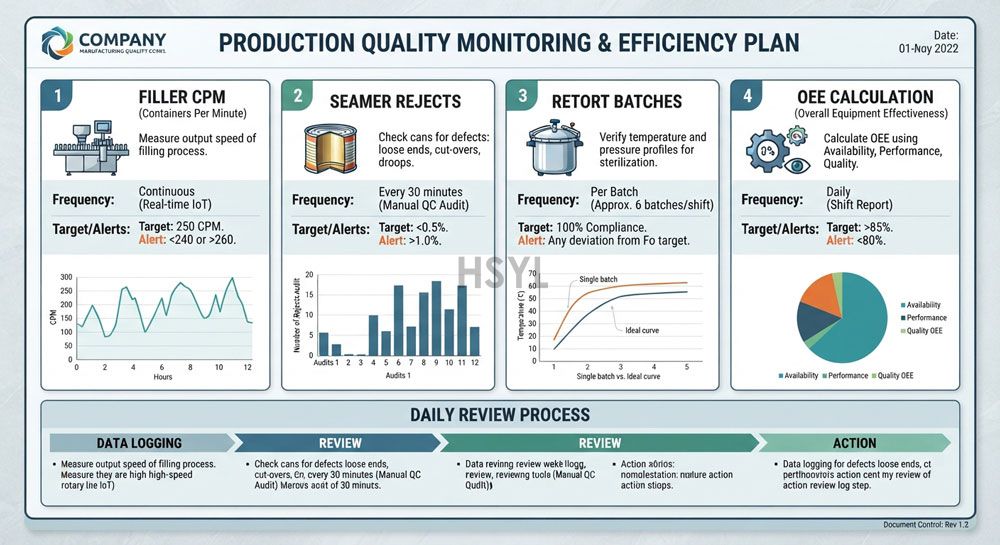
Send HSYL your line scope, filler-seamer nameplate CPM, current stop categories, and current OEE calculation method. HSYL will return a pre-filled OEE measurement plan with the stop classification framework for your line and an equipment-capability review that confirms your checkweigher and rejection coverage supports accurate quality measurement.
Frequently Asked Questions
What is OEE and how is it calculated for a fish canning line?
How should I classify food-safety stops in OEE?
What is ideal cycle time and how do I set it for a fish canning line?
What is the quality component in OEE for a fish canning line?
Can HSYL provide an OEE target for my fish canning line?
Must-Read Blogs For Chain Restaurants Owner

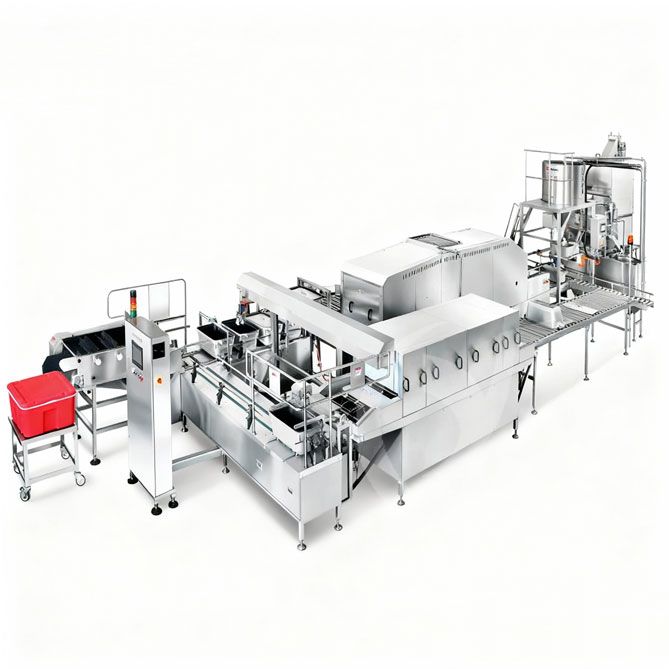
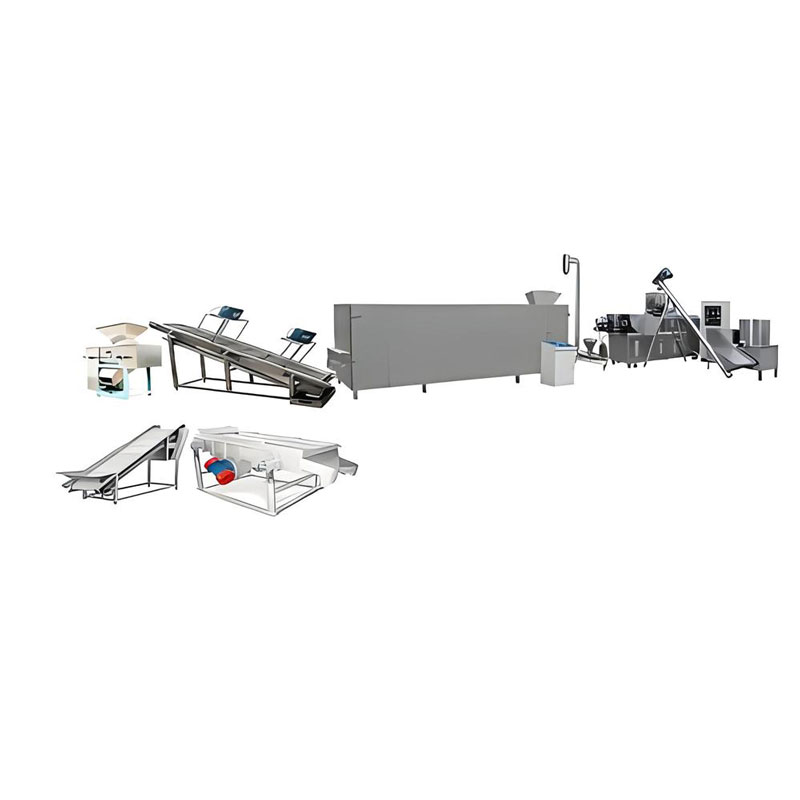 Fish Meal Production Line
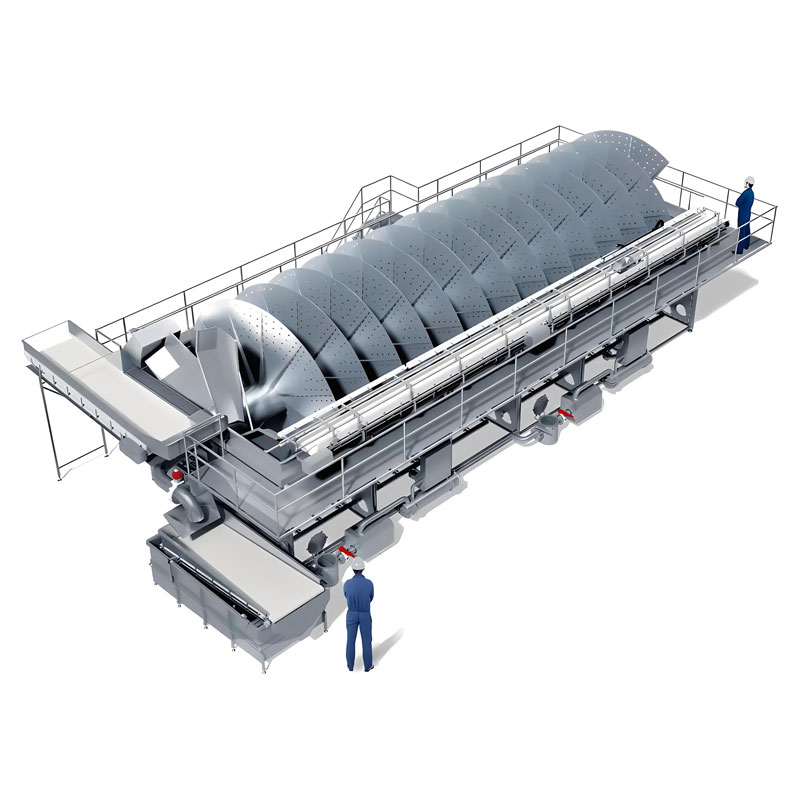 Salmon Processing Line
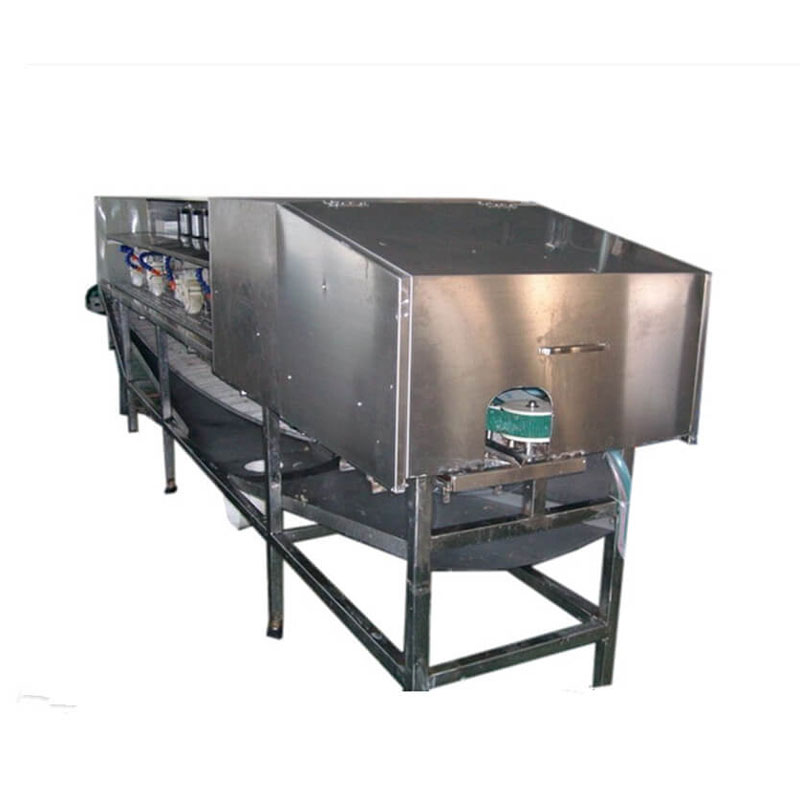 Fish Speed Cleaning Machine
 Fish Cutting Machine
Ready to Get Started?