
Commercial Kitchen Stainless Steel Surface Finish: Ra, Brushed vs Mirror vs Satin Cleanability
The surface finish on commercial kitchen stainless is not a cosmetic choice — it is a hygiene choice expressed as a number. Ra, the arithmetic mean roughness, measures how much surface variation exists on a microscopic level. A lower Ra means a smoother surface that retains fewer bacteria and cleans more completely. The three finishes common in kitchen equipment — brushed (#4), mirror (#8), and satin — have different Ra values, different cleanability, and different food-contact suitability. Specifying a finish by appearance alone, without the Ra target, is either over-spending on mirror where brushed would do, or under-specifying a rough finish where food contact requires smooth. This article provides the Ra-by-finish map, compares bacterial retention, and gives a cleanability decision for each kitchen zone.
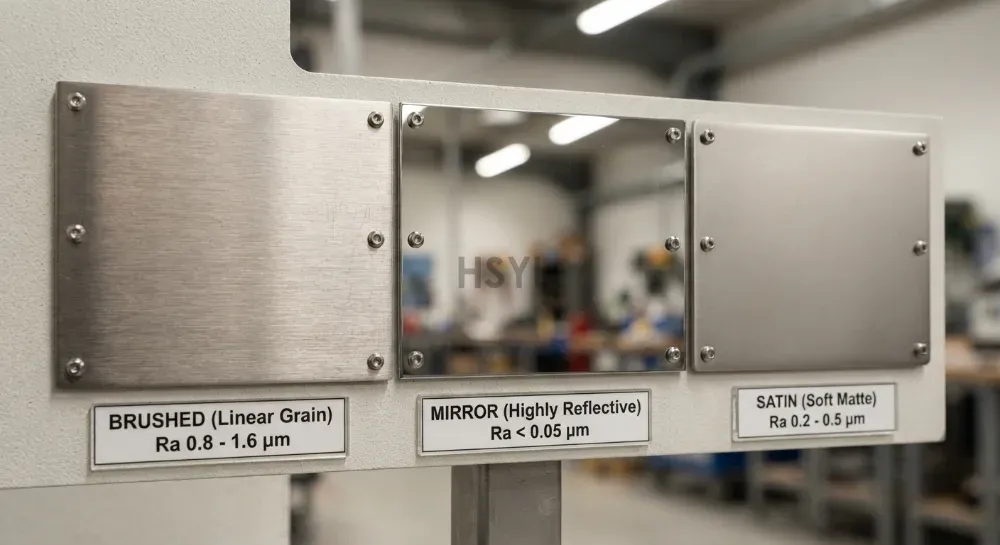
The scope covers stainless steel surface finish and cleanability for commercial kitchen equipment. It covers Ra values, finish types, and bacterial retention. It does not cover stainless grade selection (covered in CK-01), welding and passivation, or heat source. A compliant commercial kitchen equipment solution specifies finish and Ra by zone, not a single finish for the whole kitchen.
Ra, Finish Types and Their Properties
Ra (arithmetic mean roughness) is the standard measure of surface roughness, expressed in micrometers (μm). Lower Ra means smoother. The finishes common in kitchen equipment differ in how they are produced, their Ra range, and their appearance.
| Finish | Production | Typical Ra (μm) | Appearance | Food contact |
|---|---|---|---|---|
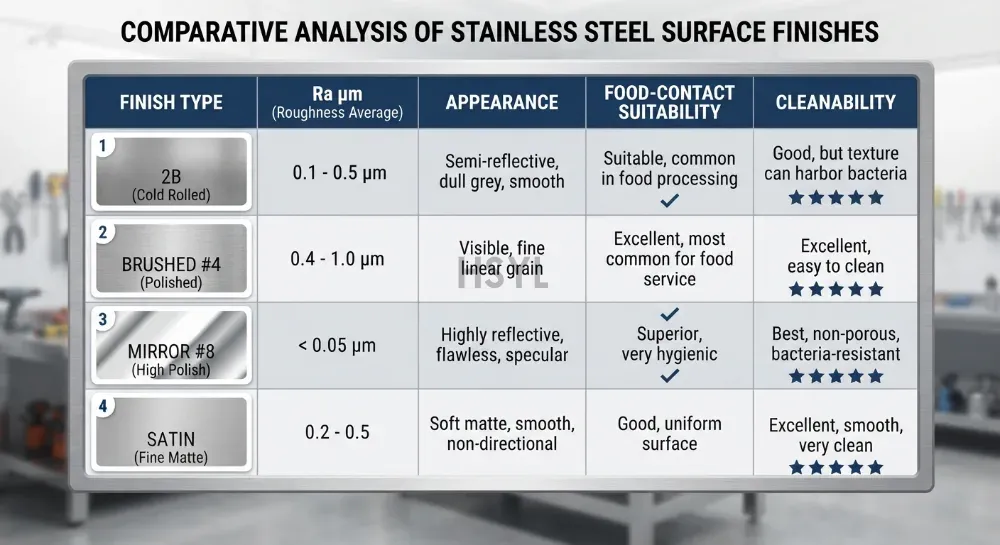
| 2B (mill) | Cold rolled, annealed, pickled, skin-passed | 0.4–1.0 | Smooth, dull | Yes — for non-decorative food contact |
| Brushed (#4) | Grinding with abrasive belt, 120–180 grit | 0.5–0.9 | Linear grain, directional | Yes — standard food-contact finish |
| Satin (hairline) | Finer grinding, 240+ grit | 0.3–0.6 | Soft matte, finer grain | Yes — for visible food-contact |
| Mirror (#8) | Progressive polishing to reflective | 0.02–0.05 | Reflective, mirror | Yes — but shows scratches; decorative |
The Ra values are not absolute — they depend on the producer and the grit sequence. But the order is consistent: mirror is smoothest, then satin, then brushed, then 2B mill finish. The question for kitchen equipment is not which is smoothest, but which smoothness is needed for the zone's hygiene and durability.
Bacterial Retention and Cleanability
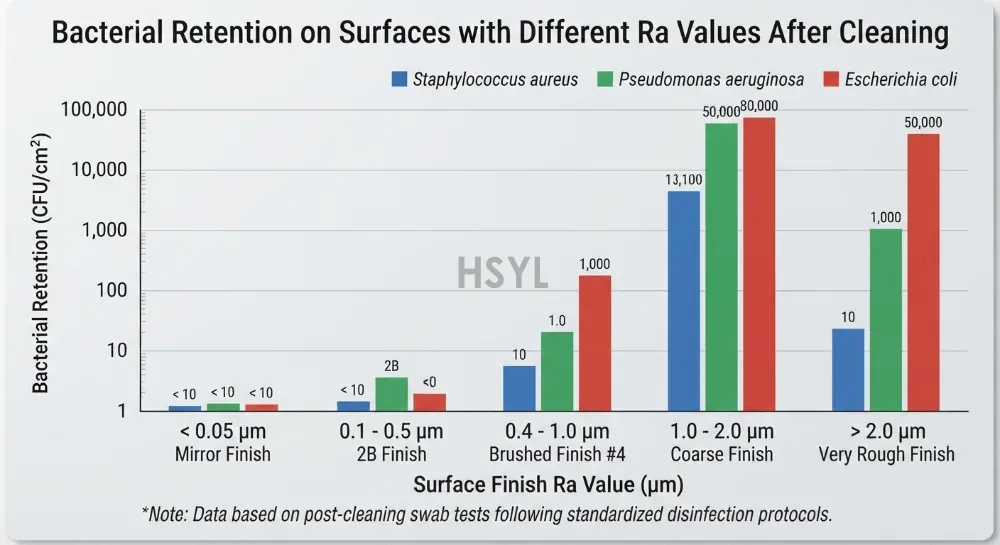
Bacterial retention correlates with Ra. Surfaces with Ra below 0.8 μm retain significantly fewer bacteria than surfaces above 0.8 μm, and they clean more completely. This is the threshold that separates food-contact-acceptable from non-food-contact in hygienic design guidelines.
| Ra range (μm) | Bacterial retention | Cleanability | Typical application |
|---|---|---|---|
| ≤ 0.4 | Very low | Excellent | Mirror, satin — visible food contact, decorative |
| 0.4–0.8 | Low | Good | Brushed #4 — standard food contact |
| 0.8–3.0 | Higher | Reduced | Non-food-contact structural, exhaust, panels |
| > 3.0 | High | Poor — not cleanable to hygienic standard | Not for kitchen food equipment |
Surface note: The Ra ≤ 0.8 μm threshold is the hygienic design boundary, not a luxury target. A brushed #4 finish at Ra 0.6 meets it; a rough ground finish at Ra 1.5 does not. The finish specification must state the Ra target, not just the finish name, because a "brushed" finish can be produced at different Ra depending on the grit.
Finish-by-Zone Map for Commercial Kitchen
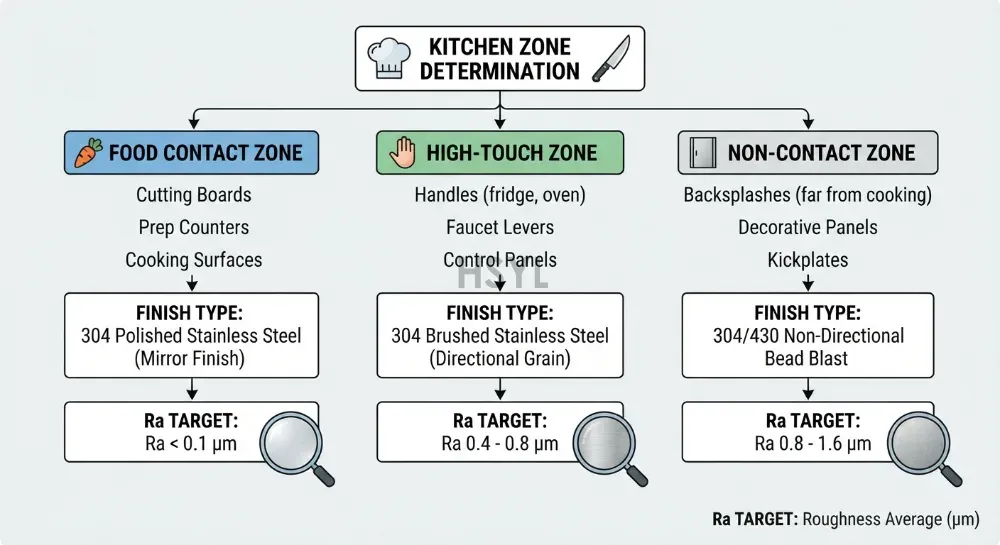
The table below maps kitchen zones to the appropriate finish, based on food contact, visibility, and durability.
| Zone | Conditions | Recommended finish | Ra target (μm) | Rationale |
|---|---|---|---|---|
| Food-contact prep (tables, sinks) | Direct food contact, frequent cleaning | Brushed #4 or satin | ≤ 0.8 (target 0.4–0.6) | Meets hygienic Ra; durable under cleaning; #4 is standard |
| Cooking cavity (oil/steam contact) | Food splatter, heat, cleaning chemicals | Brushed #4 or 2B | ≤ 0.8 | Smooth enough for hygiene; brushed hides minor scratches |
| Visible decorative (panels, doors) | No food contact, high visibility | Satin or mirror | 0.3–0.6 (satin) or 0.02–0.05 (mirror) | Aesthetic; mirror shows scratches, satin more practical |
| Non-contact structural (legs, frames) | No food contact, low visibility | 2B or brushed | 0.4–1.0 acceptable | Economic; no hygienic Ra requirement |
| Exhaust and hood | Grease, moisture, heat | Brushed #4 | ≤ 0.8 | Cleanable of grease; directional grain aids wiping |
The commercial electromagnetic cooker typically uses brushed #4 on the body and 2B on internal cavities. The cooker cavity is food-splatter contact, so Ra ≤ 0.8 is required; mirror is not specified because cooking spatter would scratch it and the scratches would trap soil.
Scope, Sources and Limitations
Scope. This article covers stainless steel surface finish and cleanability for commercial kitchen equipment. It covers Ra values, finish types, and bacterial retention. It does not cover stainless grade selection, welding and passivation, or heat source.
Limitations. All Ra values and bacterial retention correlations are drawn from publicly available metallurgical and food-safety material. Actual finish selection depends on local regulation, specific cleaning protocol, and aesthetic requirement. HSYL does not publish project-specific finish specifications without verified evidence.
Source basis. Finish and Ra principles are consistent with ASTM A480/A480M (stainless steel sheet finish), EHEDG hygienic design guidelines, and 3-A Sanitary Standards for food-contact surfaces.
Surface Finish and Cleanability Resources
Three resources complement this surface finish content. The kitchen solutions page carries the full kitchen scope. The electromagnetic cooker page carries a cooking-cavity finish example. The stainless steel selection article (CK-01) carries the grade selection that precedes finish specification.
- Commercial kitchen equipment solution — the full kitchen scope where finish-by-zone specification applies.
- Commercial electromagnetic cooker — a cooking-cavity equipment whose finish depends on food splatter and cleaning.
- Commercial kitchen stainless steel selection (CK-01) — the grade selection that precedes finish specification.
Next Step: Map Your Kitchen by Finish
Send HSYL your kitchen zones, food-contact surfaces, cleaning protocol, and aesthetic requirement. HSYL will return a pre-filled finish-by-zone map with Ra targets for your zones and a finish specification template for your equipment.
Frequently Asked Questions
What Ra value is required for food-contact stainless steel in commercial kitchen equipment?
Is mirror finish (#8) better than brushed (#4) for food-contact kitchen equipment?
What is the difference between 2B, brushed, satin, and mirror stainless finish?
Can I use a rough ground finish (Ra > 1.0) for non-food-contact kitchen parts?
Can HSYL specify the finish and Ra for every zone in my kitchen?
Must-Read Blogs For Chain Restaurants Owner

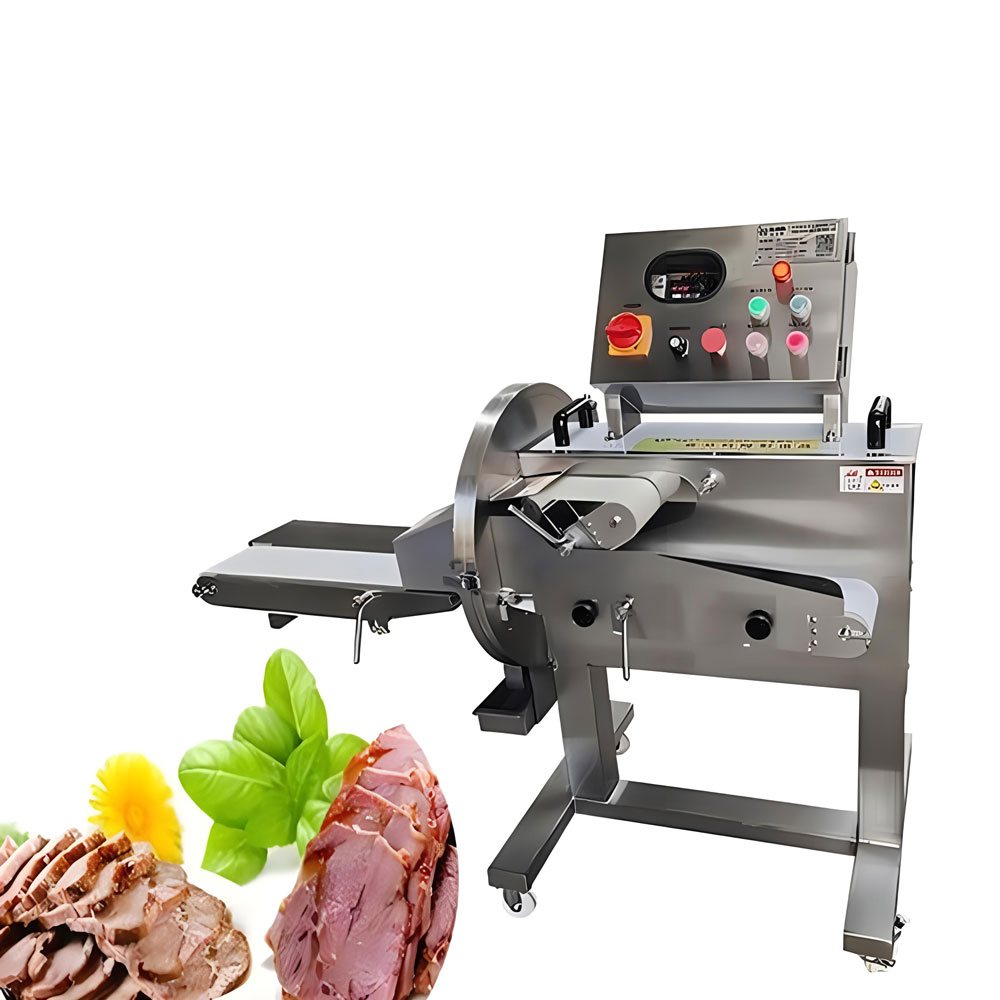 Electric Cooked Meat Slicer
 YL-W-01 Commercial Water Purification Equipment
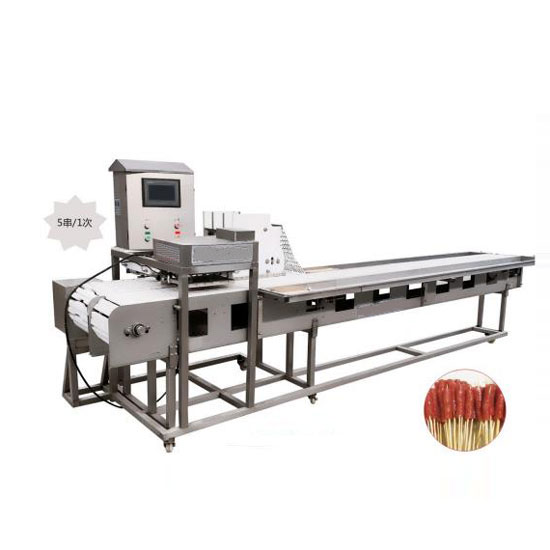 Cutting And Stringing Integrated Machine
 YL-W-06 Commercial Water Purification Equipment
Ready to Get Started?