Salmon Processing Line
We Are Not Only Capable Of Selling Products, But Also Have The Ability To Undertake Full Turnkey Projects.

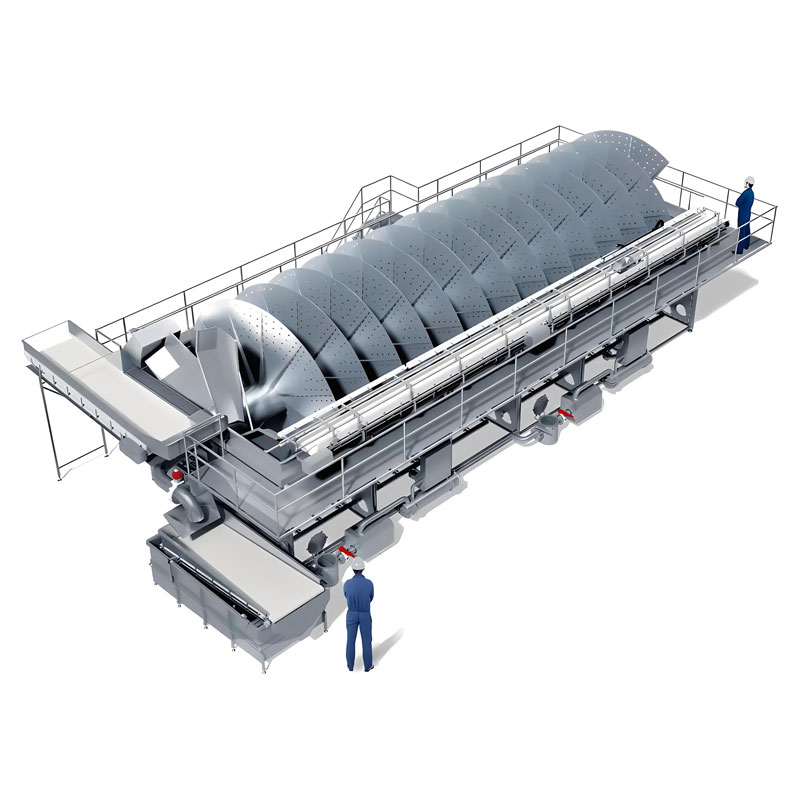
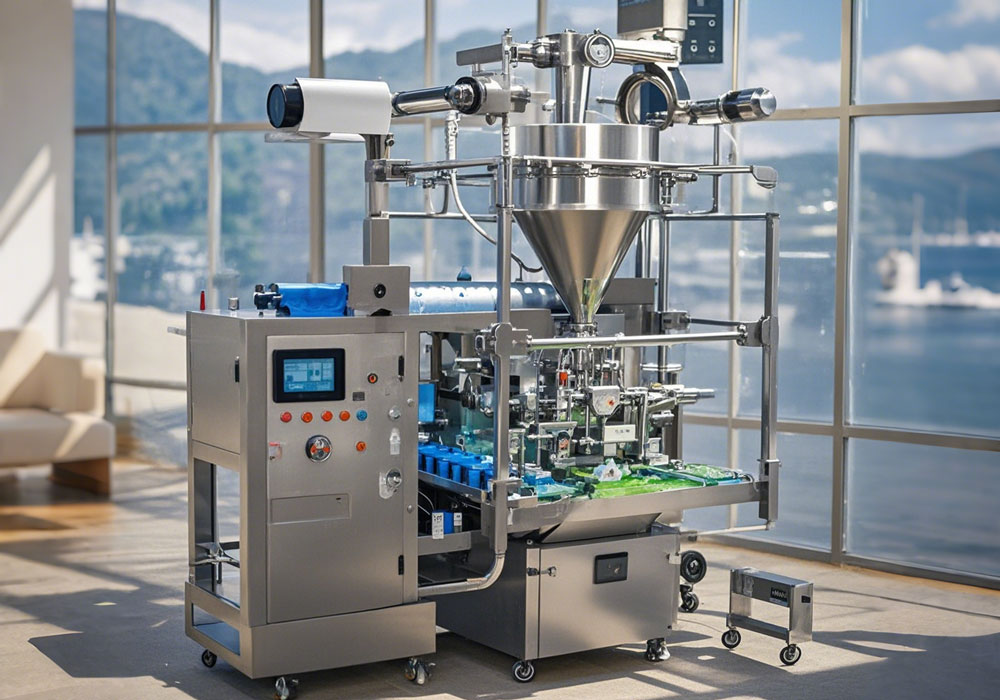
Processing premium pelagic species like Atlantic Salmon requires absolute mechanical precision; every fraction of a percent of lost meat translates to massive revenue leakage. This completely automated Salmon Processing Line is specifically engineered to resolve the intense yield losses and labor bottlenecks associated with manual heading, gutting, and filleting. By integrating microprocessor-controlled measuring optics and highly adaptive circular blades, this turnkey layout achieves deep-cut bone separation, ensuring that you recover the absolute maximum commercial fillet weight while maintaining strict hygienic parameters for sashimi-grade or cold-smoked markets.
Functioning continuously under an IP65 moisture-defense rating, the system seamlessly links primary decapitation and evisceration directly into automated pin-boning and optical portioning. This unified architecture drastically slashes cycle times, reducing the window for bacterial proliferation and safeguarding the structural integrity of the high-fat salmon muscle fibers.
| Core Technical Parameter | System Specification |
|---|---|
| System Configuration Profile | SPL-1500 Continuous Seafood Series |
| Target Processing Headcount | Up to 25 - 40 Fish / Minute (Depending on fish size grading) |
| Calculated Volumetric Output | 1000 kg/h to 1500 kg/h (Raw input weight) |
| Total Connected Power | 85 KW (Cumulative downstream drives) |
| Standard Processing Voltage | 380V / 50Hz / 3Phase (Custom UL/CSA modifications available) |
| Primary Structural Alloy | SUS316 & SUS304 Marine-Grade Stainless Steel |
| Average Fillet Yield Recovery | Up to 72% - 76% (Geometry dependent) |
Optical Measurement and Automated Heading
Before a knife ever touches the flesh, each incoming salmon passes through an optical laser gate. The PLC instantaneously calculates the exact morphometric dimensions of the fish, specifically locating the pectoral fins and the collarbone axis. The automated heading module then adjusts its V-cut pneumatic guillotine down to the millimeter. This dynamic execution eliminates the "safe margin" waste generated by static manual butchery, saving up to 3% of usable neck meat per fish before sending it to the down-line modules.
Precision Carving via Automated Filleting
Following the vacuum-evisceration stage, the salmon is saddle-mounted onto a synchronized transport chain. The automatic fish filleting machine utilizes a dual-set of dynamically adjusting circular blades. The primary blades carve tightly against the dorsal fin, while the secondary blades strip the meat precisely off the rib cage and spine. The mechanics flex dynamically against the varying bone structures of each fish, delivering an utterly smooth, blood-free fillet with virtually zero meat left lingering on the central frame.
Continuous Pin-Boning and High-Speed Portioning
Extracting the intramuscular pin bones from soft salmon tissue typically requires grueling manual labor and risks tearing the fillet. Our line integrates a continuous rolling pin-boner. Counter-rotating extraction cylinders gently grip and pull the bones in the exact direction of the muscle grain, ensuring the fillet remains visually flawless. Immediately after, an intelligent optical scanner reads the density and volume of the fillet, commanding an ultrasonic cutting blade to portion the meat into mathematically exact fixed-weight steaks or retail strips, critical for supermarket distribution or feeding into a salmon canned production line.
IP65 Washdown and Anti-Bacterial Architecture
Seafood processing floors are inherently aggressive environments, drenched in seawater, blood, and fat. To combat aggressive pitting corrosion and bacterial biofilm buildup (such as Listeria), the entire processing frame is constructed from TIG-welded SUS316 stainless steel. We have completely eliminated flat horizontal surfaces and hollow unsealed tubes from the frame geometry. Operators can perform intensive, high-pressure foam washdowns every shift without deploying special covers, courtesy of the IP65-sealed servo motors and watertight electrical enclosures.
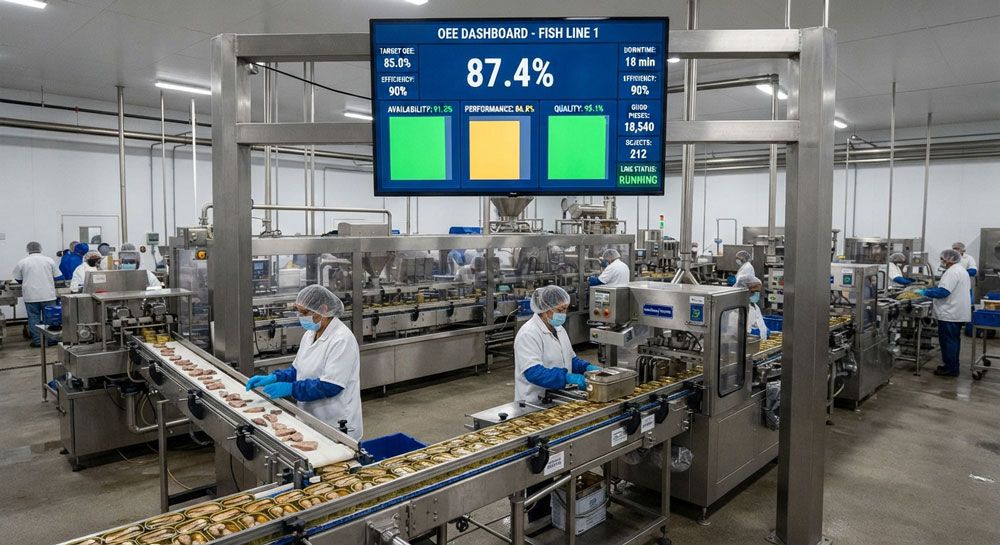
Beyond raw mechanical throughput, the value of this system lies in its data generation. The central SCADA terminal constantly calculates the differential weight between the incoming raw salmon and the outgoing finished fillets. If the yield percentage drops below your pre-set biological threshold, the PLC immediately alerts the floor supervisor to recalibrate the blade tension or alignment. Furthermore, should an operator trigger an emergency stop via a safety gate, Category 3 electronic relays engage dynamic braking on all spinning blade shafts, freezing the entire sequence in milliseconds to achieve strict OSHA compliance.
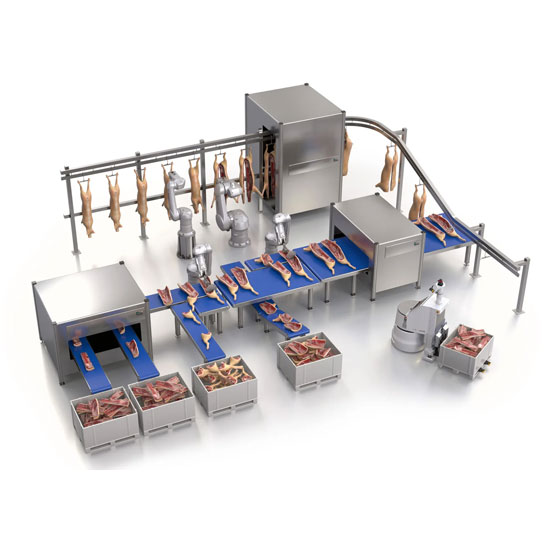
Executing an automated 1500kg/h salmon facility requires seamless integration of water, pneumatics, and data. Our B2B Turnkey deployment strategy encompasses detailed 3D factory layout engineering, ensuring proper gradient sloping for blood-water drainage and optimal placement of offal recovery conveyors. We dispatch certified marine mechanical engineers to commission the optical scanners and calibrate the fillet blades to your exact salmon species (Atlantic, Sockeye, Coho), ensuring that the line delivers peak commercial recovery rates from the initial startup sequence.
To request a tailored mechanical layout designed for your specific cold-room footprint, request an ROI yield calculation matrix, or to schedule a live demonstration of our optical cutting technology, please submit a formal project inquiry.
Must-read blogs for bosses