
Commercial Kitchen Steam System Design: Load Planning and Equipment Layout
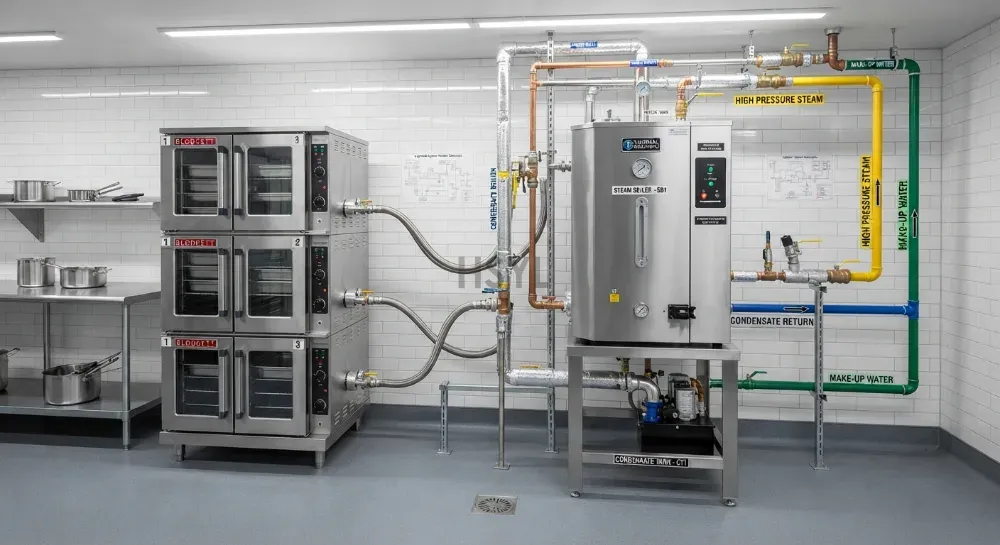
Steam is one of the most energy-dense utilities in a commercial kitchen, but it only works well when the boiler, distribution network, and cooking equipment are planned together. A commercial kitchen steam system design that undersizes the boiler will stall service during peak hours, while an oversized boiler wastes energy, increases blowdown, and complicates condensate return. The goal is to size steam capacity around actual equipment demand and peak service patterns.
Start with the overall kitchen equipment scope on kitchen equipment solutions so that steam planning aligns with cooking, holding, and sterilization modules.
Map Steam Demand by Equipment Type
Not all steam users are alike. A steamer or combi oven may draw steam in controlled bursts, while a fixed steam cabinet runs sustained cycles during service. Sterilizers and dishwashers with booster steam add additional peaks that can overlap with cooking demand. Understanding the demand profile of each steam user is the first step in boiler selection.
A double door steaming cabinet with viewing window is a typical sustained-steam user during meal service, while a double door sterilizer is usually run in scheduled batches. If both are in the same kitchen, their peak periods may not overlap exactly, which can reduce simultaneous demand.
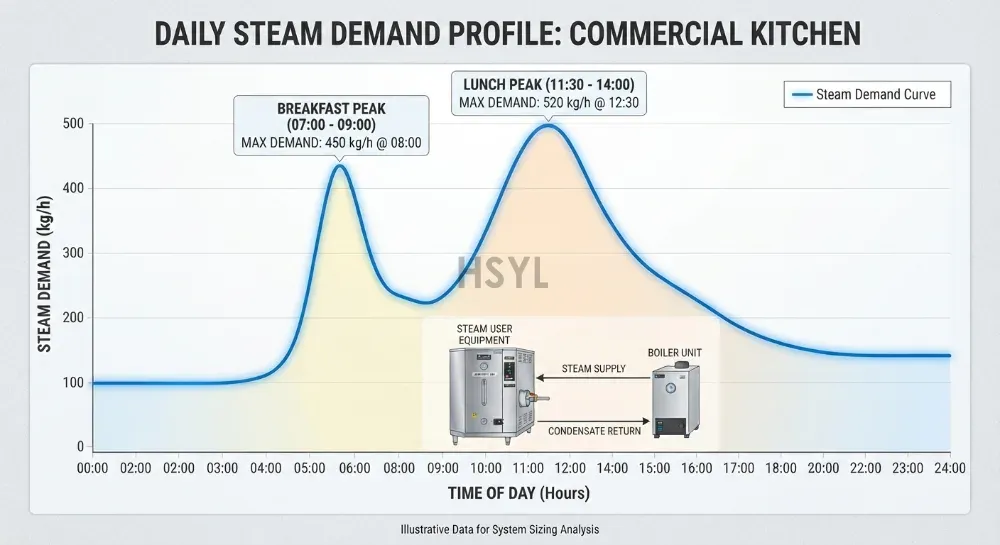
Size Boiler Capacity Around Peak Demand, Not Average Use
Boiler selection should account for the busiest service window, not the daily average. Peak steam demand often occurs during breakfast-to-lunch transition when steamer cabinets, holding units, and sanitation equipment all request steam together. Demand spikes can be managed with boiler modulation, storage tanks, or staggered startup schedules, but the base unit must have enough output to recover quickly after a peak.
Planning note: If your steam system must support both cooking and sterilization, size for cooking peak first, then verify that sterilization batch cycles fit within recovery capacity.
Electric ovens such as the full view electric oven do not use steam directly, but their thermal load can affect kitchen pressure and ventilation interactions that also influence steam-utility planning.
Design Distribution for Pressure Stability and Safety
Steam pressure drops as it travels through pipes, elbows, and valves. Long runs, undersized piping, or poor insulation cause pressure loss at the point of use. A pressure-stable system means that steamer cabinets, sterilizers, and other steam appliances receive consistent pressure during their cycles.
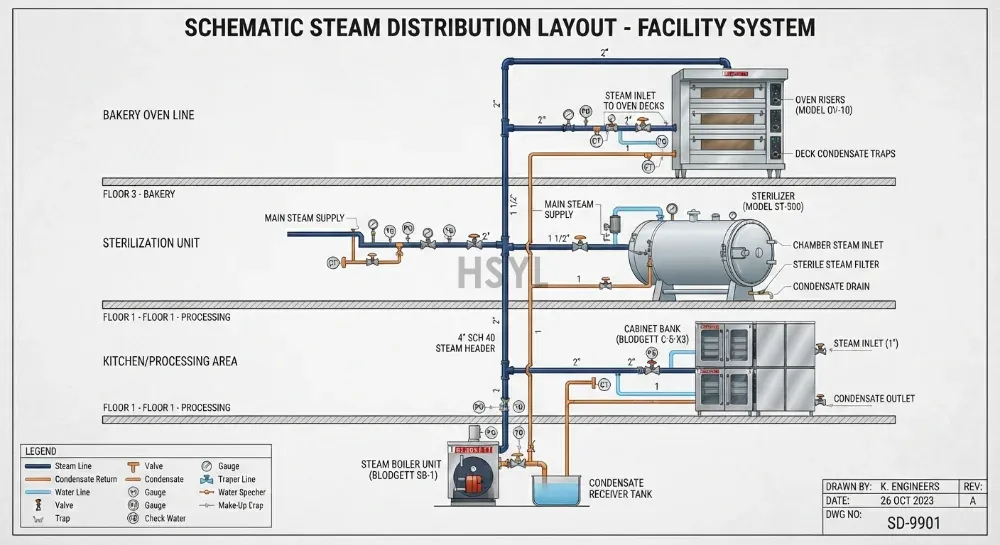
Key distribution details include pipe sizing, insulation, air venting, condensate return, and pressure-reducing stations at equipment drops. Pressure-reducing valves protect appliances that cannot tolerate full boiler pressure. Condensate return systems recover heat and reduce water consumption, but they need proper pitch, traps, and drainage planning.
Controls, Safety, and Maintenance Access
Modern steam systems use pressure gauges, temperature controls, safety relief valves, and low-water cutoffs. The control logic should allow operators to manage pressure by zone if cooking and sterilization loads are on the same boiler. Maintenance access to boiler rooms, pipe risers, and trap locations should be planned before walls and ceilings are closed.
Service contracts and spare parts availability also affect total cost of ownership. During procurement, ask suppliers about boiler service intervals, water-treatment requirements, and emergency support.
Steam System Planning Checklist
| Planning item | Impact on design |
|---|---|
| Steam users and demand profile | Determines boiler capacity and modulation range |
| Peak service timing | Affects startup schedules and recovery planning |
| Distribution pipe sizing and routing | Influences pressure stability at point of use |
| Condensate return or drain plan | Impacts efficiency, water use, and floor drainage |
| Pressure-reducing requirements by appliance | Protects sensitive equipment from high pressure |
| Controls, safety devices, and service access | Supports reliable daily operation and inspection |
Where Steam Planning Fits the Kitchen Equipment Strategy
Steam utility planning should align with cooking, washing, and sterilization equipment so that utility shafts, risers, and maintenance paths do not conflict. The double door steaming cabinet with viewing window and double door sterilizer illustrate how steam demand is distributed across cooking and hygiene modules. Review the broader equipment plan on kitchen equipment solutions and commercial kitchen cooking equipment before finalizing utility design.
Related Utility and Equipment Planning Resources
Use kitchen equipment solutions as the overall planning anchor, then review steam-relevant modules on commercial kitchen cooking equipment. The double door steaming cabinet with viewing window and double door sterilizer are examples of steam-intensive equipment that should be included in load planning early.
Frequently Asked Questions
Do I need a dedicated steam boiler for a commercial kitchen?
How do I estimate steam demand for multiple steam cabinets?
Can I use the same steam boiler for cooking and sterilization?
What maintenance does a commercial kitchen steam system need?
Why is condensate return important in a steam kitchen system?
Must-Read Blogs For Chain Restaurants Owner

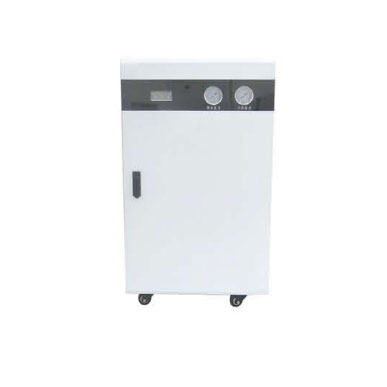 YL-W-01 Commercial Water Purification Equipment
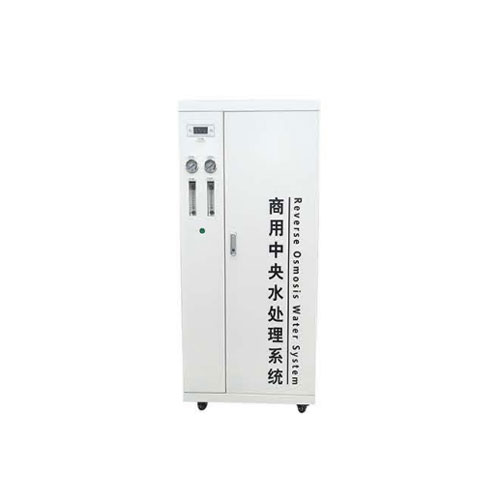 YL-W-06 Commercial Water Purification Equipment
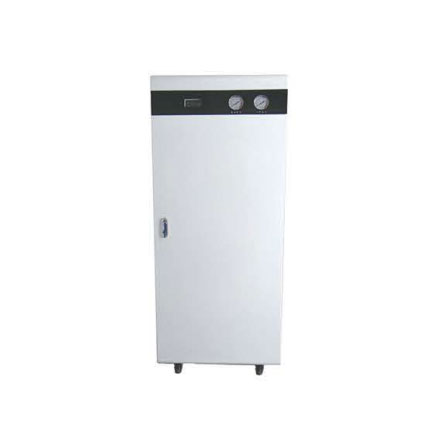 YL-W-05 Commercial Water Purification Equipment
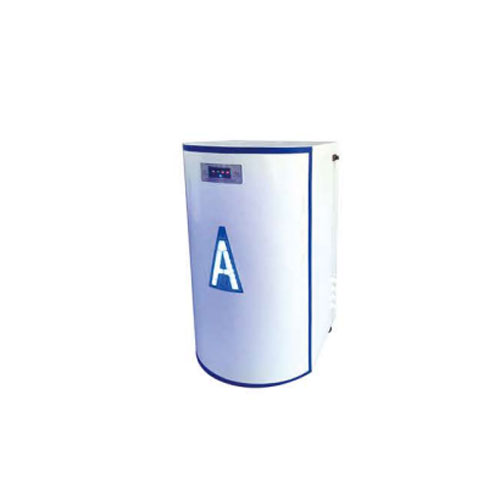 YL-W-04 Commercial Water Purification Equipment
Ready to Get Started?