
Ice Machine Sizing for Commercial Kitchen: Demand-Based Planning Guide
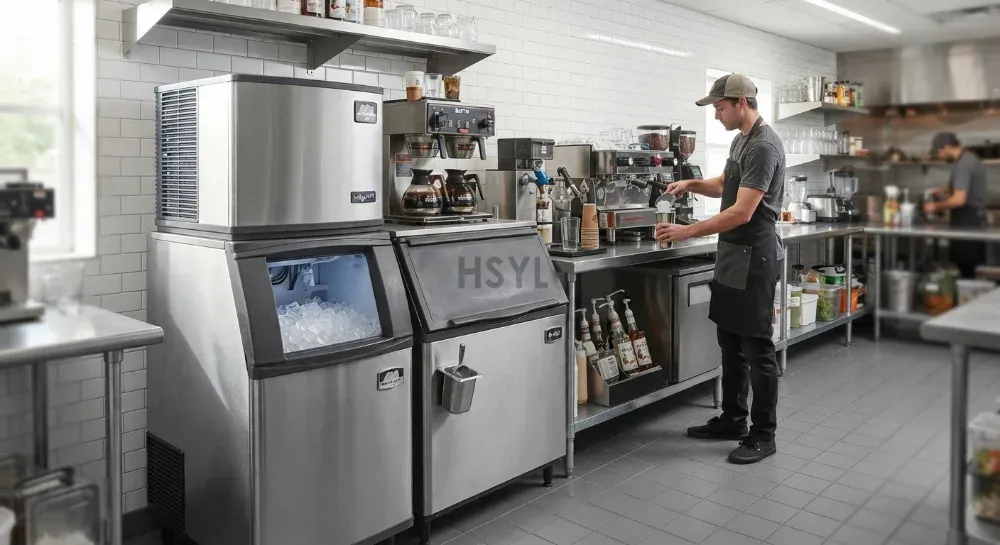
Ice machine sizing is one of those deceptively simple planning tasks that becomes complicated once you include every use case. If you size by seat count alone, you may end up short on ice during peak beverage service or overspend on a machine that never reaches its rated output. The right approach to ice machine sizing for commercial kitchen starts with menu mix, cooling tasks, and storage buffer rather than a single seat-count rule.
Before selecting an ice machine, review how cooling and freezing needs interact with the rest of the kitchen. The kitchen equipment solutions page shows how refrigeration, freezing, and ice utilities fit into the overall project.
Estimate Ice Demand by Use Case, Not Seats
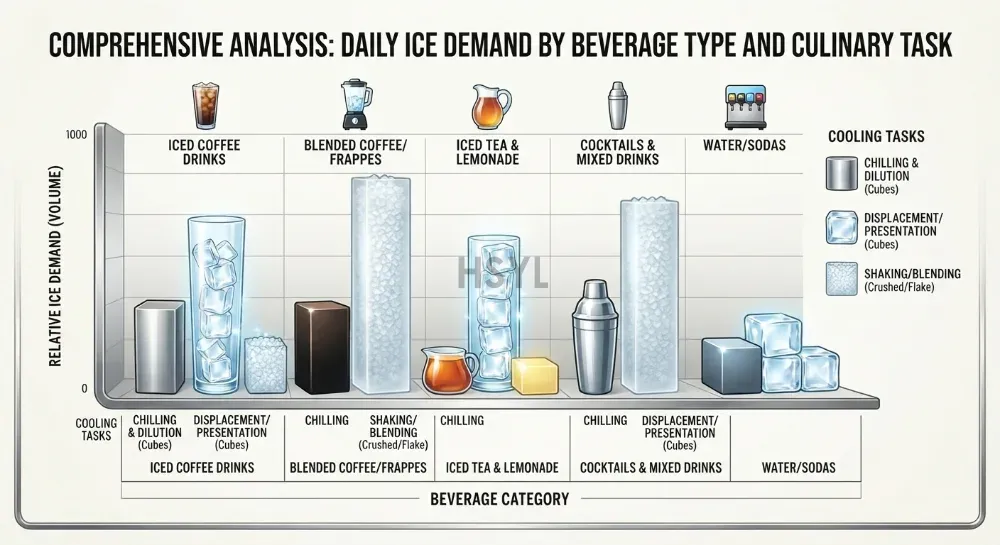
Ice is used for beverages, food display, batch cooling, and sometimes blast-freezing preparation. Beverage-heavy bars and cafes may need consistent ice flow throughout service, while restaurants with seafood displays or buffet stations need additional ice for food cooling. If your kitchen already uses a blast freezer or potato chips instant freezer for process freezing, you may still need separate ice-making capacity for display and beverage use.
Most buyers make the mistake of applying a generic per-cover or per-seat formula without adjusting for menu temperature, service length, and refill logistics. A better method is to list each ice-using station, estimate daily demand during peak service, and then add a buffer for unexpected spikes.
Match Machine Output to Peak Demand, Not Average Use
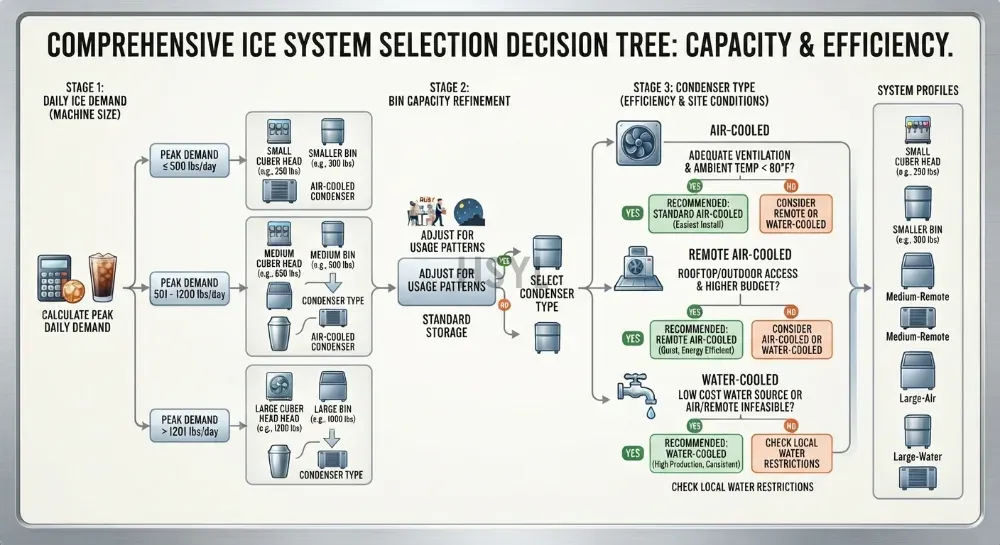
Ice machines are rated by kilograms or pounds produced over 24 hours under ideal conditions. Real kitchen output varies with water temperature, ambient temperature, condenser type, and cleanliness. Air-cooled machines exhaust heat into the kitchen, which can reduce output in hot environments. Water-cooled or remote-condenser machines avoid that problem but need extra plumbing.
Sizing note: Bin storage is as important as production capacity. A larger bin can absorb production during slow periods and cover short demand spikes without requiring a larger machine.
If your kitchen uses refrigeration equipment for perishable storage, confirm that the ice machine location does not create a heat island that raises the temperature of nearby refrigerated display cases.
Plan for Water Quality, Filtration, and Drainage
Ice quality affects both customer experience and equipment life. Water with high mineral content can scale evaporator plates and reduce output over time. Many commercial kitchens install prefilters or water-treatment systems to protect ice machines. Drainage must also handle meltwater during cleaning and bin overflow.
If your ice demand supports both beverage service and food cooling, consider whether a single machine can handle both quality requirements. Beverage ice is usually expected to be clear and odor-free, while food-cooling ice may tolerate slightly different handling standards.
Ice Machine Selection Checklist
| Selection factor | Impact on sizing or placement |
|---|---|
| Peak daily demand by station | Determines minimum production capacity |
| Beverage versus food-cooling ratio | Affects quality expectations and scheduling |
| Storage bin size | Buffers production and demand timing differences |
| Condenser type and kitchen heat load | Impacts real output in hot environments |
| Water quality and filtration plan | Protects machine performance and ice quality |
| Drainage and cleaning access | Supports hygiene and maintenance schedules |
Where Ice Planning Fits the Full Kitchen Layout
Ice machine location affects workflow, drainage, and nearby refrigeration performance. Place the machine where staff can access it during service without crossing cooking or cleaning paths. If the kitchen uses modular layouts, confirm that the ice bin does not block equipment movement or maintenance access.
For overall equipment scope, see kitchen equipment solutions. For refrigeration context, review refrigeration equipment and the blast freezer.
Related Cooling and Storage Planning Resources
Start with the overall equipment plan on kitchen equipment solutions, then review cooling modules on refrigeration equipment. The blast freezer and potato chips instant freezer show how freezing and cooling tasks share utilities and layout space with ice-making requirements.
Frequently Asked Questions
Does seat count alone determine commercial ice machine size?
What is the difference between air-cooled and water-cooled ice machines?
How big should an ice bin be for a busy restaurant?
Does water quality affect ice machine performance?
Can I use one ice machine for both beverages and food cooling?
Must-Read Blogs For Chain Restaurants Owner

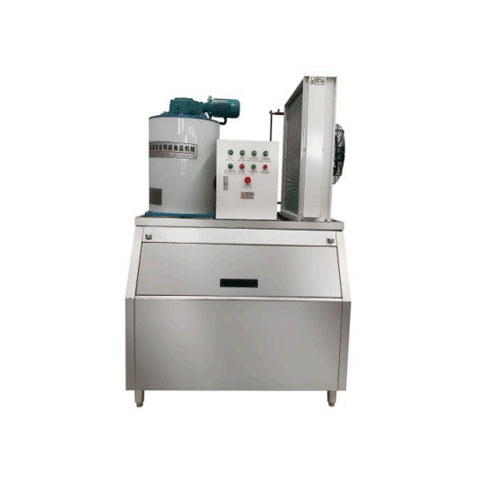 Flake Ice Machine
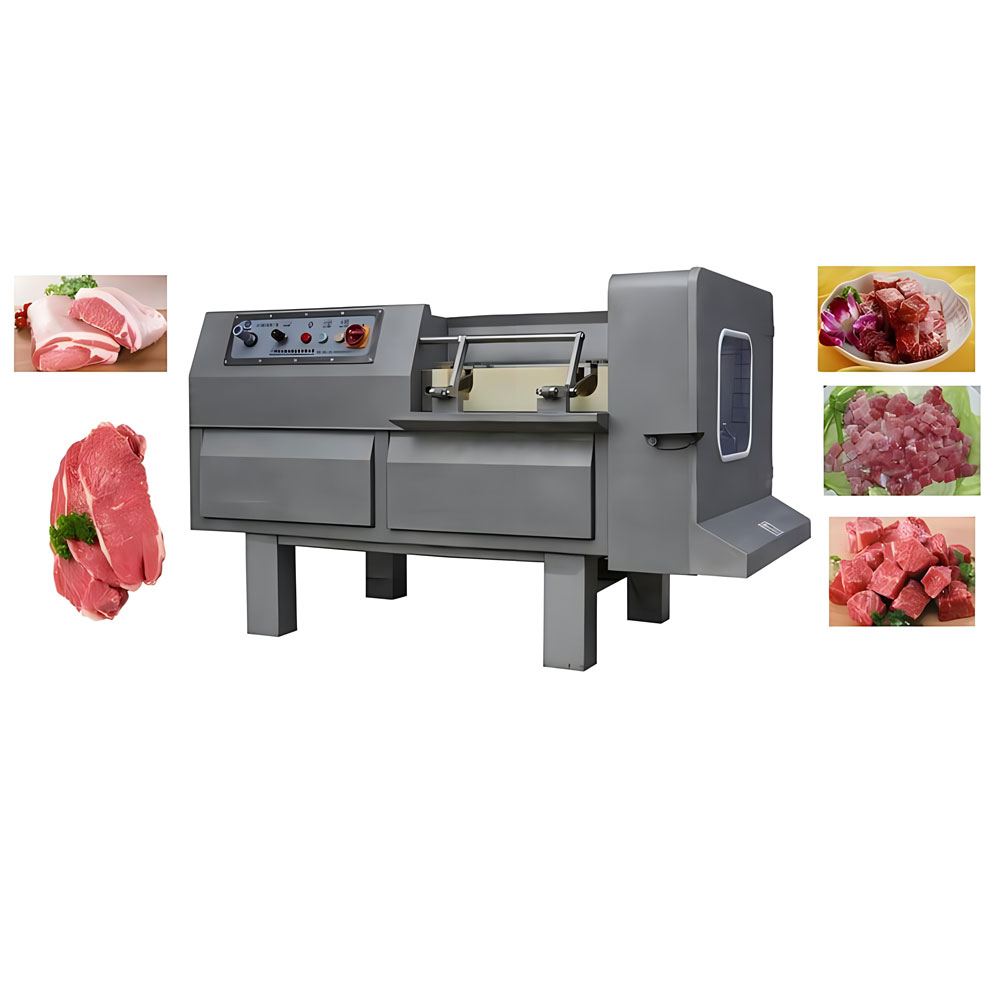 Automatic Fresh Meat Dicing Machine
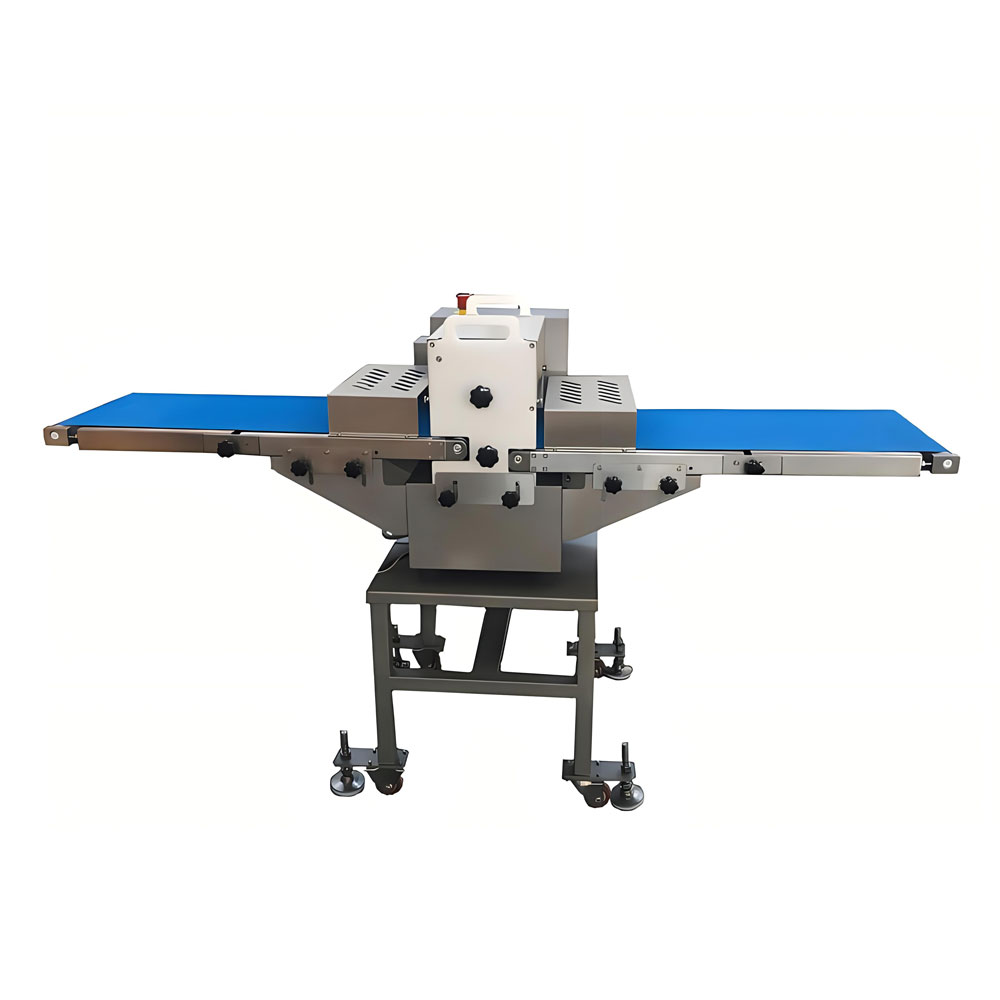 Fresh Meat Slicing Portioning Machine
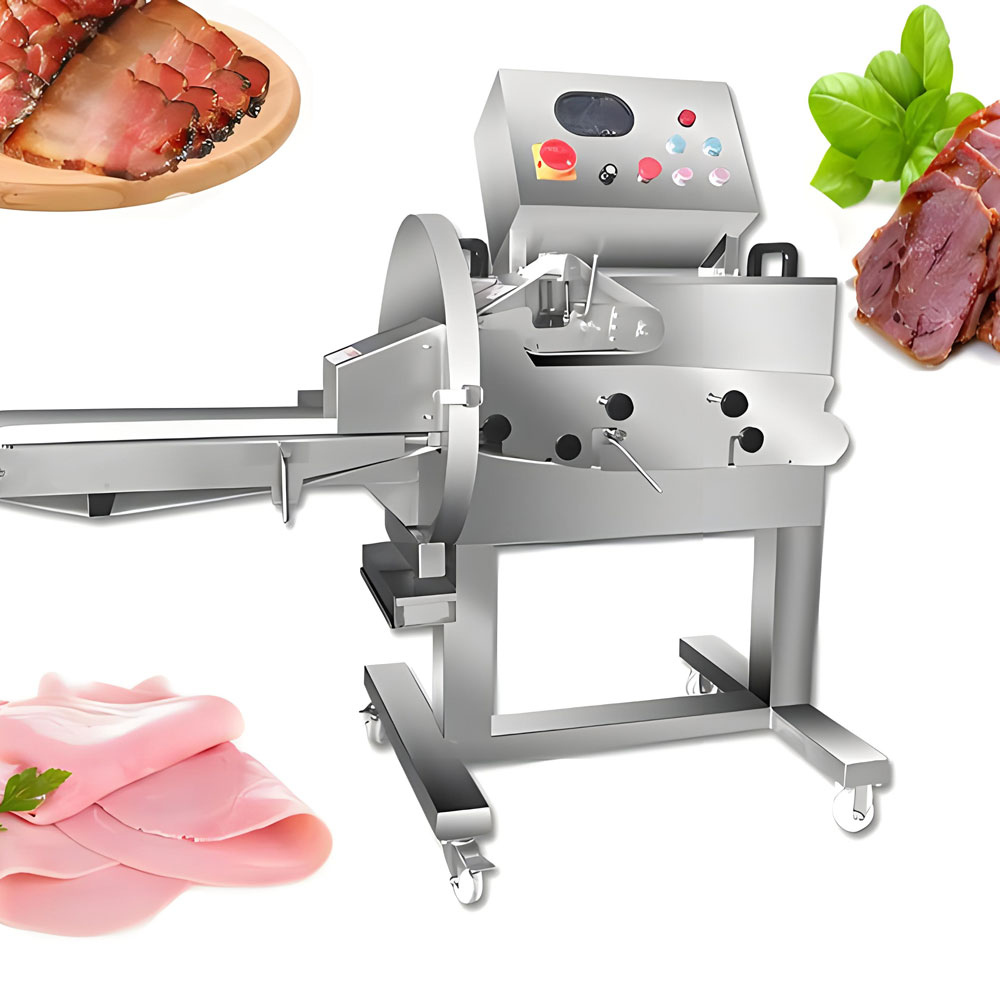 Automatic Cooked Meat Slicing Machine
Ready to Get Started?