
Institutional Canteen High-Volume Serving Line: Throughput Design
An institutional canteen does not cook per-cover — it cooks batch and serves at throughput. A 1000-cover canteen with a 45-minute service window must serve 22 covers per minute, and the serving line must be designed to deliver that throughput without a bottleneck. A line that looks right but has one slow station will queue at that station for the entire service window. This article covers throughput by line type, station count logic, and the batch-to-line balance that keeps the line fed.
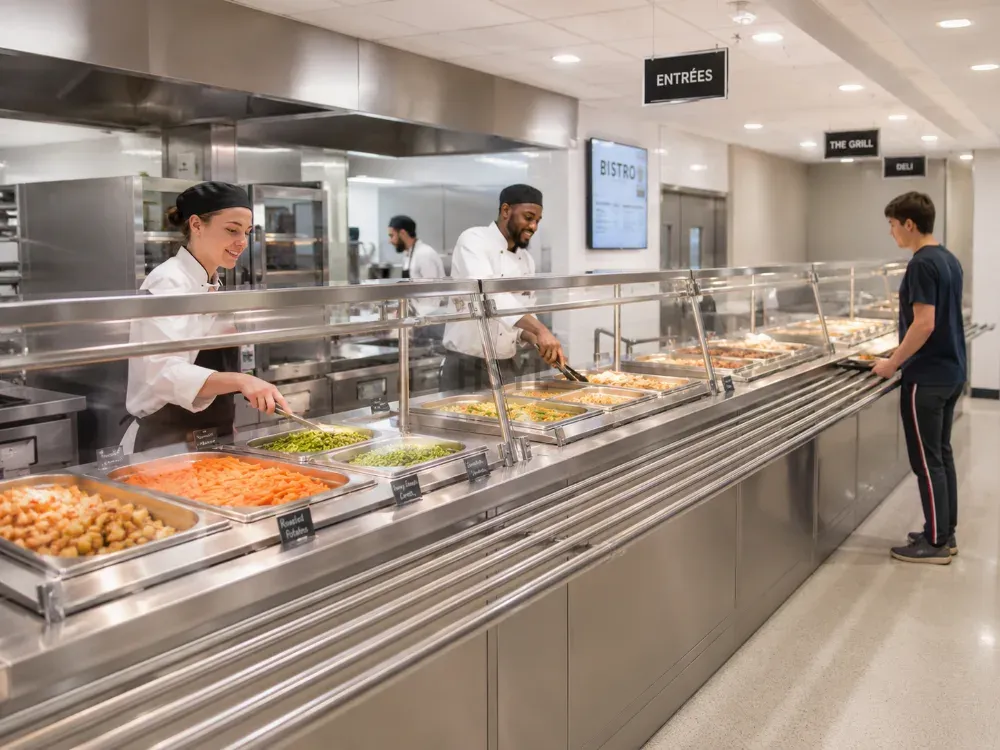
The scope covers high-volume serving line for institutional canteen. It covers throughput, station count, and batch-to-line balance. It does not cover cook-chill (covered separately), layout, or cleaning. The electric fryer and the steaming cabinet are the batch cooking equipment that feeds the serving line.
Throughput by Line Type
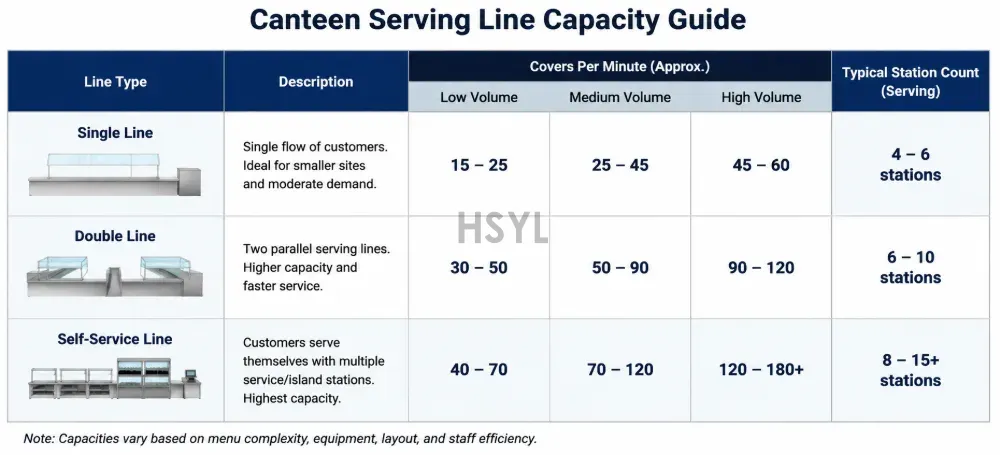
The serving line throughput depends on the line type, the number of stations, and the serving method (staff-served or self-service).
| Line type | Typical covers per minute | Station count | Best for |
|---|---|---|---|
| Single staff-served line | 4–6 | 4–6 stations | Small canteen (up to 200 covers) |
| Double staff-served line (parallel) | 8–12 | 4–6 stations per line | Medium canteen (200–500 covers) |
| Self-service line | 10–15 | 4–8 stations | Medium-to-large canteen (300–800 covers) |
| Multiple parallel self-service | 20–30 | Multiple lines | Large canteen (800+ covers) |
The throughput numbers are planning references. The actual rate depends on menu complexity, tray slide length, payment speed, and crew training. The key is that the line's slowest station sets the throughput — a line with five fast stations and one slow station runs at the slow station's rate.
Station Count Logic
Station count is derived from the target throughput and the per-station serving time. If the target is 12 covers per minute and each station serves 4 covers per minute, the line needs 3 active stations — plus one buffer station to absorb variance. Under-staffing a line creates a bottleneck at the busiest station; over-staffing creates idle stations and crew confusion. The station count must also account for menu complexity — a line with 8 menu items needs more stations than a line with 4.
Operations note: The slowest station sets the line throughput. A canteen that staffs every station equally will queue at the slowest one — usually the station with the most complex item or the slowest serving motion. Identify the bottleneck station and either speed it up (better tooling, pre-portioning) or add a parallel station to share its load.
Batch-to-Line Balance
The serving line only works if batch cooking output matches line throughput. A line that serves 12 covers per minute needs batch cooking producing at 12 portions per minute, with holding to buffer the gap between batch cooking and line service. A canteen that cooks too slow starves the line; a canteen that cooks too fast overflows the holding. The batch cooking cycle, the holding capacity, and the line throughput must be balanced as a system, not specified independently.
Scope, Sources and Limitations
Scope. This article covers high-volume serving line for institutional canteen. It covers throughput, station count, and batch-to-line balance. It does not cover cook-chill, layout, or cleaning.
Limitations. All throughput and station count references are drawn from publicly available institutional feeding material. Actual throughput depends on menu, service model, and crew. HSYL does not publish project-specific throughput data without verified evidence.
Source basis. Serving line and throughput principles are consistent with industry institutional feeding and food-service material.
Canteen Serving Line Resources
Two resources complement this throughput content. The fryer page carries batch frying equipment. The steaming cabinet page carries batch steaming equipment.
- Single tank single basket electric fryer — batch frying equipment whose output feeds the canteen serving line.
- Double-door steaming cabinet with viewing window — batch steaming equipment whose output feeds the canteen serving line.
Next Step: Size Your Serving Line
Send HSYL your cover count, service window, menu type, and current line setup. HSYL will return a pre-filled serving line throughput framework with the station count logic for your covers and a batch-to-line balance review for your cooking and serving setup.
Frequently Asked Questions
How do I calculate the serving line throughput for my canteen?
What sets the throughput of a canteen serving line?
How do I balance batch cooking output with serving line throughput?
When should a canteen use self-service vs staff-served lines?
Can HSYL specify the serving line for my canteen?
Must-Read Blogs For Chain Restaurants Owner

 Bean Product Production Line
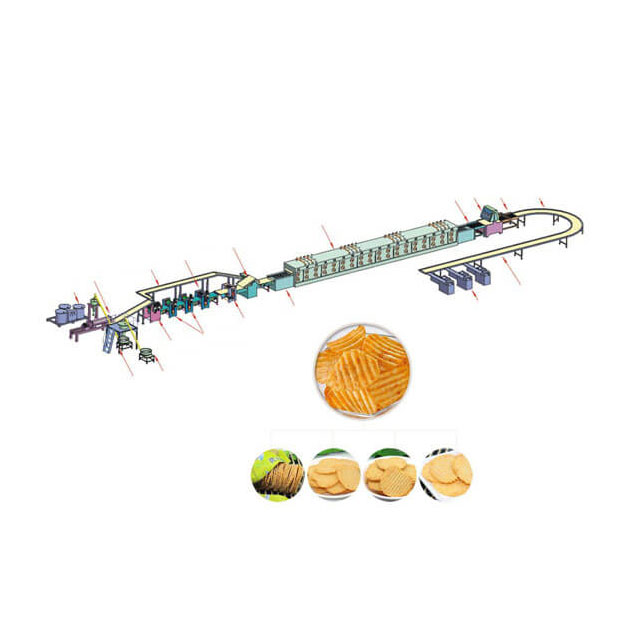 Compound Potato Chips Baking Line
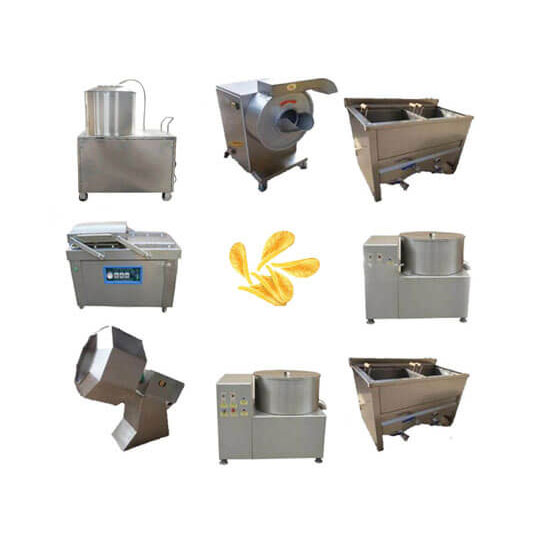 Semi-automatic Potato Crisps Production Line
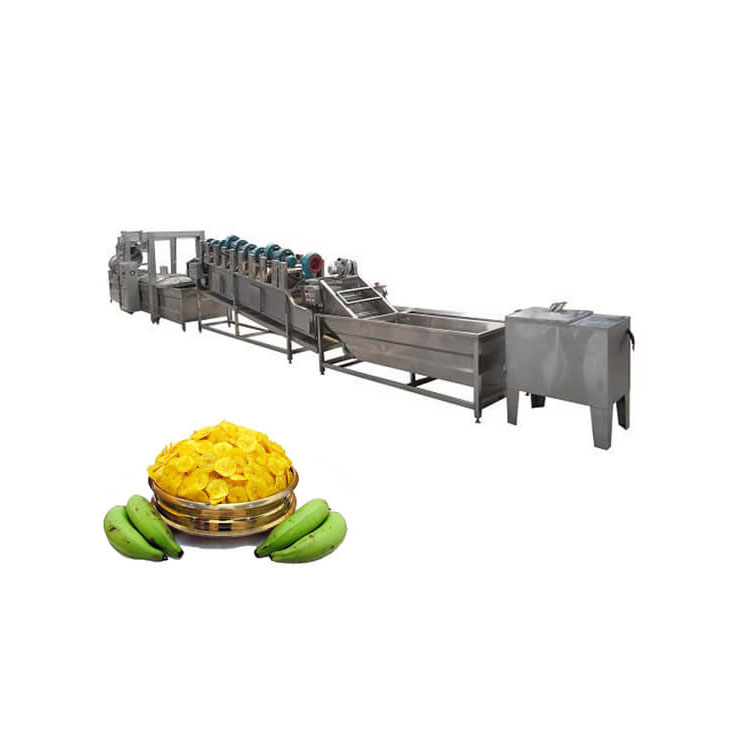 Automatic Banana Chips Production Line
Ready to Get Started?