
Hotel Banquet Kitchen Surge Capacity: Cooking for the Peak, Not the Average
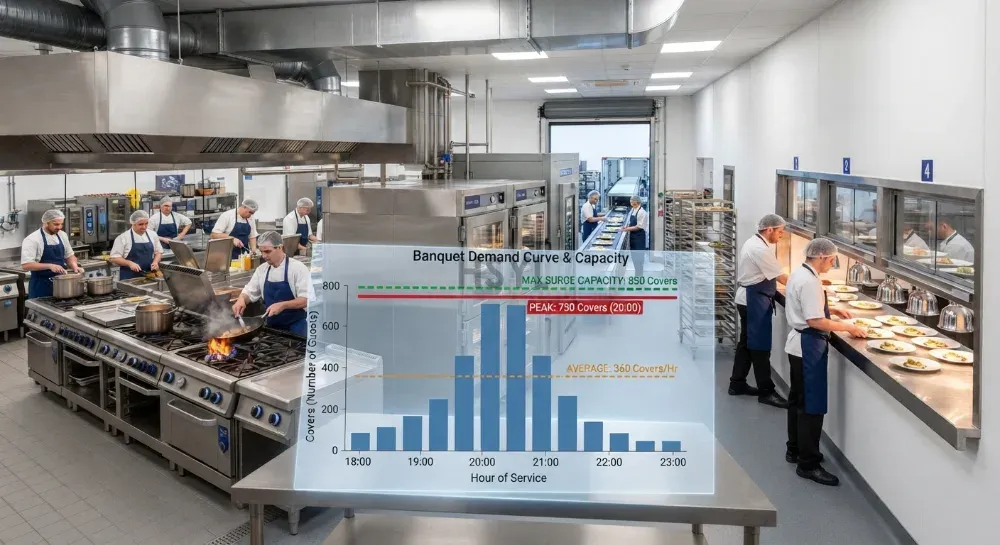
A hotel banquet kitchen does not cook for the average — it cooks for the peak. A 500-cover banquet served in 30 minutes has a peak demand many times the average hourly rate, and the kitchen must deliver all plates hot at the same time. A kitchen sized for the average will fail at the peak; a kitchen sized for the peak will have idle equipment off-peak, which is the cost of surge capacity. This article covers the peak-to-average ratio, the surge equipment matrix, and the holding and pass design that makes banquet surge possible.
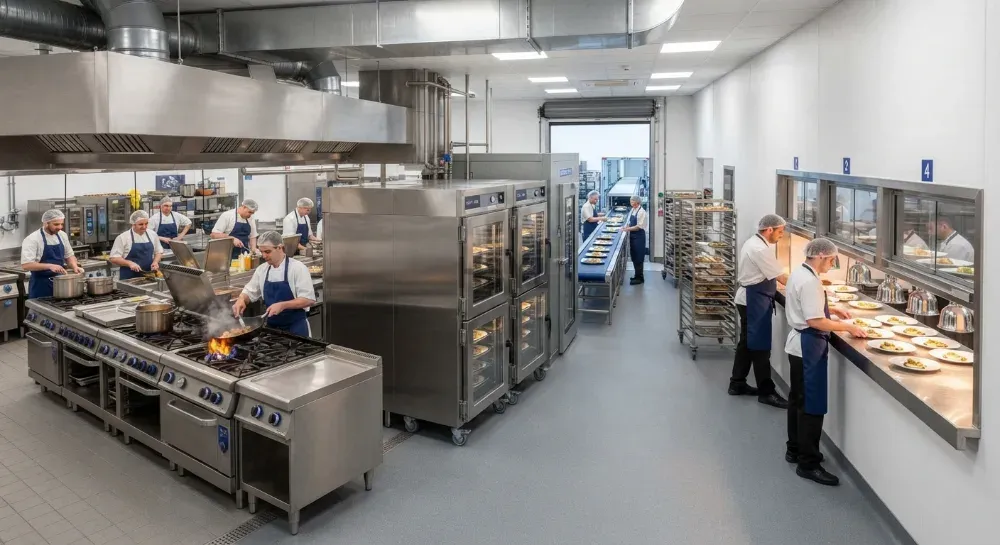
The scope covers surge capacity for hotel banquet kitchen, from cooking to pass. It covers peak-to-average logic, surge equipment, and holding and pass. It does not cover a la carte (covered separately), layout, or cleaning. The commercial electromagnetic cooker, the electric fryer, and the steaming cabinet are the surge cooking equipment.
Peak-to-Average Ratio
The peak-to-average ratio is the surge capacity number. A banquet kitchen with 100 covers average per hour but 500 covers peak per hour has a peak-to-average ratio of 5:1. The kitchen must be sized for the 500-cover peak, not the 100-cover average — which means 5× the cooking capacity of an average-sized kitchen. The cost of this idle-off-peak capacity is the cost of banquet service.
| Banquet pattern | Average covers/hour | Peak covers/hour | Peak-to-average | Surge design implication |
|---|---|---|---|---|
| Small banquet (50–100 covers) | 50 | 100 (30-min service) | 2:1 | Modest surge; holding cabinet fills the gap |
| Medium banquet (100–300 covers) | 80 | 300 (30-min service) | ~4:1 | Significant surge; multiple ranges and holding |
| Large banquet (300–500 covers) | 100 | 500 (30-min service) | 5:1 | Major surge; dedicated banquet kitchen |
| Very large (500+ covers) | 120 | 700+ (30-min service) | 6:1+ | Full surge kitchen; off-site prep possible |
Surge Equipment Matrix
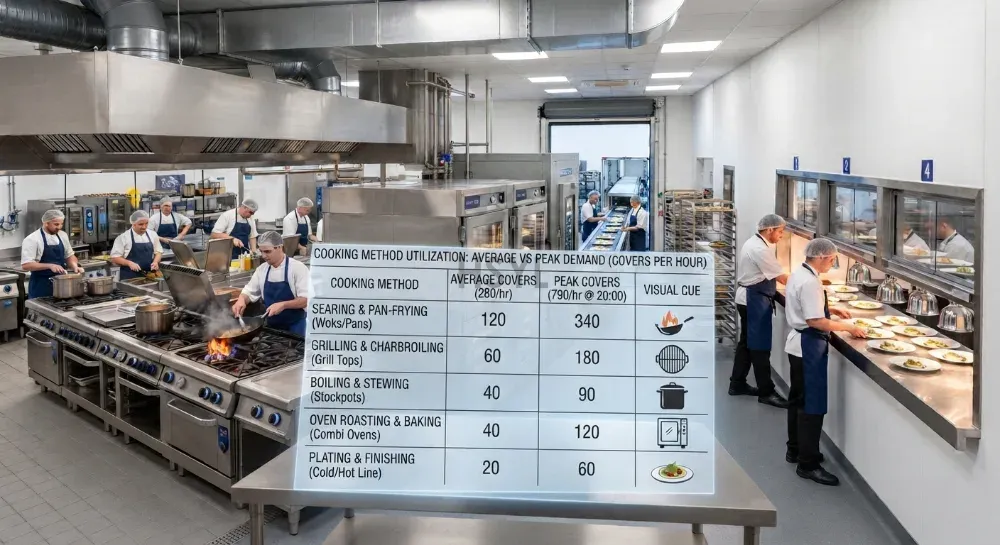
Surge equipment is sized for the peak, not the average. The matrix below shows the equipment count for average vs peak cooking across methods.
| Cooking method | Average equipment | Peak equipment | Surge logic |
|---|---|---|---|
| Range and wok | 2 stations | 4–6 stations | Surge cooking happens in parallel; idle off-peak |
| Fryer | 1 tank | 2–3 tanks | Peak fry recovery time drives tank count |
| Steaming | 1 cabinet | 2–3 cabinets | Batch steaming for banquet requires parallel cabinets |
| Oven | 1 oven | 2 ovens or 1 combi | Roast surge requires parallel oven capacity |
| Holding | 1 cabinet | 3–5 cabinets | Holding is the surge buffer — cooked ahead, held hot |
Design note: Holding is the surge buffer. The banquet kitchen does not cook all 500 covers in the 30-minute service window — it cooks ahead and holds. Holding cabinet capacity is as important as cooking capacity, and it is often under-specified. A banquet kitchen with enough ranges but not enough holding will deliver cold plates at service.
Holding and Pass Design
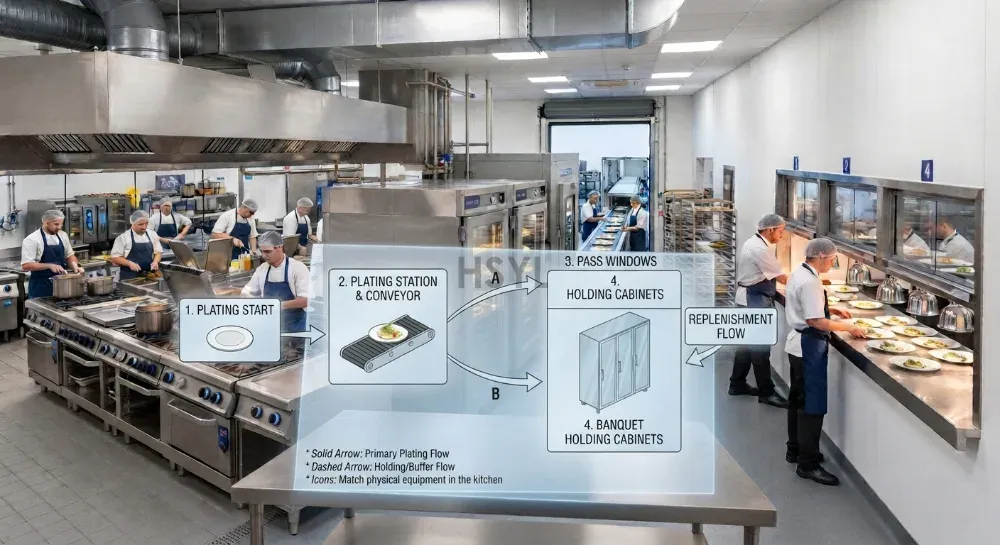
The holding and pass design is what turns surge cooking into synchronized service. Holding cabinets hold cooked food at serving temperature; the pass window is where plates are collected for service. The design must allow: cooked food to move from cooking to holding without crossing raw paths; holding to hold temperature without quality loss for the hold duration; and the pass to plate and dispatch at service speed. A banquet kitchen with a poorly designed pass will have a bottleneck at the worst moment — during service.
Scope, Sources and Limitations
Scope. This article covers surge capacity for hotel banquet kitchen, from cooking to pass. It covers peak-to-average logic, surge equipment, and holding and pass. It does not cover a la carte, layout, or cleaning.
Limitations. All surge ratios and equipment counts are drawn from publicly available hotel F&B and banquet material. Actual surge depends on banquet size, menu, service model, and venue. HSYL does not publish project-specific surge data without verified evidence.
Source basis. Banquet surge principles are consistent with industry hotel F&B material and kitchen design frameworks.
Banquet Surge Capacity Resources
Three resources complement this surge content. The electromagnetic cooker, fryer, and steaming cabinet pages carry the surge cooking equipment.
- Commercial electromagnetic cooker — surge cooking equipment for banquet range and wok stations.
- Single tank single basket electric fryer — surge frying equipment; peak fry recovery drives tank count.
- Double-door steaming cabinet with viewing window — surge steaming equipment for batch banquet steaming.
Next Step: Size Your Banquet Surge
Send HSYL your banquet size range, menu type, service model, and current equipment count. HSYL will return a pre-filled surge capacity framework with the peak-to-average ratio for your banquets and a surge equipment and holding matrix for your peak.
Frequently Asked Questions
What is peak-to-average ratio in a hotel banquet kitchen?
How do I size cooking equipment for banquet surge?
Why is holding cabinet capacity important in a banquet kitchen?
How should the pass window be designed for banquet service?
Can HSYL specify the surge capacity for my hotel banquet kitchen?
Must-Read Blogs For Chain Restaurants Owner

 Meatball Production Line
 Meat Processing Line Equipment
 Automatic Banana Chips Production Line
 Frozen French Fries Production Line
Ready to Get Started?