
Central Kitchen Batch Cooking and Portioning: Scaling Without Losing Consistency
Scaling a central kitchen is not multiplying a restaurant recipe by ten — it is rebuilding the cooking and portioning logic for batch consistency at volume. A batch that tastes right at 50 portions may drift at 500: heat distribution changes in a larger kettle, portioning accuracy drifts at higher speed, and the crew's ability to correct by eye disappears. A central kitchen that scales without a batch-to-portion framework produces inconsistent output that downstream outlets cannot control. This article covers the batch-to-portion framework, the consistency controls that hold quality at scale, and the equipment that makes uniform output possible.
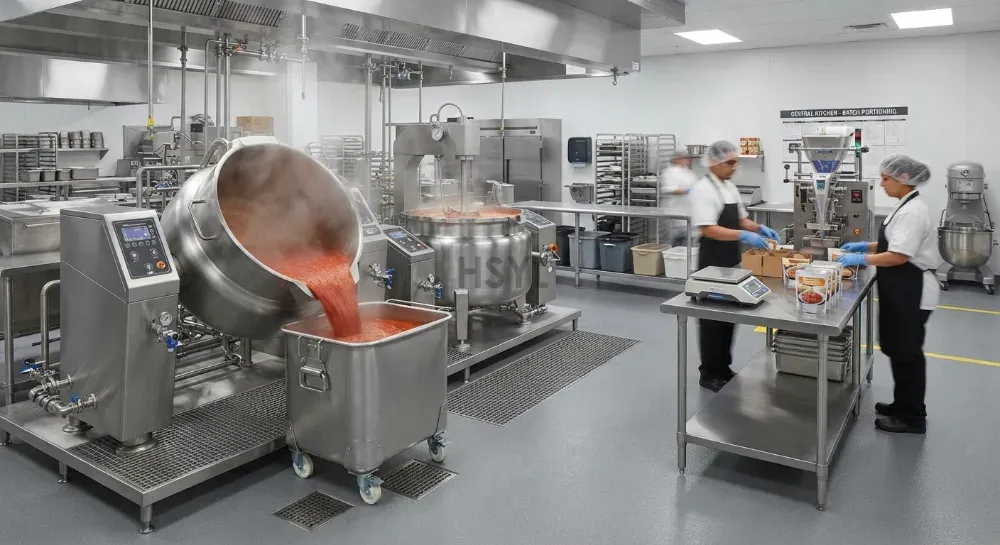
The scope covers batch cooking and portioning for central kitchen, from recipe scaling to portion output. It covers batch-to-portion logic, consistency control, and equipment. It does not cover cold chain (covered separately), layout, or cleaning. A compliant commercial kitchen equipment solution for a central kitchen specifies batch and portioning equipment for scale, not for restaurant volume.
The Batch-to-Portion Framework
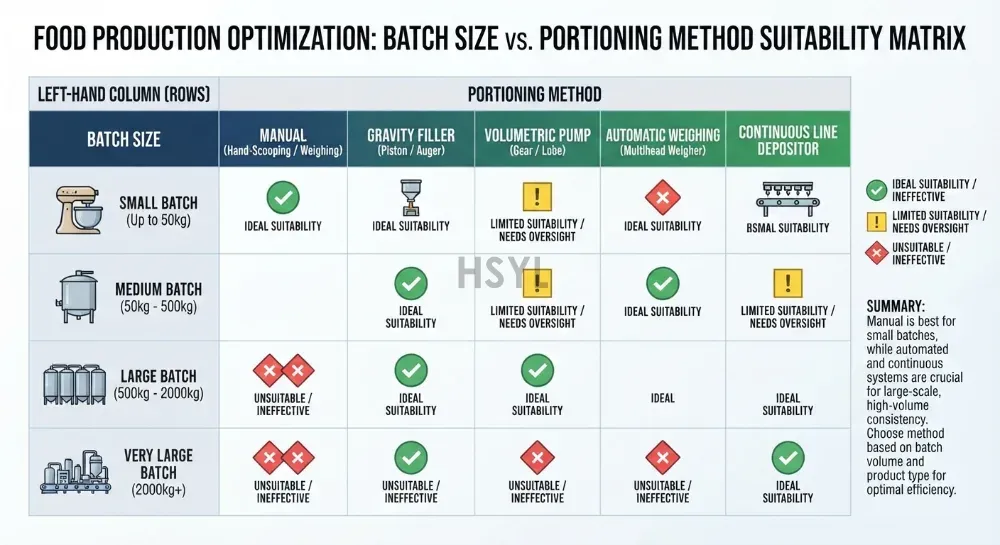
The batch-to-portion framework matches batch size to cooking equipment and portioning method. The wrong match produces either over-cooked small batches or under-portioned large batches.
| Batch size | Cooking equipment | Portioning method | Consistency challenge |
|---|---|---|---|
| Small (20–50 portions) | Range, small kettle | Scoop or ladle (manual) | Operator variance; eye-level correction |
| Medium (50–200 portions) | Steam jacketed kettle, tilting skillet | Volumetric pump or fixed-cup scoop | Batch uniformity; density drift |
| Large (200–1000 portions) | Large steam kettle, automated cooking vessel | Weight-controlled filler or automated portioner | Heat distribution; portioning drift at speed |
| Very large (1000+ portions) | Multiple large kettles, continuous cooker | Automated portioner with checkweigher feedback | Batch-to-batch consistency; line balance |
The commercial electromagnetic cooker fits small-to-medium batch cooking with precise temperature control; the electric fryer fits batch frying with oil-temperature recovery; the steaming cabinet fits batch steaming with even steam distribution. The equipment must match the batch size and the cooking method, not be oversized "for future growth" — an oversized kettle under-filled cooks differently than a right-sized kettle full.
Consistency Control at Scale
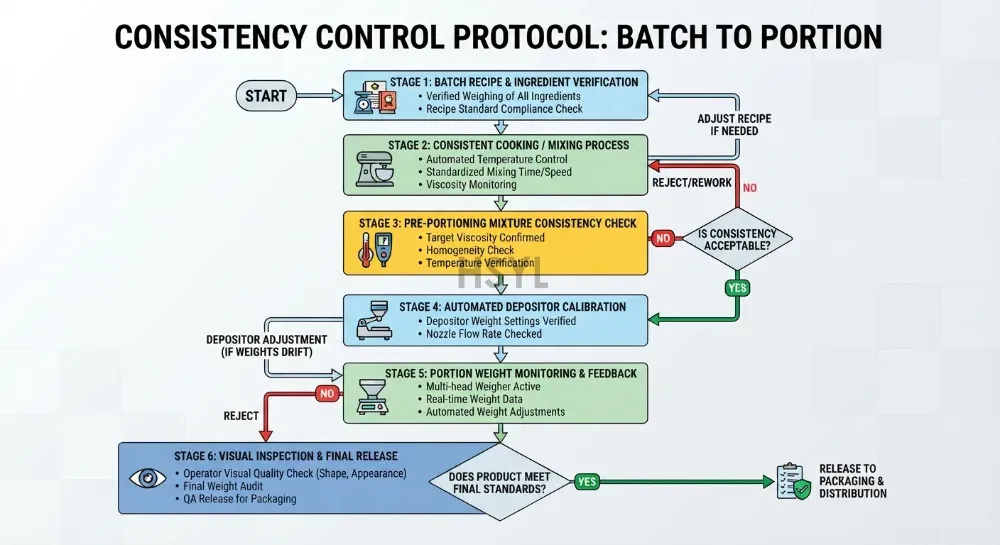
Consistency at scale is not about the recipe — it is about the controls that hold the recipe stable across batch sizes and crew changes. Three controls define a defensible consistency program.
Batch recipe control. The recipe is specified by weight, not by volume or by count. Scaling a recipe by 10× requires converting all ingredients to weight and verifying that the cooking time, temperature, and method scale correctly — a 10× batch does not cook in 10× the time of a single batch, because heat penetration is non-linear.
Portion weight control. Every portion is weighed, not scooped by eye. A checkweigher on the portioning line rejects under- and over-weight portions. The target weight and tolerance are documented per product. Giveaway — the portion weight above declared — is tracked as a cost metric.
Batch uniformity control. A sample from each batch is checked for uniformity — color, texture, doneness — before the batch is released to portioning. A batch that is non-uniform at the cooking stage cannot be made uniform at the portioning stage.
Operations note: Consistency at scale is a control problem, not a skill problem. A central kitchen that relies on a senior chef's eye to hold consistency at 500 portions per batch is a kitchen that loses consistency when that chef is absent. The controls — weight, checkweigher, batch sample — must be in the process, not in the person.
Scaling Logic
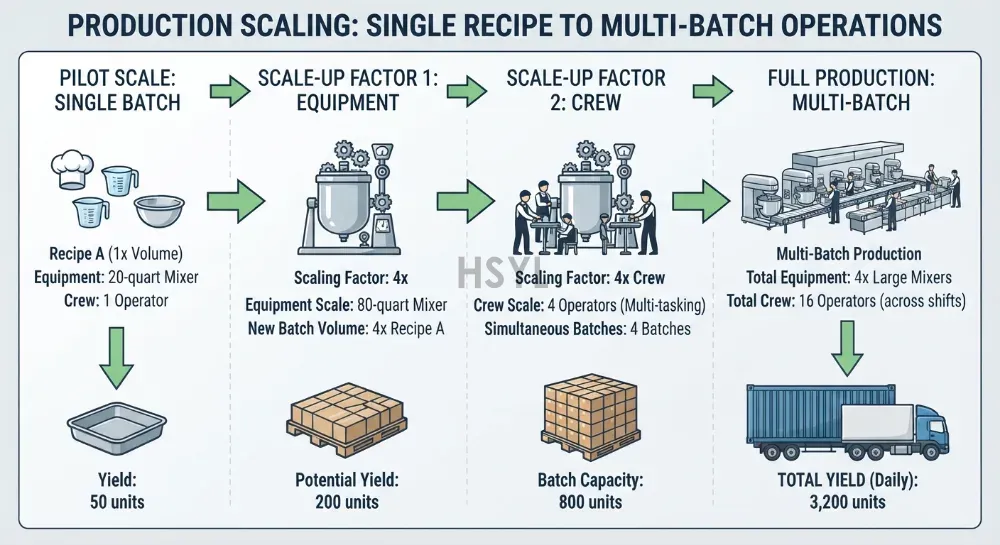
Scaling logic converts a single-batch recipe to a multi-batch production plan. The logic considers equipment capacity, crew capacity, batch cycle time, and portioning line speed. A central kitchen that scales batch size without scaling portioning line speed creates a bottleneck at portioning; a kitchen that scales portioning without scaling batch capacity starves the portioning line. The two must scale together.
Scope, Sources and Limitations
Scope. This article covers batch cooking and portioning for central kitchen, from recipe scaling to portion output. It covers batch-to-portion logic, consistency control, and equipment. It does not cover cold chain, layout, or cleaning.
Limitations. All batch and portioning references are drawn from publicly available central kitchen and food-service material. Actual batch size and portioning method depend on menu, volume, and equipment. HSYL does not publish project-specific batch data without verified evidence.
Source basis. Batch cooking and portioning principles are consistent with industry central kitchen material and food-service operations frameworks.
Central Kitchen Batch and Portioning Resources
Four resources complement this batch content. The kitchen solutions page carries the full scope. The electromagnetic cooker, fryer, and steaming cabinet pages carry the batch cooking equipment.
- Commercial kitchen equipment solution — the full kitchen scope where central kitchen batch and portioning apply.
- Commercial electromagnetic cooker — batch cooking equipment for small-to-medium batches with precise temperature control.
- Single tank single basket electric fryer — batch frying equipment with oil-temperature recovery.
- Double-door steaming cabinet with viewing window — batch steaming equipment with even steam distribution.
Next Step: Scale Your Batch-to-Portion Framework
Send HSYL your menu type, daily volume, current batch sizes, and portioning methods. HSYL will return a pre-filled batch-to-portion framework with the consistency control table for your volume and an equipment-capability review of your batch cooking and portioning setup.
Frequently Asked Questions
How do I scale a restaurant recipe for central kitchen batch cooking?
What portioning method is best for central kitchen high-volume output?
How do I maintain consistency across batches in a central kitchen?
Why does an oversized kettle cook differently than a right-sized kettle?
Can HSYL specify batch size and portioning method for my central kitchen?
Must-Read Blogs For Chain Restaurants Owner

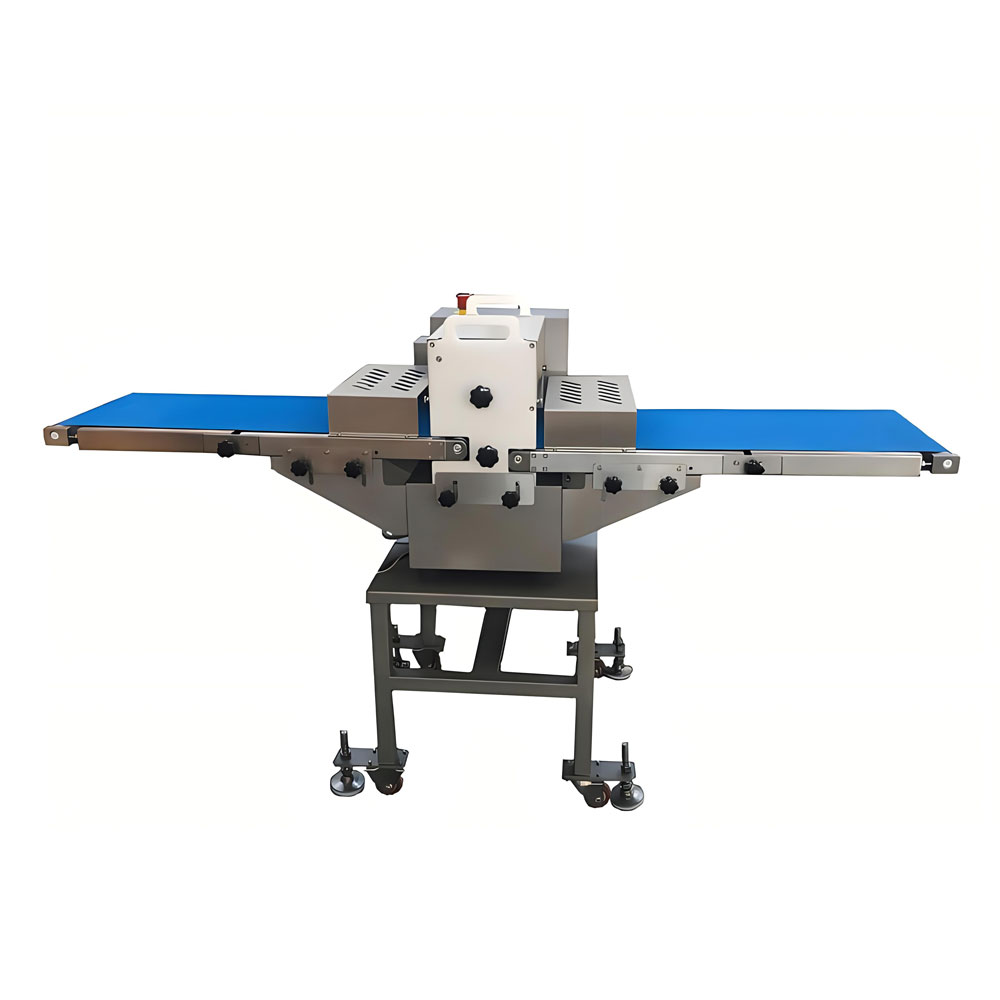 Fresh Meat Slicing Portioning Machine
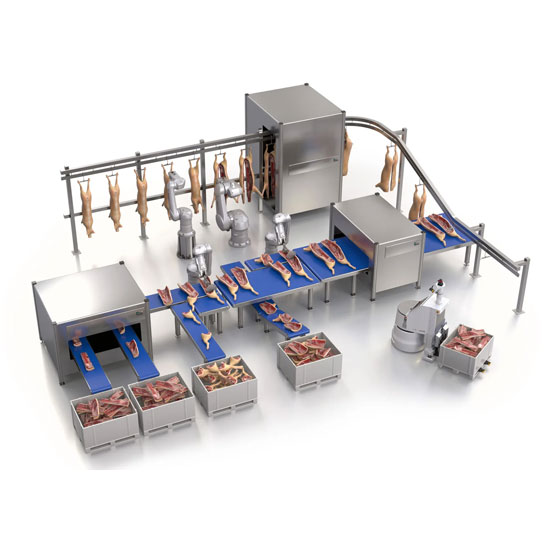 Meat Processing Line Equipment
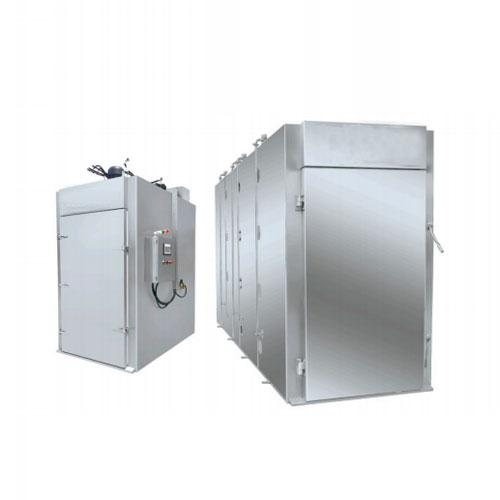 Cooking Drying Oven
 YL-W-06 Commercial Water Purification Equipment
Ready to Get Started?