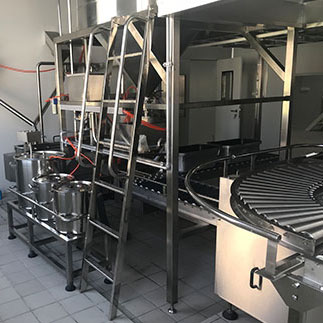
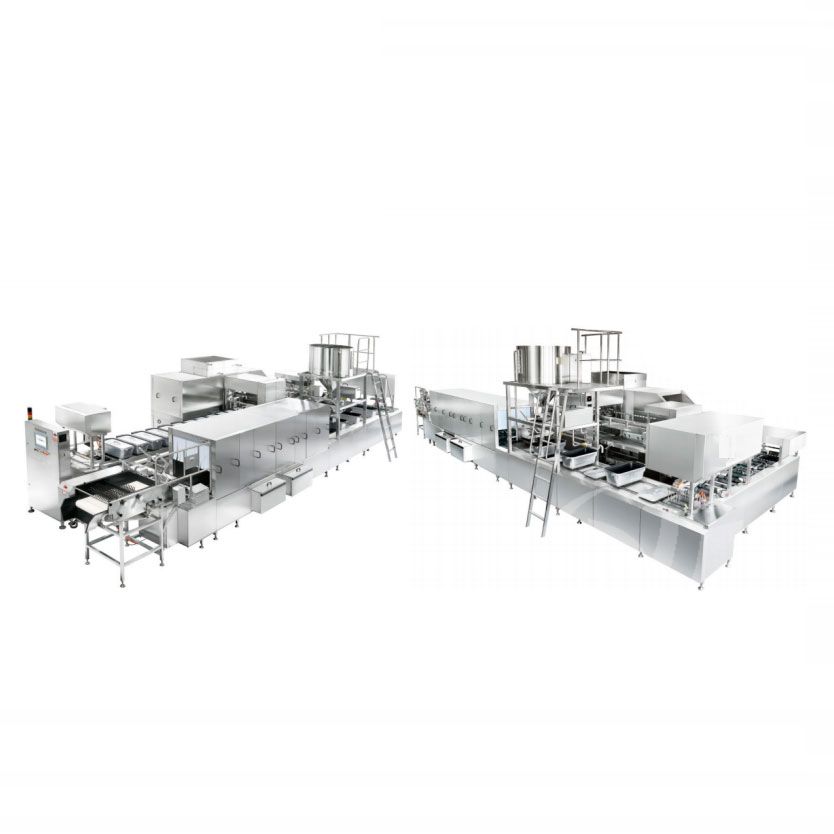
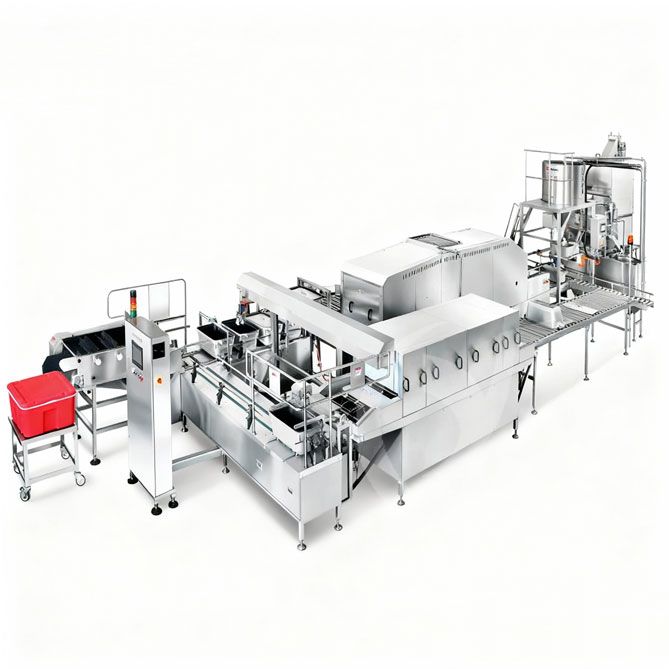
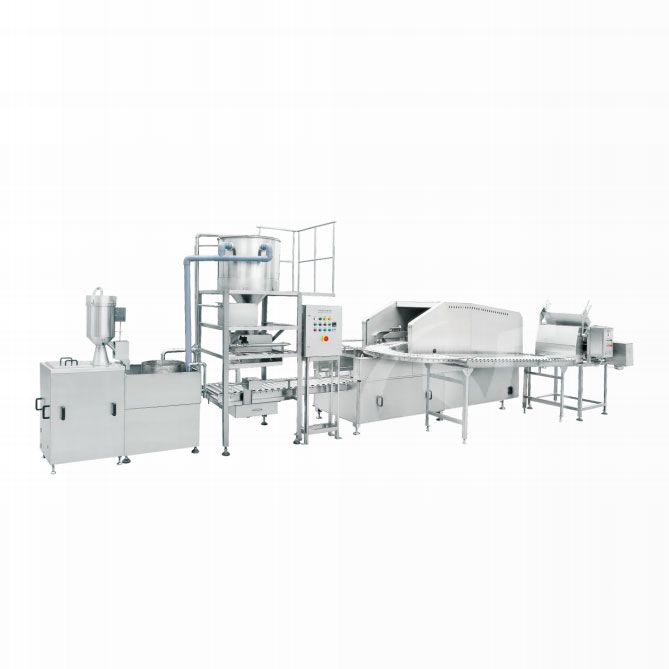
Tofu Production Line
We Are Not Only Capable Of Selling Products, But Also Have The Ability To Undertake Full Turnkey Projects.

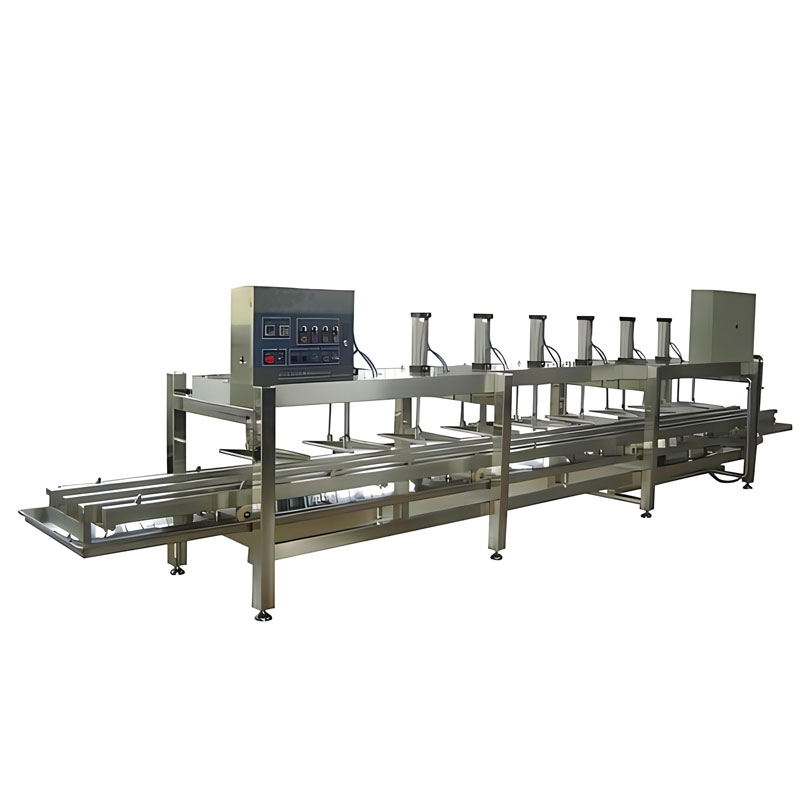
Maximizing protein extraction from raw soybeans while achieving a flawlessly smooth texture requires immense mechanical precision and exact thermo-regulation. This turnkey industrial tofu manufacturing system is engineered to resolve the most persistent bottleneck in commercial soy processing: inconsistent coagulation due to fluctuating temperatures and manual intervention. By fully automating the entire workflow—ranging from initial soak-tank discharge and continuous dual-stage micro-grinding to dynamic steam cooking and pneumatic precision pressing—this line guarantees a defect-free, identical tofu block structure across thousands of kilograms per hour.
Functioning entirely within a networked PLC environment, the system drastically increases raw material yield by isolating the mechanical grinding phase from ambient oxidation, extracting over 80% of the available soy protein while maintaining adherence to rigorous FDA and BRC sanitary directives.
| System Parameter | Engineering Specification |
|---|---|
| System Configuration Model | TPL-2000 Continuous Soy Processing Series |
| Standard Volumetric Output | 1500 kg/h to 2000 kg/h (Final firm tofu blocks) |
| Raw Soybean Input Rate | Approx. 400 kg/h to 600 kg/h (Dry weight) |
| Total Connected Power | 120 KW (Excluding external steam boiler requirements) |
| Drive Voltage Configuration | 380V / 50Hz / 3Phase (Custom UL/CSA modifications available) |
| Primary Structural Alloy | SUS304 Food-Grade Stainless Steel (TIG welded) |
| Sanitary Defense Rating | IP65 (Engineered for complete wet foam washdowns) |
Dual-Stage Micro-Grinding and Okara Separation
Traditional single-pass grinding leaves vast amounts of usable protein trapped within the soy pulp (Okara). This bean product production line utilizes a synchronized dual-stage colloid milling matrix paired with a high-speed centrifugal decanter. The centrifugal force aggressively strips the soy milk from the cellular fiber at 3000 RPM, resulting in an ultra-fine, grit-free milk base. This maximizes the extraction efficiency, recovering up to 15% more protein per ton of dry beans compared to standard commercial grinders.
Continuous Closed-Loop Steam Cooking
Soy milk contains lipoxygenase enzymes that cause an undesirable "beany" flavor if not deactivated rapidly. After extraction, the raw milk is immediately pumped into a closed-loop pressure cooker. Utilizing an indirect steam injection system, the milk temperature is raised to precisely 105℃ within seconds. This rapid thermal shock perfectly neutralizes the enzymes and sterilizes the liquid without scorching the proteins against the tank walls, preserving the bright white color necessary for premium retail tofu.
Automated Coagulant Dosing and Setting
Manual addition of coagulants (such as Calcium Sulfate or Nigari) leads to localized over-concentration, causing hard spots or crumbling textures. To entirely eliminate human error, the milk is transferred into inline mixing tubes where volumetric peristaltic pumps inject the coagulant at mathematical precision calculated by the PLC. The mixture then flows seamlessly into a continuous setting trough, allowing the protein lattice to form perfectly over a controlled 15-minute transit window.
Pneumatic Continuous Pressing and Slicing
Handling fragile curds requires strict force distribution. The continuous tofu production line replaces manual box-molding with an automated overhead pressing belt. Driven by pneumatic cylinders, the press applies an exact, gradually increasing pressure profile to expel the water from the curds without fracturing the internal structure. Once pressed into a continuous firm ribbon, a synchronized guillotine blade cleanly sections the tofu into uniform retail-sized cubes, ready for immediate underwater pasteurization and packaging.
A central SCADA terminal actively monitors every fluid dynamic within the factory. By utilizing inline flow meters and PT100 temperature sensors, the PLC governs the exact ratio of water-to-beans during the grinding phase and dictates the precise steam valve apertures. If a discrepancy in milk concentration (Brix level) is detected, the system autonomously adjusts the water injection parameters. Should any access hatch be opened unexpectedly, Category 3 safety interlocks command VFD braking, freezing all moving mechanics to comply strictly with OSHA and international safety compliance protocols.
Transitioning from a localized batch operation to a continuous 2000kg/h automated facility requires uncompromised factory engineering. Our international B2B deployment strategy includes complete 3D factory layout mapping, identifying proper floor drainage sloping, and calculating exact steam pressure demands for your boilers. We dispatch expert installation and commissioning engineers to the site to physically configure the piping matrices and train your operational staff, ensuring that the facility achieves its rated commercial capacity from the very first production run.
To request detailed technical schematics, a custom machinery footprint design, or a comprehensive thermodynamic analysis for your specific facility, please reach out to our industrial engineering sales team.
Must-read blogs for bosses