
Fish Can Filling Critical Factors: Fill Weight, Headspace, Packing Medium and Heat Penetration
Under 21 CFR Part 113 — the U.S. regulation governing thermally processed low-acid foods in hermetically sealed containers — a fish cannery does not merely "fill cans." It controls a set of critical factors that the scheduled thermal process depends on, and it documents that control for every batch. Fill weight, headspace, and packing medium are not just operational variables; for most canned fish products they are critical factors, because each of them changes how heat penetrates the can and therefore whether the scheduled process delivers commercial sterility. This article explains what makes a filling variable a critical factor, how each of the four — fill weight, headspace, packing medium, and heat penetration — affects the thermal process, and how to build a defensible filling control plan with inspection frequencies.
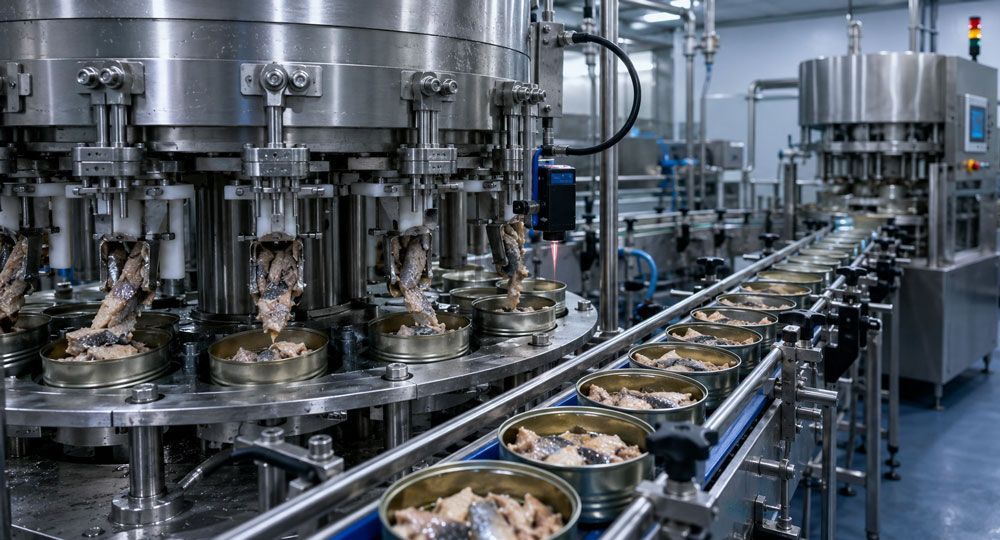
The scope covers the filling-to-seaming segment of a fish canning line, from the filler to the sealed can entering the retort. It covers the critical-factor framework, the four variables, and the control-plan structure. It does not cover retort sterilization cycle design, scheduled-process establishment, mass balance, or receiving — each is a separate topic. A compliant canned fish production line integrates filling, seaming, and retort into a single thermal-process system; this article is the filling-control counterpart to the retort and precooking content.
What Makes a Filling Factor "Critical"
A critical factor is any property, condition, or characteristic that affects the scheduled process's ability to achieve commercial sterility. The concept is defined in 21 CFR Part 113 and elaborated in the FDA Fish and Fishery Products Hazards and Controls Guidance. A variable becomes a critical factor when changing it — intentionally or by drift — changes the heat penetration characteristics of the product in the container, and therefore changes the process needed to achieve sterility.
Three properties make a filling variable a critical factor rather than a routine operational variable:
- It affects the thermal process. If changing the variable changes the time or temperature needed to sterilize the slowest-heating point in the can, it is a critical factor. Fill weight, headspace, packing medium type and temperature, initial temperature, product viscosity, and container size are all typical critical factors.
- It is specified in the scheduled process. The scheduled process — established by a process authority — lists the critical factors and their limits. A variable not listed in the scheduled process is not a critical factor for that product, regardless of how important it seems operationally.
- It must be controlled and documented. Under 21 CFR Part 113, critical factors must be controlled to within the limits specified in the scheduled process, and the control must be recorded for every batch. A critical factor outside its specified limit is a process deviation that must be evaluated and documented.
Compliance note: The list of critical factors for a specific product is established by the process authority who designed the scheduled process — not by the equipment supplier and not by the cannery QA team alone. Equipment suppliers specify what the equipment can control (filler accuracy, headspace range); the process authority decides which of those controllable variables are critical to the specific product's scheduled process and what limits apply. This article describes the framework and the common critical factors; it does not establish critical-factor limits for any specific product.
Fill Weight: Net Weight, Drained Weight and the Thermal-Process Link
Fill weight is the first critical factor most canneries identify, and it is the one most often confused with net weight. The distinction matters for both compliance and thermal-process safety.
Net weight is the total contents of the can — solid fish plus packing medium (oil, brine, or sauce). It is the weight that must meet the declared weight on the label for net-content compliance. Drained weight is the weight of the solid fish after the packing medium is drained, and it is the weight that determines whether the buyer is getting the fish they paid for. Both must be controlled, but they are controlled for different reasons and at different points.
For thermal-process safety, fill weight is a critical factor because the mass of product in the can determines how long it takes for the slowest-heating point to reach sterilizing temperature. Overfilling — putting more fish (or more packing medium) in the can than the scheduled process assumes — increases the thermal load and can extend the time needed to achieve sterility beyond the scheduled process time. A can that looks full and sells well can be a process safety problem if the fill weight exceeds the critical-factor limit in the scheduled process.
Three fill-weight control practices are standard for an audit-defensible program:
- Fill to the scheduled-process specification, not to the label minimum. The scheduled process specifies a fill-weight range that the heat penetration study was based on. Filling above that range — even to give away product — can invalidate the scheduled process if the upper limit is a critical-factor limit.
- Measure net weight and drained weight separately. Net weight is checked at the filler with a checkweigher; drained weight is checked on a sample of sealed cans post-retort. Both measurements must be recorded with lot ID, time, and operator.
- Control giveaway as a commercial variable, not by overriding the critical-factor limit. If giveaway is too high, the solution is tighter filler accuracy, not a higher fill-weight target that exceeds the scheduled-process limit.
| Fill-weight outcome | Net-content consequence | Thermal-process consequence | Corrective direction |
|---|---|---|---|
| Below scheduled-process lower limit | Net-content short weight risk; label non-compliance | May be within process safety but out of commercial spec | Adjust filler; segregate underweight cans; investigate filler drift |
| Within scheduled-process range | Net-content compliant | Process safety valid (assuming other critical factors in spec) | No action; record measurement |
| Above scheduled-process upper limit | Excess giveaway; commercial loss | Process safety risk — thermal load exceeds heat penetration study basis | Stop; hold affected cans; process-authority evaluation; adjust filler |
The upper-limit case is the one most often missed. A cannery that treats overfilling as a harmless commercial problem rather than a potential process deviation is exposed to both safety and compliance risk. The critical-factor limit is a ceiling, not a target.
Headspace: The Air Gap That Changes Heat Penetration
Headspace is the volume in the can above the product and below the can end. It is a critical factor because it changes how heat moves through the can during retorting — and because it changes the conditions under which the double seam is formed.
For thermal-process safety, headspace matters in two ways. First, in processes that rely on steam as the heating medium, the headspace fills with steam and condenses on the product surface, providing a heating path from the top of the can as well as the sides and bottom. Too little headspace reduces this steam-condensation heating path and can slow heat penetration at the top of the can. Second, in agitating retorts, headspace is essential for the headspace bubble to move through the product during rotation, providing forced convection that dramatically speeds heat penetration. An agitating process designed for a specific headspace will not deliver the same heat penetration if the headspace is wrong.
For seaming quality, headspace matters because the double seam is formed by rolling the can end onto the can body. Excessive headspace can allow the end to buckle or deform during seaming; insufficient headspace can cause product to be trapped in the seam, leading to a compromised seal. Both conditions are seaming defects with food-safety implications.
Headspace is controlled by a combination of fill volume (how much product goes in), fill temperature (hot product shrinks on cooling, increasing headspace), and exhaust or vacuum systems that remove air from the headspace before seaming. The control methods and their measurement:
| Control method | What it controls | Measurement | Common critical-factor consideration |
|---|---|---|---|
| Fill volume (volumetric or weight-controlled filler) | Product volume in the can | Checkweigher on net weight; periodic drained-weight sample | Fill volume sets the residual headspace given the can size |
| Fill temperature | Product temperature at fill; affects shrink on cooling | Product temperature probe at filler; recorded per batch | Hot fill increases headspace on cooling; cold fill reduces it |
| Exhaust or steam-flow closure | Air removal from headspace before seaming | Exhaust tunnel temperature and time; seamer steam flow | Residual air in headspace changes heat transfer and can pressure |
| Headspace measurement | Direct measurement of headspace volume | Headspace gauge on sample cans; frequency per scheduled process | Often a specified critical-factor measurement in the scheduled process |
A defensible headspace control program measures headspace directly on a sample of cans at the frequency specified in the scheduled process — not only indirectly through fill weight. Headspace and fill weight are related but not identical, and a fill-weight control program that does not measure headspace cannot defend a headspace critical-factor limit.
Packing Medium: Oil, Brine and Sauce Change the Process
The packing medium — oil, brine, sauce, or spring water — is a critical factor because it changes the heat-transfer characteristics inside the can. The scheduled process is designed for a specific medium, and changing the medium without re-validating the process is a process deviation.
The heat-transfer difference between media comes down to viscosity and convection. Brine and water are low-viscosity and convect freely when heated, transferring heat rapidly from the can wall to the product. Oil is higher-viscosity and convects less, transferring heat more slowly. Sauce viscosity varies widely with formulation and can be the slowest-heating medium of all if the sauce is thick. The practical consequence is that the same can size, same fill weight, and same retort cycle will deliver different heat penetration depending on the medium — and the scheduled process must be designed for the specific medium.
| Packing medium | Heat-transfer mechanism | Relative heat-penetration speed | Critical-factor consideration |
|---|---|---|---|
| Spring water or brine | Free convection; low viscosity | Fast | Medium type and concentration must match scheduled process |
| Vegetable oil | Limited convection; higher viscosity | Slower than brine | Oil type and fill temperature affect heat penetration |
| Sauce (tomato, mustard, etc.) | Convection limited by viscosity; formulation-dependent | Variable; often slowest | Sauce formulation and viscosity are typically critical factors |
| No packing medium (solid pack) | Conduction only | Slowest | Solid-pack processes require the longest scheduled process time |
Three operational rules govern packing medium as a critical factor. First, the medium type in production must match the medium type the scheduled process was designed for — a switch from oil to brine, or from thin sauce to thick sauce, requires a new heat penetration study and a new scheduled process. Second, the medium temperature at fill (hot fill vs cold fill) affects the product's initial temperature, which is itself a critical factor. Third, the medium dosing accuracy affects the fish-to-medium ratio, which in turn affects drained weight and heat-transfer characteristics. A canned food filling and sealing line must control both the fish dosing and the medium dosing as separate critical-factor controls, not as a single combined fill.
Heat Penetration: Why Filling Critical Factors Are Thermal-Process Critical Factors
Heat penetration is the measurement that connects filling critical factors to thermal-process safety. A heat penetration study places calibrated temperature sensors at the slowest-heating point in the can — typically the geometric center for conduction-heating products, or a different location for convection-heating products — and records the temperature history through the retort cycle. The study establishes the scheduled process: the retort temperature, the hold time, and the critical factors that the study was based on.
Every filling critical factor matters because it was part of the heat penetration study. The study was run with a specific fill weight, a specific headspace, a specific packing medium, and a specific initial temperature. If production deviates from any of those, the heat penetration in production may not match the heat penetration in the study — and the scheduled process may not deliver commercial sterility. This is why critical-factor control is not an operational nicety; it is the condition under which the scheduled process remains valid.
Three principles govern the relationship between filling critical factors and heat penetration:
- The slowest-heating point is the process-limiting point. The scheduled process is designed to sterilize the slowest-heating point in the can. Any change that slows heat penetration at that point — a higher fill weight, a more viscous medium, a lower initial temperature — extends the time needed for sterility and can invalidate the scheduled process.
- Critical-factor limits are derived from the study, not assumed. The process authority who ran the heat penetration study specifies the critical-factor limits based on what was tested. Limits outside the tested range require a new study, not an extrapolation.
- Deviations must be evaluated, not ignored. Under 21 CFR Part 113, a critical factor outside its specified limit is a process deviation. The deviation must be documented, the affected cans must be isolated, and the disposition must be determined by the process authority — not by the production team.
Compliance note: This article describes the critical-factor framework and the role of heat penetration. It does not provide scheduled-process parameters, critical-factor limits, or deviation disposition rules for any specific product. Those are established by a process authority for the specific product, container, and retort system, and they must be documented in the cannery's HACCP plan and process filing. Always verify the current version of 21 CFR Part 113 and the FDA Hazards Guide, and consult your process authority for product-specific limits.
The Filling Critical Factor Control Plan
A defensible filling control plan documents, for each critical factor, the specification, the measurement method, the frequency, the record, and the corrective action when the factor is out of spec. The plan below is a framework to be adapted to the specific product, scheduled process, and cannery — the critical-factor limits come from the process authority, not from this table.
| Factor | Specification source | Method | Frequency | Record | Corrective action |
|---|---|---|---|---|---|
| Fill weight (net) | Scheduled process | Checkweigher on every can; sample weigh | Continuous (checkweigher); per can sample per shift | Checkweigher log; sample log with lot ID and time | Adjust filler; isolate out-of-spec cans; process-authority evaluation if above upper limit |
| Drained weight | Product spec / label | Drain and weigh sample cans post-retort | Per shift or per lot per sampling plan | Drained-weight log with lot ID | Adjust fish-to-medium ratio; investigate filler dosing |
| Headspace | Scheduled process | Headspace gauge on sample cans | Per frequency in scheduled process (typically per shift minimum) | Headspace log with lot ID and time | Adjust fill volume or exhaust; isolate affected cans |
| Packing medium type | Scheduled process | Medium identification at dosing; formulation check | Every batch change; every formulation change | Medium batch record; formulation verification | Stop; do not retort with wrong medium; process-authority evaluation |
| Packing medium temperature at fill | Scheduled process | Temperature probe in medium line | Continuous; recorded per batch | Medium temperature log | Adjust medium heater; hold cans if temperature out of spec |
| Initial temperature (product at retort) | Scheduled process | Temperature probe in sample can at retort load | Per retort load | Initial temperature log with retort batch ID | Hold retort batch; process-authority evaluation if below limit |
| Container size and type | Scheduled process | Container specification verification at changeover | Every changeover | Changeover record; container spec sheet | Stop; do not run wrong container on scheduled process for different container |
The control plan is only as good as its execution. Three execution rules determine whether the plan is audit-defensible. First, every measurement must be recorded — an unrecorded measurement is treated in an audit as a measurement not made. Second, every out-of-spec result must trigger the documented corrective action, including isolation and process-authority evaluation where the scheduled process requires it. Third, the records must be retained for the period required by 21 CFR Part 113 (typically at least one year for refrigerated products and two years for frozen or shelf-stable products — verify the current regulation).
How Filling Interacts with Seaming and Retort
Filling critical-factor control does not end at the filler. It extends through seaming and into the retort, because deviations can propagate across the interface.
Filling-to-seaming interface. The seamer forms the double seam that hermetically seals the can. A fill weight above spec can cause product to be trapped in the seam; a headspace outside spec can change the can-end geometry during seaming. Both produce seaming defects that are food-safety risks independent of the thermal process. The automatic can sealing machine must be set up for the specific can size and product format, and its setup must be verified at every changeover with a first-off seam teardown. A filling deviation that is not caught before seaming becomes a seaming deviation that is much harder to catch downstream.
Filling-to-retort interface. The retort operates on the assumption that the cans entering it meet the critical-factor limits in the scheduled process. A fill-weight or headspace deviation that reaches the retort means the retort is running a process on cans that do not match the heat penetration study — and the scheduled process may not be valid for those cans. The initial temperature at retort load is itself a critical factor, and it is the last filling-related measurement before the thermal process begins. A retort batch with cans outside critical-factor limits must be held and evaluated, not processed on the assumption that the deviation is minor.
Equipment Choices That Control Filling Critical Factors
Each critical factor maps to equipment decisions that set the ceiling for how well the factor can be controlled. The mapping below is a framework for evaluating equipment against a critical-factor control requirement, not a product recommendation.
- Filler type. Volumetric fillers (lower accuracy, lower capex) vs weight-controlled fillers with checkweigher feedback (higher accuracy, tighter giveaway, higher capex). The choice sets the achievable fill-weight control band.
- Headspace control. Volumetric fill with fixed can size (indirect headspace control) vs direct headspace measurement and exhaust systems (direct control). Agitating retort products in particular require direct headspace control.
- Medium dosing. Separate fish and medium dosing (independent control of each critical factor) vs combined dosing (lower equipment cost, less independent control). The scheduled process may require independent control.
- Checkweigher and rejection. In-line checkweigher with automatic rejection of out-of-spec cans is the difference between a controlled and an uncontrolled fill-weight process. Without it, out-of-spec cans reach the seamer and the retort.
- Initial temperature control. Product temperature at fill, medium temperature, and hold time between fill and retort all affect the initial temperature at retort load. Equipment and process design must hold initial temperature within the scheduled-process limit.
Diagnosing Filling Deviations
Filling deviations present as symptoms that can point to any of several root causes. The table below maps the symptom to the likely critical factor and the confirming measurement.
| Symptom | Likely critical factor | Confirming measurement | Corrective direction |
|---|---|---|---|
| Checkweigher rejects for underweight above baseline | Fill weight (filler drift) | Filler dosing calibration; checkweigher calibration | Recalibrate filler; verify checkweigher; monitor trend |
| Checkweigher rejects for overweight above baseline | Fill weight (filler overshoot) | Filler dosing calibration; product density change | Recalibrate; check for product density or temperature change |
| Drained weight out of spec with net weight in spec | Fish-to-medium ratio | Independent fish and medium dosing audit | Adjust dosing ratio; verify medium viscosity |
| Headspace out of spec | Fill volume, fill temperature, or exhaust | Direct headspace measurement; fill temperature log | Adjust fill volume or exhaust; verify fill temperature |
| Seamer jams or first-off seam defects | Headspace or fill weight (can-end geometry) | Headspace on affected cans; fill weight; seam teardown | Correct filling; verify seamer setup for can size |
| Retort process deviation on initial temperature | Initial temperature at retort load | Initial temperature measurement; hold-time audit | Hold batch; process-authority evaluation; adjust hold time or fill temperature |
| Drained weight or texture inconsistent post-retort | Packing medium or fill weight drift | Medium batch record; fill-weight trend; medium temperature | Verify medium formulation; stabilize filler; review medium temperature |
The discipline is to measure the specific critical factor, not to infer it from downstream symptoms. A seamer deviation that is actually a headspace deviation will recur if the headspace is not measured and corrected.
Downloadable Filling Control Plan and Inspection Frequency Table
The control plan and inspection-frequency table referenced in this article provide a structured two-document set. The control plan covers each critical factor with its specification, method, frequency, record, and corrective action. The inspection-frequency table maps each factor to a default frequency by shift structure, with escalation rules for new products, new can sizes, and post-deviation recovery. Together they form the minimum documentation to defend a filling critical-factor program in an audit.
To request the templates: Share your fish species, product format (loin, chunk, whole), can size and type, packing medium, scheduled-process critical-factor list (from your process authority), and whether the program is greenfield or an audit of an existing program. HSYL will return a pre-filled control plan template with the framework for your product and a blank field column for your process-authority-specified limits.
Scope, Sources and Limitations
Scope. This article covers the filling-to-seaming segment of a fish canning line, from the filler to the sealed can entering the retort, with focus on the critical-factor framework. It covers fill weight, headspace, packing medium, and the heat penetration link. It does not cover retort sterilization cycle design, scheduled-process establishment, double-seam teardown, mass balance, or receiving — each is a separate topic.
Limitations. All critical-factor limits and control practices are described as a framework drawn from publicly available regulatory material. Actual critical-factor limits for a specific product are established by a process authority and documented in the cannery's scheduled process and HACCP plan. HSYL does not provide scheduled-process parameters, critical-factor limits, or deviation disposition advice, and does not publish project-specific filling accuracy or deviation rates without verified evidence. A defensible filling control program for your plant must be reviewed by your process authority and QA team against the current version of every applicable regulation.
Source basis. Regulatory references include 21 CFR Part 113 (Thermally Processed Low-Acid Foods Packaged in Hermetically Sealed Containers) and the FDA Fish and Fishery Products Hazards and Controls Guidance. The critical-factor framework and heat penetration principles are consistent with these sources. Specific source versions and review dates are recorded in the internal Evidence Brief and are available on request. Equipment-capability statements refer to HSYL equipment specifications and do not imply a scheduled-process or compliance conclusion.
Reviewer and date. Thermal-Process Specialist & QA, HSYL. Last technical review: 2026-07-12. This article should be re-reviewed when 21 CFR Part 113 or the FDA Hazards Guide is updated, or when HSYL publishes verified project data relevant to filling critical-factor control.
Can Filling and Seaming Control Resources
Three resources complement this filling control content when specifying or auditing a fish canning line. The first is the filling and sealing line page, which carries the integrated filler-seamer equipment. The second is the can sealing machine page, which carries the seamer detail that governs the filling-to-seaming interface. The third is the canned fish line page, which frames the species-level line that this filling step belongs to.
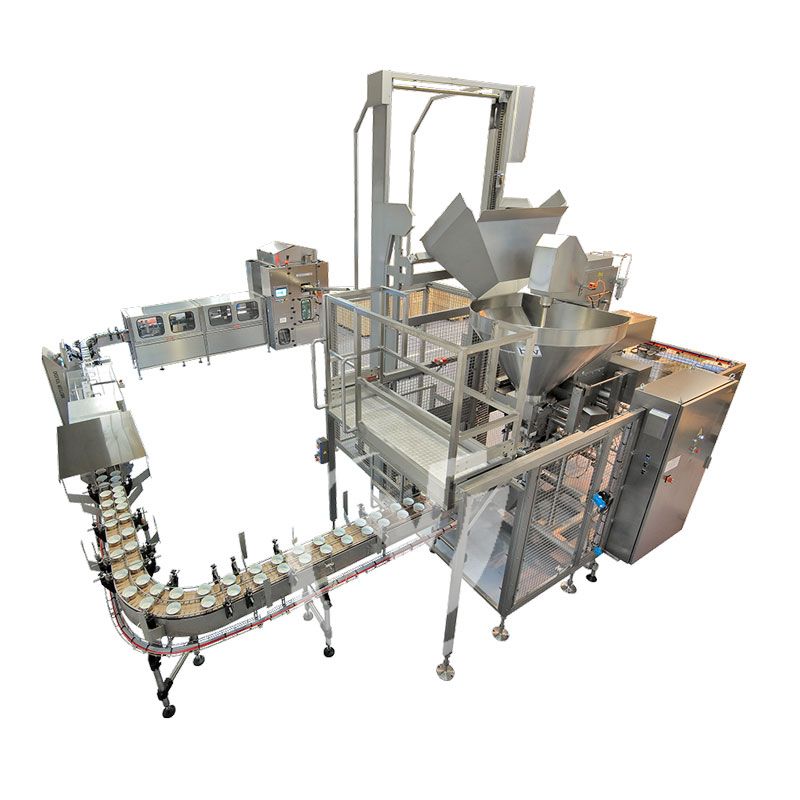
- Canned food filling and sealing line — the integrated filling and seaming equipment that controls fill weight, headspace, and medium dosing as critical factors.
- Automatic can sealing machine — the seamer equipment detail that governs the filling-to-seaming interface and double-seam quality.
- Canned fish production line — the species-level line that the filling step fits into, with full upstream and downstream scope.
Next Step: Build a Defensible Filling Control Plan
If you are building a new fish can filling control program or auditing an existing one against 21 CFR Part 113, the fastest next step is to map your current controls against the critical-factor framework in this article. Send HSYL your fish species, product format, can size and type, packing medium, the critical-factor list from your scheduled process, and whether the program is greenfield or an audit. HSYL will return a pre-filled filling control plan and inspection-frequency template with the framework for your product, plus an equipment-capability review that covers filler accuracy, headspace control, medium dosing, and the filling-to-seaming interface.
Frequently Asked Questions
What is a critical factor in fish can filling?
Who decides which filling variables are critical factors?
Why is fill weight a critical factor for thermal process safety?
How does headspace affect heat penetration in a fish can?
Can I switch packing medium from oil to brine without changing the scheduled process?
What happens if a filling critical factor is out of spec at retort?
Must-Read Blogs For Chain Restaurants Owner

 Hydraulic Sausage Filling Machine
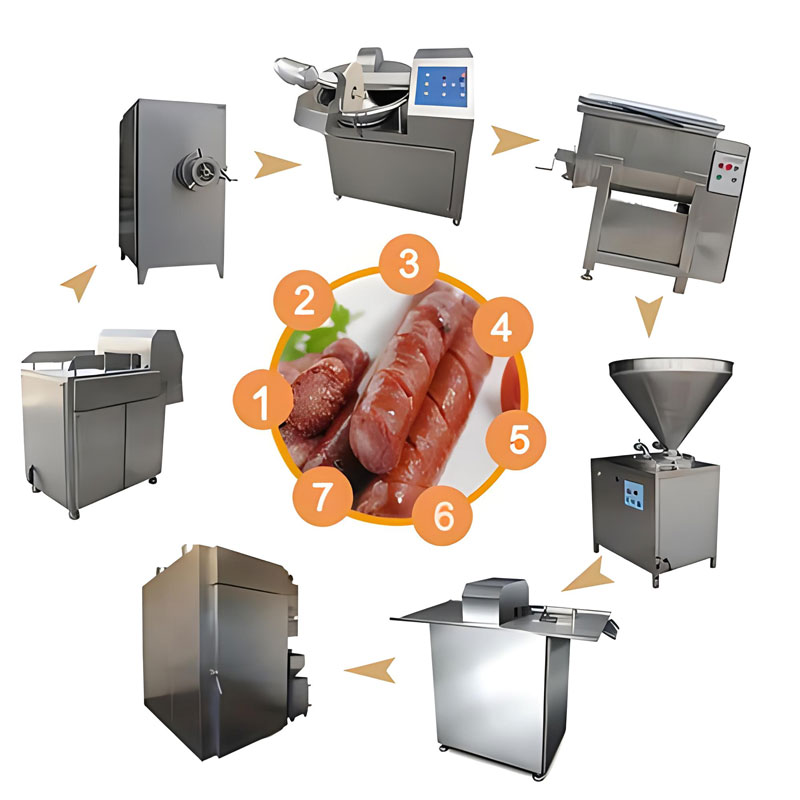 Sausage Processing Line
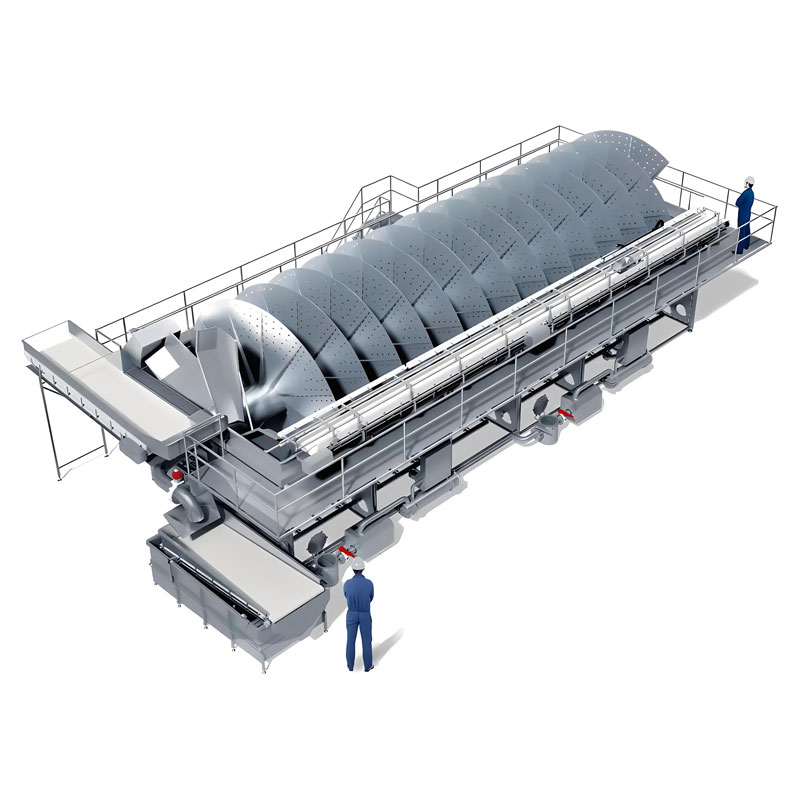 Salmon Processing Line
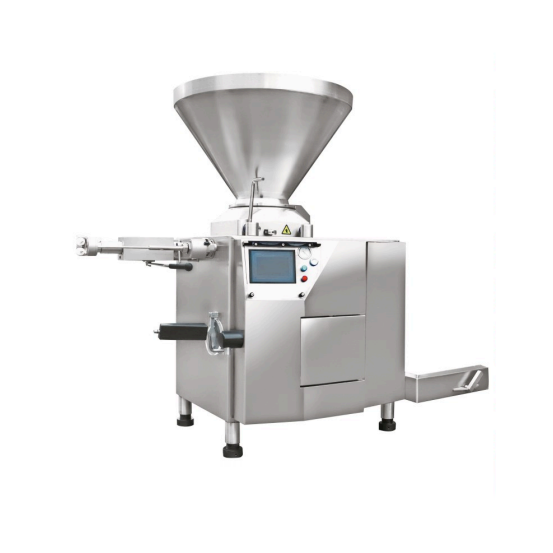 Vacuum Quantitative Filling Machine
Ready to Get Started?