
Weld Finishing, Pickling and Passivation for Fish Processing Equipment
The surface of a stainless steel weld in a fish processing line is not just a cosmetic concern — it is a food-safety and corrosion-resistance concern. Heat tint from welding, embedded iron from tooling, and rough weld profiles all create sites where corrosion can initiate and where bacteria can hide from cleaning. Pickling and passivation are the chemical treatments that restore the corrosion-resistant chromium-oxide layer that welding disturbed. This article maps surface defects to their causes, explains pickling and passivation, and shows what a defensible passivation record looks like for food-contact stainless equipment.
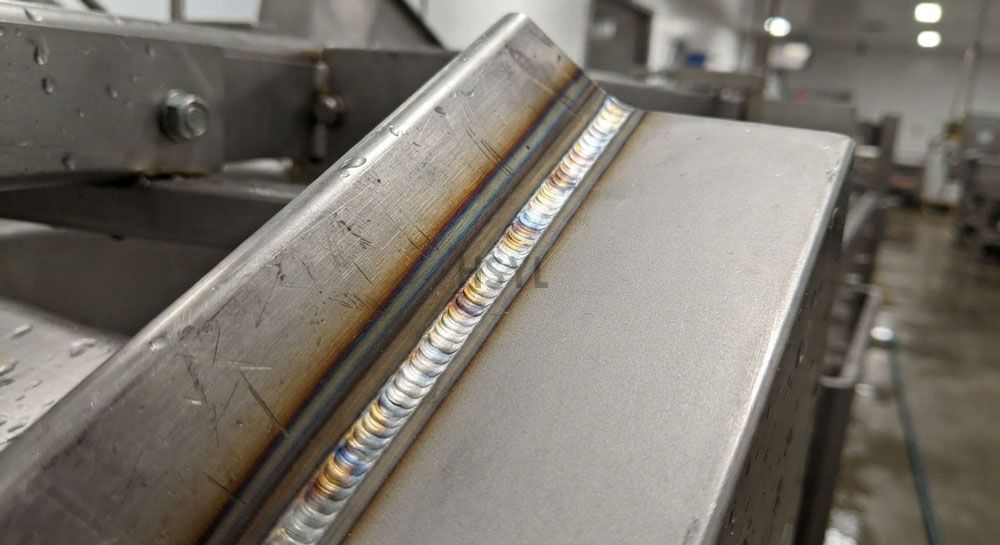
The scope covers weld finishing, pickling, and passivation for stainless steel fish processing equipment. It covers surface defects, treatment methods, and record-keeping. It does not cover stainless grade selection (covered separately in a zone-by-zone materials map), can coating, or equipment commissioning. The canned fish production line page carries the line scope.
Surface Defects and Their Causes
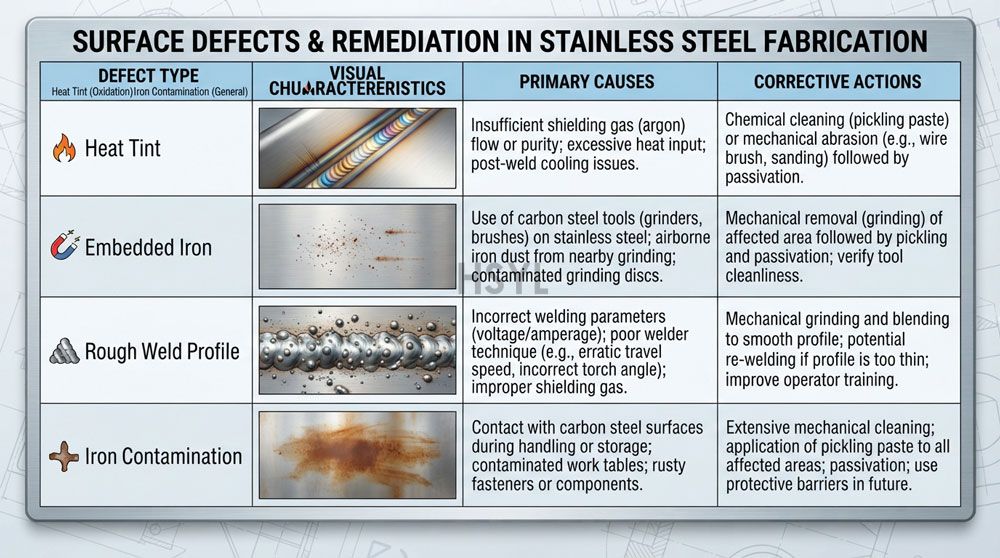
Three surface defects appear on stainless steel welds in fish processing equipment, and each has a different cause and different correction.
| Defect | Visible | Cause | Correction |
|---|---|---|---|
| Heat tint | Blue, brown, or rainbow discoloration at weld | Welding without adequate gas purge; oxygen exposure at temperature | Remove tint by pickling; verify weld purge procedure |
| Embedded iron | Rust spots on stainless; iron particles in surface | Carbon-steel tooling contact; grinding debris; wire brush contamination | Remove iron by pickling; use stainless-only tooling |
| Rough weld | Uneven weld bead, undercut, sharp valleys | Welding parameter drift; wrong filler; incomplete cleaning | Grind smooth; re-weld if undercut; pickle to restore surface |
Heat tint is not just color — it is a layer of oxidized chromium that has been depleted from the stainless surface, leaving the surface less corrosion-resistant. Embedded iron creates galvanic cells that rust and can flake into the product. Rough welds create valleys where bacteria can hide from CIP cleaning. All three must be corrected before the equipment enters food contact.
Pickling and Passivation
Pickling and passivation are acid treatments that restore the chromium-oxide passive layer on stainless steel. They are related but not identical.
Pickling removes the oxidized layer (heat tint, scale, embedded iron) using an acid mixture (typically nitric-hydrofluoric for 304/316L). Pickling is aggressive — it removes a thin layer of metal along with the oxide. It is the treatment for heat tint and embedded iron.
Passivation promotes the formation of the chromium-oxide passive layer using an acid (typically nitric acid or citric acid). Passivation is gentler than pickling — it does not remove metal but dissolves free iron and oxidizes chromium at the surface. It is the treatment for embedded iron removal and for restoring the passive layer after welding and grinding.
Manufacturing note: ASTM A380/A967 are the standard references for cleaning and passivation of stainless steel. ASTM A380 covers cleaning and descaling; ASTM A967 covers passivation. The specific method, acid, concentration, time, and temperature must be documented in the passivation record. A passivated surface without a record is not defensible — the treatment must be evidenced.
The Passivation Record
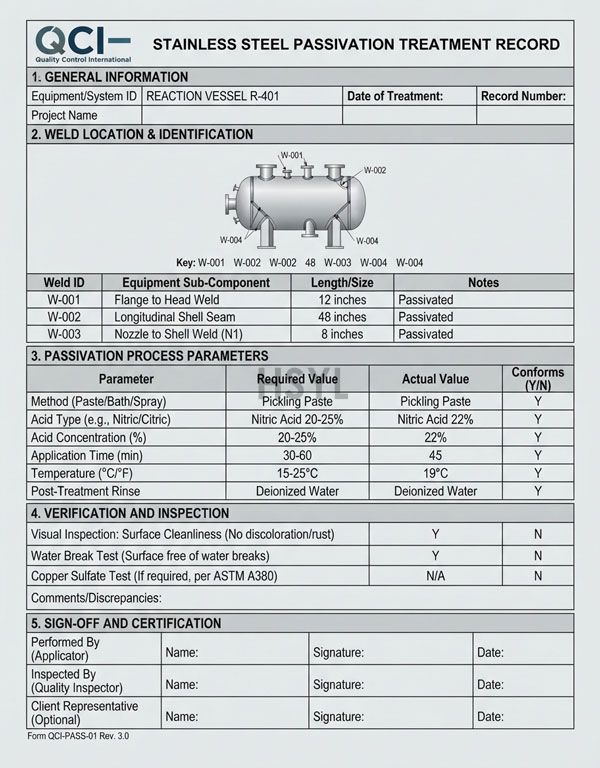
A defensible passivation record documents, for each treated weld or surface: equipment ID, weld location, treatment method (pickling or passivation), acid type and concentration, contact time, temperature, inspector, and date. The record is the evidence that the treatment was performed — without it, the passivation is assumed not done.
The record should also document the post-treatment inspection: visual check for heat tint removal, free-iron test (e.g., ferroxyl test or copper sulfate test) to confirm embedded iron removal, and surface finish verification. A passivation record with no post-treatment inspection is incomplete.
Food-Contact Zones and Stainless Grade
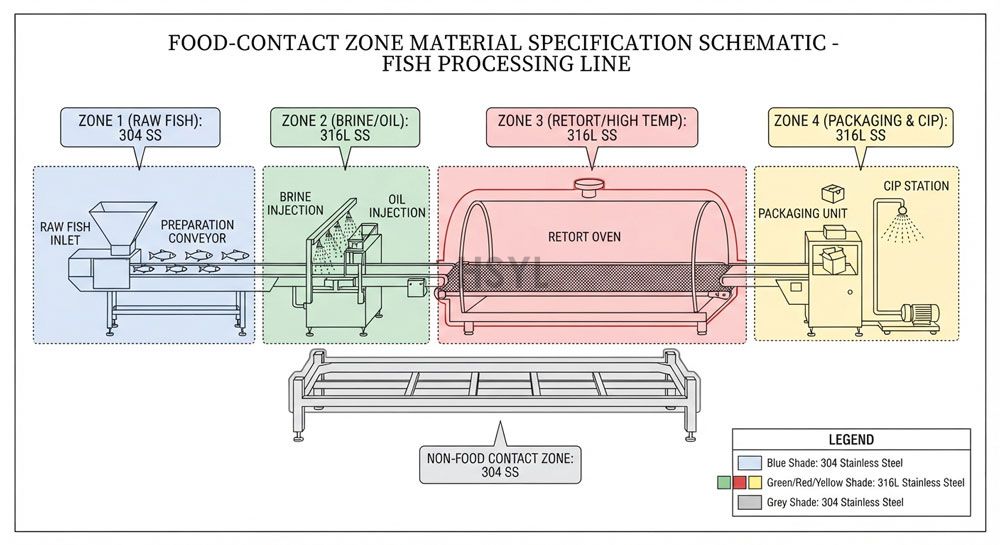
Stainless grade selection interacts with surface treatment. The canned food filling and sealing line and the retort have different food-contact conditions, and the stainless grade and passivation requirements differ by zone. Raw fish contact zones (wet, cold, high bacterial load) typically use 316L for pitting resistance; brine and oil contact zones use 304 or 316L depending on salt and fat; retort zones (high temperature, steam) use 316L for stress-corrosion resistance; CIP zones use 316L for chemical resistance. The passivation record should reference the zone and grade, because the treatment parameters differ by grade.
Scope, Sources and Limitations
Scope. This article covers weld finishing, pickling, and passivation for stainless steel fish processing equipment. It covers surface defects, treatment methods, and record-keeping. It does not cover stainless grade selection, can coating, or equipment commissioning.
Limitations. All surface defect descriptions and treatment references are drawn from publicly available standards (ASTM A380/A967) and metallurgical literature. Actual passivation parameters depend on stainless grade, weld procedure, and service condition. HSYL does not publish project-specific passivation records without verified evidence.
Source basis. Surface treatment and passivation principles are consistent with ASTM A380/A380M-25 and ASTM A967/A967M-25, EHEDG hygienic design guidelines, and metallurgical literature. The retort sterilization equipment for fish canning page carries the retort zone detail.
Weld Finishing and Passivation Resources
Three resources complement this surface treatment content. The canned fish line page anchors the line scope. The filling and sealing line page carries the filling equipment. The retort equipment page carries the retort zone.
- Canned fish production line — the species-level line scope whose stainless equipment requires passivation.
- Canned food filling and sealing line — the filling equipment with food-contact stainless surfaces.
- Retort sterilization equipment for fish canning — the retort zone with high-temperature stainless requirements.
Next Step: Audit Your Passivation Records
Send HSYL your equipment list, stainless grades in service, weld locations, and current passivation record format. HSYL will return a pre-filled passivation record template with ASTM A380/A967 reference parameters for your grades and a surface-defect diagnostic worksheet for auditing existing equipment.
Frequently Asked Questions
What is heat tint and why is it a problem on stainless steel?
What is the difference between pickling and passivation?
How do I detect embedded iron on stainless steel equipment?
What should a passivation record include?
Can I use any stainless steel tooling on fish processing equipment?
Must-Read Blogs For Chain Restaurants Owner

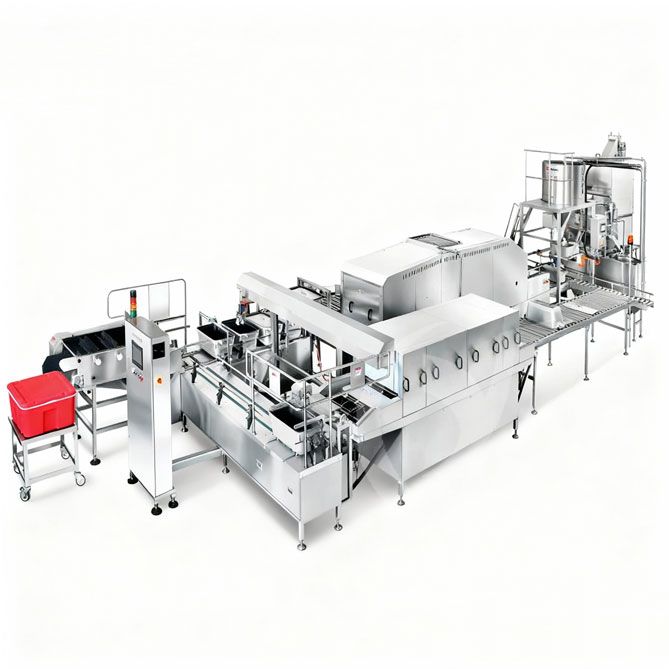
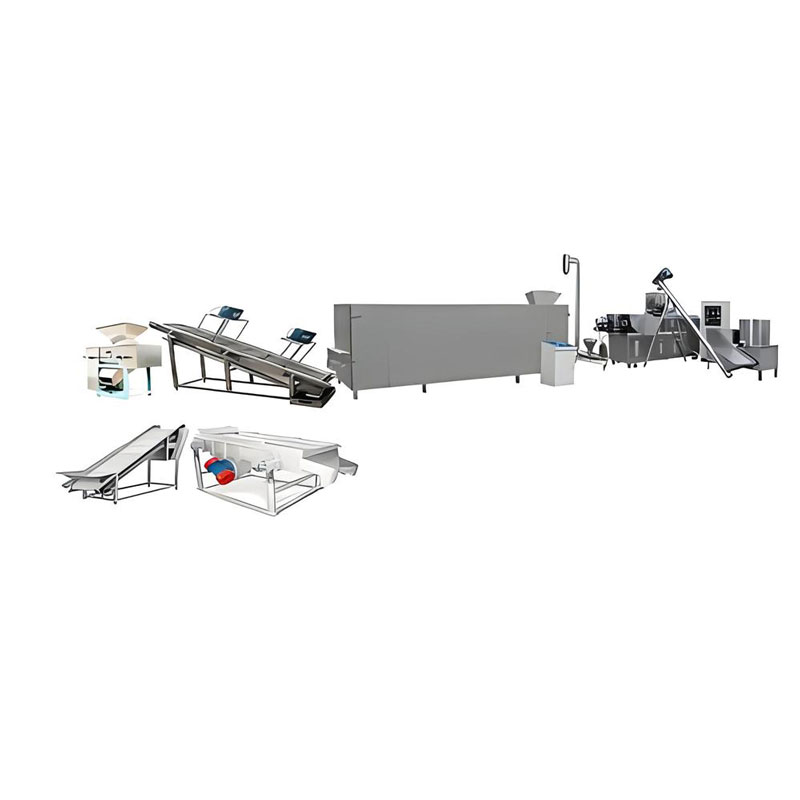 Fish Meal Production Line
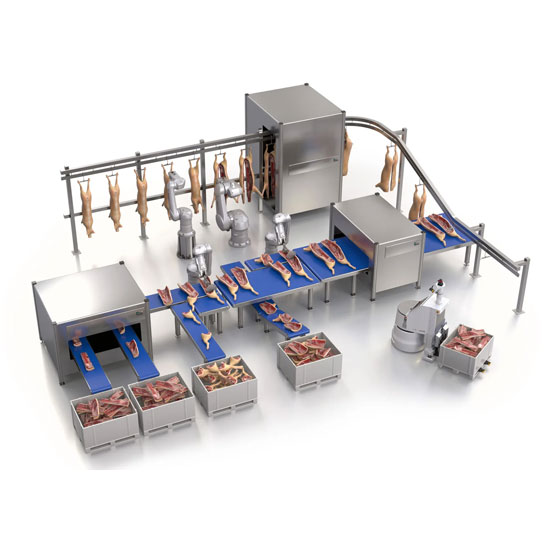 Meat Processing Line Equipment
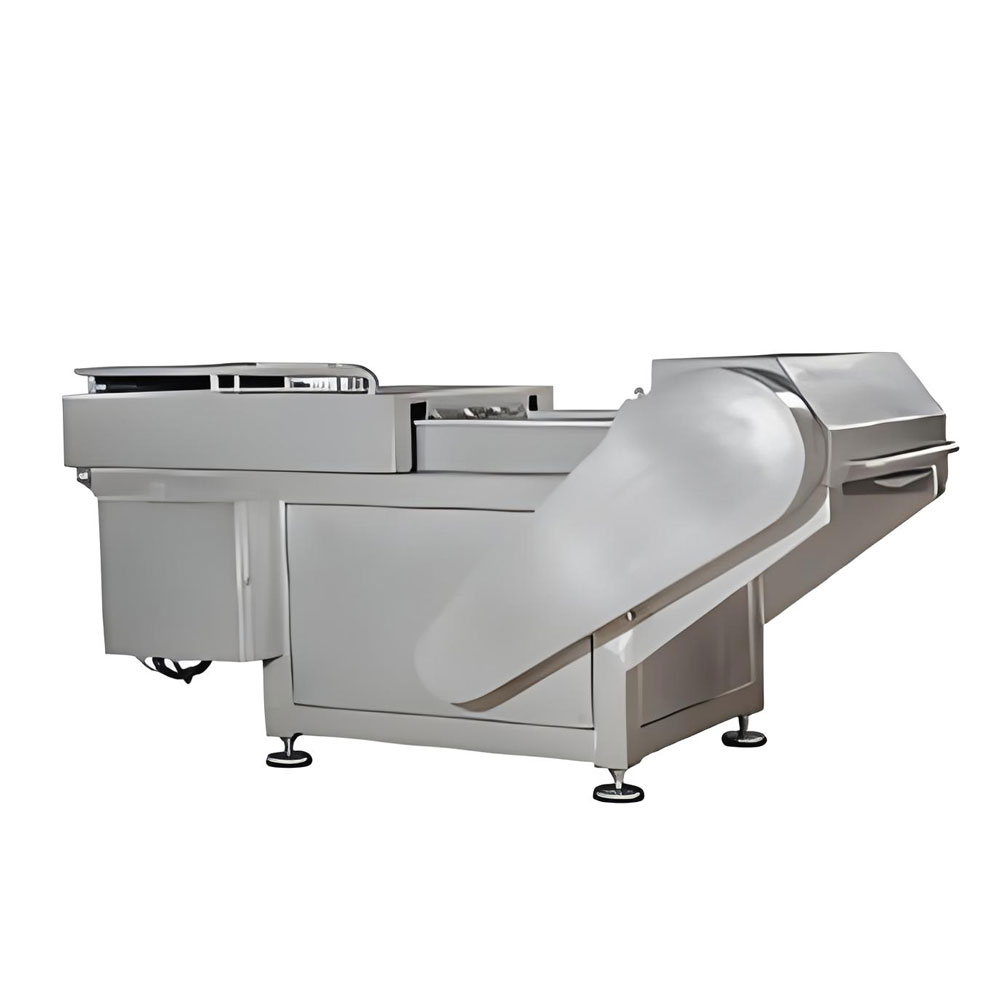 Industrial Frozen Meat Slicing Machine
 Salmon Processing Line
Ready to Get Started?