
Choosing Can Body and Internal Coating for Tuna in Oil, Brine and Sauce
The can body and internal coating are not a packaging afterthought — they are a food-safety and shelf-life decision. A coating that is wrong for the product can blister, flake, or allow product-coating interaction that contaminates the fish or discolors the can. The choice depends on the packing medium (oil, brine, sauce, or solid pack), the product chemistry (fat content, acidity, sulfur compounds), and the retort conditions. And the only way to confirm the choice is right is a pack test — a controlled incubation of the product in the candidate coating, evaluated for adhesion, integrity, and product quality. This article maps product types to coating compatibility, explains the pack test, and diagnoses coating damage mechanisms.
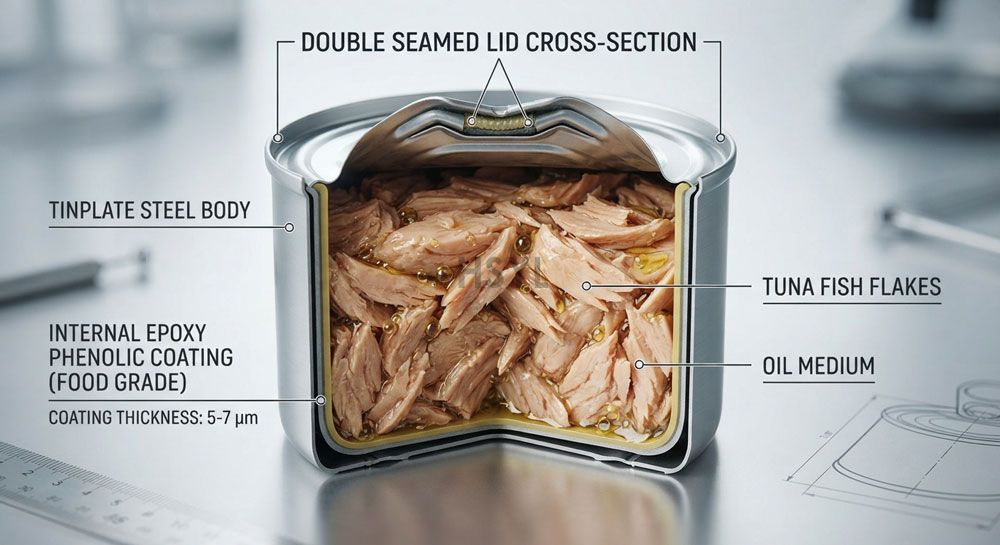
The scope covers can body and internal coating selection for tuna in oil, brine, and sauce. It covers product-coating compatibility, pack test requirements, and damage mechanisms. It does not cover can deformation (covered separately), double-seam defects, or retort sterilization. The canned food filling and sealing line page carries the equipment that handles the cans.
Product-Coating Compatibility
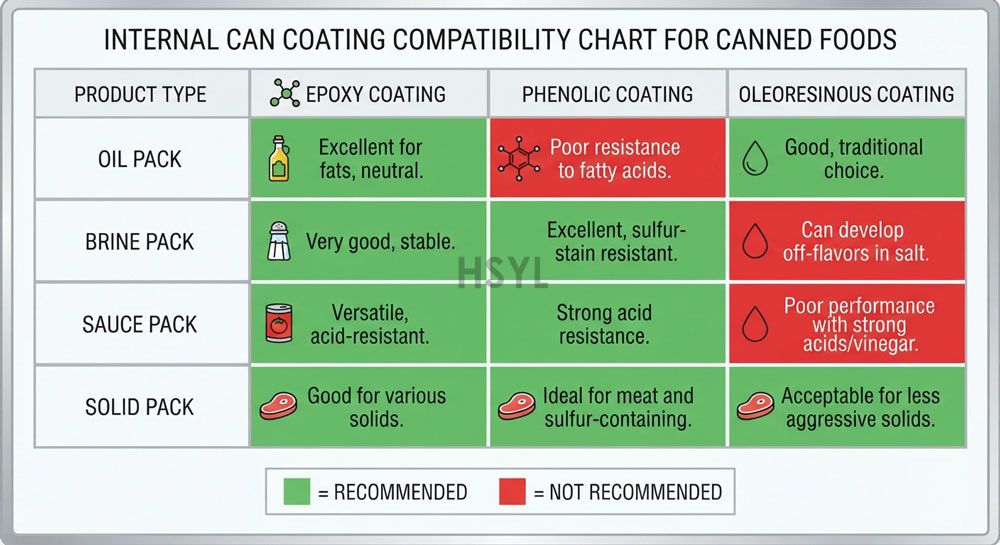
Three coating families are common in fish canning: epoxy, phenolic, and oleoresinous. Each has different resistance to product chemistry, and each is suited to a different packing medium.
| Product type | Epoxy | Phenolic | Oleoresinous |
|---|---|---|---|
| Tuna in oil | Compatible (common choice) | Compatible (high acid resistance) | Limited (softening risk) |
| Tuna in brine | Compatible | Compatible | Compatible (traditional) |
| Tuna in sauce | Compatible (if sauce is low-sulfur) | Variable (depends on sauce chemistry) | Limited |
| Solid pack (no medium) | Compatible | Compatible | Compatible |
The table is a starting point, not a substitute for a pack test. "Compatible" means the coating family is commonly used for that product type; it does not mean any specific coating in that family will work for any specific formulation. The specific coating must be validated by a pack test for the specific product.
The Pack Test
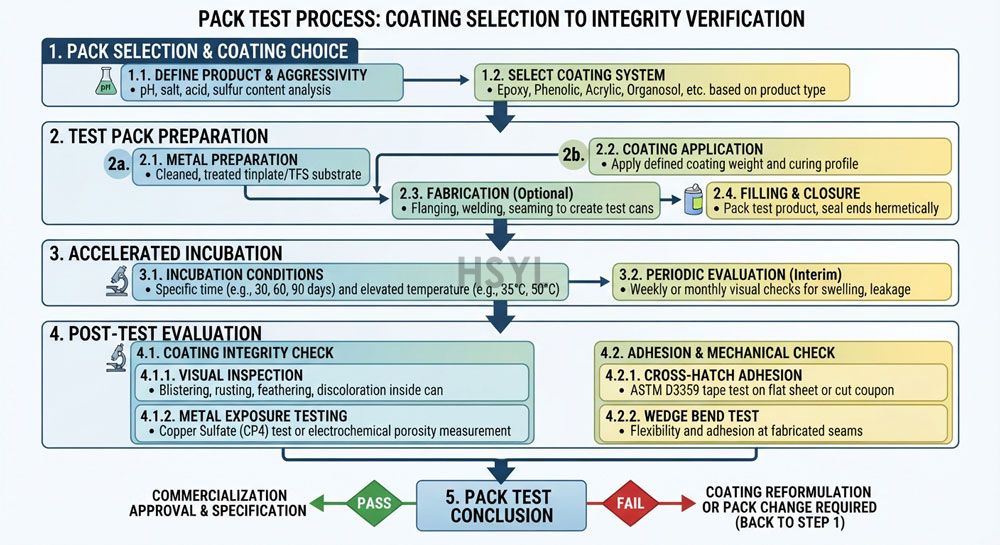
A pack test is a controlled incubation of the product in the candidate can and coating, run under accelerated shelf-life conditions, and evaluated for coating adhesion, coating integrity, and product quality. The pack test is the only reliable way to confirm that a coating choice is valid for a product.
The pack test process: fill cans with the specific product using the production filling and seaming process; retort the cans using the scheduled process; incubate the cans at accelerated conditions (typically elevated temperature for weeks); open and inspect the cans for coating adhesion, blistering, flaking, discoloration, and product quality (color, flavor, texture). The pack test must use the production retort schedule, not a generic cycle, because the retort conditions affect coating performance.
Compliance note: Can coating and product contact materials are regulated for migration limits in most markets (FDA 21 CFR 175.300, EU 1935/2004 and successors). A pack test evaluates product-coating compatibility and coating integrity; migration testing verifies regulatory compliance. Both are required for a new product-coating combination. Verify the current version of the applicable regulation for every market.
Damage Mechanisms and Their Causes
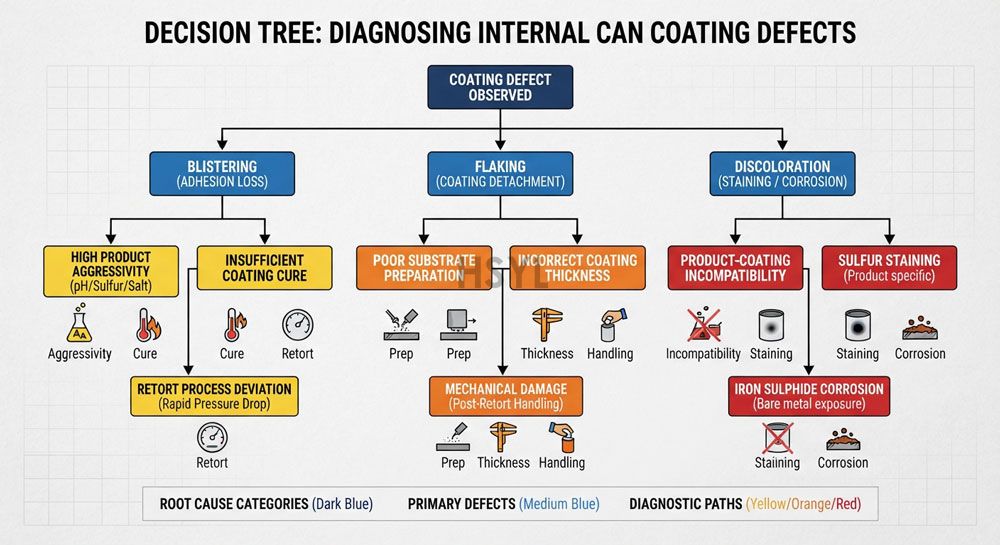
Coating damage appears as blistering, flaking, or discoloration, and each mechanism points to a different root cause.
| Damage | Visible | Likely cause |
|---|---|---|
| Blistering | Bubbles or raised areas in coating | Gas evolution under coating; wet coating during retort; coating too thick |
| Flaking | Coating separates from can body | Poor adhesion; surface contamination before coating; retort stress |
| Discoloration (coating) | Coating turns yellow or brown | Product-coating interaction (sulfur, fat); coating incompatible with product |
| Discoloration (product) | Product color changes near coating | Coating migration; coating incompatible with product chemistry |
A canned fish production line changing product format or coating supplier must run a pack test to confirm compatibility. A coating change without a pack test is a regulatory and quality risk — migration and product interaction may not be visible until the product is on the shelf.
Scope, Sources and Limitations
Scope. This article covers can body and internal coating selection for tuna in oil, brine, and sauce. It covers product-coating compatibility, pack test requirements, and damage mechanisms. It does not cover can deformation, double-seam defects, or retort sterilization.
Limitations. All coating descriptions and compatibility guidance are drawn from publicly available packaging and regulatory material. Actual compatibility depends on specific coating formulation, product chemistry, and retort conditions. HSYL does not publish project-specific pack test results without verified evidence. A coating choice for your product must be validated by a pack test run by qualified packaging personnel.
Source basis. Coating and migration principles are consistent with FDA 21 CFR 175.300, EU 1935/2004 and successors, Codex CXC 60-2005, and packaging engineering literature. The canned tuna processing production line page carries the tuna-specific line scope.
Can Coating and Pack Test Resources
Three resources complement this coating content. The filling and sealing line page carries the can-handling equipment. The canned fish line page anchors the species-level line scope. The tuna line page carries the tuna-specific scope.
- Canned food filling and sealing line — the equipment that handles the cans whose coating must be compatible with the product.
- Canned fish production line — the species-level line scope that the coating choice serves.
- Fully automatic canned tuna processing production line — the tuna-specific line where oil, brine, and sauce formats are produced.
Next Step: Validate Your Coating Choice
Send HSYL your product format (oil, brine, sauce, solid), packing medium chemistry, current coating type and supplier, and any coating defect history. HSYL will return a pre-filled coating compatibility worksheet with the product-coating matrix for your format and a pack test protocol template for validating a new coating.
Frequently Asked Questions
How do I choose the internal coating for canned tuna?
What is a pack test and why is it required?
What causes coating blistering in canned fish?
Can I change coating supplier without a pack test?
Are can coatings regulated for food safety?
Must-Read Blogs For Chain Restaurants Owner


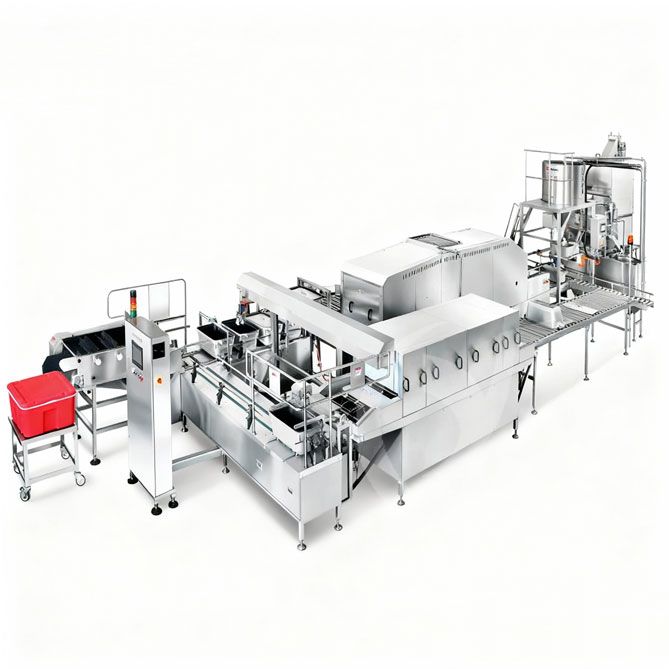
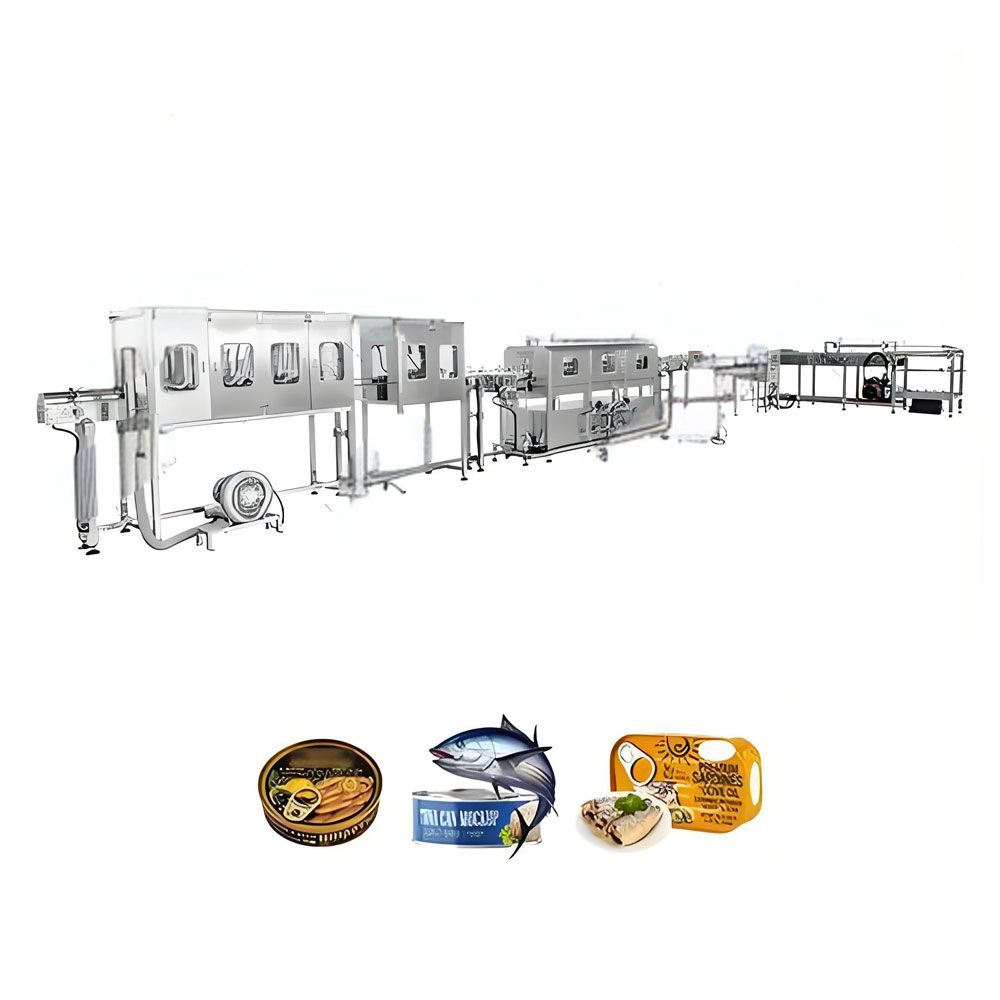 Canned Fish Production Line
 Tomato Sauce Packaging Machine
Ready to Get Started?