
Histamine Sampling Plans Explained: FDA vs Codex vs EU Requirements
A fish cannery that exports to the US, the EU, and Codex-aligned markets cannot run one histamine sampling plan and call it compliant everywhere. The three regulatory frameworks define sampling differently — different sample size (n), different acceptance number (c), different concentration limits (m and M) — and a lot that passes under one framework may fail under another. A receiving program built for one market may not meet another, and the gap is not in the chemistry but in the sampling arithmetic. This article compares the three frameworks side by side, explains the n/c/m/M parameters, and shows how lot disposition differs by market.
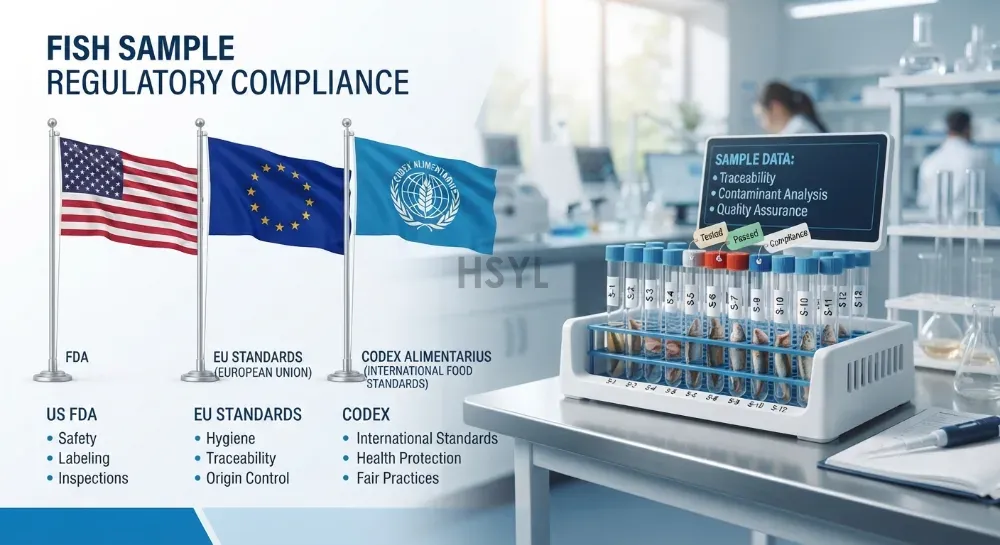
The scope covers histamine sampling plans for canned fish across FDA, Codex, and EU frameworks. It covers the sampling structure, the parameters, and lot disposition. It does not cover receiving inspection (covered separately), scheduled-process design, or mass balance. A canned tuna processing production line that exports to multiple markets must hold a sampling plan for each market.
The Three Frameworks Side by Side
Each framework defines histamine sampling through four parameters: n (number of sample units), c (number of sample units allowed to exceed m but stay below M), m (the concentration limit separating acceptable from marginal), and M (the maximum concentration that must not be exceeded). The table below shows the structure of each framework; the specific values must be verified against the current version of each source.
| Framework | Scope | Parameter structure | Action level reference |
|---|---|---|---|
| FDA (CPG 540.525 + 21 CFR 123) | US domestic and imported fish | Defect action level; sample size defined in Hazards Guide | 50 ppm histamine (CPG 540.525, 2024 revision — verify current) |
| Codex (CXC 52-2003 + Codex sampling plans) | International trade reference | n, c, m, M values by product type | Per Codex standard for the specific product — verify current |
| EU (Reg. 2073/93 + Reg. 853/2004) | EU market access | EU-specific n, c, m, M; species-specific limits | Per EU regulation for the specific product and species — verify current |
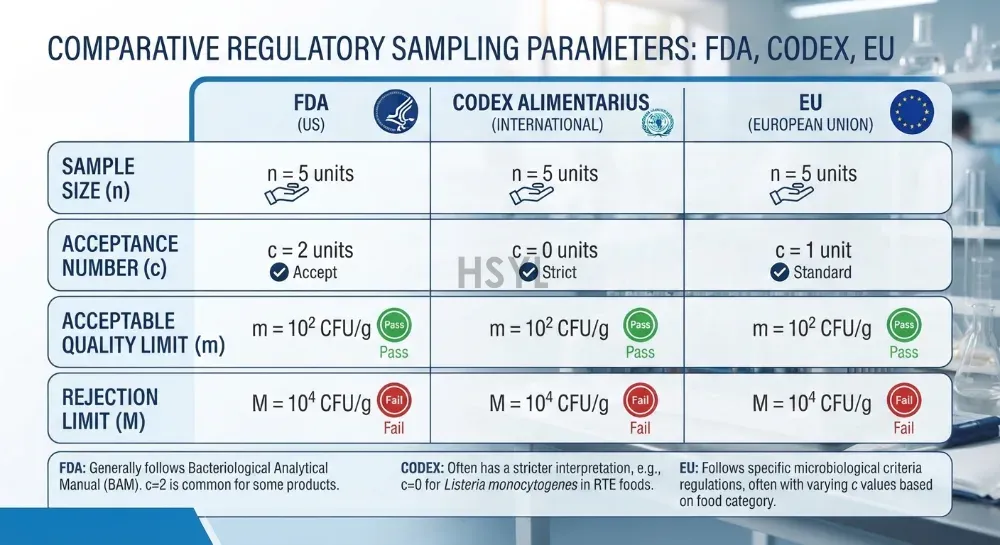
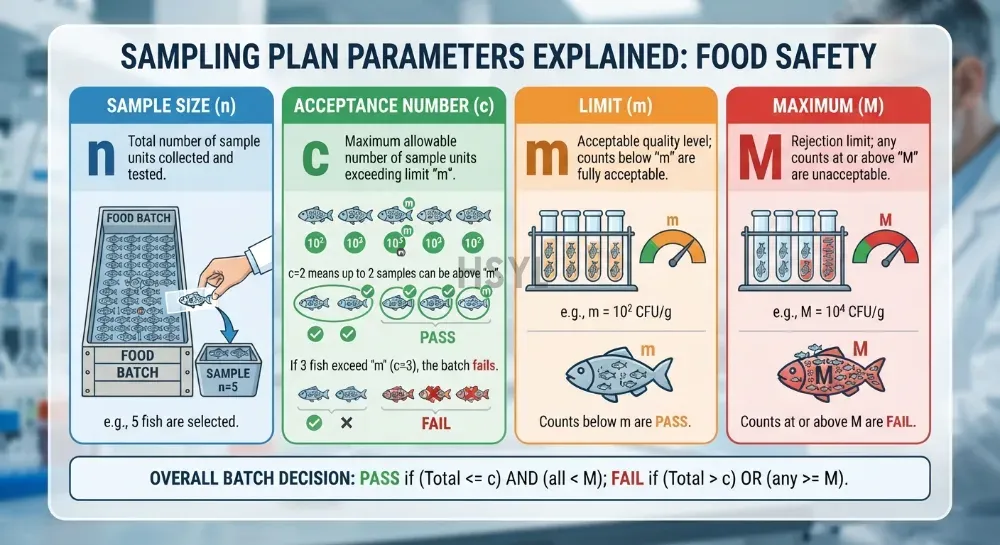
The n/c/m/M Parameters
The four parameters define how many fish are sampled, how many may be marginal, and what concentration limits apply. Understanding the parameters is the foundation of comparing the frameworks.
- n — the number of sample units drawn from the lot. A larger n gives more confidence but costs more.
- c — the maximum number of sample units allowed to exceed m but stay below M. If more than c units exceed m, the lot fails.
- m — the concentration limit separating acceptable from marginal. A sample at or below m is acceptable.
- M — the maximum concentration that must not be exceeded. Any sample above M fails the lot, regardless of c.
Compliance note: The n/c/m/M values differ across FDA, Codex, and EU, and the values are revised periodically. The references in this article are accurate as of the last technical review date (2026-07-28). Before applying any sampling plan, verify the current version of each source and confirm the requirements of every export market. A sampling plan that meets one framework may not meet another.
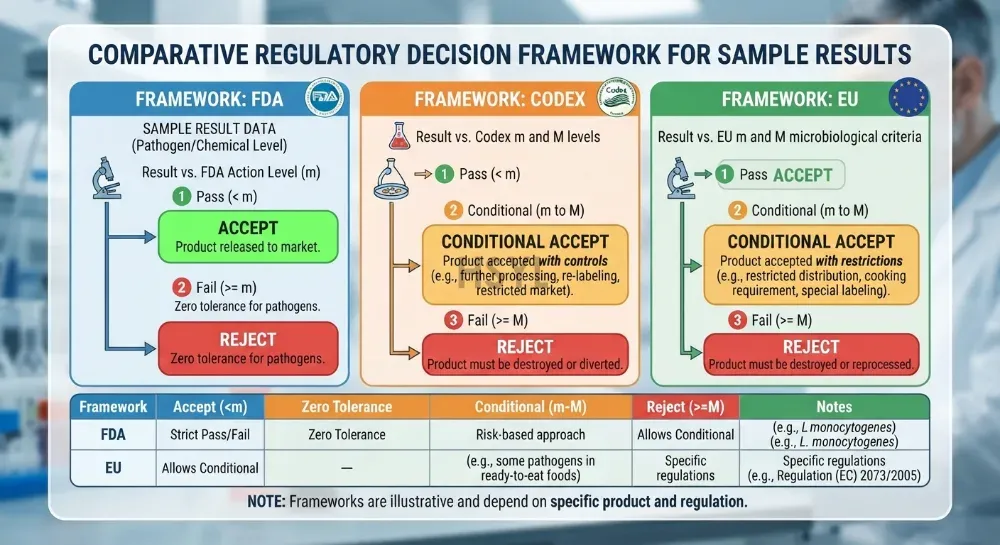
Lot Disposition by Market
Lot disposition follows from the sampling results, but the decision rule differs by framework. A lot with one sample at 60 ppm and the rest below 50 ppm may pass under one framework (if c ≥ 1 and M > 60) and fail under another (if c = 0 or M < 60). The table below shows the decision logic.
| Sample result pattern | FDA | Codex | EU |
|---|---|---|---|
| All samples below m | Pass | Pass | Pass |
| Up to c samples between m and M; none above M | Conditional (framework-specific) | Pass (if within c) | Conditional (framework-specific) |
| Any sample above M | Fail | Fail | Fail |
| More than c samples between m and M | Fail | Fail | Fail |
A cannery serving multiple markets must apply the strictest applicable framework or maintain separate sampling per market. The sardine canned food production line and the tuna line each need sampling plans calibrated to their species and their export markets.
Scope, Sources and Limitations
Scope. This article covers histamine sampling plans for canned fish across FDA, Codex, and EU frameworks. It covers the sampling structure, parameters, and lot disposition. It does not cover receiving inspection, scheduled-process design, or mass balance.
Limitations. All sampling plan descriptions and parameters are drawn from publicly available regulatory material. Actual n, c, m, M values and action levels are framework-specific, product-specific, and subject to revision. HSYL does not provide legal or regulatory compliance advice and does not publish project-specific sampling results. A defensible sampling program for your plant must be reviewed by your regulatory authority against the current version of every applicable regulation.
Source basis. Regulatory references include FDA CPG Sec. 540.525 (2024 revision), 21 CFR Part 123, FDA Fish and Fishery Products Hazards and Controls Guidance, Codex CXC 52-2003 and Codex sampling plans, EU Reg. (EC) 2073/93 and Reg. (EC) 853/2004 as amended.
Histamine Sampling and Export Compliance Resources
Two resources complement this sampling content. The tuna line page carries the species-specific scope for the most enforcement-heavy histamine species. The sardine line page carries the sardine scope where sampling thresholds differ.
- Fully automatic canned tuna processing production line — the tuna-specific line whose export sampling plan must meet all target market frameworks.
- Sardine canned food production line — the sardine-specific line where sampling thresholds are calibrated to a different species profile.
Next Step: Align Your Sampling to Your Markets
Send HSYL your fish species, product format, current sampling plan, and target export markets (US, EU, Codex-aligned, or other). HSYL will return a pre-filled sampling plan comparison worksheet with the n/c/m/M framework for each market and a lot-disposition decision flow for your species and markets.
Frequently Asked Questions
Do FDA, Codex, and EU use the same histamine sampling plan?
What do n, c, m, and M mean in a histamine sampling plan?
What is the FDA histamine action level for fish?
Can I use one histamine sampling plan for all export markets?
Who can establish a histamine sampling plan for my cannery?
Must-Read Blogs For Chain Restaurants Owner

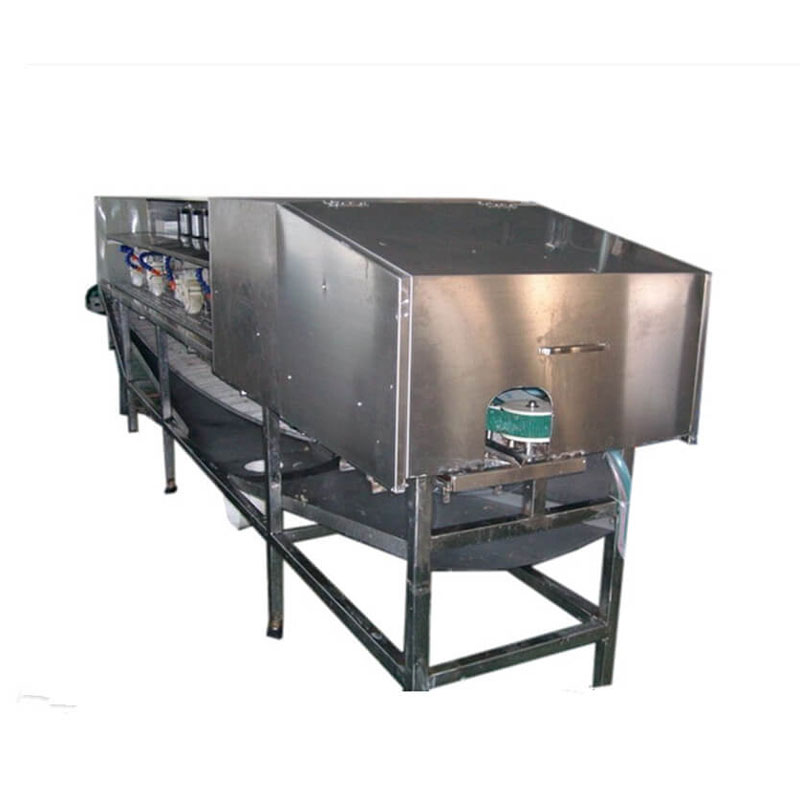 Fish Speed Cleaning Machine
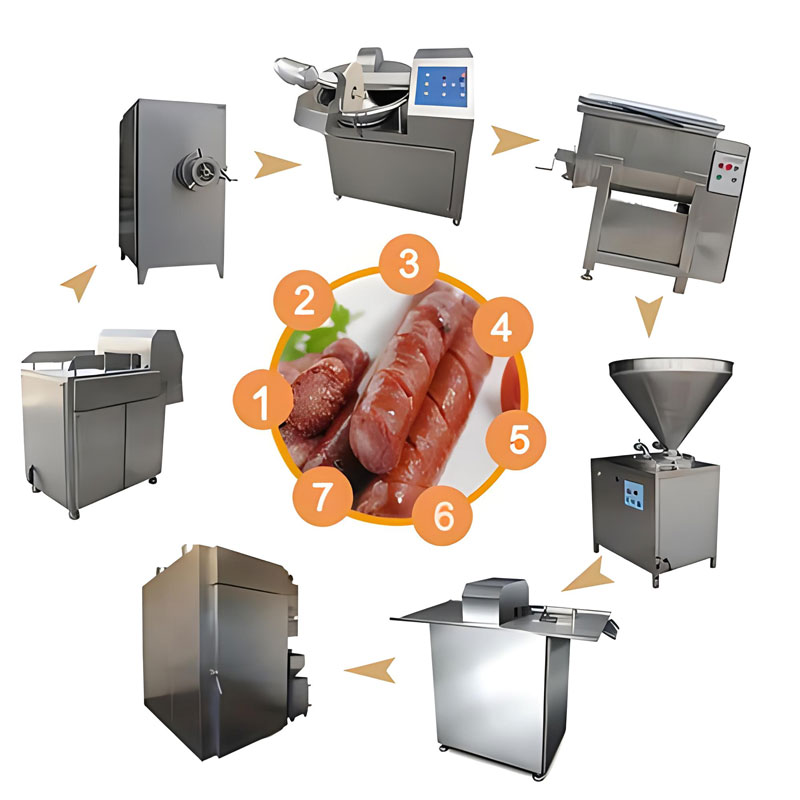 Sausage Processing Line
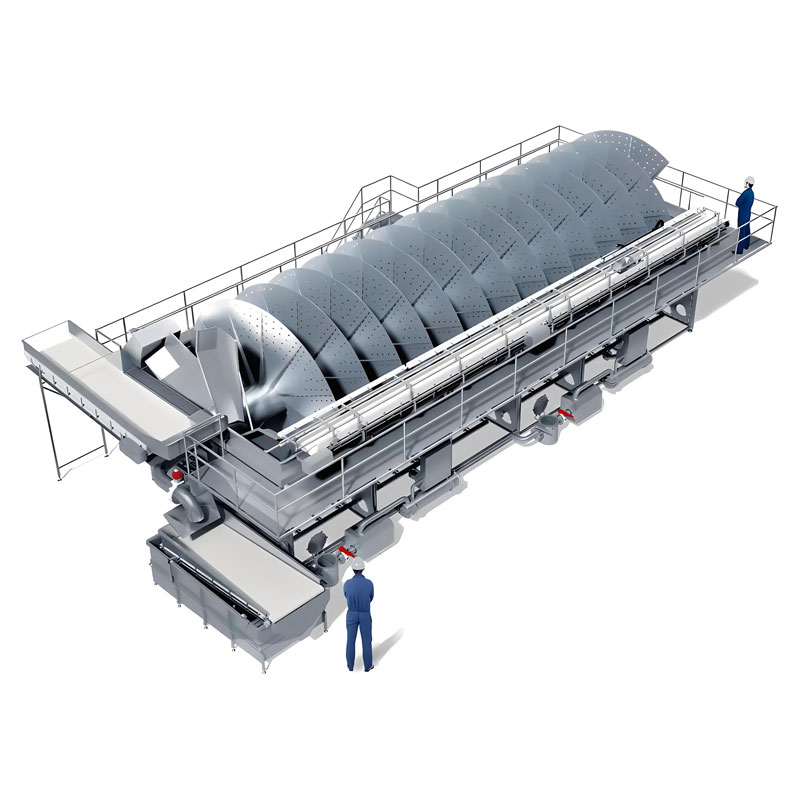 Salmon Processing Line
 Fish Meal Production Line
Ready to Get Started?