
Loin Cleaning and Trimming Yield: From Cooked Tuna to Can-Ready Portions
The yield that leaves the precooker does not all reach the can. Between cooked loin and can-ready portion sits the loin cleaning step — where blood meat, skin, bone, and trimmings are removed, and where the trimming spec decides how much usable muscle is discarded with the waste. A 5% swing in cleaning yield on a 20-tonne-per-day line is 1 tonne of fish per day, and the swing is often driven not by equipment but by a trimming spec that was never explicitly set. This article builds a mass balance from cooked loin to can-ready portions, shows how trimming spec drives yield, and explains how deboner recovery on the frame pulls back 2–5% of round weight as mince.
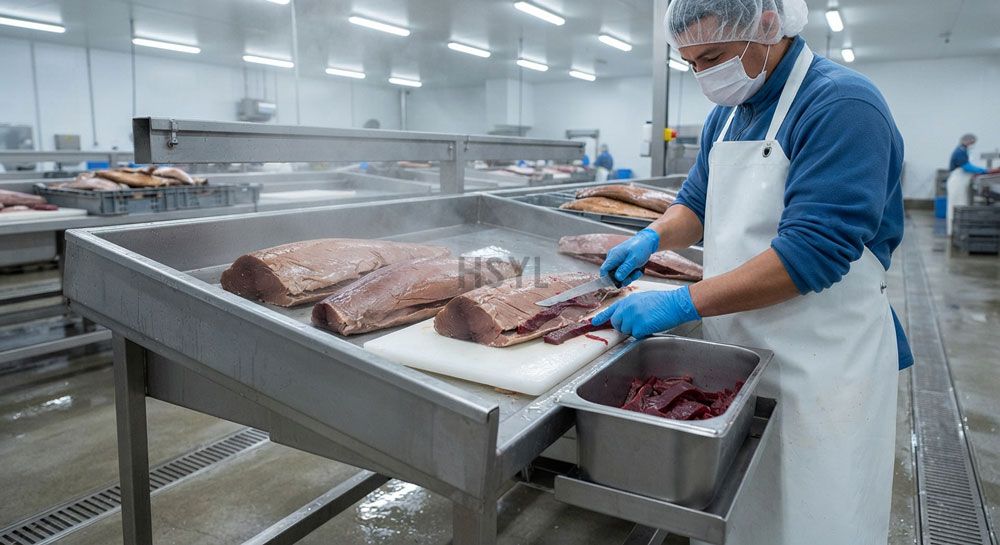
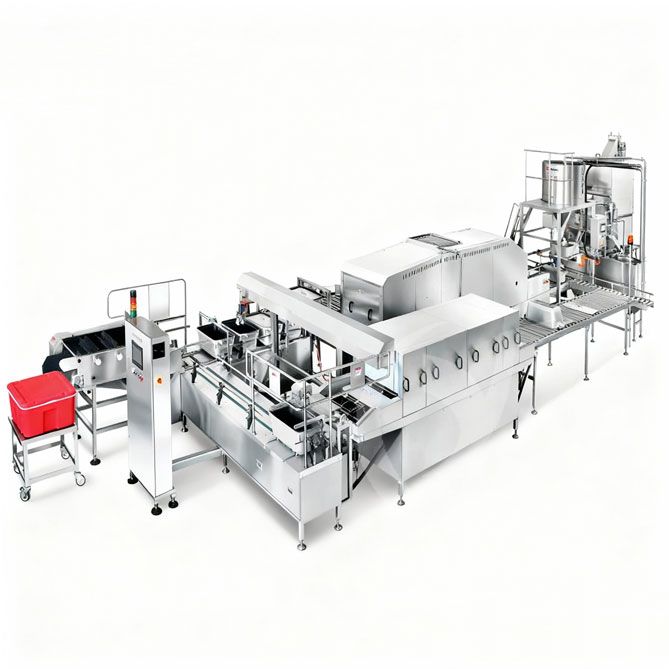
The scope covers loin cleaning and trimming for canned tuna, from precooker output to can-ready portion handoff. It covers the mass balance, trimming spec, and frame recovery. It does not cover precooking (covered separately), mass balance of the full line, or retort sterilization. A canned tuna processing production line integrates loin cleaning as the step where precooking quality becomes can-ready yield.
The Loin Cleaning Mass Balance
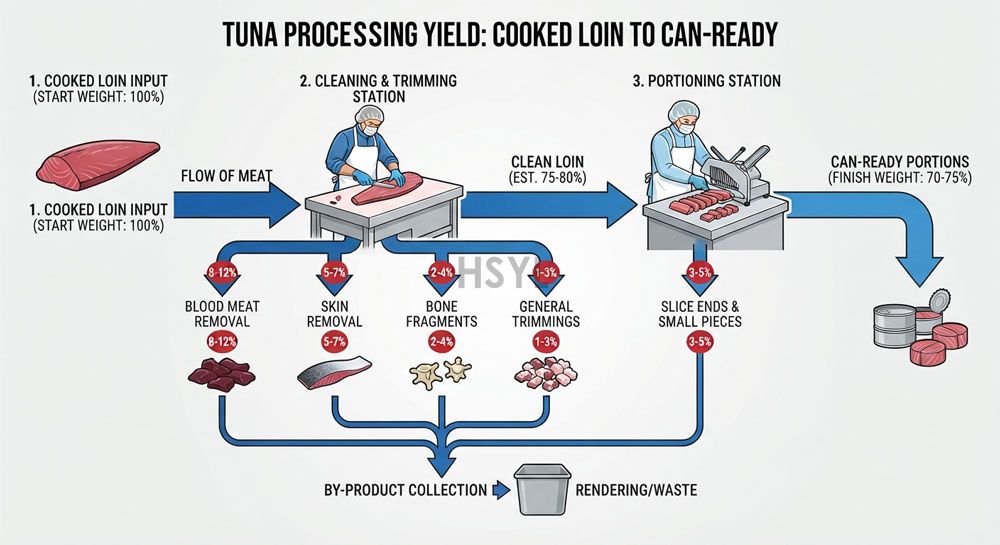
The mass balance from cooked loin to can-ready portion tracks weight as it enters, is removed, and leaves the cleaning step. The table below shows the typical reference distribution for cooked tuna loin entering cleaning.
| Stream | Reference % of cooked loin weight | Destination |
|---|---|---|
| Can-ready portions (light meat) | 75–82% | Filling |
| Blood meat (dark meat) | 5–10% | Lower-grade product or pet food |
| Skin remnants | 2–4% | Waste or by-product |
| Bone and cartilage | 1–3% | Frame for deboner recovery |
| Trimmings (ends, damaged) | 3–6% | Deboner feed or waste |
The percentages are planning references. The key read is that can-ready portions are 75–82% of cooked loin weight — the rest is removed, and where it goes determines whether it is saleable, recoverable, or waste. Blood meat that goes to pet food is saleable at a lower price; trimmings that go to a deboner are recoverable as mince; skin and bone that go to waste are lost.
Trimming Spec: The Yield Decision
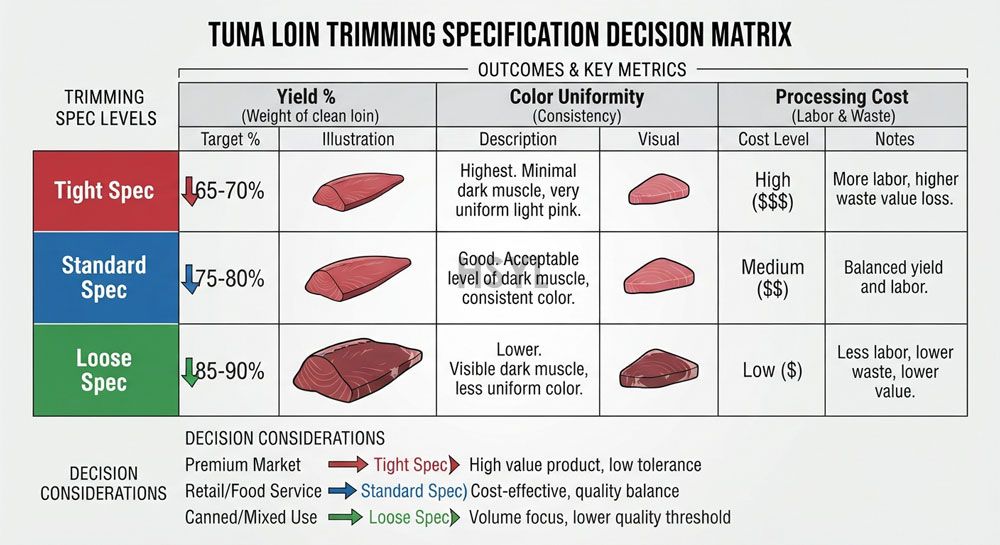
The trimming spec is the single largest driver of cleaning yield, and it is a commercial decision, not a purely technical one. A tighter spec produces a more uniform, lighter-colored product but discards more usable muscle; a looser spec recovers more weight but may fail buyer or regulatory color expectations. The spec must be set explicitly, not inherited by default.
| Spec level | Yield outcome | Color/quality outcome | Cost outcome |
|---|---|---|---|
| Tight | Lower can-ready yield; more trimmings | Uniform light color; premium product | Higher raw fish cost per can |
| Standard | Reference yield range | Acceptable color; commercial product | Reference cost |
| Loose | Higher can-ready yield; fewer trimmings | More dark meat inclusion; lower-grade product | Lower raw fish cost per can |
The decision belongs to the commercial team with engineering input. A spec that is too tight wastes usable muscle; a spec that is too loose may fail buyer standards. The spec must be documented in the product specification, trained to operators, and audited against the actual yield outcome.
Frame Recovery and Deboner Integration
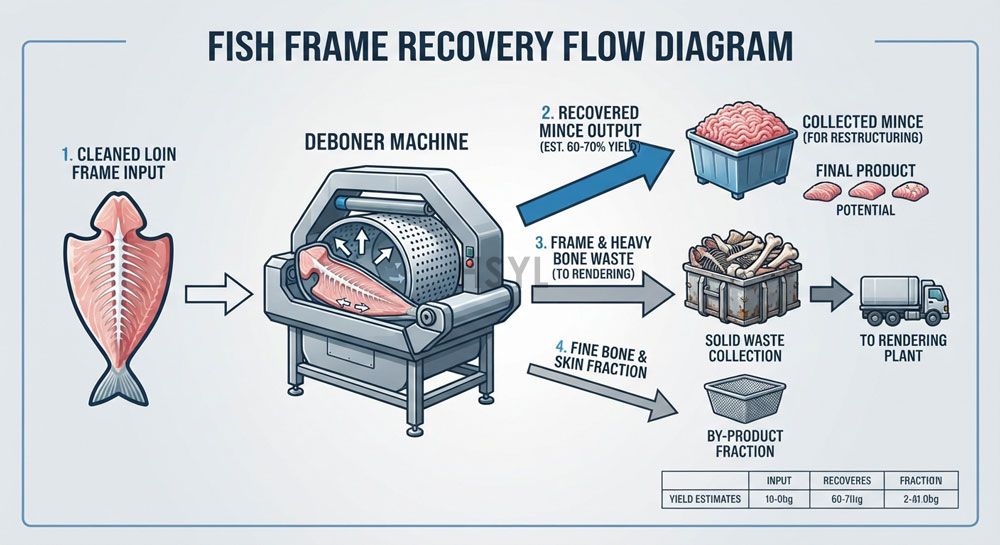
The frame — the bone, cartilage, and residual muscle left after loin cleaning — is not waste. It contains recoverable muscle that a deboner can separate as mince, suitable for lower-grade products or pet food. The recovery step pulls back 2–5% of round weight that would otherwise be lost, and it changes the headline yield number without changing the physical process.
Integration is straightforward: the frame from loin cleaning is collected and fed to a deboner, which uses mechanical separation to extract residual muscle from the bone. The automatic fish filleting machine and the deboner are often paired in the cleaning section, with the filleting machine handling the primary cut and the deboner recovering residual muscle from the frame. Whether the recovered mince is sold, reworked, or discarded is a commercial decision, but the recovery step itself is an engineering decision that should be made at line design, not as a retrofit.
Engineering note: The cleaning yield number reported to management should always state whether frame recovery is included. A 78% cleaning yield without recovery and an 83% yield with recovery are the same physical process — the difference is what is counted. A yield improvement project that reports a 5% gain may have done nothing but add a deboner step that was always available.
Scope, Sources and Limitations
Scope. This article covers loin cleaning and trimming for canned tuna, from precooker output to can-ready portion handoff. It covers the mass balance, trimming spec, and frame recovery. It does not cover precooking, full-line mass balance, or retort sterilization.
Limitations. All yield percentages are planning references drawn from publicly available industry material. Actual values depend on species, fish size, precooking outcome, trimming spec, and equipment set. HSYL does not publish project-specific yield figures without verified evidence.
Source basis. Loin cleaning and yield principles are consistent with publicly available food-science and industry canning material. Equipment-capability statements refer to HSYL equipment specifications.
Reviewer and date. Process Engineering & QA, HSYL. Last technical review: 2026-07-28.
Loin Cleaning and Yield Recovery Resources
Three resources complement this yield content. The tuna line page carries the full tuna-specific scope. The filleting machine page carries the cutting equipment. The deboner page carries the frame recovery equipment.
- Fully automatic canned tuna processing production line — the tuna-specific line that the loin cleaning step sits in.
- Automatic fish filleting machine — the cutting equipment used in the loin cleaning section.
Fish deboner machine — the frame recovery equipment that pulls back residual muscle from the bone.
Next Step: Build Your Cleaning Yield Balance
Send HSYL your tuna species, typical fish size, current trimming spec, precooking core temperature setpoint, and whether you have a deboner integrated. HSYL will return a pre-filled loin cleaning mass balance worksheet with reference yield ranges for your spec and a deboner recovery integration review.
Frequently Asked Questions
What is a typical loin cleaning yield for canned tuna?
How does trimming spec affect loin cleaning yield?
What is blood meat and where does it go?
How much yield can a deboner recover from the frame?
Can HSYL guarantee a specific loin cleaning yield?
Must-Read Blogs For Chain Restaurants Owner

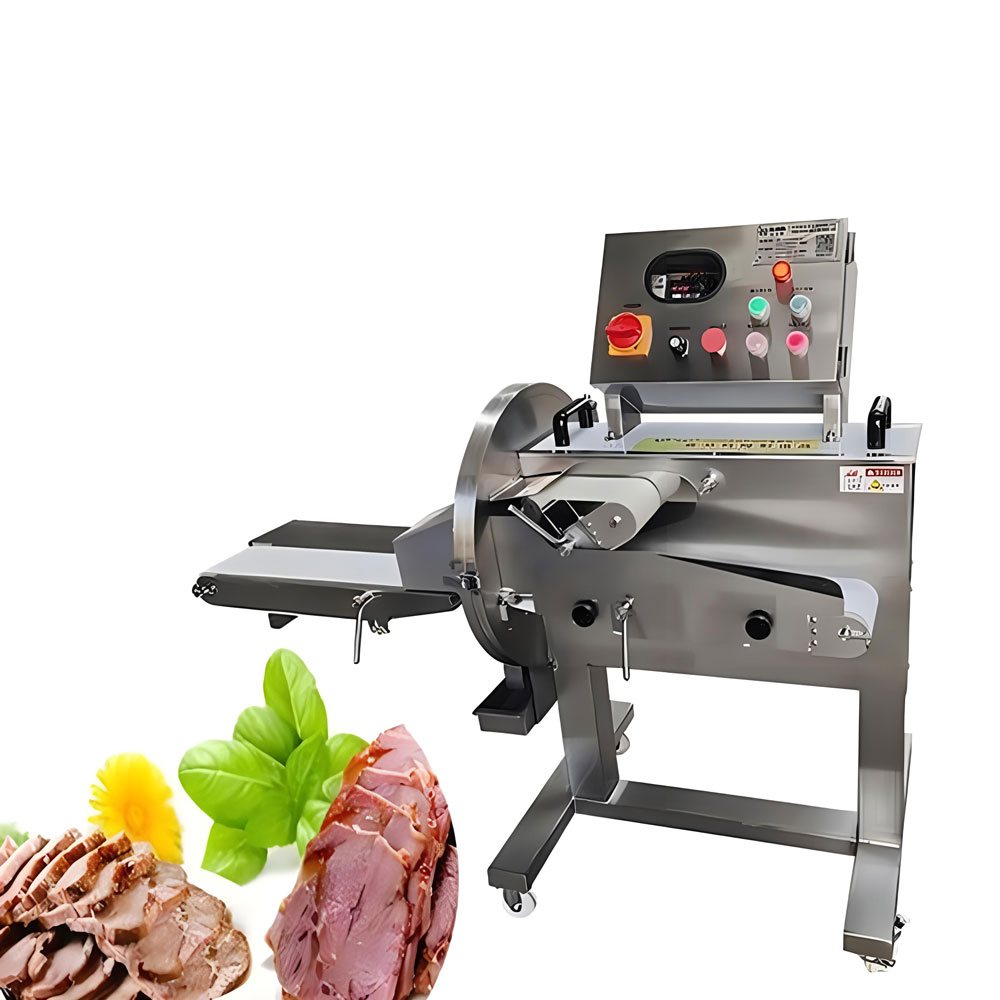 Electric Cooked Meat Slicer
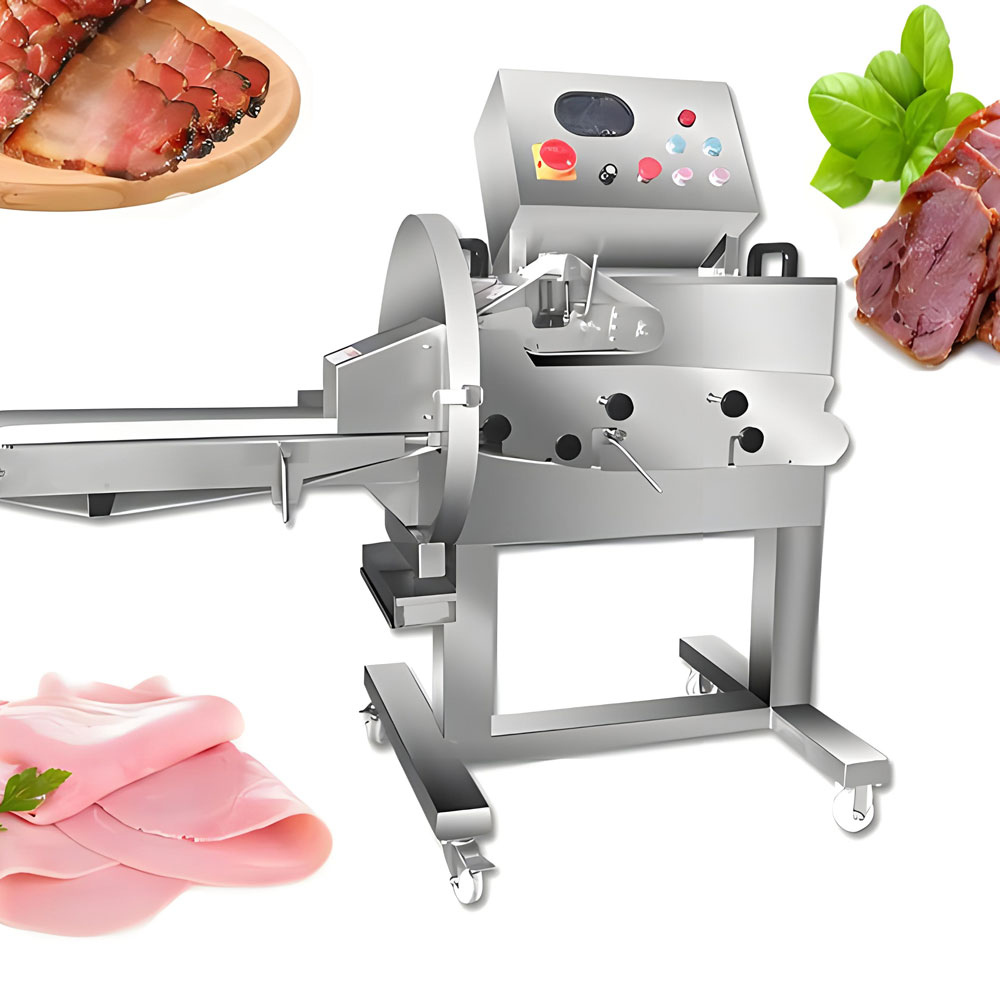 Automatic Cooked Meat Slicing Machine
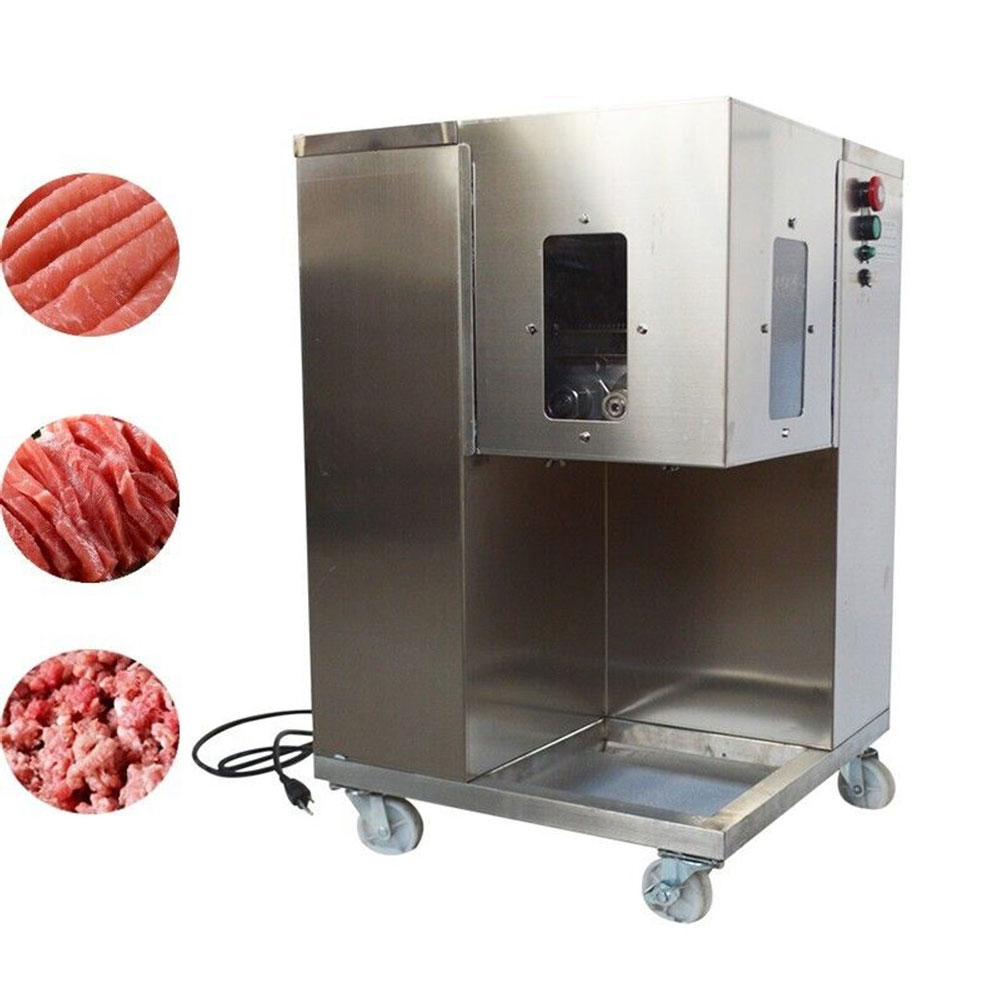 Cooked Meat Shredder Machine
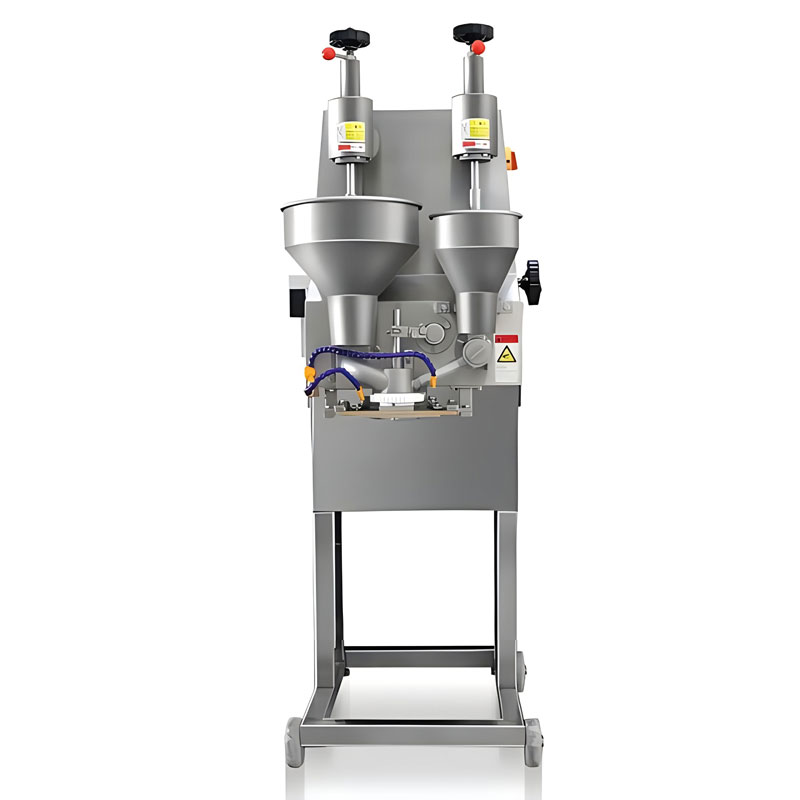 Commercial Stufed Meatball Forming Machine
Ready to Get Started?