
Commercial Kitchen Sheet Metal Gauge and Structural Design for Food-Contact Equipment
Sheet metal gauge in commercial kitchen equipment is not a cosmetic choice — it is a structural and hygiene choice. A gauge too thin deflects under load, dents on impact, and warps during welding; a gauge too thick is unnecessarily expensive and hard to form. The gauge must match the application: a table top that bears load needs a different gauge than a panel that does not; a sink bowl that takes impact needs a different gauge than a backsplash. This article provides a gauge-by-application framework, separates structural from food-contact gauge logic, and explains the deflection and welding considerations that set the spec.
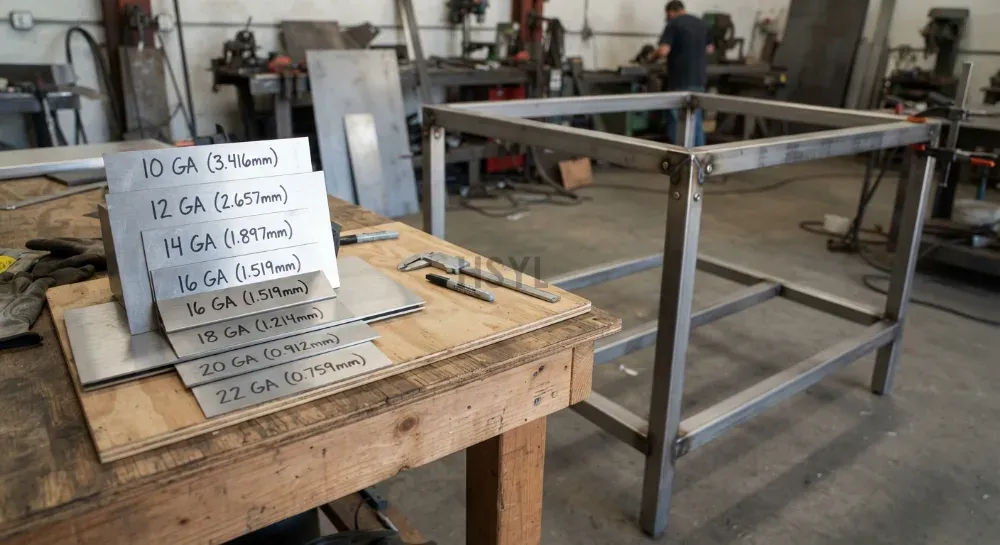
The scope covers sheet metal gauge and structural design for commercial kitchen food-contact equipment. It covers gauge by application, structural vs food-contact logic, and deflection/welding. It does not cover stainless grade selection (covered separately), heat source, or layout. A compliant commercial kitchen equipment solution specifies gauge by application, not a single gauge for the whole kitchen.
Gauge System and Thickness
The stainless steel gauge system is counter-intuitive: a lower gauge number means a thicker sheet. 14 gauge is thicker than 16 gauge, which is thicker than 18 gauge. The table below shows the common gauges in kitchen equipment and their typical applications.
| Application | Typical gauge | Approximate thickness (mm) | Rationale |
|---|---|---|---|
| Table top (heavy load) | 14 | 1.98 | Load-bearing; resists deflection and dent |
| Table top (standard) | 16 | 1.59 | Standard food-contact surface; adequate for most loads |
| Sink bowl | 16 or 18 | 1.59 or 1.27 | Impact from dishes; 16 for heavy-duty, 18 for light |
| Panel (non-load) | 18 or 20 | 1.27 or 0.94 | Non-load-bearing; formability and cost |
| Backsplash and trim | 20 | 0.94 | Non-contact, non-load; economic |
| Frame and structural | 14 or thicker | 1.98+ | Load-bearing structure; deflection control |
The thicknesses are approximate — actual gauge thickness varies slightly by standard ( Manufacturers' Standard Gauge vs. Brown & Sharpe). Verify the actual thickness in the material specification, not just the gauge number.
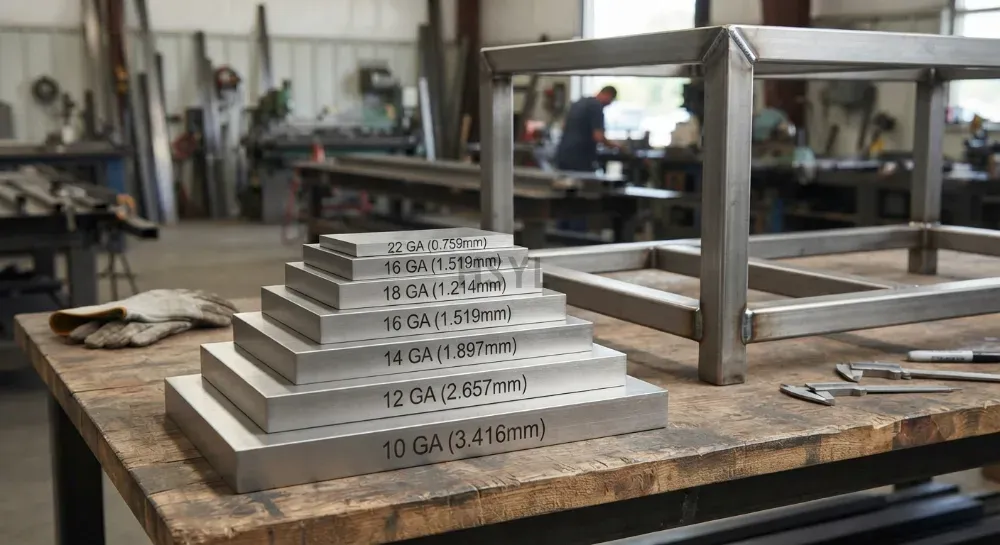
Structural vs Food-Contact Gauge Logic
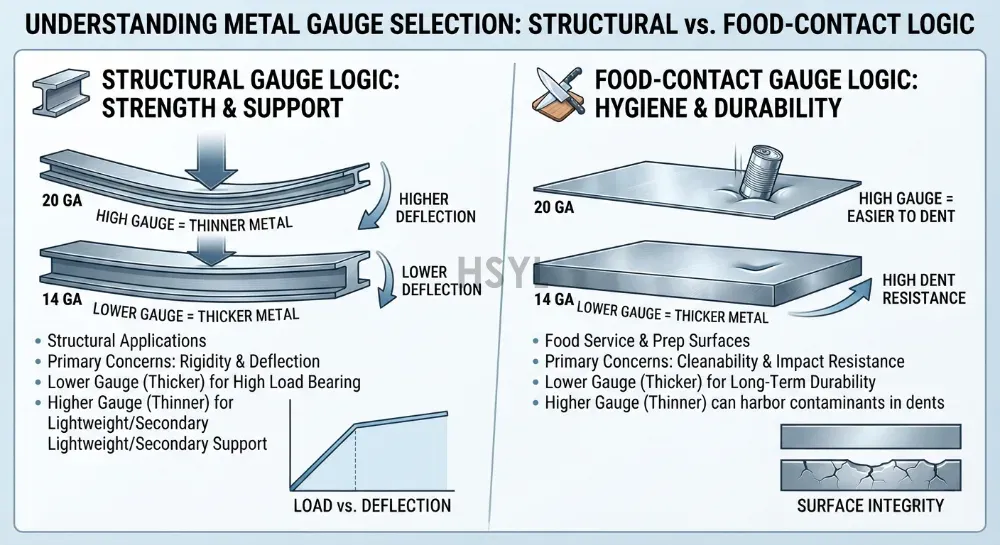
Structural and food-contact applications have different gauge logic. Structural gauge is about load and deflection — the sheet must bear the weight without bending. Food-contact gauge is about cleanability and dent resistance — the sheet must resist dents that create bacteria-hiding sites and must be rigid enough that cleaning pressure does not flex it.
Design note: A food-contact surface that is too thin flexes under cleaning pressure, creating a "oil-can" effect that traps soil at the flex point. A food-contact surface that dents easily collects soil in the dent. Food-contact gauge is not just about thickness — it is about cleanability and long-term hygiene. A thin top that saves money up front costs more in cleaning time and hygiene risk over its life.
Deflection and Welding Considerations
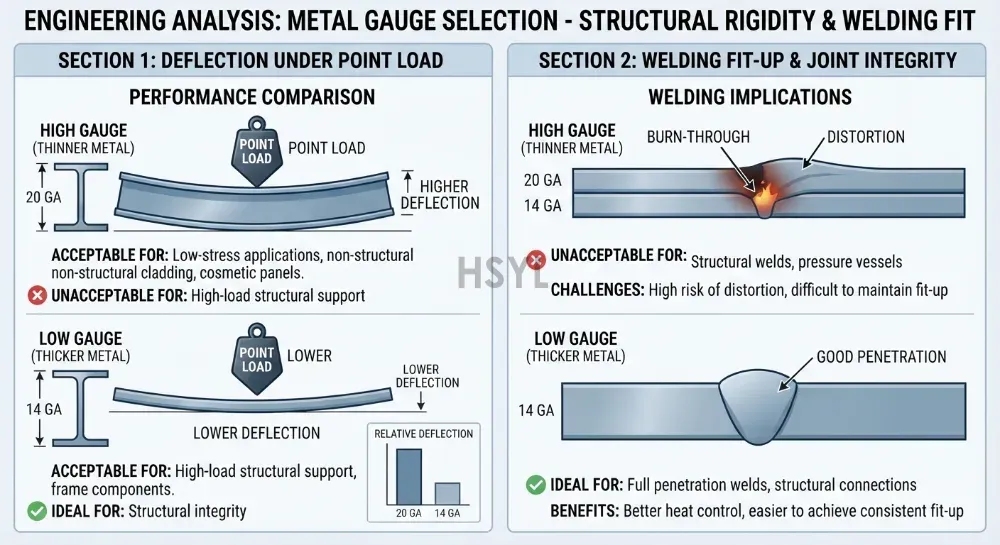
Deflection under load is the structural limit. A table top that deflects more than a few millimeters under load is too thin — it flexes, it feels unstable, and over time it work-hardens and cracks at the welds. Deflection depends on span (distance between supports), load, and thickness. A longer span or a higher load needs a thicker gauge or more supports.
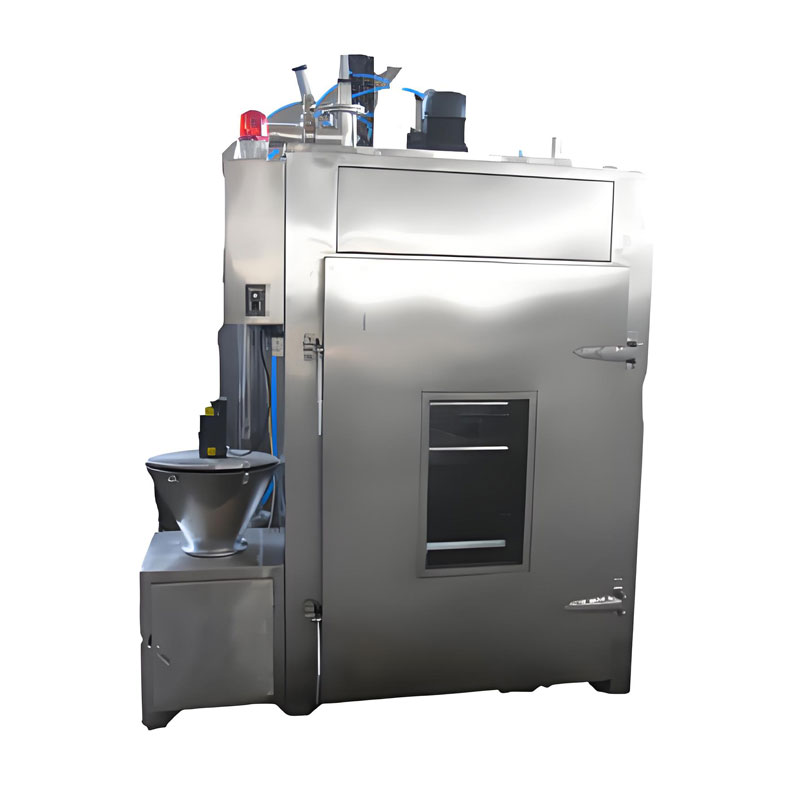
Welding fit is the fabrication limit. A gauge too thin warps during welding — the heat of the weld distorts the sheet, creating a wavy surface that is not cleanable. Thicker gauges are more welding-stable but harder to form and more expensive. The double-door steaming cabinet with its cavity walls, door, and frame uses different gauges for different parts — the cavity needs food-contact gauge for cleanability, the frame needs structural gauge for load, and the door panel needs a gauge that balances formability and rigidity.
Scope, Sources and Limitations
Scope. This article covers sheet metal gauge and structural design for commercial kitchen food-contact equipment. It covers gauge by application, structural vs food-contact logic, and deflection/welding. It does not cover stainless grade selection, heat source, or layout.
Limitations. All gauge recommendations and thickness references are drawn from publicly available manufacturing and structural material. Actual gauge selection depends on load, span, fabrication method, and cost target. HSYL does not publish project-specific gauge specifications without verified evidence.
Source basis. Gauge and structural principles are consistent with ASTM A480 (stainless sheet), manufacturers' standard gauge, and structural engineering material.
Sheet Metal and Structural Resources
Two resources complement this gauge content. The kitchen solutions page carries the full scope. The steaming cabinet page carries an equipment with multiple gauge applications.
- Commercial kitchen equipment solution — the full kitchen scope where gauge-by-application specification applies.
- Double-door steaming cabinet with viewing window — an equipment with cavity, frame, and door gauge applications.
Next Step: Specify Your Gauges
Send HSYL your equipment list, applications (table top, sink, panel, frame), load requirements, and fabrication method. HSYL will return a pre-filled gauge-by-application framework with structural and food-contact logic for your equipment and a deflection/welding consideration checklist for your fabrication.
Frequently Asked Questions
What gauge stainless steel is used for commercial kitchen table tops?
What is the difference between structural and food-contact gauge logic?
Why does gauge matter for food-contact cleanability?
How does welding affect gauge selection for kitchen equipment?
Can HSYL specify the sheet metal gauge for my kitchen equipment?
Must-Read Blogs For Chain Restaurants Owner





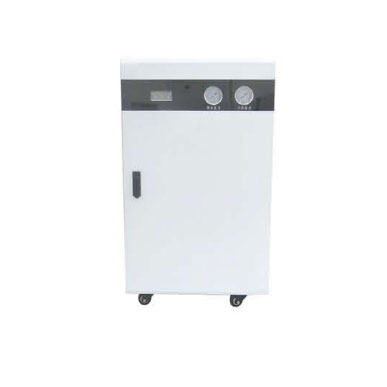 YL-W-01 Commercial Water Purification Equipment
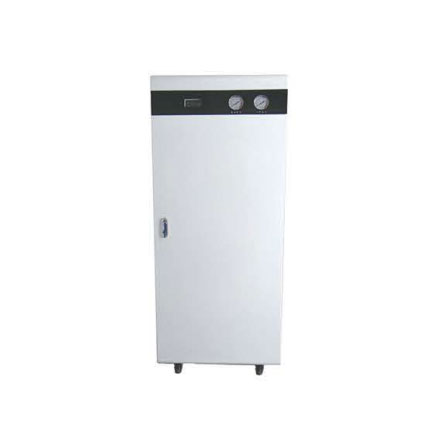
 YL-W-06 Commercial Water Purification Equipment
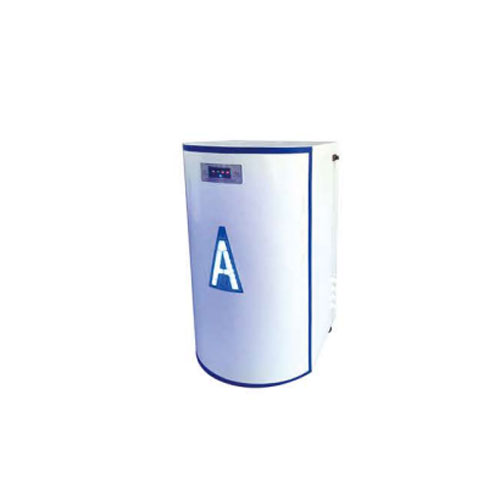
 YL-W-05 Commercial Water Purification Equipment
 YL-W-04 Commercial Water Purification Equipment
Ready to Get Started?