
Can-Size Changeover Control: Tooling, Recipes, First-Off Seam Approval and Ramp-Up Losses
Can-size changeover is the moment when a fish canning line is most exposed to defect risk. Tooling changes, recipe loads, first-off approval, and ramp-up all happen in a compressed window, and any step that is skipped or rushed produces defects that propagate to the retort and beyond. A changeover that takes 90 minutes with a structured process produces fewer defects than a 45-minute changeover that skips first-off approval — and the ramp-up loss from the rushed changeover typically exceeds the time saved. This article covers the changeover control process: tooling setup, recipe management, first-off seam approval, and ramp-up loss recording.
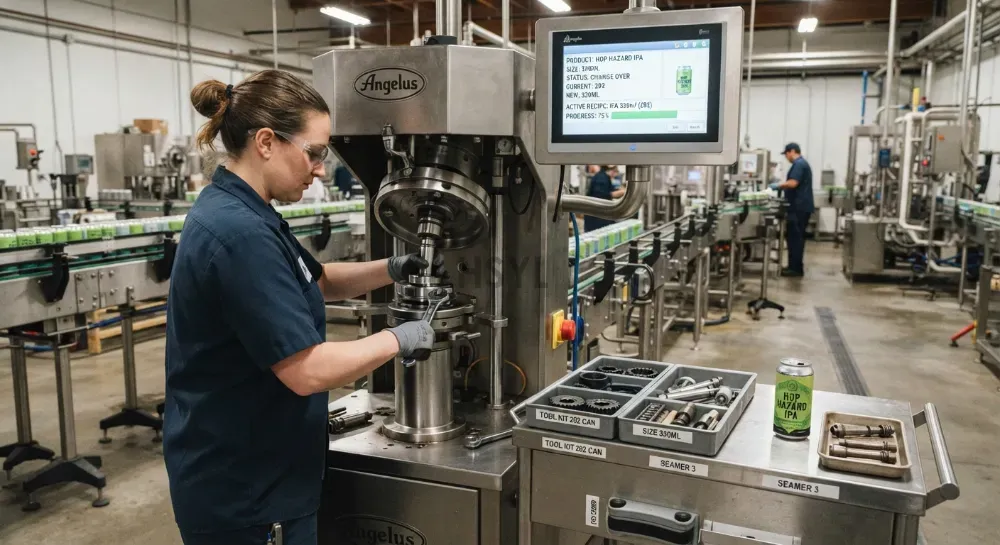
The scope covers can-size changeover on a fish canning line, from last-can-stable on the previous size to first-can-stable on the new size. It covers tooling, recipes, first-off, and ramp-up. It does not cover OEE measurement (covered separately), double-seam defect types (covered separately), or preventive maintenance. The canned food filling and sealing line page carries the equipment detail.
The Changeover Step Sequence
A defensible changeover has a defined step sequence, with a verification at each step. The table below shows the structure; the specific durations depend on equipment, can size, and crew.
| Step | Action | Verification | Typical duration |
|---|---|---|---|
| 1. Stop and clear | Stop line; clear previous cans; sanitize if product change | Line clear confirmed | 10–20 minutes |
| 2. Tooling change | Change seamer chuck and rolls, filler heads, guide rails, checkweigher calibration | Tooling ID recorded; setup verified | 20–40 minutes |
| 3. Recipe load | Load filler, seamer, checkweigher, retort recipes for new can size | Recipe version confirmed | 5–10 minutes |
| 4. First-off | Run first cans; teardown and verify seam, fill weight, headspace, vacuum | First-off approval by QA | 10–20 minutes |
| 5. Ramp-up | Run at reduced speed; monitor rejects; ramp to full speed | Stable production confirmed | 15–30 minutes |
The total changeover is 60–120 minutes for a typical fish canning line. A changeover that is significantly shorter is likely skipping a step — usually first-off approval or ramp-up — and the defects will appear at retort or at the customer.
First-Off Seam Approval
First-off approval is the control that prevents a changeover defect from reaching the retort. After the tooling change and recipe load, the first cans produced are sampled and verified: seam teardown, fill weight, headspace, vacuum, and any product-specific check. The QA authority must approve before full-speed production resumes.
Operations note: First-off approval is not optional. A changeover that resumes full-speed production without first-off approval is producing unverified cans — if the tooling was set wrong or the recipe was loaded wrong, every can until the next check is a potential defect. The few minutes saved by skipping first-off cost hours of rework or recall risk.
The first-off approval must include the automatic can sealing machine seam teardown (body hook, cover hook, overlap, tightness, pressure ridge), the fill weight and headspace check, the vacuum or exhausting verification, and the product-specific quality check. All results must be recorded against the can size and lot ID.
Recipe Management
Recipe management is the control that ensures the right filler, seamer, checkweigher, and retort parameters are loaded for the new can size. A recipe error — wrong retort temperature, wrong seamer pressure, wrong checkweigher target — produces defects that may not be visible until retort or shelf. The recipe management discipline is to:
- Version control. Each recipe has a version number, and the version loaded is recorded per changeover.
- Pre-loaded verification. Recipes are verified against the product specification before being available for production load.
- Changeover confirmation. After recipe load, the loaded parameters are displayed and confirmed by the operator before first-off.
- Audit trail. Recipe versions and load events are recorded for audit traceability.
Ramp-Up Loss Recording
Ramp-up is the period between first-off approval and stable full-speed production. During ramp-up, the line runs at reduced speed, rejects are higher, and the crew monitors for drift. Ramp-up loss is the cans rejected during this period, and it must be recorded, not assumed.
The ramp-up loss record captures: can size, changeover start time, first-off approval time, stable production time, cans produced during ramp-up, cans rejected during ramp-up, reject reasons, and root cause if known. The retort sterilization equipment for fish canning recipe must also be loaded and verified during ramp-up — a can size change often means a different scheduled process, and the retort must be set to the new recipe before the new cans enter.
A canned fish production line with structured changeover control turns can-size changeover from a defect risk into a measured, verifiable process. The changeover time, first-off approval, and ramp-up loss become metrics that can be tracked and improved.
Scope, Sources and Limitations
Scope. This article covers can-size changeover on a fish canning line, from last-can-stable on the previous size to first-can-stable on the new size. It covers tooling, recipes, first-off, and ramp-up. It does not cover OEE measurement, double-seam defect types, or preventive maintenance.
Limitations. All changeover step durations and ramp-up loss references are drawn from publicly available industry and manufacturing operations material. Actual values depend on equipment, can size, product, and crew. HSYL does not publish project-specific changeover times without verified evidence.
Source basis. Changeover control principles are consistent with SMED (single-minute exchange of die) methodology, OMAC PackML, and industry manufacturing operations literature. Equipment-capability statements refer to HSYL equipment specifications.
Reviewer and date. Operations & Process Engineering, HSYL. Last technical review: 2026-07-28.
Changeover Control Resources
Four resources complement this changeover content. The filling and sealing line page carries the integrated filler-seamer. The can sealing machine page carries the seamer detail. The retort equipment page carries the retort recipe scope. The canned fish line page anchors the line scope.
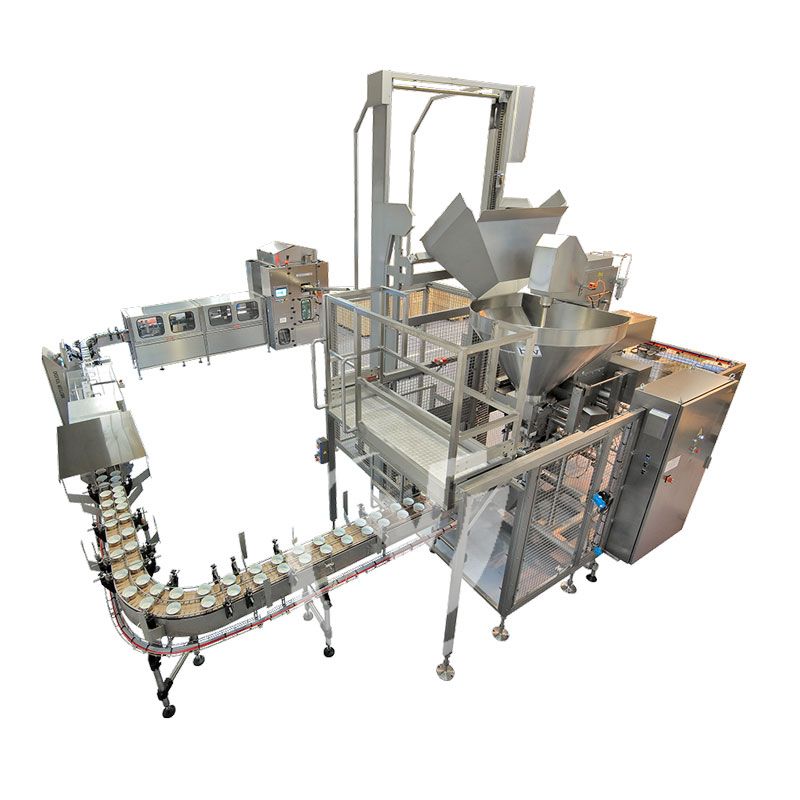
- Canned food filling and sealing line — the integrated equipment whose tooling, recipe, and checkweigher are changed at changeover.
- Automatic can sealing machine — the seamer whose chuck, rolls, and pressure are the critical tooling change.
- Retort sterilization equipment for fish canning — the retort whose recipe must be loaded for the new can size's scheduled process.
- Canned fish production line — the species-level line scope that the changeover serves.
Next Step: Build Your Changeover Control
Send HSYL your can sizes in production, current changeover process, first-off approval format, and ramp-up loss recording method. HSYL will return a pre-filled changeover control worksheet with the step sequence for your equipment and a first-off approval and ramp-up loss recording template for your can sizes.
Frequently Asked Questions
What is can-size changeover on a fish canning line?
Why is first-off seam approval required at changeover?
What is ramp-up loss and why should it be recorded?
How does recipe management affect changeover?
Can HSYL provide a changeover time target for my fish canning line?
Must-Read Blogs For Chain Restaurants Owner

 Shrimp Canning Line Equipment
 Automatic Sardine Canning Line Equipment
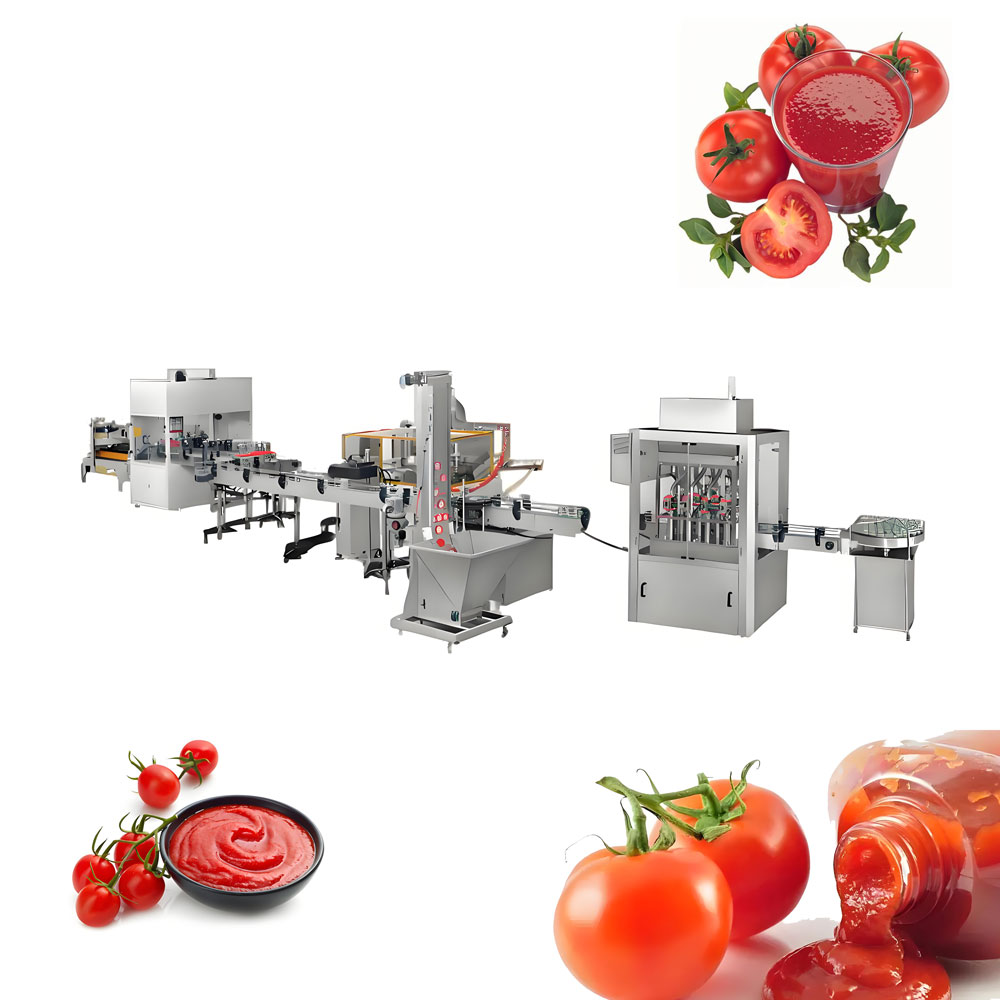 Tomato Ketchup Processing Line
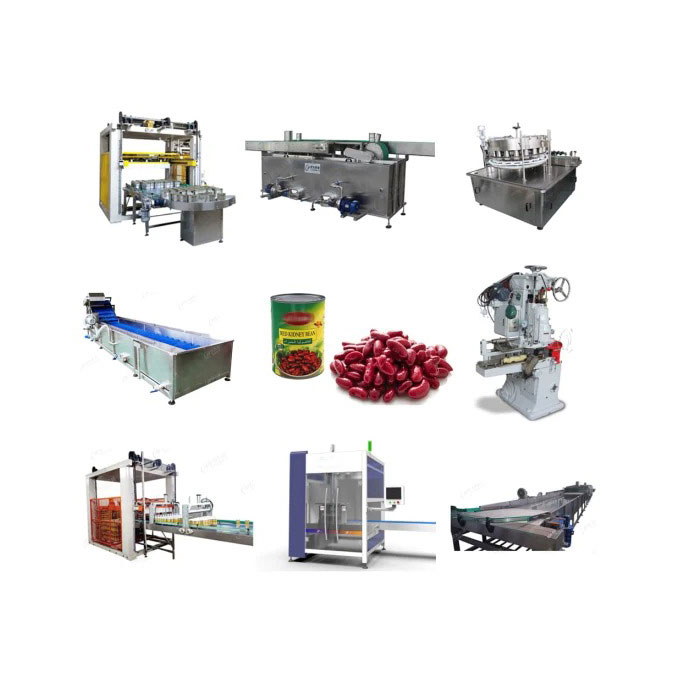 Bean Product Production Line
Ready to Get Started?