
Commercial Kitchen Stainless Steel Selection: 304 vs 316L vs 430 by Zone
304, 316L, and 430 are the three stainless grades most used in commercial kitchen equipment, and they are not interchangeable. 304 is the workhorse for most food-contact surfaces; 316L adds molybdenum for pitting resistance in salty and acidic zones; 430 is a ferritic grade used for non-contact structural and economic applications. Specifying one grade for the whole kitchen is either over-spending on 316L where 304 would do, or under-specifying 430 where 316L is required. The correct approach is a zone-by-zone grade map that matches the grade to the corrosion, temperature, and food-contact conditions of each area. This article provides that map, compares the three grades on corrosion resistance, and gives a selection decision for each kitchen zone.
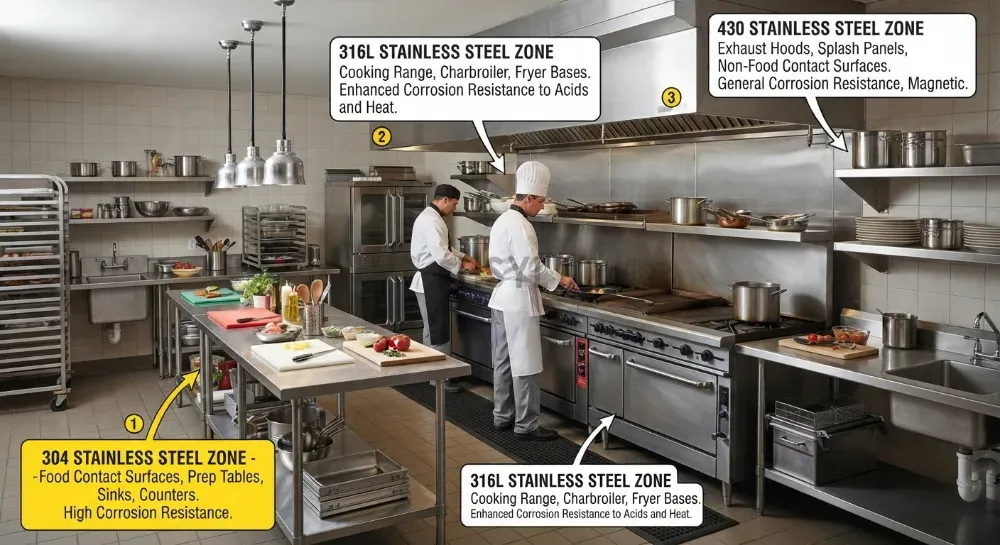
The scope covers stainless steel grade selection for commercial kitchen equipment, by zone. It covers 304, 316L, and 430 properties and zone assignment. It does not cover welding and passivation (covered separately), heat source selection, or layout. A compliant commercial kitchen equipment solution specifies grade by zone, not a single grade for the whole kitchen.
The Three Grades and Their Properties
The three grades differ in composition, which drives their corrosion resistance, formability, and cost.
| Grade | Type | Key composition | Corrosion resistance | Food contact | Relative cost |
|---|---|---|---|---|---|
| 304 | Austenitic | 18% Cr, 8% Ni | Good general corrosion resistance; vulnerable to pitting in chloride | Yes — standard food-contact grade | Reference |
| 316L | Austenitic | 16% Cr, 10% Ni, 2% Mo, low C | Superior pitting and crevice resistance; better in salty and acidic | Yes — for aggressive food contact | Higher |
| 430 | Ferritic | 16-18% Cr, no Ni | Lower than 304; vulnerable to pitting; good for dry and mild | Limited — non-contact or mild contact | Lower |
The molybdenum in 316L is the key differentiator — it is what gives 316L its pitting resistance in chloride environments (salty food, brine, coastal air). The absence of nickel in 430 makes it cheaper but also less corrosion-resistant and less formable. Grade choice is not about "better or worse" — it is about matching the grade to the zone conditions.
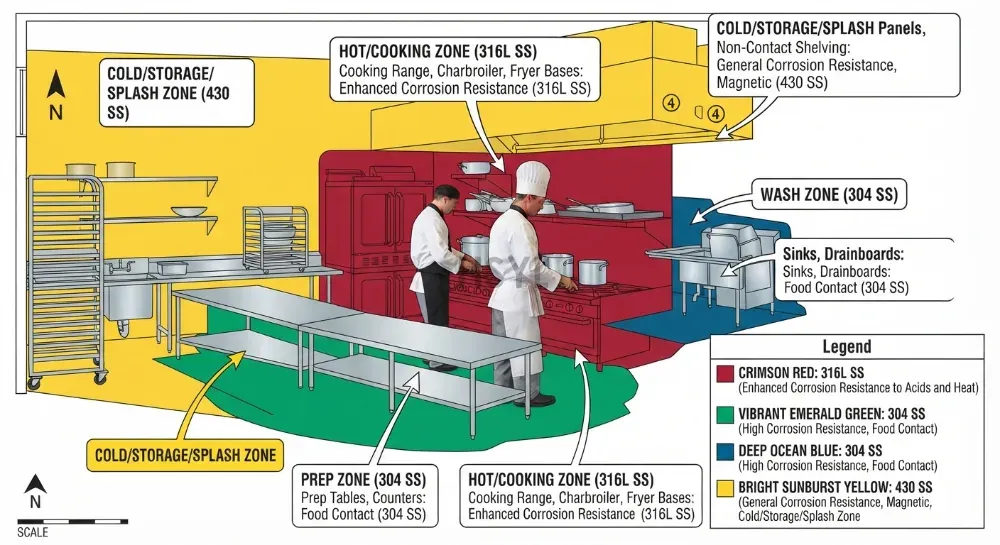
Zone-by-Grade Map for Commercial Kitchen
A commercial kitchen has distinct zones with different corrosion, temperature, and food-contact conditions. The table below maps each zone to the appropriate grade.
| Zone | Conditions | Recommended grade | Rationale |
|---|---|---|---|
| Hot cooking (range, wok, fryer) | High temperature, grease, splatter, cleaning chemicals | 304 (standard) or 316L (for salt exposure) | 304 handles most hot cooking; 316L if brine or salty food contact |
| Prep and cold (prep tables, cold tables) | Food contact, moisture, occasional acid | 304 | Standard food-contact grade; handles normal prep conditions |
| Wash and CIP (sink, wash station, CIP spray) | Water, detergent, sanitizer, chloride exposure | 316L | Pitting resistance needed for continuous wet and chemical exposure |
| Seafood and brine (fish prep, brine station) | Salt, brine, fish blood | 316L | Chloride pitting resistance essential |
| Acidic food (tomato, citrus, vinegar prep) | Acid contact | 316L | Better acid resistance than 304 |
| Non-contact structural (panels, legs, trim) | Dry, mild, no food contact | 430 | Economic; adequate for non-contact structural use |
| Exhaust and hood (canopy, filters) | Grease, heat, moisture | 304 (or 430 for dry sections) | 304 for wet sections; 430 acceptable for dry structural |
Material note: The zone-by-grade map is a starting point, not a universal spec. Local regulation, specific product chemistry, and cleaning chemical concentration may shift the boundary. A kitchen in a coastal area with salt air may need 316L in zones where an inland kitchen would use 304. Document the grade selection per zone in the equipment specification.
Corrosion Resistance Comparison
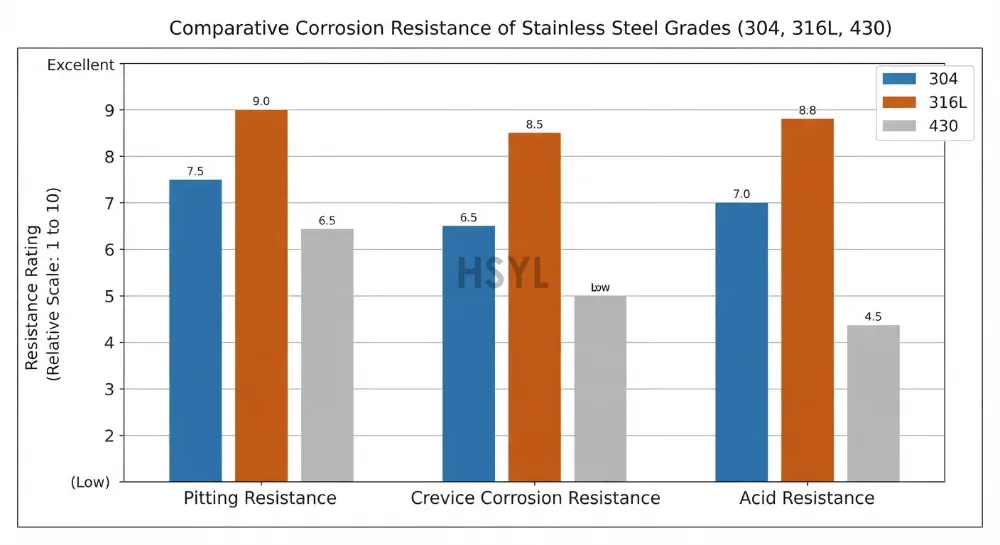
The three grades differ most in pitting and crevice corrosion resistance — the failure modes that matter in a wet, salty, acidic kitchen. Pitting is localized corrosion that creates small holes; crevice is corrosion under gaskets, deposits, or tight gaps. Both are chloride-driven. 316L's molybdenum gives it roughly 2-3 times the pitting resistance of 304 in chloride environments. 430 has lower pitting resistance than 304 and is not recommended for continuous wet or salty contact.
The commercial electromagnetic cooker and other hot-zone equipment typically use 304 for the body and 316L for components in direct salt or brine contact. The single tank electric fryer uses 304 for the oil contact zone, where oil is not chloride-corrosive but cleaning chemicals are.
Scope, Sources and Limitations
Scope. This article covers stainless steel grade selection for commercial kitchen equipment, by zone. It covers 304, 316L, and 430 properties and zone assignment. It does not cover welding and passivation, heat source selection, or layout.
Limitations. All grade properties and zone recommendations are drawn from publicly available metallurgical and food-safety material. Actual grade selection depends on local regulation, specific product chemistry, and cleaning protocol. HSYL does not publish project-specific grade specifications without verified evidence.
Source basis. Grade properties are consistent with ASTM A240 (stainless steel plate), EHEDG hygienic design guidelines, and food-contact material regulations (FDA, EU 1935/2004).
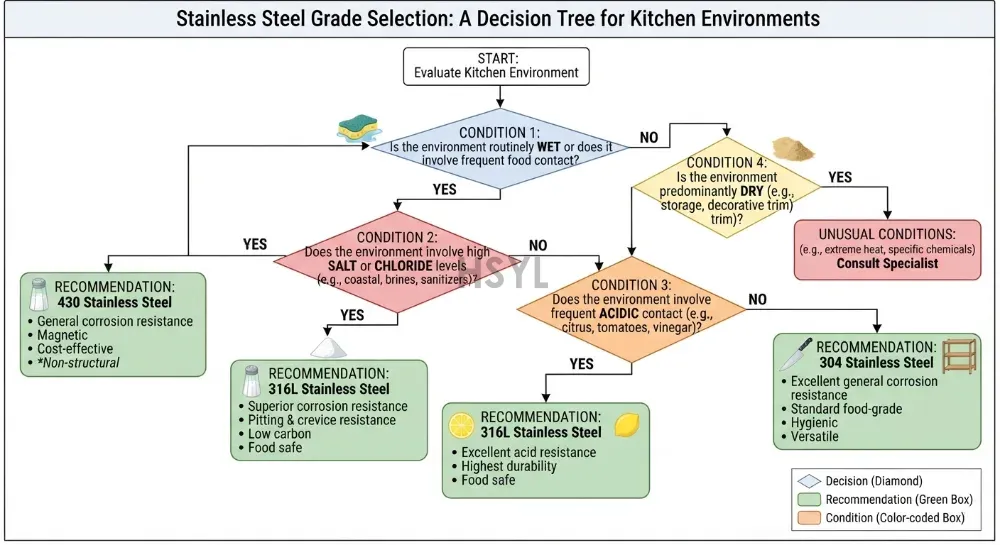
Stainless Steel Grade Selection Resources
Three resources complement this grade selection content. The kitchen solutions page carries the full commercial kitchen scope. The electromagnetic cooker page carries a hot-zone equipment example. The electric fryer page carries an oil-zone equipment example.
- Commercial kitchen equipment solution — the full kitchen scope where zone-by-grade specification applies.
- Commercial electromagnetic cooker — a hot-zone equipment whose grade spec depends on food contact and salt exposure.
- Single tank single basket electric fryer — an oil-zone equipment where grade selection balances oil and cleaning-chemical exposure.
Next Step: Map Your Kitchen by Grade
Send HSYL your kitchen zones, product types (salty, acidic, oily), cleaning chemicals, and location (coastal or inland). HSYL will return a pre-filled zone-by-grade map with 304/316L/430 assignment for your zones and a grade selection decision template for your equipment specification.
Frequently Asked Questions
What is the difference between 304, 316L, and 430 stainless steel in commercial kitchen equipment?
When should I use 316L instead of 304 in a commercial kitchen?
Can I use 430 stainless steel for food-contact surfaces in a commercial kitchen?
How does a coastal location affect stainless steel grade selection for a kitchen?
Can HSYL specify the stainless grade for every zone in my kitchen?
Must-Read Blogs For Chain Restaurants Owner

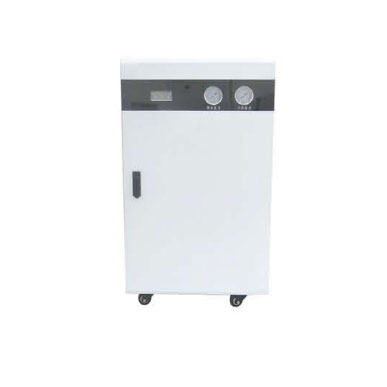 YL-W-01 Commercial Water Purification Equipment
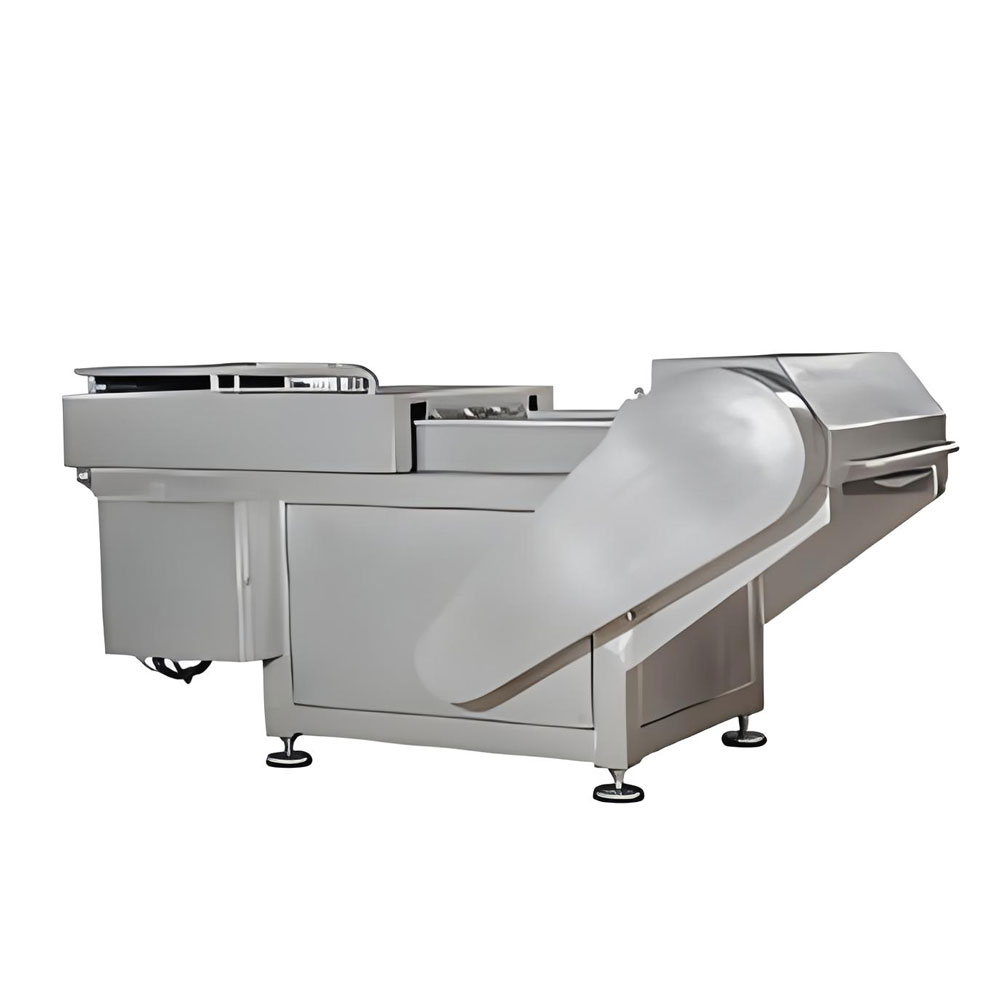 Industrial Frozen Meat Slicing Machine
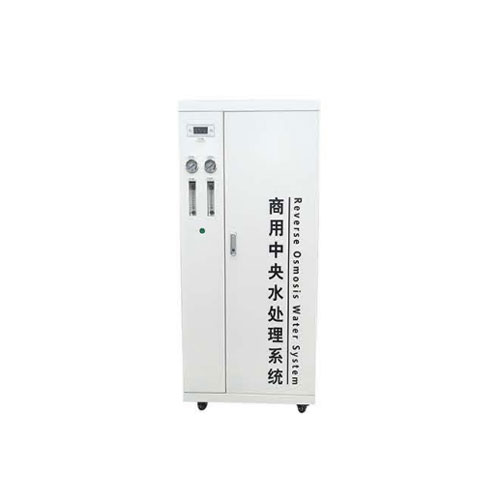 YL-W-06 Commercial Water Purification Equipment
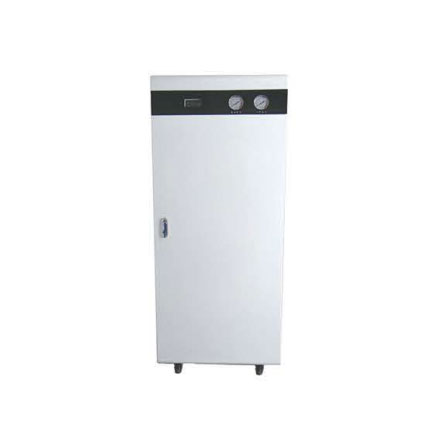 YL-W-05 Commercial Water Purification Equipment
Ready to Get Started?