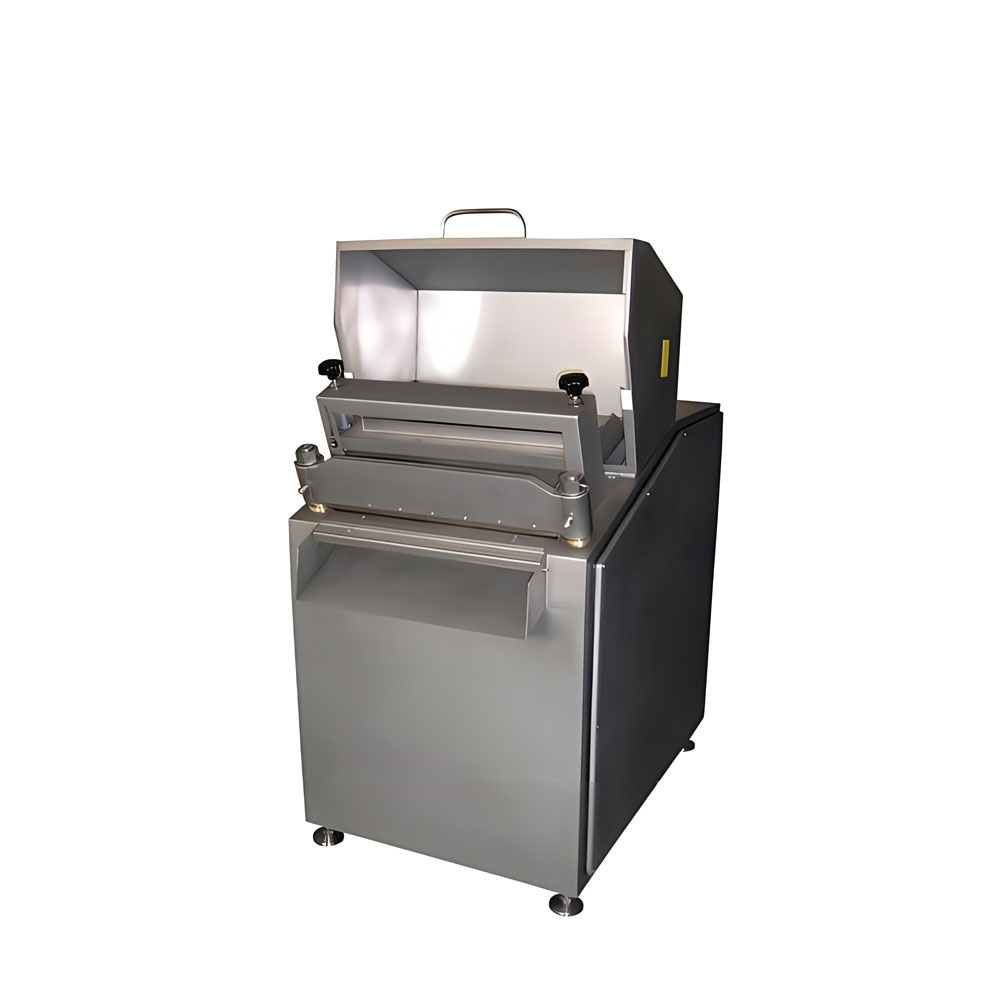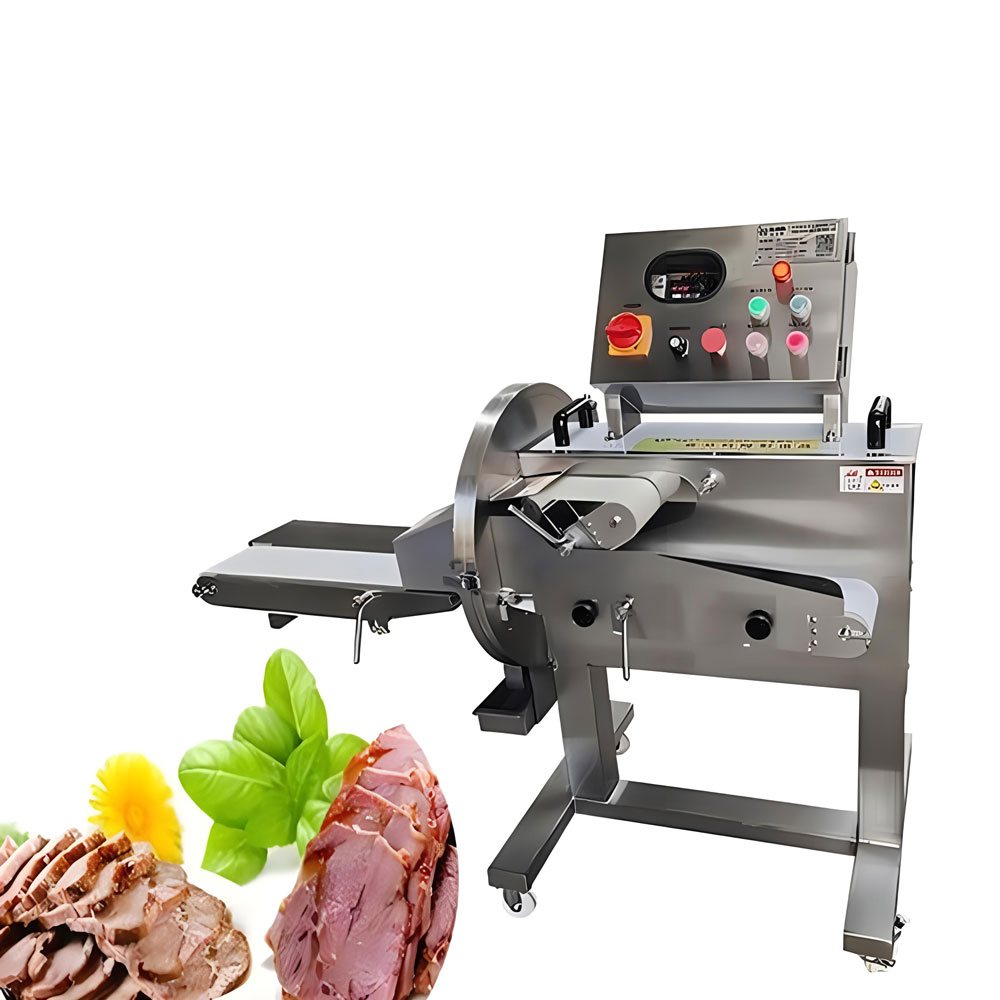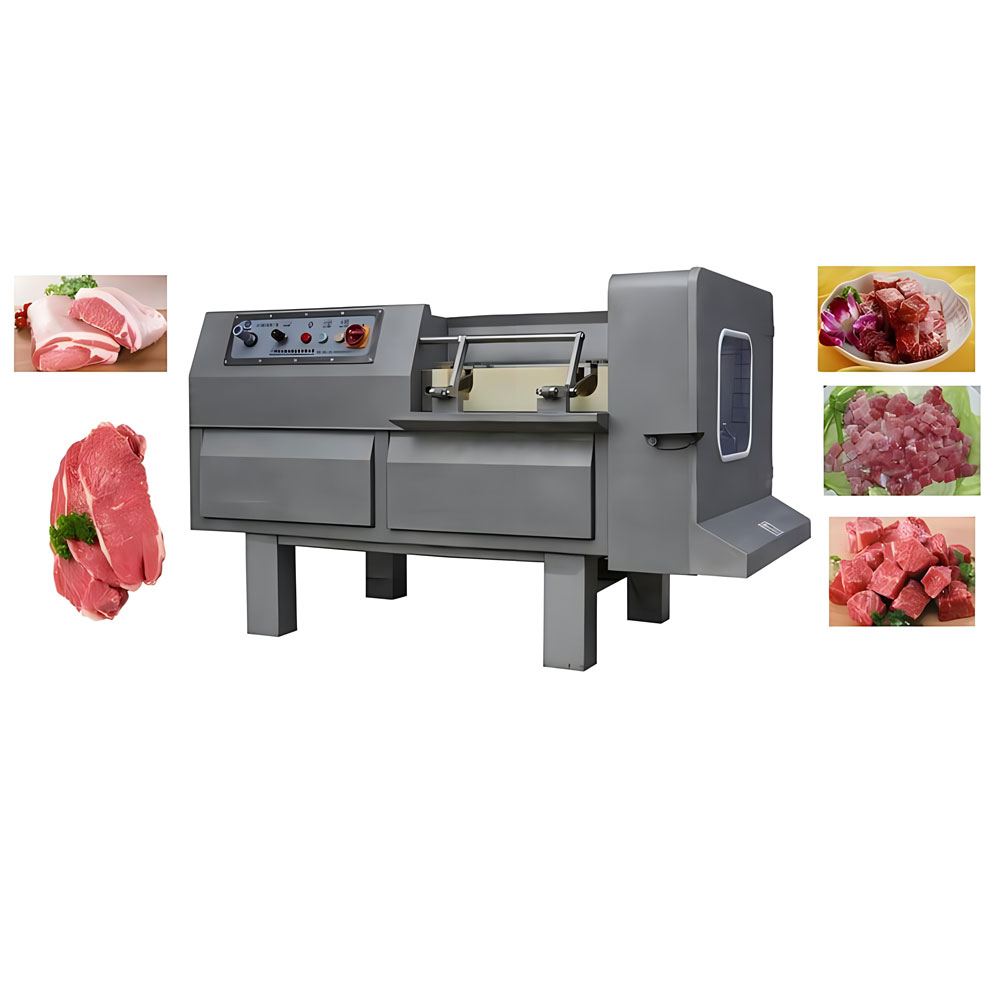
From A Vacant Site To Full-Scale Production And Profitability — Achieve It All With One Trusted Partner: Hongsheng Yuanlin.

Get A Quote

Home > Ultrasonic Food Cutting Machine​

Ultrasonic Food Cutting Machine​ - Chinese Manufacturer, Factory, Supplier

Ultrasonic Zero-Friction Cutting Mechanism

The HSYL Ultrasonic Food Cutting Machine represents a paradigm shift in industrial portioning, utilizing a high-frequency vibration system oscillating at 20,000 cycles per second (20kHz). By creating a nearly frictionless surface on the titanium alloy blade, our technology eliminates the traditional "sticking" force experienced with viscous materials. This ensures that even the most delicate mousse cakes or multi-layered fudge retain their aesthetic integrity without the compression or lateral smearing common in mechanical cold-knife systems.

Integrated into a larger cake production line, these machines utilize high-power ultrasonic transducers to dissipate heat during the cutting process, which effectively sanitizes the blade surface and prevents the buildup of organic residue. This results in a superior surface finish for premium confectionery products, significantly reducing scrap rates for high-yield operations.

Engineering Parameters for Precision Processing

Parameter ComponentEngineering SpecificationOperational Advantage
Ultrasonic Frequency20kHz / 40kHz Auto-TuningPrevents product adhesion and blade clogging
Cutting Throughput60 - 120 cuts per minuteScalable for high-volume commercial baking
Blade MaterialFood-Grade Titanium AlloyAnti-corrosive with 3,000+ hour durability
Control InterfaceMulti-Axis PLC Touch ScreenOne-touch recipes for different density foods
Slicing Accuracy±0.15mm ToleranceEnsures uniform portion weight and size

Solving Adhesion and Deformation Bottlenecks

Plant managers often face unsustainable production downtimes due to blade cleaning cycles when processing high-sugar or fat-rich items. Our ultrasonic design mitigates this bottleneck through specific engineering innovations:

  • High-Amplitude Oscillations: The rapid movement sheds debris instantly, allowing for continuous 24/7 operation without manual blade wiping.
  • Vertical Impact Cutting: Instead of a sawing motion, the blade moves vertically, preserving the structural air bubbles in delicate puff pastries.
  • Thermal Regulation: The ultrasonic friction generates localized micro-heat that seals the edges of frozen chocolate coatings, preventing cracking.

To view our full range of processing solutions, explore our catalog of commercial food manufacturing equipment which includes options for standalone and conveyor-integrated models.

End-Product Versatility & Business Impact

  1. Creamy Confections: Flawless slicing of cheesecake and mousse without the traditional "dragging" marks from metal blades.
  2. Sticky Nutrition Bars: Efficient portioning of nougat, granola, and date-based bars that typically jam rotary cutters.
  3. Industrial Sandwiches: Clean cross-sections of chilled sandwiches, ensuring that meat and vegetable layers do not smear into the bread fibers.
  4. Frozen Dough Blocks: Precision dicing of block butter and frozen dough for bakery premixes at temperatures as low as -15°C.
Core Competitive Advantages

Technical Leadership & Customer Value Creation Capabilities

Technology Leadership

· 57 core patents in dynamic cutting algorithms & IoT control
· 8.5% R&D investment ratio with 3-5 new models annually

Agile Supply Chain

· 82% vertical integration of critical components
· 40% inventory turnover improvement via digital systems

Full-Lifecycle Service

· 25% lower TCO for equipment lifecycle
· 24/7 remote diagnostics support
· >95% client retention over 5 years

Green Compliance

· 35% energy consumption reduction
· Certified by CE/FDA/ISO 14064
· ≥92% material recyclability

Project Case

Learn about our efficient and reliable equipment and production line solutions tailored for various food processing industries.

Relevant News


Commercial Kitchen Food-Grade Polymer Selection: PP, POM, PTFE, PEEK and PPSU by Application

Select food-grade polymer for commercial kitchen contact parts: PP vs POM vs PTFE vs PEEK vs PPSU, temperature, impact, wear, FDA 21 CFR 178 compliance, and app...

Commercial Kitchen Gasket and Seal Selection: Food-Grade Silicone, EPDM, NBR and FKM

Select gasket and seal material for commercial kitchen equipment: silicone vs EPDM vs NBR vs FKM, temperature range, food-contact compliance, fat and cleaning c...

Commercial Kitchen Food-Contact Edge Finishing, Deburring and Rounding for Stainless Equipment

Control edge finishing and deburring for commercial kitchen stainless: edge types, deburr process, food-contact edge radius, and inspection records for hygienic...

Commercial Kitchen Stainless Steel Surface Finish: Ra, Brushed vs Mirror vs Satin Cleanability

Select stainless steel surface finish for commercial kitchen by Ra, cleanability and bacterial retention: brushed vs mirror vs satin, with a finish-by-zone deci...

Commercial Kitchen Sheet Metal Gauge and Structural Design for Food-Contact Equipment

Select sheet metal gauge for commercial kitchen equipment: thickness by application, structural vs food-contact logic, deflection, and welding fit for stainless...

Commercial Kitchen Cleaning Zone Design: Soil Type, Method and CIP Integration

Design cleaning zones for a commercial kitchen: soil type to method matrix, manual vs COP vs CIP, and CIP integration for automated cleaning in food-contact zon...

Hygienic Welding and Passivation in Commercial Kitchen Equipment

Control hygienic welding and passivation in commercial kitchen equipment: joint types, weld process, food-contact weld requirements, and passivation records for...

Commercial Kitchen Stainless Steel Selection: 304 vs 316L vs 430 by Zone

Select stainless steel for commercial kitchen by zone: 304 vs 316L vs 430, corrosion resistance, food-contact suitability, and a zone-by-zone grade map for kitc...

OEE for a Fish Canning Line: Measuring Availability, Performance and Quality Without Hiding Food-Saf

Measure OEE for a fish canning line without hiding food-safety stops: availability, performance, quality, stop classification, ideal cycle time, and a measureme...

Weld Finishing, Pickling and Passivation for Fish Processing Equipment

Control weld finishing, pickling and passivation for fish processing stainless steel: heat tint, embedded iron, rough weld diagnosis, and passivation records pe...

Fish Canning Line Commissioning Checklist: FAT, SAT & Handover

A food factory project manager sits in a machine supplier's assembly workshop, a stack of blueprints in front of them and a signed contract in hand. The mac...

304 vs 316L Stainless Steel in a Fish Canning Line: A Zone-by-Zone Materials Map

A plant manager at a newly commissioned sardine cannery conducts a routine inspection and notices faint, reddish-brown stains forming along the corners of the b...

Frequently Asked Questions

Does the high-frequency vibration affect the internal structure of delicate foods?
No, the ultrasonic waves are localized to the blade's edge, meaning the 20kHz vibration only affects the molecular layer in contact with the titanium, preserving the spongy or airy texture of the surrounding product.
How many hours can the ultrasonic blade operate before requiring replacement?
Under standard operating conditions for soft food processing, our titanium alloy horns and blades are rated for approximately 3,500 to 5,000 hours of active cutting time before sonic tuning stability is compromised.
Can I integrate this standalone machine into my existing conveyor system?
Absolutely, the HSYL unit is designed with an adjustable aperture and generic RS485 communication protocols, allowing it to sync with external belt speeds and sensor triggers from upstream machinery.
What is the cleaning protocol for an ultrasonic cutter?
The system features a "sonic cleaning mode" where the blade vibrates in a sanitation bath, coupled with a full SUS304 washdown frame that meets IP65 protection standards for food safety compliance.
Is the machine suitable for cutting products with hard inclusions like whole nuts?
While ultrasonic cutting is superior for soft and sticky matrices, products with dense inclusions like hard almonds or macadamias require a customized heavy-duty horn to prevent harmonic feedback damage to the generator.
How do I adjust the cut size for different products?
The integrated PLC allows users to store up to 100 recipes, where cutting widths and speeds are adjusted via digital stepper motor inputs on the touch interface, requiring no physical tool changes.

Contact Us

Format: +[country code][number] (e.g. +8615098926008)

Do You Have A Factory Workshop Or Layout Drawing?